
TL;DR
- Switching performance software mid-cycle is a deeply disruptive decision that requires absolute executive buy-in to survive the inevitable manager complaints.
- Keep your current setup if you simply need defensible documentation and your basic review cycles are completing on time.
- The core job of any performance platform is enforcing your review cadence while generating a reliable paper trail for employment decisions.
- The market divides strictly into structured compliance engines, gamified continuous feedback tools, and flexible workflow builders.
- Only rip out an existing tool if its technical limitations actively prevent your managers from having required performance conversations.
- Expect a sharp dip in review completion rates during your first cycle on a new platform before long-term engagement metrics recover.
The Mid-Cycle Dilemma
It’s week three of your performance review cycle. You open your HR dashboard to check completion rates and see a wall of red. Managers are blowing past deadlines. Employees are complaining that the mandatory forms take far too long to fill out. You know exactly what happens next because you’ve seen it before. The quiet rebellion begins. Managers will simply rubber-stamp the ratings just to get the People team off their backs.
You’re looking at your Trakstar instance and wondering if this is the year you finally pull the plug. You have sat through calibration meetings where senior leaders openly admitted they entirely guessed an employee rating because they simply could not remember what actually happened six months ago. You have heard the whispers from new hires that the interface feels like it belongs in another decade. The temptation to rip and replace the whole system is incredibly strong.
But changing software isn’t a magic fix for lazy management. Switching your entire review infrastructure disrupts every single leader in your business. It forces you to retrain the very people who already complain loudly about administrative overhead. The real issue isn’t the software you bought, it’s whether your company culture actually values performance management or just tolerates it.
Best tools for Performance Management
Evaluating Your Need to Move
Sometimes the hardest part of HR leadership is admitting that a mediocre tool is currently good enough. You fall into this first stage if your current setup is genuinely fine. The review cycles happen on time. The audit trails are clear enough to protect the business. Nobody loves the software, but nobody is threatening to quit over it either. If Trakstar is giving you the defensible documentation you need for legal compliance, leave it alone.
The second stage is friction. That’s when the operational complaints start getting louder. Managers grumble about the interface. Employees ask why they can’t give peer feedback easily. You’re spending more time answering basic user support questions than looking at rating distributions. Friction is highly annoying, but it rarely justifies the immense pain of a mid-cycle platform migration.
The third stage is real liability. Data gets lost. Calibration meetings drag on for hours because you can’t pull the right reports. The system strictly limits how you want to structure your reviews. Perhaps you desperately need a project-based cycle, but the software refuses to allow it. At this point, the risk of staying actively outweighs the pain of moving.
Finally, there’s the edge case. This happens when your executive team completely changes the corporate operating model. Suddenly, you need to tie learning paths directly to compensation bands. If your current software can’t technically support the new business mandate, you have to move.
Midnight Doubts
Will my managers actually log into a new system? Yes, if it saves them time. The primary reason managers ignore HR software is that it feels like administrative busywork instead of a tool that actually helps them run their teams.
Can we migrate our historical review data? Usually, yes. But the internal data structures rarely match perfectly between competing vendors. You’ll likely end up storing old PDFs in your core HRIS rather than mapping every old rating to a new competency framework.
Are we just buying a shiny interface for a broken process? This is the single most dangerous trap. If managers don’t know how to give constructive feedback in person, a gamified badge system won’t fix their cowardice.
How long does implementation actually take? Vendors say two weeks. Reality says eight to twelve weeks. You desperately need time to configure the workflows and train your internal champions before launching it to the broader company.
Will a new tool reduce the number of HR complaints? No. It just changes what they complain about. Instead of complaining about a dated interface, they will complain about learning an entirely new workflow.
Mapping the Options
The first category covers the compliance heavyweights. These tools are built exclusively to protect the company. They focus on creating an unbreakable audit trail of who rated whom and when it happened. They’re right when your legal risk is high and performance records directly inform termination decisions. They fail completely if you want a lightweight experience for a young remote workforce.
The second category includes the continuous feedback engines. These platforms prioritize weekly check-ins and peer recognition. They assume that frequent inputs are vastly superior to one massive annual form. They’re right for fast-moving startups where company goals change every single month. They fail spectacularly when HR needs rigid rating distributions to run a highly structured compensation cycle.
The third category features the modular workflow builders. These act as blank slates. You can build almost any review cadence or calibration step you can imagine. They’re perfect for companies with highly specific performance philosophies. They fail miserably if you lack a strong internal perspective because the blank slate will simply paralyze your HR team.
Self-Assessment
Do your managers view performance reviews as a coaching opportunity or a compliance exercise? If they see it as a rigid compliance task, buying an engagement-heavy tool will cause massive culture shock. You need to align the software with their actual mental model instead of forcing your aspirational one upon them.
How complex is your compensation process? Tying merit increases to performance ratings requires deep technical integration. If your quarterly compensation cycle requires complex dual-manager sign-offs combined with weighted competency averages across multiple departments, a lightweight check-in tool will break your internal process entirely.
Does your workforce actually sit at desks all day? A browser extension for giving peer feedback is entirely useless if half your employees are on a manufacturing floor. The physical reality of your workers heavily dictates the type of access your new software must provide.
Are you fully willing to act on the data you collect? There’s no point in implementing a sophisticated OKR tracking system if executive leadership never adjusts strategy based on missed goals. Over-collecting data without taking meaningful action destroys HR credibility faster than doing absolutely nothing.
Who owns the ongoing system administration? If every single change to a review template requires a support ticket to the vendor, your HR team will eventually stop iterating. You need to know exactly how much autonomy your internal team will have to build and modify forms.
Reviewing the Options
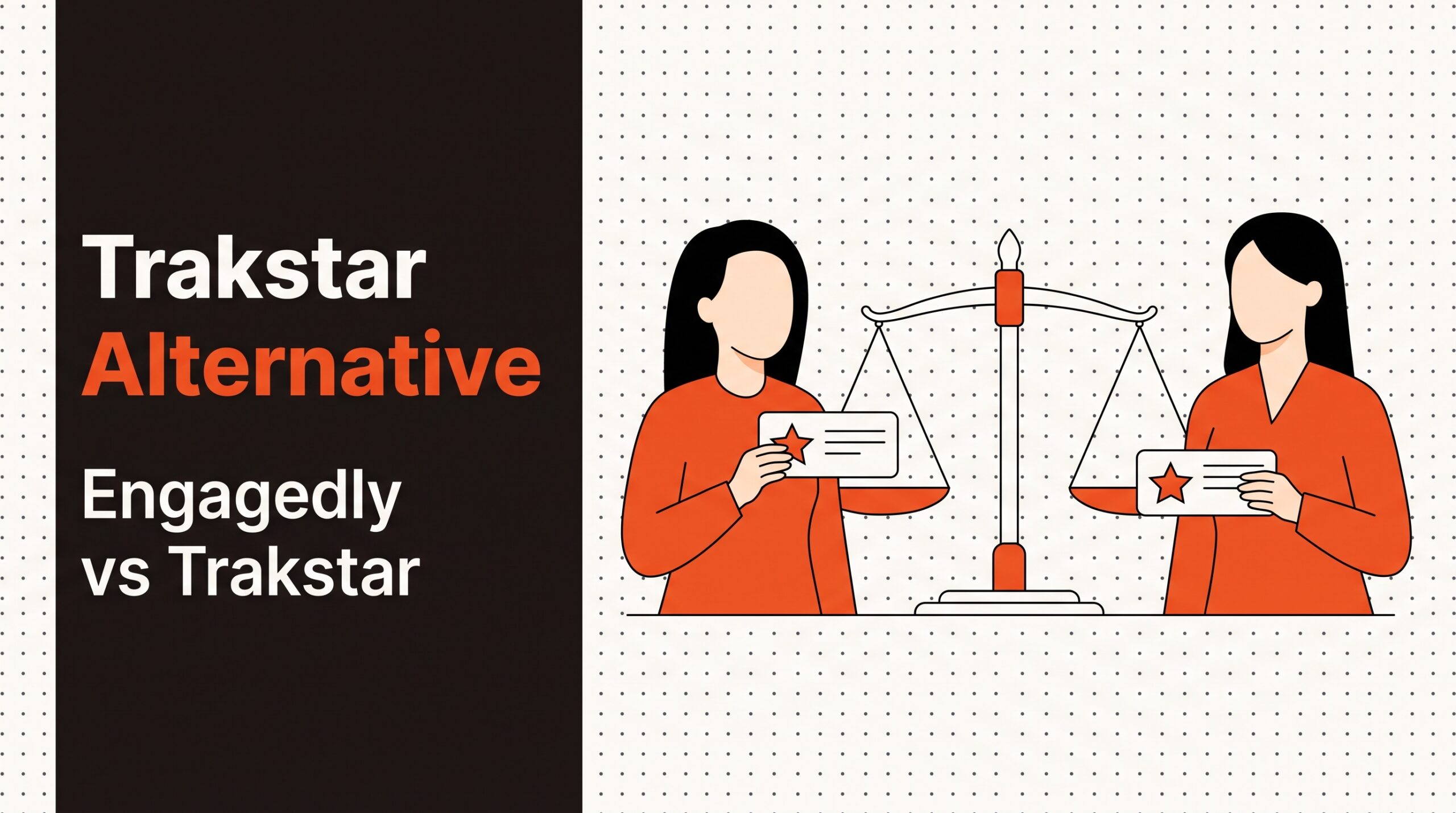
Trakstar (rated 4.2/5) is best for highly structured performance reviews. It earns its place by delivering the most comprehensive audit trail we found in the mid-market tier. HR teams with 100 to 2,000 employees get a highly defensible paper trail showing exactly who submitted what rating. The customizable review templates let you build complex competency scorings without needing IT help. Where Trakstar genuinely struggles is in its approach to continuous feedback. The platform feels far less focused on real-time conversations, and its dated interface is highly noticeable when compared against Lattice or Culture Amp. Pricing is available on request, and a free demo is available.
Engagedly (rated 4.1/5) is best for gamified engagement and recognition. It earns a spot because it takes a completely different approach. By utilizing points and rewards for completing performance activities, it intrinsically motivates employees to actually participate. Companies of 100 to 2,000 employees with a younger workforce often see higher engagement rates here than with traditional tools. It also features a strong learning module. Where Engagedly genuinely struggles is cultural fit. Gamification isn’t for every culture, and highly traditional businesses will find the learning badges entirely inappropriate. It also feels less enterprise-grade than Culture Amp. Pricing is available on request.
PerformYard (rated 4.2/5) is best for custom performance workflows. It earns its place by being the most flexible configuration engine on the market. In our testing, we configured a quarterly project-based review cycle with skills matrices and dual-manager scoring in under a day. That exact level of customization usually requires expensive professional services elsewhere. HR teams of 100 to 2,000 employees with unconventional needs will love the proactive setup support. Where PerformYard genuinely struggles is its lack of built-in opinions. Because it’s much less opinionated than Lattice, it requires significantly more setup effort from your team. It also has a smaller integration ecosystem. Pricing runs from $5 to $10/person/month.
Leapsome (rated 4.6/5) is best for combining performance and compensation in one integrated platform. It earns its place by dramatically reducing administrative overhead for HR teams. Seeing an employee’s review scores and compensation history in one profile reduced data-gathering overhead by an estimated 6 to 8 hours per compensation cycle during our tests. It perfectly suits people-first companies of 100 to 3,000 employees that want everything in one coherent data model. Where Leapsome genuinely struggles is its initial complexity. Stitching all these distinct modules together means it can be very complex to configure initially. It also comes at a higher price point. Pricing is on request.
Keka (rated 4/5) is best for real-time continuous feedback. It earns its place by drastically lowering the friction for giving feedback in the moment. The built-in browser extension allows employees in companies of 200 to 3,000 people to request feedback right from Gmail or LinkedIn without ever switching applications. This informal recognition infrastructure drives higher daily active usage than almost any other platform we tested. Where Keka genuinely struggles is in running highly structured formal review workflows. If you absolutely need rigid annual cycles with complex calibrations, you’ll find it lacking. Its reporting features can also be limited. Pricing is available on request.
15Five (rated 4.5/5) is best for weekly check-ins and OKR tracking. It earns its place through pure operational simplicity. The core premise requires a 15-minute weekly employee input that generates a 5-minute manager review. Because the format respects time, we saw 92% weekly check-in compliance in our manager testing, compared to a category average of 43%. For companies of 50 to 2,000 employees, it’s the lightest lift available. Where 15Five genuinely struggles is in the depth of its formal review features compared to heavyweights like Lattice. Additionally, if you want to run engagement surveys, those require a separate add-on. Pricing starts from $4/user/month.
| Situation | Scale | Setup | Primary Pain | Recommended Starting Point |
|---|---|---|---|---|
| High legal risk and compliance needs | 100 – 2,000 | Rigid annual cycles | Lack of clear audit trails | Trakstar |
| Disengaged younger workforce | 100 – 2,000 | Gamified points system | Nobody logs into the tool | Engagedly |
| Unconventional review processes | 100 – 2,000 | Highly custom workflows | Tools force a standard cadence | PerformYard |
| Fragmented HR data systems | 100 – 3,000 | Unified comp and learning | Manual data gathering for merit | Leapsome |
| Shift to continuous feedback | 200 – 3,000 | Browser extensions | Feedback only happens annually | Keka |
| Managers hate admin work | 50 – 2,000 | 15-minute check-ins | Poor check-in compliance | 15Five |
| Desire for peer recognition feeds | 100 – 2,000 | Social feeds and badges | Disconnected remote teams | Engagedly |
The Hidden Costs of a Bad Switch
The platform licence fee is merely the smallest part of what a new performance tool actually costs your business. The real financial cost hides quietly in lost management hours. When you deploy software that clashes with your actual operating culture, managers waste countless hours figuring out technical workarounds. They hold shadow spreadsheets to track real performance while feeding garbage data into the official system just to satisfy HR.
You also burn valuable political capital. Every time HR introduces a new tool that fails to deliver on its grand promises, the business loses a little more faith in the People team. If you force everyone through a painful migration and the end result is just a prettier interface doing the exact same thing, you’ll struggle to get executive sponsorship for your next major initiative.
If you aren’t solving a software problem, shouldn’t you stop trying to buy a solution to a management problem?
Evaluating the Market Objectively
When your headcount crosses the threshold where manual spreadsheets become completely impossible, you have to systematise your HR processes. But vendor sales pitches all sound entirely identical. Every single rep will tell you their platform miraculously increases engagement and saves time. They show you carefully curated sandbox environments that look beautiful, completely divorced from the messy reality of your own employee data.
We built HROpsLab to cleanly cut through that noise. We are a review publication, entirely independent from the software vendors we evaluate. We test the software ourselves and document exactly where these platforms break down under real corporate pressure. We don’t sell software. We just provide the clear, unvarnished truth about what actually works in the real world.
If you’re tired of guessing which tool will survive a real performance cycle, read our in-depth comparisons. We have done the hard work of breaking down the pricing tiers and implementation realities. You can completely trust our independent reviews because we’ve no financial stake in which platform you eventually choose.
Frequently Asked Questions
Does changing performance software improve employee engagement?
Software alone never improves human engagement. If your managers are entirely absent or offer terrible feedback, a new platform simply digitises that poor experience. A tool can remove the administrative barriers to having good conversations, but it can’t force a bad manager to actually care about their direct reports.
How long should we run a software trial before committing?
You can’t effectively trial performance software in just two weeks. A true evaluation requires configuring your specific review form and testing it with a pilot group of trusted managers. Focus your entire evaluation on the implementation support and workflow flexibility rather than playing around in a pre-populated sandbox.
Can we run Trakstar and another tool simultaneously?
Running two distinct performance tools creates a massive data nightmare for your HR team. Managers get deeply confused about exactly where to log their feedback. And you lose the ability to pull a unified rating distribution for compensation planning. Pick one system of record and force the business to adopt it completely.
Do gamified systems like Engagedly actually work for older workforces?
It depends entirely on your specific company culture, not just demographic age. Some highly mature workforces absolutely love peer recognition feeds, while others find public leaderboards deeply patronising. So you have to evaluate the specific maturity and temperament of your employees before forcing them into a badge system.
What happens to our historical data if we finally leave Trakstar?
You’ll export your historical review data as static files or raw spreadsheets. Very few vendors offer clean data migrations that directly map old competency scores into new rating frameworks. Store the old records in your core HRIS for compliance purposes and start fresh in the new tool.
Is 15Five sufficient for highly structured annual compensation cycles?
It can be, but it requires massive internal discipline. While 15Five is genuinely brilliant at weekly check-ins, its formal review module lacks the deep complexity of heavy enterprise systems. If your compensation formula relies on highly weighted competency matrices, you’ll hit a technical wall very quickly.
Honest HR software reviews for leaders who refuse to guess.