
TL;DR
- The core decision: whether this is a genuine attempt to help somebody succeed, or the documented route to an exit. Both are legitimate. Running the second while describing it as the first is not.
- When doing nothing is right: when the problem is new, the person doesn't know about it yet, and a conversation hasn't been tried.
- What has to be true: you can describe what passing looks like, specifically enough that the person could tell on their own whether they'd done it.
- How the options split: by how formal the process is and whether success is genuinely available.
- Decision rule: if you can't name a realistic path to passing, you don't have an improvement plan. You have an exit with paperwork.
- Outcome to expect: either a person who improves, or an ending that both parties saw coming and neither found dishonest.
Everybody in the Room Already Knows
A manager is told to put somebody on a plan. The reasoning is reasonable: the performance problem has been going on a while, conversations haven't changed it, and the organisation needs a documented process before anything else can happen.
So the plan gets written. It has objectives, dates, support, review points. It's presented in a meeting where both people are uncomfortable, and the person receiving it asks the question everybody asks, which is whether this means they're being let go. The manager says no, this is about helping you succeed, and means it about as much as they can.
Then the plan runs. Weekly check-ins happen. The objectives are partly met, which is the most common outcome, and at the end somebody has to decide what partly means. In a large number of cases the answer was decided before the plan started, and the person knew, and their colleagues knew, and the weeks in between were a performance that everybody attended and nobody believed.
Best tools for Performance Management
The real problem isn't that improvement plans are inherently dishonest. It's that the same document is used for two incompatible purposes, and the purpose is rarely stated even internally. One is a genuine attempt at recovery, which requires that success is actually possible and that the manager believes it. The other is a documented runway to an exit, which is a legitimate thing to need. Everything that makes these processes painful comes from running the second while describing it as the first.
When You Genuinely Do Not Need to Act Yet
Your current setup is genuinely fine. The problem is recent, the person may not know it's a problem, and nobody has had a direct conversation about it. Formalising at this stage skips the step most likely to work, and it converts something recoverable into a process with a record attached.
Friction is starting to show. You've had the conversation once, nothing much changed, and you're starting to manage around the person: routing work differently, checking things you wouldn't normally check. That adjustment is the signal. The cheapest next step is a second, more specific conversation, with a stated expectation and a date, and no formal status attached.
It has become a real cost. Colleagues are absorbing the shortfall, or the work is visibly affected, or you've had the direct conversation more than once with no change. At this point something formal is reasonable, and the question that matters is which of the two things you're actually doing.
The edge case that forces it. The performance issue may relate to a health condition, a disability, something that happened outside work, or a protected characteristic. It may also arise shortly after somebody raised a concern or took leave, which is a situation that will be looked at carefully if it's ever examined. All of these carry requirements that differ sharply by jurisdiction. Stop, establish what applies where you operate, and take local advice before starting a plan rather than during one.
Five Questions This Reader Asks at 11pm
Does a plan mean somebody is being fired? Not necessarily, and the honest answer is that it depends on something the manager can test: whether they can describe a realistic path to passing and would be pleased if the person took it. If that's true, it's a genuine plan. If the manager is privately certain of the outcome, it's an exit process, and saying otherwise is the thing that makes these so corrosive.
How long should it last? Long enough for the change to be demonstrated in the ordinary course of the work, which depends entirely on the job. A role with a weekly cycle can show change in weeks; one where the meaningful output arrives quarterly cannot. The common failure is a period chosen for administrative tidiness rather than for the work, which produces a plan that couldn't have been passed regardless of effort.
What should be in it? What specifically needs to change, what evidence would show it had, what support is being provided, when it's reviewed, and what happens at the end. The part most often missing is the second: without a stated standard for passing, the assessment at the end is a judgement call made by somebody who has already formed a view.
Should HR be involved? Yes, in almost all cases, and early rather than at the point of decision. Beyond the practical help, the requirements around documentation, process and protected situations differ considerably by jurisdiction, and the cost of discovering that afterwards is high. Involving HR isn't an escalation, it's the ordinary way to avoid making an error nobody can undo.
What if they improve and then slip back? Decide in advance, because both answers are defensible and improvising looks arbitrary. Either the plan's completion resolves the matter and any recurrence starts fresh, or there's a stated period during which a return to the previous pattern reopens it. What's unfair is leaving it undefined and then deciding after the fact, which the person will reasonably experience as the goalposts moving.
Three Honest Categories the Approaches Split Into
Informal, with no status attached. A direct conversation, a stated expectation, a date to revisit, and nothing filed. It's right as the first response in nearly every case, and it resolves more situations than any formal process does, because most performance problems are clarity problems or circumstance problems rather than capability problems. It fails when it's repeated indefinitely: three informal conversations with no escalation teach the person that nothing follows, and they teach colleagues that the organisation tolerates it. It also leaves nothing behind, which becomes a problem if the situation later needs to be explained.
A development plan with support and no formal weight. Written objectives, agreed support, regular check-ins, and explicitly not a disciplinary step. It's right when the problem is genuine capability, when the person is engaged and wants to improve, and when you believe recovery is likely. It's also the version most likely to actually work, because the absence of threat means the person can be honest about what they're finding difficult. It fails when it's used to avoid the harder conversation, so somebody spends months on a development plan when the real message was that the role isn't working.
A formal improvement plan with defined outcomes. Stated standard, stated period, stated consequence, documented throughout. It's right when informal routes have genuinely been tried, when the shortfall is affecting others, and when the organisation needs a defensible record. It gives the person something most informal approaches don't: unambiguous clarity about where they stand, which many people say afterwards they'd have preferred earlier. It fails when it's the first step rather than a later one, and it fails hardest when the objectives couldn't be met by anybody, which converts a process into theatre everyone can see through.
Five Diagnostic Questions You Can Self-Assess Against
Can you describe what passing looks like, specifically? Write it out before you write anything else. If the description is a general improvement in performance, you haven't got a plan, and neither you nor the person will be able to tell at the end whether it worked. The test is whether they could assess themselves against it without asking you.
Would you be pleased if they passed? Answer honestly, alone. A manager who has privately decided is going to run the process differently regardless of intent: they'll notice the failures and discount the improvements, because that's how people behave when they've reached a conclusion. If the answer is no, you're running an exit, and the decision to make is whether to be straight about that.
Has the person actually been told, clearly, before now? Not hinted, not addressed obliquely in a review, but told in words that couldn't be misread. A surprising number of plans are the first unambiguous message somebody has received about a problem that's been discussed among managers for months, and that sequence is both unfair and difficult to defend.
What have you contributed to this? Steelman it before you start. Unclear expectations, a brief that changed, inadequate handover, a workload nobody recalculated, or a role that was never properly defined. If any of those are true and you haven't named them, the plan is asking somebody to fix a problem they only partly own.
Could this be about something other than capability? Circumstances change: health, caring responsibilities, something happening at home, or a situation at work the person hasn't raised. A performance drop in somebody previously solid is more often circumstantial than capability-based, and the process that suits one is wrong for the other. Where a health condition or disability may be involved, the requirements differ by jurisdiction and this needs advice rather than judgement.
Five Ways Underperformance Gets Handled
Doing nothing and hoping
The problem is noticed, nothing is said, and the manager waits to see whether it resolves. It earns its place more often than its reputation suggests, in one specific case: where the dip is recent and there's a visible reason for it, such as a difficult period the person is working through. Some problems genuinely do resolve, and intervening in all of them makes a manager an unwelcome presence in ordinary bad weeks.
Where it falls short is that it's rarely a decision. It's the default, chosen because the conversation is uncomfortable, and it's applied indefinitely. The cost compounds in two directions: the person is denied the chance to fix something they don't know about, and colleagues absorbing the shortfall conclude that the organisation doesn't deal with things. That second conclusion spreads well beyond the case.
If you're going to wait, put a date on it and decide what you'd need to see. That converts avoidance into a plan, which is the whole difference.
An informal conversation with no record
A direct conversation naming the problem, with an expectation and no formal status. It earns its place as the right first step in nearly every situation, and it resolves more cases than any formal process. Many performance problems are clarity problems, and a person who genuinely didn't know what was expected will often fix it immediately once told.
It falls short when it's repeated. A second and third informal conversation with no change and no escalation teaches everybody involved that nothing follows, including the person, who reasonably concludes it isn't serious. It also leaves no trace, so if the matter later becomes formal there's nothing to show the problem was raised, which weakens the organisation's position and is genuinely unfair to somebody who'd say they were never told.
Have the conversation, then write yourself a short note of what you said and when. That isn't building a case, it's remembering accurately.
It also protects the person, which is worth saying because managers often feel uneasy about note-keeping at this stage. A dated note recording that a problem was raised gently in March is the thing that makes it indefensible to claim in September that they'd been told repeatedly. Records cut both ways, and the absence of one favours whoever is telling the story most confidently.
A development plan with no formal status
Written objectives and support, explicitly framed as development rather than discipline. It earns its place when the issue is capability, the person is engaged, and you believe they can get there. It's also the version most likely to work, because without a threat attached the person can say what they're actually finding difficult, and that's the information the plan needs.
It falls short when it's used as avoidance. A manager who can't face the formal conversation may offer a development plan instead, and the person spends months on something that was never going to change the outcome. It also fails where the real problem is fit rather than capability, since no amount of support makes somebody suited to a role that doesn't match what they're good at.
The honest use requires you to believe it can work. If you don't, choosing this route is kinder to the manager and not to the person.
One detail makes the difference between this working and drifting. Agree at the outset what happens if it doesn't work, and say it plainly: that if things haven't changed by the review point, the conversation becomes a different one. That isn't a threat, it's the information somebody needs in order to take the plan seriously, and without it a development plan can run for a year while the person reasonably believes the situation is under control.
A formal improvement plan with defined outcomes
Stated standard, period, support and consequence, documented throughout. It earns its place when informal routes have genuinely been exhausted and the shortfall is affecting others. It also provides something people frequently say they wanted earlier: unambiguous clarity. Many who go through one report that the worst part was the preceding months of not knowing where they stood.
It falls short in two ways. Used as the first step, it converts a recoverable situation into a formal one with a record attached, and it damages the relationship past the point where recovery is likely. Used with objectives nobody could meet, it becomes a visible performance: the person knows, their colleagues know, and the organisation acquires a reputation for a process that means one thing while saying another.
Requirements around what a fair process looks like, what must be documented, and what protections may apply differ sharply by jurisdiction. Establish the local position before you start rather than partway through.
Moving straight to an exit conversation
Skipping the plan and discussing an ending directly. It earns its place where the role genuinely isn't working and both people can see it, where a plan would be a formality nobody believes, and where the person would rather have the honest conversation than a scripted month. Handled well, it's frequently the most respectful option available.
It falls short on process and on exposure. What's required before an employment ends differs considerably by jurisdiction, and in many places skipping steps creates real risk regardless of how reasonable the decision was. It also removes any possibility of recovery, including in the cases where the manager's assessment was wrong, which happens more than managers expect.
This is the route that most needs local advice before it's taken, not after. Where it is the right call, how it is handled matters more than in any other route on this list, because there is no subsequent process to correct a poor conversation. Give the person the reason plainly, give them time to respond rather than requiring an answer in the room, and be clear about what is settled and what is still open. People accept endings far better than they accept being managed through a process whose conclusion was decided elsewhere.
The Decision Table
| Situation | Scale | Setup | Primary Pain | Recommended Starting Point |
|---|---|---|---|---|
| Problem is recent, nobody has said anything | Any | Any | The person may not know | A direct conversation, nothing formal |
| One conversation had, little change | Any | Any | Message may not have landed | A second, specific conversation with a date |
| Three conversations, no change, nothing filed | Any | Any | Nothing follows, and everybody knows | Formal plan, with local advice first |
| Genuine capability gap, person engaged | Any | Any | They want to improve and cannot yet | Development plan, support, no formal status |
| You cannot describe what passing looks like | Any | Any | There is no plan, only a period | Do not start until you can |
| You would not be pleased if they passed | Any | Any | You are running an exit | Be straight about it, take advice |
| Colleagues are absorbing the shortfall | Any | Any | The cost has moved to other people | Formal route, and tell the team nothing |
| Possible health, disability or protected reason | Any | Any | Standard process may not apply | Stop. Establish local position, take advice |
| Drop follows a concern being raised or leave | Any | Any | Sequence will be scrutinised if examined | Advice before any step, without exception |
The fifth row is the test that would prevent most of the damage in this area. A plan without a describable standard for passing isn't an improvement plan, whatever the document is called, and both people discover that at the end when the assessment turns out to be a matter of opinion.
Honest Before You Start
Four questions decide whether what you're about to run is the thing you'd describe it as. They're uncomfortable and they take ten minutes.
| The question | The honest answer to give yourself | What it means for whether to proceed |
|---|---|---|
| Would I be pleased if they passed? | Sometimes no, and you know it immediately | If no, this is an exit. Decide whether to say so |
| Can I describe passing specifically? | Often not, on the first attempt | If not, do not start until you can |
| Have they been told plainly before today? | Frequently not, despite manager discussions | If not, have that conversation first |
| Did I contribute to this? | Usually something, however small | Name it in the plan, or the plan is dishonest |
| Is the period long enough to show change? | Often chosen for tidiness, not for the work | Set it from the work cycle, not the calendar |
| Could this be circumstantial rather than capability? | More often than managers assume | Ask, before formalising anything |
The first row is the one that determines everything else. A manager who has privately concluded will run the process differently no matter how fairly they intend to behave, because they'll weight the evidence towards the conclusion they've already reached. That's ordinary human behaviour rather than bad faith, and the only defence against it is answering the question honestly before the process starts.
The fourth row prevents a specific unfairness that's common and rarely noticed. If a brief changed, a handover was inadequate, or the workload was never recalculated after somebody left, the person is being asked to fix a problem they only partly created. Naming your part costs nothing and makes the rest of the plan credible.
What Makes a Plan Genuinely Achievable
The difference between a plan somebody could pass and one nobody could is usually structural, and it's decided when the plan is written rather than during it.
The standard has to be describable by the person themselves. If they can't tell, at any given moment, whether they're currently meeting it, the plan is asking them to satisfy a judgement rather than reach a bar. Write the standard so that they could assess themselves and reach the same conclusion you would.
The period has to match the work. This is the most common structural failure. A role where meaningful output arrives monthly cannot demonstrate a sustained change in a period shorter than a few of those cycles, and setting one anyway guarantees the assessment will be about partial evidence. Choose the period from the rhythm of the job, and be prepared to defend why it's that length.
The support has to be real and specific. Naming a training course is usually not support. What actually helps is a change in the work: different pairing, a reduced load while something is fixed, a piece of work with a tighter feedback loop, or regular short check-ins with somebody who does the thing well. If the support column says the manager will be available, nothing has been provided.
The competing demands have to be removed. A plan that adds new objectives while leaving the existing workload untouched is asking for improvement with less capacity than the person had when they were failing. Something has to come off, and deciding what is the manager's job rather than the person's.
And the check-ins have to be frequent and short. A plan with a single mid-point review leaves somebody working for weeks without knowing whether they're on track, which is exactly the uncertainty the plan was supposed to resolve. Short weekly contact, focused on what happened this week rather than on the overall verdict, is what makes the difference between a plan that helps and one that's endured.
What to Put in Writing
This is one of the few areas where documentation genuinely matters, both for fairness and because decisions here get examined.
| Artefact | Who owns it | When it is written | What it prevents |
|---|---|---|---|
| What was said in earlier informal conversations | The manager | At the time, each time | A formal plan that is the first clear message |
| What passing looks like, in assessable terms | The manager, with HR | Before the plan starts | An ending decided by opinion at the end |
| Why the period is this long | The manager | At the start | A window too short for the work to show change |
| What support is provided, specifically | The manager | At the start | Support that is a promise of availability |
| What comes off their workload | The manager | At the start | Improvement expected with less capacity |
| What happens at the end, in each outcome | The manager, with HR | At the start | Improvising a decision the person can contest |
| Local requirements on process and protections | HR, with local advice | Before anything formal | A process that cannot be defended if challenged |
The second row is the one that decides whether the process is fair. Without a written standard for passing, the final assessment is made by somebody who has spent weeks watching for evidence, and people find what they're looking for. With one, both parties can reach the same conclusion from the same facts.
Questions to Ask Before You Commit
On honesty. Would you be pleased if they passed? A bad answer takes a while to arrive.
On the standard. Could they assess themselves against it? A bad answer describes improvement in general.
On history. Have they been told plainly, before today? A bad answer describes a review comment.
On your part. What did you contribute? A bad answer is nothing.
On capacity. What comes off their plate? A bad answer is that they'll manage it alongside.
On the law. What applies where you operate, and who confirmed it? A bad answer is a template from a previous employer.
What Getting This Wrong Costs
The first cost is what the organisation learns about you. A plan that everybody can see is an exit dressed as help teaches the whole team something about how this place behaves when things get difficult, and that lesson isn't confined to performance. People who watch a colleague go through a process with a predetermined outcome adjust their own behaviour accordingly: they become more careful, less likely to admit difficulty, and considerably less likely to raise a problem early. You've made the next performance issue harder to detect.
The second cost is the recoverable case you lost. Managers are wrong about capability more often than they expect, and the situations most likely to be misjudged are the ones where something circumstantial is going on that the person hasn't disclosed. A formal process started too early frequently ends a relationship that a conversation would have repaired, and the organisation records it as a performance exit rather than as a failure to ask.
The third cost is exposure, and it's the one that arrives without warning. Where a process was run without establishing what was required locally, or where the sequence of events invites a question about why it started when it did, the organisation ends up defending a decision that may have been entirely reasonable on the merits. What differs by jurisdiction here is substantial, and the moment to find out is not after somebody has challenged it.
So before you start, work out which of three things you have. A clarity problem means the person doesn't know what's expected, and a conversation fixes it. A capability problem means they know and can't yet, and support with a real standard may work. A fit problem means the role doesn't match what they're good at, and no plan changes that, though a plan is what usually gets run. Only one of the three is what an improvement plan is designed for.
When You Are Ready to Go Further
None of this needs a system. It needs an honest answer to whether you'd be pleased if they passed, a written standard they could assess themselves against, and something actually removed from their workload.
The step beyond the individual case is organisational and rarely taken. Look at the plans run in the last couple of years and ask how many ended in improvement. If the answer is none, the process is being used for exits exclusively, and the honest response is either to change how it's used or to stop describing it as an improvement mechanism. Managers and staff will already have worked out which one it is.
HROpsLab publishes independent comparison work across HR tooling, applicant tracking and payroll. We sell nothing, we take no vendor money, and we publish no paid placements. If the next step is looking at what your current systems record and when, our comparison work is one place to start.
Frequently Asked Questions
What is a performance improvement plan?
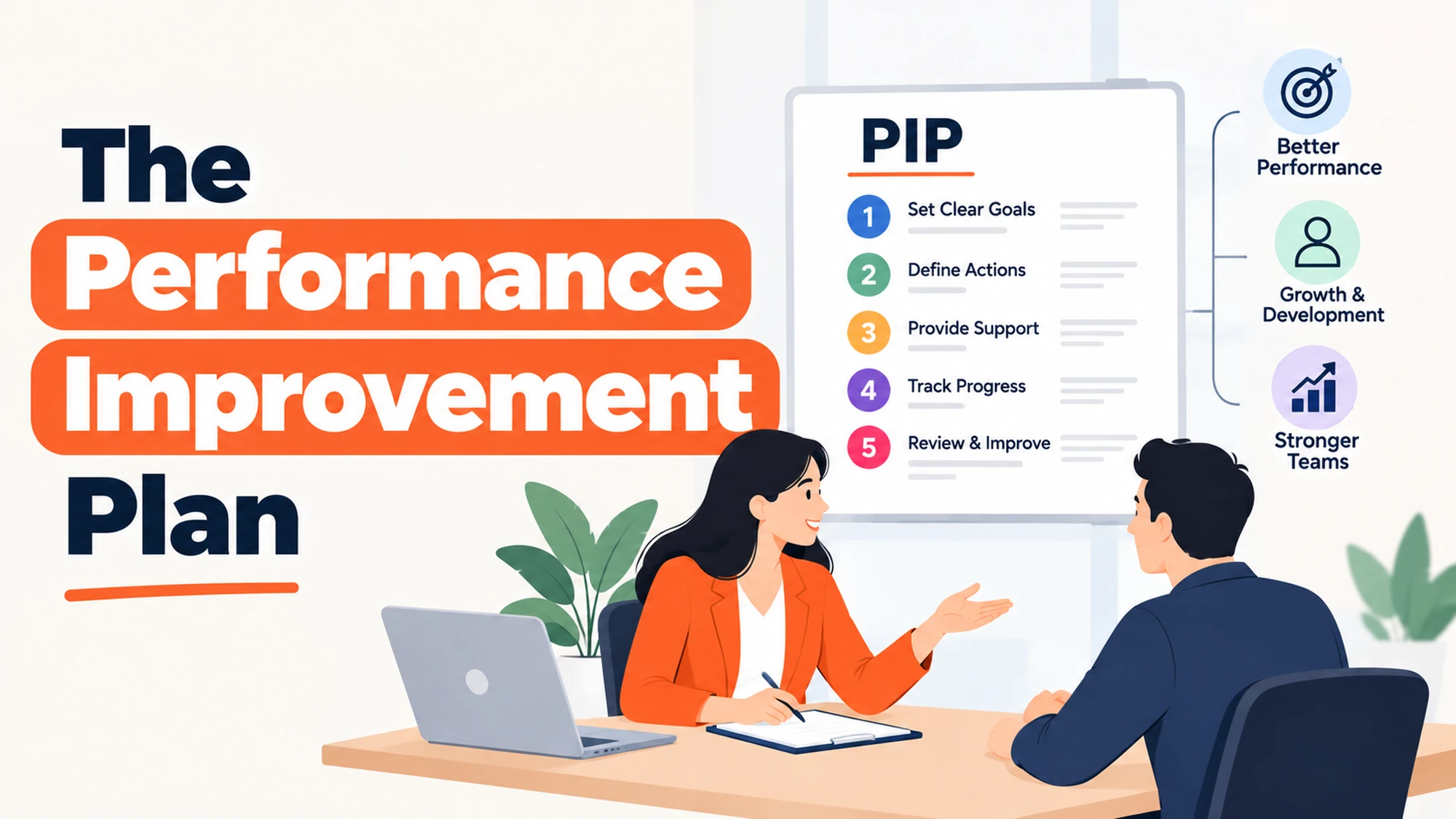
It's a structured process for addressing performance that hasn't met expectations, setting out what needs to change, over what period, with what support, and what happens at the end. In practice the document serves two very different purposes that organisations rarely distinguish even internally: a genuine attempt at recovery where the manager believes success is possible, and a documented route towards an exit. Both are legitimate needs. Almost everything that makes these processes painful comes from running the second while describing it as the first, which the person receiving it can usually detect and nobody can say out loud.
How long should a performance improvement plan last?
Long enough for a sustained change to show up in the ordinary course of the work, which depends entirely on the role rather than on convention. A job with a weekly output cycle can demonstrate change in a few weeks. One where meaningful results arrive quarterly cannot show a sustained pattern in anything shorter than several of those cycles, and setting a shorter period guarantees the final assessment rests on partial evidence. The common failure is choosing a period for administrative tidiness, then judging somebody against a window in which the work itself couldn't have demonstrated anything.
Does a performance improvement plan mean you are being fired?
Not automatically, and there's a specific test that distinguishes the two cases. If the manager can describe a realistic path to passing and would genuinely be pleased if the person took it, it's a real attempt. If the manager has privately concluded, the process is an exit route, and while that's a legitimate thing for an organisation to need, presenting it as help is what makes these situations so damaging. If you're on the receiving end, the useful question to ask directly is what specifically would need to be true at the end for this to be a success, and whether that's achievable in the time given.
What should be included in a performance improvement plan?
Five things: what specifically needs to change, what evidence would demonstrate it had, what support is being provided, when it's reviewed, and what happens at the end in each possible outcome. The element most often missing is the second. Without a stated standard for passing, the final assessment is a judgement made by somebody who has spent weeks looking for evidence, and people find what they're looking for. A good test is whether the person could assess themselves against the standard and reach the same conclusion you would, without asking.
Who should write a performance improvement plan?
The manager writes it, because they know the work and will be assessing it, with HR involved in the design and the process. HR's role isn't to author the content but to make sure the standard is assessable, the period is defensible, the support is real, and the process meets whatever applies locally. Getting HR involved early rather than at the decision point is worth doing: requirements around documentation, fair process and protected situations differ sharply by jurisdiction, and discovering a problem after the plan has run is considerably more expensive than avoiding it beforehand.
Should HR be involved in a performance improvement plan?
Yes, and early. Beyond the practical help with structure, there's a category of situation where proceeding without advice creates genuine exposure: where the performance issue may connect to a health condition or disability, where it follows shortly after somebody raised a concern or returned from leave, or where a protected characteristic could be relevant. Those carry requirements that differ considerably between jurisdictions and have been changing. Involving HR isn't an escalation of the situation, it's ordinary practice, and framing it that way to the employee also helps, since being told HR is involved otherwise reads as a threat.
What happens if someone improves and then slips back?
Decide before the plan starts, and write it into the document, because both possible answers are defensible and improvising after the fact looks arbitrary. One approach is that completing the plan resolves the matter entirely, and any later recurrence begins a fresh process from the start. The other is that a stated period follows completion, during which a return to the previous pattern reopens the original process. Either is reasonable. What causes a justified sense of unfairness is leaving it undefined, then reaching for whichever interpretation suits the organisation when the situation arises.
What do you do if the employee disagrees with the plan?
Take the disagreement seriously enough to check it, since a meaningful proportion of disputed plans rest on a factual misunderstanding: the expectations were genuinely unclear, a brief changed, or something happened that the manager doesn't know about. Ask them to set out specifically where they disagree, in writing, and respond to it point by point. If the disagreement survives that, the plan can still proceed with their objection recorded, and recording it properly matters. What doesn't work is treating the disagreement itself as further evidence of a problem, which is both unfair and, if the matter is later examined, difficult to defend.
An improvement plan you can't describe a path to passing isn't an improvement plan. It's an ending with a timetable.