

TL;DR
- The core decision: You’re trading Greenhouse’s best-in-class structured interview kits for either better outbound sourcing functionality or cheaper headcount scaling.
- When to stay put: Keep Greenhouse if your primary operational goal is reducing unconscious bias across a 2,000-person headcount.
- The ATS reality: An applicant tracking system exists to keep hiring managers compliant and recruiters sane.
- The market split: The alternatives break down into proactive sourcing engines, heavy enterprise suites, or lightweight volume tools.
- The decision rule: Choose your next system based on the pain your recruiters complain about daily rather than the CFO’s pricing spreadsheet.
- The expected outcome: A proper migration demands goodwill and six months of training, but it can cut software costs drastically if sized correctly.
| Tool | Rating | Pricing | Free trial | Best for |
|---|---|---|---|---|
| Greenhouse (your current tool) | 4.7 / 5 | Pricing on request | Free demo available | Best ATS for structured, bias-reduced hiring |
| Lever | 4.6 / 5 | Pricing on request | Free demo available | Best CRM + ATS for proactive talent teams |
| Workable | 4.5 / 5 | From $189/month | 15-day free trial | Best easy-to-use ATS with built-in sourcing |
| SmartRecruiters | 4.4 / 5 | Pricing on request | Free demo available | Best enterprise ATS for complex hiring operations |
| Ashby | 4.6 / 5 | Pricing on request | Free demo available | Best ATS for data-driven, high-performance teams |
| iCIMS | 4.3 / 5 | Pricing on request | Free demo available | Best ATS for large enterprise talent operations |
| JazzHR | 4.2 / 5 | From $75/month | 21-day free trial | Best affordable ATS for small businesses |
| Recruitee | 4.1 / 5 | From $224/month | 18-day free trial | Best ATS for collaborative, team-based hiring |
| Jobvite | 4 / 5 | Pricing on request | Free demo available | Best ATS with referral and employer branding tools |
| Pinpoint | 4.2 / 5 | Pricing on request | Free demo available | Best ATS for employer branding-led hiring |
The Friday Afternoon Email
It always starts with a direct Slack message from your finance business partner. The CFO has carefully scrutinized the software renewal budget for the upcoming year. They see a massive line item for Greenhouse. They notice your total hiring volume has dropped significantly since the frantic peak of your growth phase. They want to know if there’s a cheaper option. You take a deep breath.
You know exactly what a migration demands from your team. You remember the gruelling six to eight weeks of implementation time it took to get Greenhouse running properly. You remember the endless training sessions teaching engineering managers how to use digital scorecards instead of vague gut feelings. Moving off a system rated 4.7 out of 5 by its users isn’t just a technical project. It’s a political war.
The immediate temptation is to pull a feature comparison report to defend the status quo. Don’t do that. The real issue isn’t whether Greenhouse has the absolute best requisition approval workflows on the market. The real issue is whether your current talent strategy still matches the enterprise tool you bought three years ago.
Best tools for Applicant Tracking (ATS)
The Case for Doing Nothing
Sometimes your current setup is genuinely fine. You’re a mid-size to large company with anywhere from 200 to 5,000 employees. You heavily prioritize structured evaluation. Greenhouse’s pre-built interview guides and competency-based scoring criteria actively prevent bad hires every single week. Your hiring managers actually fill out their scorecards properly before attending calibration sessions. If this describes your operational reality, close this tab. Tell finance to approve the renewal.
Then comes the friction stage. You start noticing smaller satellite teams find the rigid multi-stage approval chains annoying. A senior manager complains loudly that opening a simple backfill requisition takes far too long. The system works as designed, but it feels undeniably heavy. You can usually fix this minor friction by auditing your internal workflows.
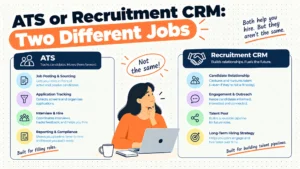
Real liability hits when the tool actively works against your recruiters’ daily goals. If your talent team spends all day executing proactive sourcing campaigns but they manually log passive candidate emails, you’re bleeding productivity. They lack Lever’s automatic two-way email sync. You’re paying a massive premium for a highly structured compliance process your team simply doesn’t run.
The extreme edge case is software cost at a very small scale. If you’re a 50-person startup paying premium rates for advanced calibration features you don’t even use yet, the financial math fails. You’re driving a heavily armoured tank to the local grocery store.
Late Night Doubts
Will hiring managers mutiny if I change the user interface? Yes, temporarily. Hiring managers despise sudden change more than they hate clunky software.
Can I actually get my historical candidate data out safely? Yes, but it will be incredibly messy. Moving candidate relationship history between disparate databases always drops valuable context.
Is there really a tool that does CRM and ATS equally well? No. Systems like Ashby get incredibly close. But every platform ultimately leans toward either proactive sourcing or strict requisition management.
Will a cheaper tool completely ruin our carefully crafted employer brand? Not necessarily. Pinpoint offers a best-in-class careers site builder that frequently looks much better than standard enterprise setups.
How much political capital will this software migration cost me? Absolutely all of it. You need a bulletproof business case to justify the inevitable disruption to your engineering leaders.
How the Market Actually Splits
The All-in-One Data Engines These modern platforms aggressively combine applicant tracking and advanced recruiting analytics into a single cohesive interface. Ashby is the prime example here. They’re exactly right for high-growth tech companies with 50 to 2,000 employees. These teams obsess over funnel analysis and recruiter capacity dashboards. But they fail completely when deployed to traditional corporate teams. Traditional teams often lack the raw data maturity needed to interpret advanced interviewer calibration scores.
The Enterprise Talent Clouds These are the complex heavy lifters built specifically for massive scale. Think of SmartRecruiters or iCIMS. They’re perfect for multinational companies with over 1,000 employees. These giants need a built-in hiring marketplace and automated application routing across multiple distinct geographies. They fail spectacularly for lean startups. The backend configuration is entirely too complex. The user interface will also feel sluggish to younger recruiters used to modern consumer apps.
The Lightweight Collaborators These accessible tools prioritize speed and everyday ease of use over deep administrative workflow control. Workable and Recruitee fit perfectly into this specific mold. They’re absolutely right for growing companies under 500 employees. In these companies, non-HR team members are heavily involved in candidate evaluation. They fail when you finally scale past a certain organizational point. Suddenly you desperately need granular, multi-stage requisition approval chains.
Assess Your Reality
How many passive candidates do your recruiters actually source every single week? If your team relies heavily on targeted outbound efforts to find elite talent, you need different tools. A system with built-in AI sourcing like Workable might serve you far better than a strict compliance engine. If you mostly rely on organic inbound applications, stick to strong workflow engines.
Do your hiring managers actually use the customized interview kits? Greenhouse is globally famous for structured interviewing workflows. But if your managers just ignore the designated focus areas and make gut decisions anyway, you’ve a problem. You’re essentially paying a massive premium for unused features.
What is your genuinely expected headcount growth this year? If you’re pausing all net-new hiring or only backfilling critical roles, making a software change makes sense. Moving to an affordable option like JazzHR makes total financial sense right now. If you’re preparing to double in size quickly, a migration will completely derail your momentum.
How complex are your internal requisition approval chains? If you strictly require multi-stage approvals for compensation banding confirmation, you need an enterprise tool. Lightweight systems simply can’t handle that depth. They’ll force you to manage these critical financial approvals loosely in Slack.
Are you managing hourly workers or high-volume retail roles? Corporate software engineering hiring is fundamentally different from seasonal retail hiring. If you need two-way text messaging and knock-out question filtering for thousands of daily applications, stop looking at mid-market tools. You need a specialized high-volume platform like iCIMS.
The Nine Alternatives, Reviewed
Lever
Lever is best for companies with 100 to 2,000 employees whose talent teams need a CRM-first approach to pipeline building. It earns its place by offering a visual drag-and-drop kanban candidate pipeline and flawless two-way email sync. Your recruiters will never have to manually log an email conversation again. However, reporting requires significant manual configuration before it becomes truly useful. It’s also far less focused on the structured interview kits that Greenhouse excels at.
Workable
Workable is the best easy-to-use ATS with built-in sourcing for growing companies under 500 employees. It earns a spot because it offers the fastest setup of any ATS and simple pricing starting from $189/month. The built-in AI People Search accesses 400M+ profiles without requiring expensive LinkedIn Recruiter seats. But it lacks the required depth for complex enterprise recruiting operations. Its CRM features are also notably less mature than Lever.
SmartRecruiters
SmartRecruiters targets large enterprises with complex multi-country recruiting operations. It shines through its built-in hiring marketplace that connects directly to staffing agencies. The AI candidate screening models rank applicants by fit using historical hiring data. But the system configuration is incredibly complex for smaller lean teams. It also carries a notoriously high cost at enterprise scale.
Ashby
Ashby is built for data-obsessed talent teams at high-growth tech companies with 50 to 2,000 employees. It stands out by combining ATS and automated interview scheduling into one platform. The advanced recruiting analytics offer funnel analysis that outperforms almost everything else on the market. But it has a much less established brand presence than Greenhouse. Some of its integration features are still technically in beta.
iCIMS
iCIMS is a proven modular talent cloud for enterprises handling massive application volumes across multiple locations. It handles high-volume screening perfectly with automated application routing and TextRecruit SMS engagement. The modular setup lets you add video interviewing functionality as your operation grows. But the interface feels noticeably dated compared to newer software competitors. You must also plan for exceptionally long implementation cycles.
JazzHR
JazzHR is the most affordable ATS for small businesses making fewer than 50 hires per year. Starting at just $75/month, it provides one-click job board distribution to over fifty sites. It’s incredibly quick to learn for teams with no dedicated IT support. However, its reporting and analytics capabilities are quite limited. It’s genuinely not suited for companies rapidly scaling past 200 employees.
Recruitee
Recruitee is ideal for collaborative environments where hiring managers are heavily involved in the daily process. Starting at $224/month, it offers a clean interface where team members can easily leave structured feedback. The drag-and-drop careers site builder requires absolutely no developer resources to launch. But it unfortunately offers fewer advanced analytics features. It’s fundamentally not built to handle true multinational enterprise scale.
Jobvite
Jobvite is designed for mid-to-large companies that rely heavily on employee referral programs. It provides a branded referral portal where employees can generate trackable links effortlessly. Predictive AI surfaces high-fit candidates from internal pipelines to help busy recruiters prioritize. But the UI is significantly less modern than newer market entrants. It’s also quite complex for smaller teams to configure properly.
Pinpoint
Pinpoint is the best choice for in-house talent teams that view their employer brand as a competitive advantage. It features a best-in-class careers site builder and a branded candidate experience portal. The structured hiring workflows ensure consistent process quality across all open roles. But it currently has a smaller market presence than Greenhouse. The proactive CRM functionality is also visibly less developed.
The Decision Table
| Situation | Scale | Setup | Primary Pain | Recommended Starting Point |
|---|---|---|---|---|
| Heavy structured interviewing | 200 – 5,000 | Complex workflows | Bias in hiring decisions | Greenhouse |
| Proactive sourcing focus | 100 – 2,000 | CRM-first needs | Dropped candidate follow-ups | Lever |
| High-growth tech team | 50 – 2,000 | Data-obsessed | Scheduling coordinator overhead | Ashby |
| Small business budget | 5 – 100 | Basic tracking | High software costs | JazzHR |
| High volume retail | 2,000+ | Modular cloud | Managing thousands of applications | iCIMS |
| Non-HR collaboration | 50 – 500 | Manager heavy | Clunky user interfaces | Recruitee |
| Need fast deployment | 10 – 500 | Lean team | Slow implementation times | Workable |
| Strict compliance needed | 1,000+ | Multi-country | Agency management chaos | SmartRecruiters |
The real cost of a botched ATS migration won’t actually show up on the vendor invoice. It appears in the hidden second-order effects that quietly wreck your entire recruiting pipeline. When busy recruiters lose faith in a poorly configured new system, they instantly revert to tracking candidates in hidden desktop spreadsheets. Suddenly your incredibly expensive compliance engine is totally blind to operational reality.
Then you’ve the severe candidate experience cost. If a rushed migration causes automated interview scheduling links to break, top-tier talent will simply ghost you. They naturally assume a disorganized hiring process indicates a deeply disorganized company culture. You’ll spend months trying to rebuild basic pipeline trust. Meanwhile, your frustrated hiring managers will scream loudly about empty interview calendars.
So you have to ask yourself a very difficult question. Are you genuinely willing to risk a full quarter of missed hiring targets just to save a few thousand dollars on an annual software license?
When you’re finally ready to move beyond a basic starter setup, the available options can feel completely overwhelming. Every single software vendor promises the absolute world in their pristine demo environment. They all boldly claim their proprietary AI features will instantly fix your broken pipeline. Cutting through that aggressive sales noise requires genuinely objective information.
This is exactly why the HROpsLab editorial team spends hundreds of hours extensively testing these platforms. We dig deep into the actual daily user experience rather than just reading polished marketing copy. We actively look at the ugly third-party integrations and the hidden configuration limits that sales reps never mention on calls.
HROpsLab is a totally independent review publication. We sell no software whatsoever. We just provide the clear, unvarnished analysis you need to make the right infrastructure decisions for your talent team.
Frequently Asked Questions
How long does an ATS migration actually take?
A proper migration from a complex system like Greenhouse typically takes three to six months. You have to export historical candidate data and configure brand new approval workflows. The technical data transfer is honestly only half the battle. The rest of the time is spent heavily training hiring managers to use the new interface before you can safely turn the old system off entirely.
Can I export my Greenhouse scorecards to a new system?
You can technically export the raw data, but the structured format rarely maps perfectly into a different system. Every software vendor handles candidate evaluation data differently in their backend architecture. You’ll likely end up with static PDF attachments in the new platform rather than natively queryable scorecards. Plan to completely rebuild your competency frameworks from scratch in the new tool.
Is built-in AI sourcing worth leaving Greenhouse for?
It depends entirely on your current recruiter capacity and daily habits. Tools like Workable offer access to 400M+ profiles natively, saving massive amounts of time compared to toggling between browser tabs. If your talent team spends hours manually hunting on LinkedIn, built-in AI will pay for itself immediately. If you rely purely on organic inbound volume, AI sourcing is an unnecessary distraction.
Will my hiring managers hate Lever’s interface?
No, most hiring managers actually find Lever’s visual kanban view highly intuitive. They can see exactly where their candidates are at a quick glance without digging through text-heavy tables. The internal friction usually comes from HR leaders who deeply miss Greenhouse’s rigid compliance checks. The hiring managers themselves usually just want to see their active pipeline.
Why is iCIMS considered better for high volume?
iCIMS is built specifically to process massive applicant numbers without crashing or slowing down. It uses automated application routing and two-way text messaging to engage hourly workers instantly on their phones. Standard corporate tools frequently stumble when faced with thousands of rapid applications for a single retail warehouse role. iCIMS genuinely thrives in that exact chaotic scenario.
Do cheaper ATS options integrate with my HRIS?
Most modern tools, even highly affordable ones like JazzHR, offer standard integrations with major HRIS platforms. However, cheaper tools usually offer flat data pushes rather than complex bidirectional syncs. You might get the new hire’s name automatically into the HRIS. But you’ll still have to manually input their final compensation details.
Clear talent technology decisions, backed by data.