
TL;DR
- The base licence is one line of a quote. Nine other things are routinely priced separately, and two of them are easy to assume are included.
- Single sign-on is sometimes a paid add-on. One vendor publishes it as such, which makes it the clearest documented example rather than a suspicion.
- Most vendors in this category publish nothing at all, so the module structure is unknowable until you ask for an itemised quote and keep asking.
- An annual rate quoted as a monthly figure is the most common pricing misstatement in this market. Always carry the billing basis with the number.
- The only comparable figure is total annual cost including amortised implementation, divided by your planned hires. Build that for every vendor including the quote-based ones.
- Decide the figure you consider reasonable before any quote arrives. With no published market price, anchoring on the first number is the main way buyers overpay.
The Quote That Was Three Quotes
A company at 140 people, planning around forty hires, approved a budget based on a vendor's indicative annual figure given verbally in a first call.
The signed figure was substantially higher, for reasons that were all legitimate. The indicative number had been for a tier below the one the company needed, because the tier boundary was a headcount band nobody had mentioned. Single sign-on, which the security team had listed as mandatory, turned out to be an add-on rather than a feature. And the implementation fee was a one-off line that had not appeared in the verbal conversation at all.
Nobody had been misled. Each of the three differences was a thing the company had assumed rather than asked, and the vendor had answered every question it was asked accurately. The procurement lead's summary afterwards was the useful part: the problem had not been the price, it had been that the first number heard became the anchor, and everything after it felt like an increase rather than information.
Best tools for Applicant Tracking (ATS)
That pattern is the subject of this article. In a market where almost nothing is published, the number you hear first is the number you will judge everything against, and it is almost never the number you will pay.
What Is Actually in the Base Licence
Generally four things, and they are the ones a product demo is about.
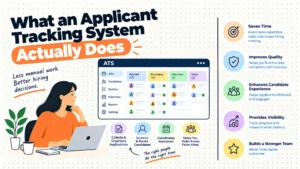
A place to post roles and receive applications. A pipeline with stages and a status per candidate. Collaboration, meaning notes, feedback and some notion of a hiring team. And basic reporting, meaning counts by stage and by source.
That set is genuinely useful and for many companies it is the whole requirement. The cost surprises come from the distance between that list and what a company actually needs on day one, which usually includes at least two of the things in the next section.
Two structural variables also sit inside the base licence and move the figure more than any module.
The tier. Vendors with tiers put specific capabilities above specific lines, and the capability your security or finance team treats as mandatory is frequently one tier above the obvious starting point. Workable publishes its tiers, which makes the shape visible: read on 10 October 2026, Standard is $299 per month or $3,588 per year, Premier is $599 per month or $7,188 per year and Enterprise is $719 per month or $8,628 per year.
The headcount or volume band. Many quotes are banded, and the band boundary is rarely volunteered. A company at 140 people growing to 190 may cross one inside the contract term, which is a mid-term increase nobody budgeted. Ask where the boundaries are and what happens when you cross one.
The Nine Things Priced Separately
Not every vendor charges for every one of these. Every vendor charges for some of them, and the list is what an itemised quote should be checked against.
Single sign-on. Covered in detail below because it has a published example. Frequently mandatory for a security team and frequently not in the base tier.
Candidate texting or SMS. Usually metered rather than flat, which means the cost scales with activity in a way the licence does not.
Assessments. Either a partner product billed separately or a module. Either way it is rarely included, and it is the thing most likely to be added in the second year.
Background and reference checking. Almost always a third party with its own per-check cost, which belongs in a cost-per-hire figure even when it is not on the platform's invoice.
Sponsored job posting. The platform may let you post free; promoted placements are paid, and the spend is often larger than the licence for a company hiring in a competitive market.
Advanced reporting or analytics. The basic counts are included. The cuts anybody actually asks for in a board meeting are sometimes a tier up.
Additional user seats. Where the model is per-seat, this is the line that grows quietly, because hiring managers get added one at a time and nobody reviews the total.
API access and specific integrations. Sometimes tiered, sometimes a named connector at a price, sometimes genuinely included. Ask about the specific integrations you need by name rather than about API access in general.
Implementation and data migration. A one-off, sometimes substantial, and the line most often left out of a verbal indication. It belongs in the first-year figure.
| Line | Usually included | Typical shape | Belongs in your figure |
|---|---|---|---|
| Posting, pipeline, collaboration | Yes | Base licence | Yes |
| Basic reporting | Yes | Base licence | Yes |
| Single sign-on | Often not | Flat monthly add-on or a tier | Yes, if security requires it |
| Texting or SMS | No | Metered per message block | Yes, estimate from volume |
| Assessments | No | Module or third party | Yes, if you will use them |
| Background checks | No | Third party, per check | Yes, in cost per hire |
| Sponsored posting | No | Spend, not licence | Yes, and often the largest line |
| Advanced analytics | Sometimes | A tier above | Yes, if anybody will read it |
| Extra seats | Depends on model | Per user per month | Yes, forecast the count |
| API and named connectors | Varies | Tier or per connector | Yes, ask by integration name |
| Implementation | No | One-off | Yes, amortised over year one |
The One Published Example of a Paid Add-On
Most of the section above is a description of how quotes work rather than something you can verify, because the vendors do not publish their module structure. One vendor does, and it is worth citing precisely because it converts a suspicion into a documented fact.
Ashby's pricing page is a configurator rather than a list. Read on 10 October 2026, at the default company size and payment selection it returned around $400 per month for its all-in-one foundations tier, and it showed two add-ons alongside: candidate texting at $90 per additional thousand messages, and single sign-on at $100 per month.
Two things follow, and both are useful beyond this one vendor.
The first is that single sign-on being a priced add-on is a real pattern rather than an anecdote. If your security team treats it as mandatory, it belongs in every quote comparison as a line item you ask about by name, and a vendor that includes it has a genuine advantage that will not appear in any feature matrix.
The second is about the headline figure itself. A configurator output at a default setting is not a list price, and it moves with the company size and term you select, so a company of 140 people may see something quite different. Because that distinction disappears when a number is copied into a comparison article, the figure gets reproduced as a flat monthly rate, and a buyer anchors on it. Treat any single number you see quoted for this platform elsewhere as one reading of a configurator at one setting.
So a worked example of how the lines add up. Taking the configurator output at that default plus the published single sign-on add-on gives $400 plus $100, which is $500 per month, or $6,000 a year before texting, implementation or anything else. That is not a quote for anybody and it is not a claim about what the vendor charges your company. It is an illustration that a mandatory add-on moved the annual figure by a quarter, from one published page, which is the whole point of itemising.
Who Publishes What, Verified
The state of transparency in this market, checked and dated, because it determines what kind of exercise your evaluation is.
Workable publishes a readable list with monthly and annual rates for three tiers, read on 10 October 2026 and given earlier in this article.
Ashby publishes a configurator with two visible add-ons, read on 10 October 2026, as described above.
Greenhouse publishes no price, confirmed on its own site on 10 October 2026. Note also that greenhouse.io now redirects to greenhouse.com, which matters if you hold older links or internal documentation.
Lever publishes no price, confirmed on its own site on 10 October 2026.
For comparison in the adjacent HR platform market, BambooHR publishes list pricing: read on 6 October 2026, Core is $10 per employee per month, Pro is $17 and Elite is $25, above 25 employees, with flat rates of $250, $425 and $650 per month at 25 employees and under. It is cited here only as evidence that published pricing is possible in this neighbourhood rather than as an alternative.
And one general caution worth more than any of the figures. Pricing pages change, and they change in both directions. Two vendors in adjacent markets moved in opposite directions within a few weeks: one removed its published figures entirely in favour of a quote request form, while another that had been widely described as publishing nothing turned out to publish a full list. So read the page yourself and write down the date, because the alternative is repeating something that was true once.
The Billing Basis Trap
The single most common pricing misstatement in this market, and it costs buyers real money in comparisons.
The mechanism is simple. A vendor publishes two numbers, a monthly rate and a lower effective monthly rate available only on annual commitment. A comparison article, or an internal spreadsheet, records the lower number without the condition. The buyer then compares a competitor's genuine monthly rate against a rival's annual-commitment rate and concludes the second is cheaper by a wide margin when the actual difference is much smaller or reversed.
Three rules prevent it.
Carry the basis with the number, always. Never write a figure in a comparison without the words monthly or annual beside it. In a spreadsheet, make it a separate column rather than a note, because notes get dropped when rows are sorted.
Convert everything to an annual figure as the first step. Not a monthly one. Annual is the figure finance will approve, it absorbs the discount question, and it makes the implementation fee easy to include.
Ask what happens if you need to stop. An annual commitment with a lower rate is cheaper only if you keep it for the year. A company hiring in bursts, or one that may be acquired, should price the flexibility explicitly rather than taking the discount by default.
Workable's own published figures show the shape: the annual rates are labelled as a saving against the monthly ones, which is exactly the structure that produces the error when the label is dropped. The same pattern appears across software markets and is worth treating as the default assumption rather than the exception.
Five Questions People Ask First
"What should an ATS cost?" There is no published market answer and anybody giving you one is quoting a configurator default or a single negotiated outcome. The useful version of the question is what it should cost per hire for you, which you can answer from your own hire count once you have an annual figure, and which turns an unanswerable question into arithmetic.
"Is the implementation fee negotiable?" Usually more negotiable than the licence, because it is a one-off and does not affect the vendor's recurring revenue figure. It is therefore the first thing to ask about reducing, and asking for it to be waived in exchange for an annual commitment is a conventional trade rather than a cheeky one.
"Why does the price depend on headcount if we are buying recruiting software?" Because headcount is a proxy for hiring volume that is easier to verify than hiring volume. It also means a growing company crosses bands, so ask where the boundaries are and what happens mid-term. A company that expects to grow 40 per cent inside the contract term should negotiate the band in advance rather than discover it.
"Can we start on a lower tier and move up?" Almost always yes, and the question that matters is what the uplift is and whether it is contractual. Starting low and moving up is a reasonable strategy when the uplift is known. It is an expensive one when the second-year figure is discretionary.
"How much should we budget for sponsored posting?" More than people expect, and it is the line most likely to exceed the licence entirely. It is also the one genuinely variable cost here, which makes it the right place to run a small test before committing a budget rather than estimating from somebody else's benchmark.
How to Build a Comparable Figure
Five steps, about two hours, and it is the only way to compare quotes that are structured differently.
Step one: get everything itemised. A line per module, a line for implementation, a line for seats with the assumed count, and the discount for annual commitment stated separately. Ask politely and repeatedly. A bundle total is not comparable to anything.
Step two: convert to one annual figure per vendor. Include the implementation fee in the first-year figure and show years two and three separately, because the renewal uplift is where quote-based pricing diverges most.
Step three: add the lines that are not on the vendor's invoice. Background checks at your volume. Assessment costs if you will use them. Sponsored posting. These are costs of hiring rather than costs of software, and leaving them out produces a tidy comparison of the wrong thing.
Step four: divide by planned hires. The per-hire figure is what makes three differently shaped quotes legible to a finance team and to you. It is also the figure that makes a low-volume purchase obviously questionable, which is useful information.
Step five: write down the number you consider reasonable, before any quote arrives. The annual figure and the per-hire figure you would approve, and the number above which you would walk away. This is the only available protection against anchoring, and in a market with no published prices anchoring is the main mechanism by which buyers overpay.
| Step | Output | Why it matters |
|---|---|---|
| Itemise | A line per module and for implementation | A bundle total compares to nothing |
| Annualise | One figure per vendor, years one to three | Absorbs the discount and the uplift |
| Add non-invoice costs | Checks, assessments, sponsored spend | Otherwise you compare the wrong thing |
| Divide by hires | A per-hire figure | Makes differently shaped quotes legible |
| Pre-commit | Your own reasonable and walk-away figures | The only defence against anchoring |
The Per-Hire Number
Worth isolating, because it is the figure that changes decisions and the one nobody calculates.
Using the one published list available, the arithmetic is straightforward. Workable's Standard tier at $3,588 per year is $179 per hire at twenty hires, $239 per hire at fifteen hires and $449 per hire at eight hires. Those are simple divisions of a published annual figure, not quotes, and they show how sharply the per-hire cost moves with volume while the licence stays still.
Three things to do with that number.
Compare it against the next best use of the same money. At $239 per hire, the alternatives include a few hours of somebody competent rewriting your adverts, a referral bonus, or a sourcing contractor for a week. At three hundred hires a year no alternative competes with software. At eight it is a genuine comparison, and making it explicitly is the difference between a decision and a default.
Use it to test a quote-based vendor in the room. Ask for an annual figure and divide it by your hire count in front of them. It is a short, polite and revealing conversation, and it moves the discussion from features to value in one step.
Track it after the first year. The per-hire figure in year two, with the actual hire count rather than the planned one, is the honest assessment of the purchase. Companies that plan forty hires and make twenty-two have doubled their per-hire software cost without anybody noticing, because the invoice did not change.
How to Choose: Five Questions Before You Ask for a Quote
What is mandatory from security and finance, by name? Single sign-on, specific data handling, audit requirements, named integrations. Get the list before the first conversation, because these are the items most likely to be above the tier you would otherwise pick and the ones that change a quote most.
What is your realistic hire count, and your headcount at the end of the term? Both. The first gives you the per-hire figure. The second tells you whether you will cross a band mid-contract, which is a question to settle in the negotiation rather than in month nine.
Which two modules would you drop? Decide before the quote. Asking a vendor what the figure looks like without those two is the most straightforward negotiation lever available and it tells you how much of the bundle is load-bearing.
Who will be a user, and how many of them in a year? For per-seat models this is the line that grows. Forecast it honestly, including hiring managers who will log in twice, and get the per-seat figure in writing.
What would you pay? Annual and per-hire, written down before you hear a number. If you skip every other step, do this one.
The Comparison
| Vendor | Publishes a price | Pricing shape | Visible add-ons | What you still have to ask |
|---|---|---|---|---|
| Workable | Yes, list with monthly and annual | Flat, three tiers | Not published | Implementation, integrations, posting spend |
| Ashby | Configurator output | Depends on size and term | Texting metered, single sign-on monthly | Your own configuration, implementation |
| Greenhouse | No, confirmed 10 Oct 2026 | Quote | Unknown until quoted | Everything, itemised |
| Lever | No, confirmed 10 Oct 2026 | Quote | Unknown until quoted | Everything, itemised |
| BambooHR | Yes, list pricing | Per employee, with flat small-company rates | Not published | Whether hiring is on your tier |
The last column is the real content of this table. Even the vendor with a published list leaves three significant lines unpublished, which is why an itemised quote matters as much for a transparent vendor as for an opaque one.
The Decision Table
| Situation | Scale | Setup | Primary Pain | Recommended Starting Point |
|---|---|---|---|---|
| Security requires single sign-on | Any | Quote with the add-on named | A mandatory feature above the base tier | Ask every vendor the price by name, up front |
| Growing 40 per cent inside the term | Any | Band boundaries agreed in the contract | A mid-term increase nobody budgeted | Negotiate the band, not just the rate |
| Hiring in bursts, quiet quarters | Any | Monthly billing, or a pause clause | An annual discount that assumes a full year | Price the flexibility rather than taking the discount |
| Comparing a monthly rate to an annual one | Any | One annual figure per vendor | The most common pricing misstatement | Convert everything to annual as step one |
| Per-seat model, managers added one by one | 100 plus | Seat count forecast, in writing | A line that grows without review | Forecast seats for a year, get the rate in writing |
| Under 20 hires a year | Under 20 | Flat pricing or an existing module | Per-hire cost of a platform priced for volume | Run the per-hire division before anything else |
| Quote arrived before you set a number | Any | A pre-committed reasonable figure | Anchoring on the first number heard | Write your own figure down, then reopen the quote |
| Sponsored posting spend unbudgeted | Any | A small test before committing | The line most likely to exceed the licence | Test on one role, measure, then budget |
Negotiating Without a Market Price
With no published reference point, the negotiation rests on structure rather than on knowing what others pay.
Lead with the one-off. Implementation and migration fees are more negotiable than recurring licence, because they do not affect the recurring revenue figure the vendor is measured on. Ask for a reduction or a waiver in exchange for something you were going to do anyway, such as an annual commitment.
Trade term for rate, deliberately. A longer commitment should buy a lower rate and a capped renewal uplift. The cap matters more than the rate, because an uncapped year-two uplift recovers a first-year discount quietly and the conversation is much harder once you have migrated.
Ask for the modules you would drop to be removed, and see what happens. Either the price falls, which tells you what they were worth, or it does not, which tells you the bundle is the product. Both answers are useful.
Get the seat definition in writing. What counts as a user, whether a hiring manager who only leaves feedback counts, and what happens when you exceed the count. This is where per-seat models produce surprises, and it is a one-sentence clarification.
Name your decision date and keep it. Vendors have quarters and the end of one is a real thing. Being ready to sign on a specific date is worth more than any argument about value, and it is honest, because the only alternative to a date is drift.
And ask for the reference customer at your size to tell you what they pay. Many will not, and some will say something useful about the shape of their quote, which is more than any article can give you in a market where almost nothing is published.
The Annual Module Audit
The cheapest recurring action in this article, and the one that compounds. Once a year, a month before renewal, list every module in your contract and mark each used, partly used or unused.
Do it from the admin interface rather than from the contract, because the contract tells you what you bought and the interface tells you what is switched on. Then ask the two or three people who use the platform daily to confirm each line, since an administrator's view of what is in use is reliably more optimistic than a user's.
Three things come out of it. A list of modules nobody opens, which is your negotiation material and the only credible way to ask for a lower figure without claiming a competitor would be cheaper. A list of modules switched on and half configured, which is usually where the real missed value is, because the capability was bought deliberately and then abandoned when somebody left. And a short list of things people are doing manually that the platform already does, which is a training gap rather than a purchasing one.
Then take the unused column into the renewal conversation and ask what the figure looks like without it. Either the price falls, which tells you what those modules were worth, or it does not, which tells you the bundle is the product and you should stop treating the modules as separable.
And record the per-hire figure at the same time, using the actual hire count for the year rather than the planned one. Because the invoice does not change when the hire count falls, a year of slower hiring doubles the per-hire cost of the software invisibly, and the renewal is the only moment anybody is going to look. A company that writes that number down every year has a three-point trend after three renewals, which is more negotiating evidence than any market benchmark would give it.
Testing Sponsored Posting Before Budgeting It
Sponsored posting is the line most likely to exceed the licence and the only genuinely variable cost in this article, so it is the one line worth measuring rather than estimating. This article says to run a small test instead of borrowing somebody else's benchmark. Here is the test.
Pick one role you are definitely hiring for, not a hypothetical. It has to be real, because the thing you are measuring is the quality of applications and a fake role produces no decisions.
Post it unsponsored first, for one week, and count. Applications received, and of those, how many you would interview. The second number is the only one that matters and it is the one nobody records. Ten applications with three worth interviewing is a better result than eighty with two.
Then sponsor the same role for one week, with a small fixed budget, and count the same two numbers. Same advert, same week of the month if you can. You are looking for the change in the second number rather than the first, because sponsorship reliably increases volume and the question is whether it increases usable volume.
Divide the sponsored spend by the extra interviewable applications. That figure is your cost per usable application, and it is the only defensible basis for a sponsored posting budget. It varies enormously by role and by market, which is exactly why a benchmark from another company is useless to you.
Then repeat it once on a different kind of role, ideally one you find harder to fill. The two results usually differ by more than people expect, and the finding is almost always that sponsorship is worth a lot for one category of role and close to nothing for another. That is a budgeting rule you can defend, and it replaces a flat annual number with a per-role decision.
Two cautions. Do not run the sponsored week first, because an unsponsored week following a sponsored one is contaminated by the earlier reach, and the baseline is the number you need. And resist judging the test on applications per pound, which is the metric every posting product reports and the one that rewards volume over fit.
So the output is two numbers and a sentence: sponsorship costs roughly this much per usable application on roles like this, and roughly that much on roles like that. Two weeks and a small budget buys you that, and it converts the largest variable line in your hiring cost from a guess into a decision. It also gives you something concrete to say when a posting product quotes you a package rate, which is the situation this spend is most often committed in.
What Getting This Wrong Costs
The visible cost is overpaying, and without a published price you will never confirm whether you did. That uncertainty is itself a cost, because it recurs at every renewal.
The second cost is a budget that is wrong in its first year, which damages the person who approved it more than the company. The three differences in the opening example, a tier boundary, a mandatory add-on and an implementation fee, are each individually defensible and collectively a number that looks like poor control. The fix is entirely procedural: itemise, annualise and pre-commit, which takes two hours.
The third is buying a bundle and using a third of it. Because the modules are priced in and the capability exists, nobody experiences the unused two thirds as a cost, so it persists through renewal after renewal. The test is to list every module in your contract once a year and mark each used, partly used or unused, then take the unused column into the renewal conversation. That single annual exercise is worth more than any negotiation tactic in this article.
And the reframing question: if your hire count next year is half what you planned, what will this cost per hire, and would you still sign it? If the answer is no, you are relying on the plan rather than on the purchase, and the flexibility is worth negotiating for even at a higher headline rate.
When You're Ready to Run a Proper Procurement
The honest position is that at the sizes most companies buy this, the procurement effort is small and the discipline is what is missing rather than the expertise.
The point at which it is worth doing properly is not a spend threshold. It is whenever more than one vendor quotes on request, which in this market is almost always, because that is the condition under which the first number heard becomes the benchmark. One quote-based vendor on your shortlist is enough to justify the two hours.
The sequence costs nothing. Get the mandatory list from security and finance, by name. Write your realistic hire count and your end-of-term headcount. Decide which two modules you would drop. Forecast your seat count for a year. Then write down the annual figure and the per-hire figure you consider reasonable, and the number above which you would walk away, and do it before you hear anything.
Then ask every vendor for a line per module, a separate implementation line, a stated seat count, the annual discount shown separately and the renewal uplift for years two and three. Convert everything to one annual figure, add the costs that are not on the invoice, divide by your planned hires, and compare. That produces a table a finance team will approve in one meeting, and in a market where two of the best-known vendors publish nothing at all, it is the only benchmark that is going to exist.
Frequently Asked Questions
What does an applicant tracking system actually cost?
There is no published market answer, because most vendors in this category publish nothing. Workable publishes a readable list with monthly and annual rates for three tiers, read on 10 October 2026, and Ashby publishes a configurator whose output depends on the company size and term you select. Greenhouse and Lever both publish no price, confirmed on their own sites on 10 October 2026. The useful question is what it costs per hire for you, which becomes arithmetic once you have an annual figure and your own planned hire count.
Which ATS features are usually charged as add-ons?
Nine lines recur: single sign-on, candidate texting, assessments, background checks, sponsored job posting, advanced analytics, additional user seats, API access or named integrations, and implementation or data migration. Not every vendor charges for all of them, but every vendor charges for some, which is why an itemised quote matters more than a bundle total. Ask about each by name rather than in general, particularly single sign-on, which security teams often treat as mandatory and which is frequently above the base tier.
Is single sign-on included in an ATS?
Often not, and there is a published example rather than only anecdote. Ashby's pricing page showed single sign-on as a monthly add-on alongside its configurator output when we read it on 10 October 2026, which documents the pattern clearly. If your security team requires it, put it in every quote request by name and treat a vendor that includes it as having a real advantage, because that advantage will not appear in any feature comparison and can move an annual figure by a noticeable share.
Why do ATS vendors quote instead of publishing prices?
The commercial reason is that it allows pricing per customer, and the effect on you is that no reference point exists to judge a quote against. The practical consequence worth planning for is anchoring: the first number you hear becomes your benchmark, and everything afterwards feels like an increase rather than information. The defence is to write down the annual figure and the per-hire figure you consider reasonable before any quote arrives, and to require itemised pricing so that differently structured bundles can be compared at all.
How do you compare ATS quotes that are structured differently?
Convert everything to one annual figure per vendor, including the implementation fee in year one and showing years two and three separately so the renewal uplift is visible. Then add the costs that will not appear on the vendor's invoice, such as background checks at your volume, assessments and sponsored posting spend. Finally divide by your planned hires to get a per-hire figure, which is what makes three differently shaped quotes legible to a finance team and is the number a low-volume buyer most needs to see.
What is the annual billing trap in software pricing?
A vendor publishes a monthly rate and a lower effective monthly rate that is only available on annual commitment, and a comparison records the lower number without the condition. The buyer then compares a genuine monthly rate against a rival's annual-commitment rate and reaches the wrong conclusion. Workable's own published figures have exactly this structure, with the annual rates labelled as a saving. Carry the billing basis as a separate column rather than a note, because notes get lost when a spreadsheet is sorted.
Should we negotiate the licence or the implementation fee?
Start with the implementation fee. It is a one-off and does not affect the recurring revenue figure a vendor is measured on, which makes it more negotiable than the licence, and asking for it to be reduced or waived in exchange for an annual commitment is a conventional trade. Then negotiate a cap on the renewal uplift rather than only the first-year rate, because an uncapped year-two increase quietly recovers a first-year discount and the conversation is far harder once you have already migrated.
HROpsLab takes no vendor money and publishes no paid placements, which is why every figure here carries the date it was read and the derived ones carry their arithmetic.