
TL;DR
- At low volume, divide the annual licence by the number of hires. The figure that comes out is the number the decision should be made on, and almost nobody calculates it.
- Flat monthly pricing is structurally better than per-seat pricing here, because per-seat models charge for recruiters a company at this volume does not have.
- Two things are genuinely not optional: a single place every application lands, and a record of why each person was not progressed. Everything else can wait.
- You can skip scheduling automation, interview scorecards, analytics and most integrations until volume justifies them. At fifteen hires a year they cost configuration effort and return very little.
- A spreadsheet plus a dedicated inbox is still the right answer more often than vendors admit, and it fails in three specific, recognisable ways rather than gradually.
- The real cost at this volume is not the licence. It is a hiring manager's time, and no platform saves much of it below a certain number of applications.
Three Thousand Five Hundred and Eighty-Eight Pounds of Software for Eleven Hires
A 70-person company bought an applicant tracking system after a bad hiring quarter. The business case was sound in every respect except one: nobody divided the annual figure by the number of hires.
The following year the company made eleven hires. The platform was used properly, the HR coordinator liked it, and the hiring managers used it to leave feedback about half the time. By any ordinary measure the implementation succeeded.
Then a budget review asked what the tool cost per hire and the answer was over three hundred pounds a hire for the software alone. That was not a scandal and it was not necessarily the wrong purchase, but it had never been stated, so nobody had ever compared it against the alternatives at that number. For three hundred a hire you can buy a lot of things, including several hours of somebody competent writing a better job advert, and the company had not considered any of them because the comparison had been between applicant tracking systems rather than between uses of the money.
Best tools for Applicant Tracking (ATS)
That is the whole problem at low volume. The market is priced for companies hiring hundreds of people and sold to companies hiring a dozen, and the per-hire arithmetic is the one number that makes the difference visible.
The Arithmetic Nobody Runs
Take the annual licence figure, not the monthly one, and divide it by your realistic number of hires next year. Not your optimistic number.
Using the one employer-side platform in this market that publishes a readable list, the shape of the result is clear. Workable's Standard tier was $299 per month or $3,588 per year when read on 10 October 2026, labelled as a saving against monthly billing. At twenty hires that annual figure is $179 per hire. At fifteen hires it is $239 per hire. At eight hires it is $449 per hire.
None of those numbers is outrageous and all of them are worth knowing before signing, because they reframe the question. The decision is not whether $3,588 is a reasonable price for recruiting software, which it plainly is. It is whether $239 per hire buys more than the next best use of $239 per hire.
Three things follow from running this.
Annual billing matters more at low volume than anywhere else. A fixed annual cost spread over few hires is sensitive to the licence figure in a way a cost spread over three hundred hires is not. Where a vendor publishes a discount for annual commitment, the per-hire difference is material rather than marginal.
Pausing is worth asking about. A company hiring in bursts may have two quiet quarters. Monthly billing with the ability to stop, where a vendor allows it, can cost less in total than an annual commitment despite the higher headline rate. Ask the question explicitly, because it is rarely volunteered.
Per-seat pricing is the wrong shape. At this volume you have no recruiters, you have one coordinator and several hiring managers who log in occasionally. A model that charges per user either costs more than it should or forces you to share a login, and sharing a login destroys the audit trail that is one of the two things actually worth having.
| Hires next year | Annual licence spread over them | What it should be compared against |
|---|---|---|
| 20 | $179 per hire | A better advert, or a day of sourcing help |
| 15 | $239 per hire | Two hours of a specialist writing the role |
| 8 | $449 per hire | A referral bonus, or a job board campaign |
The right-hand column is the point. At three hundred hires a year, software is obviously cheaper than any alternative use of the money. At eight, it is a genuine comparison, and the comparison should be made deliberately rather than avoided.
When a Spreadsheet Is Genuinely Still Right
When the manual way is genuinely fine
Up to about eight hires a year, with one person coordinating and a dedicated email address every application arrives at, a spreadsheet with eight columns is honestly adequate. It is free, instant to change, and shapes itself around how you work rather than the reverse. Buying a platform at this volume buys you process consistency, which is a real benefit, and you should be clear that it is what you are paying for.
When friction starts appearing
The first signal is a candidate experience failure rather than an internal one. Somebody is not replied to, or is replied to twice, or is told different things by two people. The second is a hiring manager asking where a candidate is and nobody being able to answer without opening an inbox. Both are recoverable with discipline, and both recur.
When it becomes a liability
The point at which you cannot say why somebody was not progressed. That is different from inefficiency because it is external, it may be asked about later, and reconstructing it from memory is both unreliable and uncomfortable. This is the single strongest argument for a system at any volume, and it is about the record rather than the workflow.
The edge case that forces it
Hiring in a burst. Three roles at once, each with forty applications, which is the same annual volume arriving in a fortnight. A spreadsheet survives a steady trickle and not a burst, and companies that hire in bursts should assume their peak rather than their average when deciding.
Five Questions People Ask First
"Is there a free option?" Some vendors offer free tiers and some job boards include basic tracking with a posting. We have not verified the current terms of any free tier for this article and nobody should rely on a general comparison for that, since free tiers change more often than paid ones and usually carry limits on open roles or users. Check the vendor's own page, note the date, and specifically look for what happens when you exceed the limit.
"Can we use our HR platform for this?" Possibly, and it is worth checking before buying anything separate, because a hiring module you already have is cheaper than a hiring module you buy. Confirm against your own contract rather than the vendor's marketing, since the module may be on a tier above yours, and confirm that it stores a reason for rejection, which is the part most likely to be thin.
"How many applications before we need something?" Volume of applications matters more than volume of hires, and the threshold most people feel is somewhere around forty applications for a single role. Below that a person can hold the whole picture. Above it, reading becomes a task with a queue and the queue needs a status.
"What about scheduling?" Scheduling automation is the feature most oversold to low-volume buyers. It saves meaningful time when you are coordinating dozens of interviews a week against several calendars. At fifteen hires a year it replaces a handful of emails a month, and the configuration effort exceeds the saving in the first year.
"Will hiring managers actually use it?" Usually not consistently, and planning for that is more useful than hoping otherwise. At low volume a manager touches the system a few times a year, which is not often enough to remember how it works. The design that survives is one where the manager receives an email, clicks once, and types into whatever opens. Any flow that requires them to log in and find their way to the right screen will be answered verbally instead.
What You Actually Need at This Volume
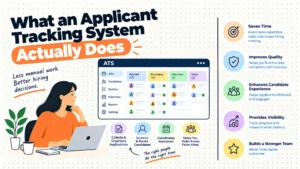
Four things, and the list is shorter than any product's feature page.
One place every application lands. Not a shared inbox that people also use for other things. One destination, with nothing arriving anywhere else, which usually means one email address on every advert and a rule that applications sent elsewhere get forwarded rather than answered.
A status per candidate that somebody maintains. Five values are enough: new, reading, in process, offer, not progressing. More than about seven and nobody keeps them current, which produces a status field that lies, which is worse than no status field.
A reason recorded for everybody not progressed. One line, written at the time. This is the thing that is genuinely not optional and the thing most spreadsheets omit, because writing it feels like administration in the moment and is the only part anybody wants in a year's time.
A way to reply to everybody. Including, and especially, the people you are not progressing. At fifteen hires a year this is the whole of your employer reputation in the markets you hire from, and it costs a template and ten minutes a week.
That is the requirement. A tool that does those four things well is better for this buyer than a tool that does those four adequately and thirty others brilliantly, because the thirty others are configuration work that returns nothing at this volume.
What You Can Skip
Worth being specific, because every one of these will be demonstrated to you and each sounds obviously useful.
Scheduling automation. Covered above. Revisit it when somebody is coordinating more than about five interviews a week.
Structured scorecards. Genuinely valuable for consistency and genuinely expensive in adoption effort, because they require hiring managers to complete a form reliably. At a few hires a year, managers will not build the habit. A written summary in a free-text box, which they will do, is worth more than a structured form they will not.
Analytics and funnel reporting. At fifteen hires a year the sample size is too small for a conversion rate to mean anything. Two bad quarters and two good ones are indistinguishable from noise. Skip the dashboards and look at the individual hires instead, which at this volume you can actually do.
Most integrations. The exception is your calendar and your email, which should work without any setup. A connection to your HR platform is pleasant and saves retyping one record per hire, which is a small saving fifteen times a year.
Career site customisation. A page that lists your roles and loads on a phone is enough. The time spent on brand treatment at this volume is better spent on the adverts themselves, which is where the actual difference in applicant quality comes from.
Sourcing and outbound tooling. Only relevant if somebody is actually going to spend hours a week sourcing, and at this volume that person usually does not exist. If they do, that changes the requirement substantially and the tool should be chosen for them.
The Two Things That Are Not Optional
Both of these are about the record rather than the process, and both are cheap.
Every application in one place
The failure this prevents is the one that damages you externally. When applications arrive in two inboxes and a careers page and somebody's direct messages, the probability that one person is ignored entirely approaches certainty, and you will not know it happened. At low volume each individual candidate is a larger share of your reputation, because the people you reject this year are a small enough group to talk to each other.
So the practical step is to audit it rather than assume it. Post a role, then list every route by which somebody could apply, including forwarding from an employee, a reply to a job board, a direct message to a founder and an email to a general address. Every route that does not end in the same place is a gap.
A written reason for every rejection
One line, at the time, in the record. Not a code from a list, which produces a field full of the first option. A sentence.
Two reasons this matters. The first is that you may be asked, at some point, why somebody was not progressed, and the honest answer written at the time is worth considerably more than a reconstruction. What obligations apply to you around record keeping and data retention differ by jurisdiction and by circumstance, so take local advice on that rather than relying on this article. The second reason is internal and more immediate: the reasons, read together after three roles, are the single most useful diagnostic available about your own hiring. Because the reasons are written individually and read collectively, they surface patterns nobody notices in the moment, such as a requirement in the advert that is eliminating people you would have hired.
How to Choose: Five Questions Before You Talk to Any Vendor
What is your realistic hire count next year, and your peak month? Both numbers. The first gives you the per-hire arithmetic and the second tells you whether you are a steady trickle or a burst, which changes the answer more than the total does.
How many applications does a typical role attract? This is the number that determines whether you need a queue with a status. If the answer is twelve, you do not. If it is a hundred and twenty, you do, even at eight hires a year.
Who will maintain the status field? One named person. If the honest answer is that it will be shared among hiring managers, assume it will not be maintained and choose accordingly, which usually means choosing something simpler.
Does your existing HR platform include hiring, on your tier? Check the contract. A module you already have beats a product you buy, and the only thing to verify is whether it stores a written rejection reason.
What would you do with the money instead? The honest version of the per-hire comparison. At $239 a hire, name the alternative. If you cannot think of a better use, buy the software with confidence. If you immediately think of three, that is informative.
The Options
Only one of these publishes a readable list price, and at low volume the pricing model matters as much as the figure. Dates are given against everything.
Workable
Best for low-volume hiring among the employer-side platforms, specifically because of its pricing shape rather than its feature depth.
Read on 10 October 2026: Standard at $299 per month or $3,588 per year, Premier at $599 per month or $7,188 per year, and Enterprise at $719 per month or $8,628 per year, with the annual figures labelled as a saving against monthly billing.
The structural advantage at this volume is that it is flat rather than per-seat, which means hiring managers logging in a few times a year do not each add cost. Spread over fifteen hires, Standard is $239 per hire, which is the figure to compare against alternatives.
Where it struggles: it is still priced for a company hiring more than twenty people a year, and at eight hires the per-hire figure of $449 invites a genuine comparison with doing it manually. Confirm what is in the Standard tier against your own four requirements rather than the feature list.
Ashby
Best for a well-funded company with a data-led talent function and somebody whose job is hiring, which is a precise description and is not this buyer.
Its pricing page is a configurator rather than a list. At the default company size and payment selection it returned around $400 per month for its all-in-one foundations tier when read on 10 October 2026, with candidate texting at $90 per additional thousand messages and single sign-on at $100 per month as add-ons. The headline number depends on the size and term you select, so it is a configurator output rather than a flat price and should never be quoted as one.
Where it struggles for this buyer: the product's centre of gravity is analytics and funnel depth, which needs volume to be meaningful. At fifteen hires a year the sample size cannot support the thing the product is best at.
Greenhouse
Best for mid-market and larger employers building a consistent, structured process across many hiring teams.
It publishes no price, confirmed on its own site on 10 October 2026. Note that greenhouse.io now redirects to greenhouse.com, which matters if you hold older links.
Where it struggles for this buyer: the structure that is its strength is adoption work, and adoption work is the thing low-volume hiring cannot sustain, because managers do not touch the process often enough to form habits.
Lever
Best for employers who want candidate relationship management alongside tracking, which implies somebody doing outbound work.
It publishes no price, confirmed on its own site on 10 October 2026.
Where it struggles for this buyer: the relationship-management capability assumes a person spending hours a week on it. Without that person it is capability you are paying for and not using, which is the most common failure mode of a low-volume purchase.
Your existing HR platform's hiring module
Best when you already have one on your tier, which is more often than companies check.
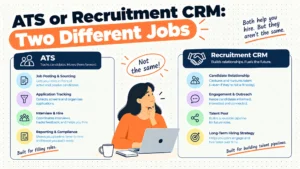
The attraction is that the marginal cost may be zero, and the record lands in the same place as the employee record, removing the one integration worth having. BambooHR, for context on pricing in that neighbourhood, publishes list figures: read on 6 October 2026, Core is $10 per employee per month, Pro is $17 and Elite is $25, above 25 employees.
Where it struggles: hiring modules inside HR platforms vary enormously, and the part most likely to be thin is exactly the part that matters here, which is a written rejection reason stored against the candidate. Verify that specifically.
A spreadsheet and a dedicated inbox
Best up to about eight hires a year with modest application volumes and one person coordinating.
Free, instant, and shaped to your process. It does the four required things if you make it, and the discipline required is real but small: one destination, five statuses, a written reason, a reply to everybody.
Where it struggles: bursts, application volumes above about forty for one role, and any situation where more than one person maintains it. It also provides no structural protection against the single-destination failure, which has to be enforced by convention.
The Comparison
| Option | Publishes a price | Pricing shape | Per-hire at 15 hires | Right at this volume |
|---|---|---|---|---|
| Workable | Yes, list pricing | Flat monthly or annual | $239 on the Standard tier | Yes, if volume is near 20 |
| Ashby | Configurator output | Depends on size and term | Not comparable, configure it | No, needs volume for its strengths |
| Greenhouse | No | Quote | Unknown until you ask | No, adoption cost too high |
| Lever | No | Quote | Unknown until you ask | No, assumes an outbound person |
| Existing HR module | Varies by contract | Already paid, possibly | Possibly zero marginal | Often, check the rejection reason field |
| Spreadsheet and inbox | Free | None | Zero | Yes, up to about eight hires |
The fourth column is the one to fill in for every vendor you speak to, including the quote-based ones. Asking a vendor for an annual figure and dividing it by your hire count in front of them is a short conversation and it changes the character of the discussion.
The Decision Table
| Situation | Scale | Setup | Primary Pain | Recommended Starting Point |
|---|---|---|---|---|
| Steady trickle, one coordinator | Under 8 hires | Spreadsheet, one inbox, five statuses | Nothing structural yet | Keep it. Add a written rejection reason |
| Hiring in bursts, three roles at once | Any annual total | A real queue with status | A spreadsheet that survives a trickle, not a burst | Plan for the peak month, not the average |
| One role attracts over a hundred applications | Any | Status field somebody maintains | Reading becomes a queue | A platform, even at low annual volume |
| HR platform already includes hiring | Any | Check your own tier first | Paying twice for the same job | Verify the rejection reason field, then use it |
| Candidates receiving no reply | Any | One destination, one template | Applications arriving by five routes | Audit the routes this week, before buying |
| Cannot say why somebody was rejected | Any | A written line, at the time | An external question you cannot answer | Start recording it today, in whatever you have |
| Somebody sourcing for hours each week | Any | Tool chosen for that person | Outbound work with no system | Lever or similar, scoped around sourcing |
| Volume approaching twenty hires | 15 to 25 | Flat-priced platform | Per-seat models charging for occasional users | Workable, with the per-hire figure stated |
Running a Hire Well Without a Platform
If the arithmetic says to wait, this is what good looks like in the meantime. It is a process rather than a tool and it takes about an hour to set up.
One inbox, named, used for nothing else. Not a person's address and not a general one. Every advert carries it, and anybody who receives an application elsewhere forwards it there and replies to nobody.
A sheet with eight columns. Name, role, source, date received, status, reason if not progressing, next action, and who owns the next action. Eight is enough and twelve is too many, because a sheet that takes two minutes per candidate to update does not get updated.
Three email templates, written once. Acknowledgement, invitation to interview, and a decline. The decline is the one worth spending twenty minutes on, because it is the one most people send badly or not at all, and at this volume it is most of your reputation among people who did not get the job.
A standing fifteen minutes, weekly, in a calendar. Update the sheet, send the replies, chase the next actions. This is the entire operational overhead and the reason low-volume hiring breaks is almost always that this slot does not exist rather than that the sheet is inadequate.
A written summary after each interview, within the day. Free text, three or four sentences, in the sheet or a document linked from it. Not a scorecard. The test of whether it is good enough is whether you could read it in six months and remember the person.
And read the rejection reasons together after every third role. Fifteen minutes, all of them in one list. This is the diagnostic that no low-volume company does and that returns more than any analytics module would at this sample size, because the patterns in a list of twenty written reasons are legible to a human in a way a conversion rate from twenty candidates is not.
Writing the Decline Email
This article says the decline template is worth twenty minutes and most of your reputation, so here is what it should contain. At twelve hires a year you will send perhaps a hundred of these, to people who know each other, and it is the only communication most applicants will ever have from you.
Say no plainly, in the first line. Not after two paragraphs of thanks. Somebody opening the email knows what it is within a second either way, and a delayed answer reads as evasion rather than kindness.
Name the role and the date they applied. People apply to many places and a message that does not identify itself is a message they have to work at. One clause does it.
Give one specific reason where you honestly can. Not a critique, and not a template phrase about the strength of the field. Something true and short: we were looking for more experience with a particular thing, or the role has been filled by somebody with a background closer to what the team needed. If you cannot say anything specific without it being unfair or unclear, say that the decision was close and leave it there rather than inventing a reason.
Say what happens to their details. Whether you will keep them and for how long, or whether you will not. Keep this consistent with whatever your actual retention practice is, since what applies to you differs by jurisdiction and circumstance and is a matter for local advice rather than a template.
Leave out the invitation to apply again unless you mean it. A line encouraging future applications, sent to somebody you would not hire, generates a second application and a second decline. Send it only to the people you would genuinely want back, which at this volume you can decide individually.
And send them in a batch, from the weekly slot, within a week of the decision. Because the single most common failure at low volume is not a badly written decline but no decline at all, the mechanism matters more than the wording: a template plus a standing slot beats a thoughtful message that waits for somebody to feel ready to write it.
What Getting This Wrong Costs
The visible cost is overspending on software, and at these figures it is a few hundred pounds a hire. Real, and the smallest of three.
The second is a hiring manager's time, which is the expensive input nobody prices. At low volume a manager is reading applications, interviewing and deciding, in among their actual job. A platform saves them very little of that, because the time is in reading and talking rather than in administration. So a business case that promises to save manager time at fifteen hires a year is promising something the tool cannot deliver, and the disappointment that follows is usually attributed to the software rather than to the business case.
The third is the reputational cost of an unanswered applicant, and at this volume it is proportionally larger than at any other. A company hiring three hundred people a year that fails to reply to someone has made an error in a large population. A company hiring twelve has made an error in a small one, among people who know each other and who are the pool you will hire from next year. This is the cost that a process fixes and a platform merely assists with.
And the reframing question, which is the per-hire arithmetic in words: for what this costs per hire, what else could you buy, and would it produce a better hire? If the answer is no, buy it. If you are not sure, the answer is usually that the process is the gap rather than the tool.
When You're Ready to Move Beyond the Spreadsheet
The honest position is that the spreadsheet does not fail because of hire count. It fails because of application count, burst shape and the number of people maintaining it, and any of the three can arrive long before the annual total justifies a purchase.
Three markers, and one is enough. The first is a single role attracting more applications than one person can hold in mind, which is around forty. The second is hiring in bursts, where three concurrent roles produce the workload of a year in a fortnight. The third is more than one person maintaining the record, at which point convention stops being a control.
None of those is a headcount and none is an annual hire count, which is why a company making eight careful hires a year can be in better shape than one making eighteen chaotic ones.
The sequence that works costs nothing. Run the per-hire arithmetic with your realistic number and write the figure down. Audit every route by which somebody could apply and close the ones that do not lead to your single destination. Start writing a one-line reason for every rejection today, whatever you are using. Put the weekly fifteen minutes in a calendar with an owner. Then read twenty rejection reasons together and see what they tell you.
Do that and you will know whether you have a tool problem or a process problem, which at this volume is the only question that matters. And if you do buy, you will walk into the conversation with your per-hire figure, your peak month and your four actual requirements, which is a much shorter conversation than a feature tour and a considerably better position from which to ask a quote-based vendor for a number.
Frequently Asked Questions
What is the best ATS for a company hiring fewer than 20 people a year?
Among employer-side platforms, the one with the most suitable pricing shape rather than the deepest features, because flat pricing beats per-seat at this volume. Workable publishes a readable list, read on 10 October 2026, and being flat rather than per-seat means hiring managers who log in a few times a year do not each add cost. Before buying any of them, check whether your existing HR platform includes a hiring module on your tier, and verify that it stores a written reason for rejection.
How do you work out whether an ATS is worth it at low volume?
Divide the annual licence figure, not the monthly one, by your realistic hire count for next year. That per-hire number is what the decision should rest on and it is almost never calculated. Then name the alternative use of the same money per hire, such as two hours of somebody competent rewriting the advert, a referral bonus or a job board campaign. At three hundred hires a year software is obviously cheaper than any alternative; at eight it is a genuine comparison and deserves to be made explicitly.
Is a spreadsheet still acceptable for hiring?
Up to about eight hires a year with modest application volumes and one person coordinating, yes, and more often than vendors suggest. It needs four things to be adequate: one destination every application lands in, a status per candidate with no more than about five values, a written line explaining every rejection, and a reply to everybody including the people you decline. It fails on bursts, on single roles attracting more than roughly forty applications, and as soon as more than one person maintains it.
What ATS features can a low-volume hirer skip?
Scheduling automation, which replaces a handful of emails a month at this volume. Structured scorecards, because managers who hire twice a year will not build the habit and a free-text summary they will write is worth more. Analytics and funnel reporting, because fifteen hires is too small a sample for a conversion rate to mean anything. Career site customisation beyond a page that loads on a phone. And sourcing tooling, unless somebody is genuinely going to spend hours a week on outbound work.
Which applicant tracking systems publish their pricing?
Workable publishes a readable list with monthly and annual rates for three tiers, read on 10 October 2026. Ashby publishes a configurator rather than a list, so its figure depends on the company size and payment term you select and should not be quoted as a flat price. Greenhouse and Lever both publish nothing, confirmed on their own sites on 10 October 2026, and greenhouse.io now redirects to greenhouse.com. For any free tier, check the vendor's own page with the date you read it, since free tiers change more often than paid ones.
What is the one thing a low-volume hirer must record?
A written reason, one line, for every person not progressed, entered at the time rather than reconstructed later. It matters for two separate purposes. You may be asked at some point why somebody was not progressed, and a contemporaneous note is worth far more than a recollection, though what applies to you around record keeping differs by jurisdiction and is a question for local advice. And read collectively after three roles, twenty written reasons are the most useful diagnostic available about your own hiring at this sample size.
Will hiring managers use an applicant tracking system at low volume?
Usually not consistently, and designing around that is more productive than hoping otherwise. A manager who touches the system a few times a year will not remember how it works, so any flow requiring them to log in and find something will be answered verbally instead. The pattern that survives is an email they can click once, which opens something they can type into. When evaluating, test that specific journey rather than the administrator's view, because the administrator is not the adoption risk.
HROpsLab takes no vendor money and publishes no paid placements, which is why the per-hire figures here are shown with their arithmetic and the vendors that decline to publish a price are named as declining.