TL;DR
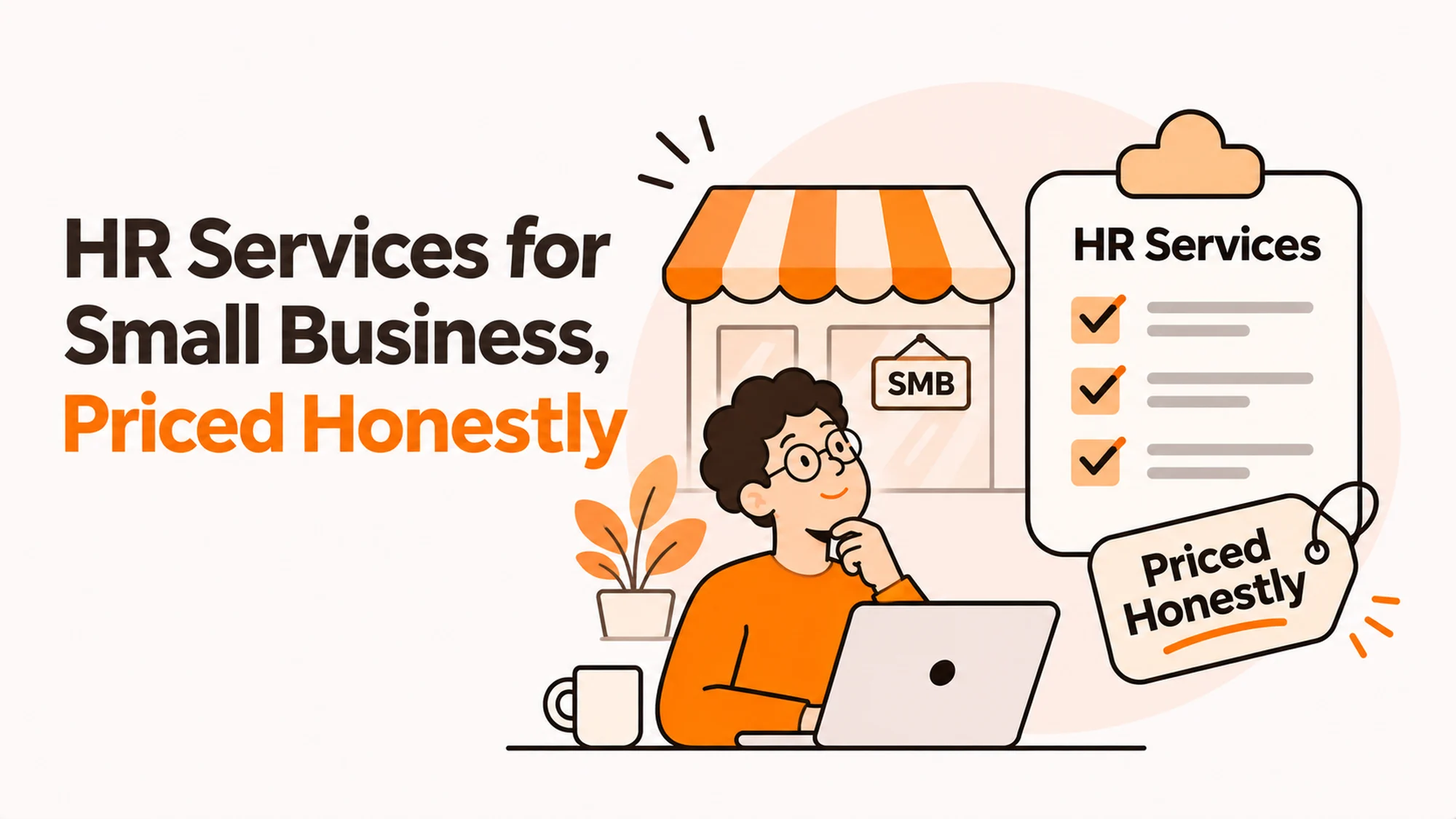
HR services for small business arrive as bundles because bundles are easier to sell. Almost every small company needs three or four of the components and ends up paying for nine, which is worth unpicking before signing.
- Bundles are a sales shape, not a need.
- Four components matter at this size.
- Software and service are separate purchases.
- Per-employee pricing punishes growth.
- Nothing physical is in any package.
- Buy in the order things actually break.
Why everything arrives as a bundle
Worth understanding, because it explains the shape of every quote you will see.
Selling one component to a small company is expensive relative to its value. The sales effort is similar whether the contract is small or large, so providers bundle to raise the value of each sale.
Best tools for HR Operations
That is rational and it is not a conspiracy. It does mean the package reflects what is efficient to sell rather than what you need, and the overlap between those two is partial.
What follows
Work out your components first, then find who sells them, rather than evaluating packages and deciding which you can live with. The second approach reliably ends with paying for things nobody uses, because they were in the middle tier.
The four that matter
At under about a hundred people, four components do nearly all the work.
Payroll. Must be right, must be on time, and is genuinely specialist once more than one jurisdiction is involved. The clearest case for buying rather than doing.
Contracts and documentation. Templates adapted to your company and kept current. Mostly a one-off with occasional updates rather than an ongoing service, which is worth noticing when something is priced monthly.
Somewhere to keep records. A single place for employee data, documents and leave. Usually software rather than a service, and frequently bundled with things you do not need.
Access to advice when something is difficult. A grievance, a dismissal, a dispute. Infrequent, high stakes, and the thing small companies most often lack entirely.
Almost everything else, engagement surveys, performance frameworks, learning platforms, is genuinely optional at this size. Useful later, rarely the thing standing between you and a functioning company now.
Software and service are different purchases
A distinction bundles deliberately blur, and separating them usually saves money.
An HR system is software: a place for records, documents and leave requests. It needs configuring once and maintaining lightly. Priced per employee per month, usually modestly.
An HR service is people doing work: processing payroll, writing documents, answering difficult questions. Priced on effort, however it is presented.
Bundled together, the service margin hides inside the software price and you cannot tell what either costs. Separated, you can buy a cheap system and expensive advice, which is the right combination for most small companies, since the advice is what you cannot do yourself.
| Component | Software or service | Buy when |
|---|---|---|
| Payroll | Service | Immediately |
| Records and documents | Software | Past a spreadsheet, roughly 25 people |
| Contracts and templates | One-off service | First hire, then on change |
| Advice on difficult cases | Service | Before you need it |
| Engagement and performance | Software | Later than vendors suggest |
Per-employee pricing punishes growth
The pricing model nearly everything in this market uses, and it has a specific consequence.
Per employee per month is predictable and it means your cost rises linearly with headcount while the work does not. Doubling from thirty to sixty people roughly doubles the bill and nothing like doubles the effort for the provider, because the hard part was setup.
Three things to negotiate rather than accepting the rate card. A banded price that steps down as you grow. A cap for the contract term. Or a flat fee for a headcount range, which is the simplest and the easiest for a provider to agree.
Ask also what counts as an employee. Contractors, part-timers, people on leave and leavers still in the system are treated differently by different providers, and that definition can move the bill by a tenth without anybody discussing it.
defending an HR budget is relevant if you need to present this internally, because a cost that scales automatically with headcount is the kind finance notices in year two rather than year one.
Nothing physical is in any package
The consistent finding across this whole batch, and it is as true at this size as at any other.
No HR services package covers buying a laptop, shipping it to somebody’s home, replacing it when it fails, recovering it when they leave, or disposing of it with evidence.
For a small company this frequently lands on a founder or an office manager, who absorbs it because at ten people it happens rarely. At forty it is a recurring task that nobody has been given and nobody is measuring.
The honest way to handle it is to decide whether to own it or buy it, and to put it in the budget either way. choosing an equipment partner without an IT team covers choosing somebody when there is no IT function, which is the normal situation at this size.
There is a related obligation worth knowing about for home-based staff. the HSE guidance on home working sets out why what you provide for somebody working at home is a real consideration rather than a perk, and no HR package covers that either.
Buy in the order things break
Practical sequencing, based on what actually fails as a company grows.
- Payroll, at the first employee. Non-negotiable and the one thing where being wrong is immediately visible to everybody.
- Contracts, at the first employee. A one-off cost that prevents a category of problem later.
- Somewhere to keep records, around twenty five people. When a spreadsheet stops being credible and nobody can find the signed version of anything.
- Access to advice, before the first difficult case. The one people buy reactively and should buy in advance, because the first grievance is a poor moment to be choosing a provider.
- Equipment logistics, at the second country or around forty people. Whichever arrives first.
- Everything else, later. Genuinely later.
Item four is the one worth pressing on. Reactive purchasing of advice means you are choosing under pressure, with one provider who can start this week, in the middle of the situation you needed help with.
The data questions at this size
Small companies hand employee data to suppliers more casually than larger ones, usually because there is nobody whose job it is to ask.
Four questions, and they take one email. Where the data sits. Who at the provider can see it and whether access is scoped. What happens to it if you leave, and in what format. And whether they can show basic security practice rather than assert it.
NIST’s small business cybersecurity resources is written for exactly this size of company and is the most useful free yardstick available. CISA and its Secure Our World guidance is plain enough to send to a colleague who is evaluating a supplier and is not technical.
The export question is the practical one. Employee records in a structure you can use are the difference between changing provider and starting again, and that difference costs nothing to secure at signing and a great deal to fix afterwards.
the NIST Cybersecurity Framework is the broader frame if a customer ever asks you to describe how you handle this, which happens earlier than most small companies expect.
What to say no to
Three things small companies are routinely sold and rarely need yet.
Performance management modules. At under fifty people, conversations work and a system mostly adds ceremony. Buy one when managers genuinely cannot keep track, not when a vendor explains best practice.
Engagement survey platforms. At this size you can ask people. A survey tool measures something you could find out by talking, and the gap between the two is largest when the company is small.
Learning platforms. Unless you have a compliance training obligation, this is usually a solution looking for a problem at small scale.
And a general rule worth applying to any proposal: if a component would not be missed next month were it switched off, it is not solving a problem you have. designing an HR operating model covers deciding what your HR function should actually do, which is upstream of what you should buy.
One closing point about the end of the equipment lifecycle, since it is the part small companies most reliably never plan. Machines will eventually leave, and doing that properly produces the evidence a future customer or auditor will ask for. NIST Special Publication 800-88 on media sanitization describes what that evidence is and the EPA on electronics and batteries management covers the responsible route. Setting it up before the first machine retires costs almost nothing; reconstructing it after the third one vanished costs a great deal.
Decide whether to own the physical half or buy it. See a managed laptop lifecycle service or laptop procurement across 80+ countries.
Frequently asked questions
What do hr services for small business usually bundle?
Payroll, documentation, a records system, an advice line and then several optional components such as performance, engagement and learning. The bundle reflects what is efficient to sell rather than what a small company needs, and the overlap is partial.
Which components actually matter under a hundred people?
Four: payroll, contracts and documentation, somewhere to keep records, and access to advice when something difficult happens. Almost everything else is useful later and is rarely what stands between you and a functioning company now.
Should we buy software and service together?
Usually not. Bundled, the service margin hides inside the software price and you cannot tell what either costs. Separated, most small companies are better off with a cheap system and expensive advice, because the advice is the part you cannot do yourself.
What is wrong with per-employee pricing?
Your cost rises linearly with headcount while the provider’s work does not, since the hard part was setup. Negotiate a banded price, a cap, or a flat fee for a headcount range, and ask exactly what counts as an employee.
Does any package cover equipment?
No. Buying a laptop, shipping it to a home, replacing it, recovering it and disposing of it with evidence sit outside every HR services package. At ten people a founder absorbs it; at forty it is a recurring task nobody was given.
In what order should we buy?
Payroll and contracts at the first employee, a records system around twenty five people, access to advice before the first difficult case rather than during it, and equipment logistics at the second country or around forty people, whichever comes first.
What should we decline?
Performance modules under about fifty people, engagement survey platforms while you can still just ask people, and learning platforms without a compliance obligation. If a component would not be missed next month if switched off, it is not solving a problem you have.