TL;DR
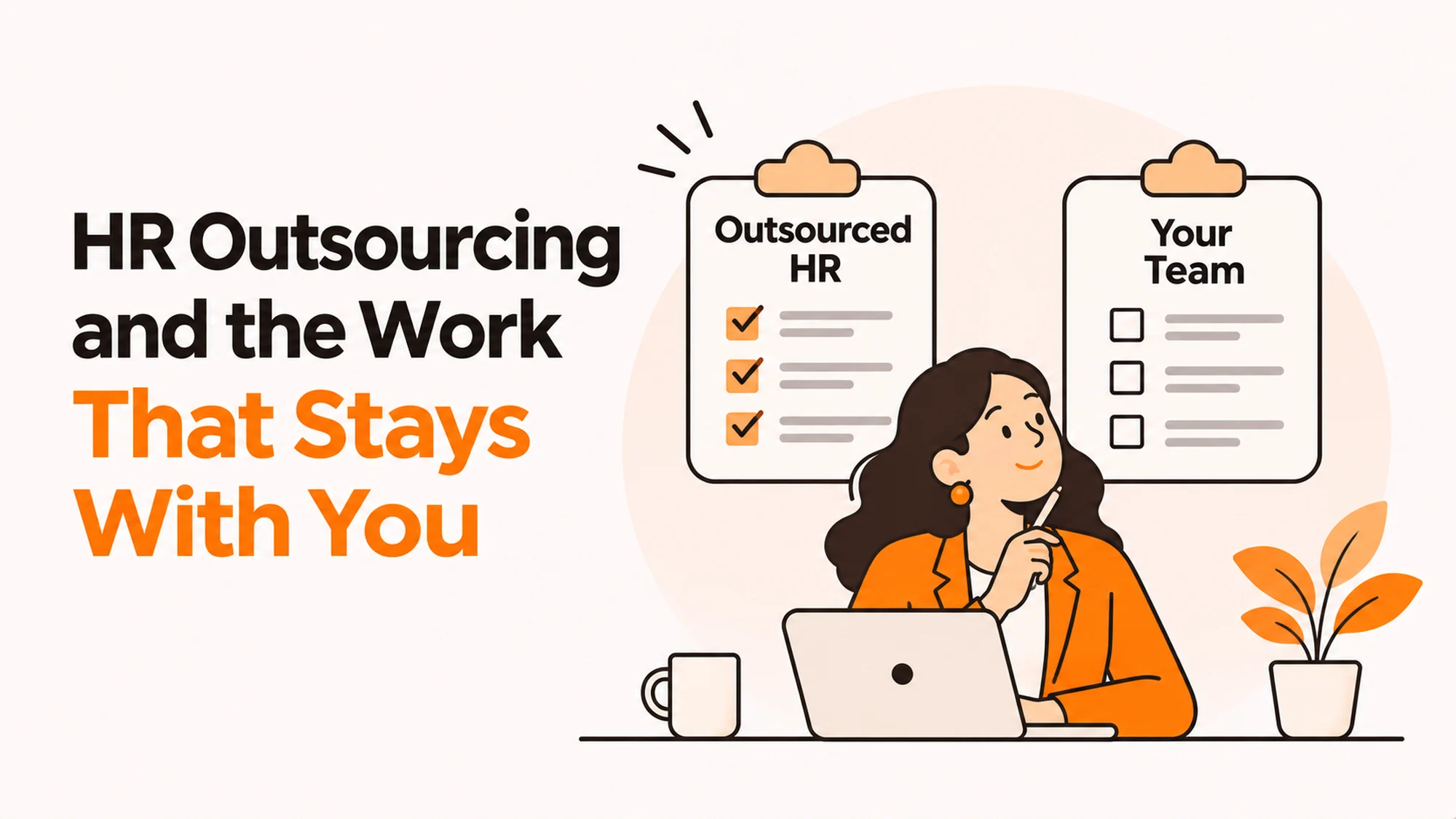
HR outsourcing is sold as handing over HR and delivers something narrower and more useful: it moves transactions. Judgement, relationships and anything physical stay exactly where they were, and knowing that in advance is the difference between a good decision and a disappointment.
- It moves transactions, not judgement.
- Anything needing context stays with you.
- Equipment is outside every agreement.
- You still need somebody who owns HR.
- Scope the exceptions, not the happy path.
- Measure what you got back, which is time.
What genuinely transfers
The honest description is narrower than the pitch and the narrow version is genuinely valuable.
What moves well is repeatable, rule-based and high volume. Payroll processing. Benefits administration. Document generation and storage. Answering the questions that have a documented answer. Compliance paperwork of the routine kind.
Best tools for HR Operations
Those share a property: somebody who does not know your company can do them correctly from a procedure. That is what makes them outsourceable, and it is also what makes them a good deal, because specialists do volume work better and cheaper than a generalist doing it between other things.
What that is worth
If your HR person spends a third of their week on payroll corrections and benefits queries, moving that out gets you a third of a person back for work only they can do. That is the actual return, and it is a better frame than cost comparison.
What stays, and why
Everything requiring context about your company, your people or your situation.
Judgement calls. A performance problem, a grievance, an accommodation request, a difficult exit. These need somebody who knows the history and will be there afterwards.
Relationships. Managers trusting HR enough to raise something early is a function of knowing the person. It does not transfer to a service desk.
Culture and design work. How you structure teams, what you reward, how you communicate change. Outsourceable in theory, useless in practice, because it is the part that has to be yours.
Anything physical. Equipment, workspace, anything arriving at somebody’s home. The section after next is about this one.
designing an HR operating model covers designing around that split properly. The short version is that outsourcing changes what your HR person does rather than whether you need one.
Equipment is outside every agreement
The gap this publication keeps finding, and it is as true here as on the IT side.
An HR outsourcing agreement will handle the contract, the onboarding paperwork, the payroll setup and the benefits enrolment for a new starter. It will not get a laptop to their house.
That is not an oversight. Shipping hardware requires suppliers, couriers, customs knowledge and somewhere to hold stock, which is a different business from processing payroll.
| Joiner task | Typically outsourced | Stays with you |
|---|---|---|
| Contract and offer paperwork | Yes | |
| Payroll and benefits setup | Yes | |
| Right to work checks | Often | |
| Ordering equipment | You | |
| Shipping it abroad | You | |
| Recovering it at exit | You |
The bottom three rows are where distributed teams spend real time, and they sit outside the agreement you just signed to save time. a managed laptop lifecycle service is the service shape that covers them, and choosing an equipment partner without an IT team covers choosing one when there is no IT function to lean on.
You still need somebody who owns HR
The most expensive misunderstanding available in this decision.
Outsourcing execution does not outsource accountability. Somebody internally still has to decide what the policies are, approve exceptions, handle anything sensitive, and manage the relationship with the provider itself.
Companies that outsource without naming that person end up with a provider making decisions by default, because somebody has to and the provider is the one being asked. Those decisions will be reasonable and generic, which is exactly wrong for the parts of HR that should reflect your company.
The role does not need to be full time or senior at smaller sizes. It needs to be named, to have authority, and to have time allocated rather than squeezed in.
what shared services actually centralise is relevant if you are weighing this against building an internal shared service, which is the same question asked from the other direction.
Scope the exceptions, not the happy path
Where these agreements are written badly, and it is the same failure as in IT contracts.
Any proposal will describe the normal case clearly. A standard hire in a standard location on standard terms. That case is easy and it is not where the cost or the friction lives.
Ask instead about the awkward cases, because they are what you will actually be ringing about.
- A hire in a country you have not used before. In scope, extra, or not at all.
- Somebody leaving at short notice, mid-pay-period, with equipment outstanding.
- A contractor who should probably be an employee, which is a judgement that differs by jurisdiction and by circumstance and needs your own adviser rather than a service desk.
- An accommodation request involving specific equipment, which crosses into the physical gap above.
- A pay correction after the run has closed.
Nothing in this article tells you what any of those situations requires legally, because that depends on where you are and the details, and the answer belongs with a local adviser. What this article can tell you is that the agreement should say who does what in each one, and most do not.
Measure what you got back
The right evaluation question, and almost nobody asks it.
Cost comparison is the obvious frame and it is the weaker one, because the honest answer is usually that outsourcing is roughly cost neutral at smaller sizes once you count the management overhead.
The real return is time, and specifically whose. If your HR person was spending a third of their week on transactions and now spends it on hiring quality, manager capability or retention, that is the gain. If they now spend it managing the provider, you have changed the shape of the work rather than reducing it.
So measure two things six months in. How many hours internally still go to the outsourced areas, and what the recovered time is being used for. Both are easy to estimate and uncomfortable to look at, which is why they get skipped.
A third worth watching: how often managers go around the provider and come to your internal person anyway. That number tells you whether the service is trusted, and it rarely appears in any report the provider produces.
The data question nobody asks early enough
Outsourcing HR means a third party holds employee records, which deserves more attention than it typically gets during a price comparison.
Three questions worth asking before signing. Where the data physically sits. Who inside the provider can see it, and whether access is scoped or general. And what happens to it when the agreement ends, in a form you can actually use.
That last one is the practical one. Getting your own employee records back in a usable structure, rather than as a locked export, is the difference between changing provider and starting again.
There is a device angle too, which is easy to miss. If the provider issues anything, or if equipment is bought through them, the records about who holds what may end up in their system rather than yours. the NIST Cybersecurity Framework treats knowing your assets as foundational, and a register you cannot export is not really yours.
NIST’s small business cybersecurity resources is a reasonable baseline reference for what a company of modest size should expect as standard from any supplier holding its data.
When outsourcing is the wrong answer
Three cases.
Your processes do not exist yet. Outsourcing an undefined process means buying somebody else’s defaults. If nobody has written down how hiring or offboarding works here, write it first, even roughly. The provider will otherwise decide and you will inherit it.
The real problem is capacity in judgement work. If your HR person is drowning in employee relations rather than admin, outsourcing payroll does not help. That needs another pair of hands with experience, not a service desk.
You are about to change shape significantly. An agreement scoped for your current geography and headcount can become expensive or ill-fitting quickly, and renegotiating from inside a term is weaker than scoping properly before one.
And one honest note about what this never covers. Whatever you outsource, somebody still has to get a laptop to a new starter in another country and get it back when they leave, with evidence that the data on it was dealt with. NIST Special Publication 800-88 on media sanitization describes what that evidence looks like and the EPA on electronics and batteries management covers the disposal route. Neither will be in your HR agreement, and both will be your responsibility on the day somebody asks.
The physical half is nobody else’s by default. See a managed laptop lifecycle service or a laptop retrieval service for remote employees.
Frequently asked questions
What does hr outsourcing actually transfer?
Repeatable, rule-based, high volume work: payroll processing, benefits administration, document generation, routine compliance paperwork and questions with a documented answer. Anything somebody can do correctly from a procedure without knowing your company.
What always stays with us?
Judgement calls, relationships, culture and design work, and anything physical. A performance problem or a difficult exit needs somebody who knows the history and will be there afterwards, which is not a service desk.
Does an HR outsourcing agreement cover equipment?
No. It will handle the contract, payroll setup and benefits enrolment for a new starter and will not get a laptop to their house. Shipping hardware needs suppliers, couriers, customs knowledge and storage, which is a different business from processing payroll.
Do we still need an internal HR person?
Yes, though the role changes. Somebody has to set policy, approve exceptions, handle anything sensitive and manage the provider. Without a named owner, the provider makes those decisions by default and they will be reasonable and generic.
What should we scope carefully?
The exceptions rather than the normal case. A hire in a new country, a short notice leaver mid-pay-period, an accommodation request involving equipment, a pay correction after the run closed. The agreement should say who does what in each.
How should we judge whether it worked?
By time recovered rather than cost saved, since outsourcing is often roughly cost neutral at smaller sizes. Measure how many internal hours still go to the outsourced areas and what the recovered time is being spent on six months in.
When is outsourcing the wrong move?
When your processes are undefined, because you will inherit the provider’s defaults; when the real bottleneck is judgement work rather than admin; or when you are about to change geography or size significantly and would be renegotiating from inside a term.