
TL;DR
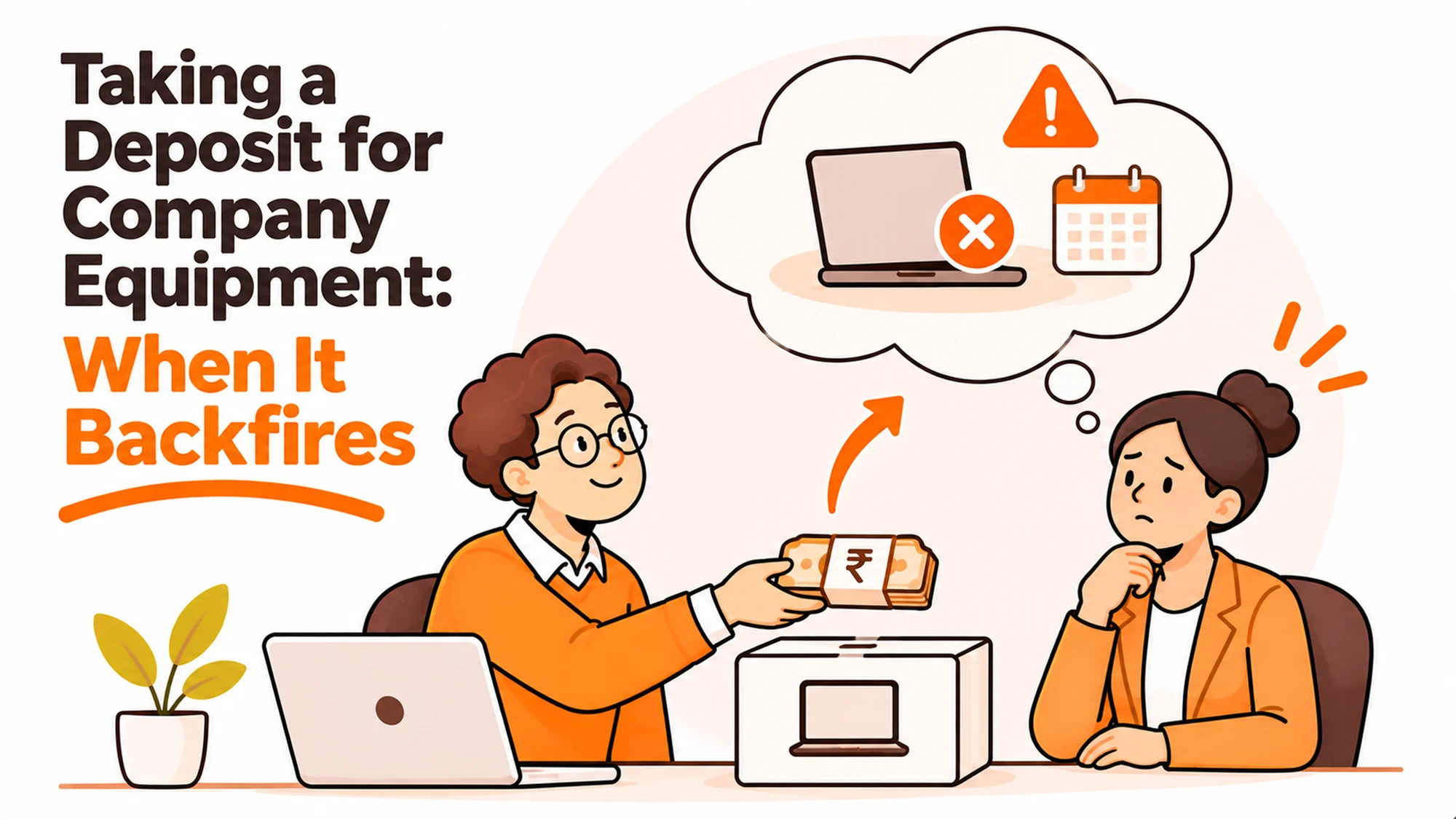
An equipment deposit policy comes up every time a laptop fails to come back. It is intuitive, it feels fair, and it is usually the wrong instrument. The returns problem is almost always caused by process rather than by intent, and a deposit addresses intent while adding administrative cost, legal exposure and a signal to new joiners that you expect them to steal from you.
- Deposits treat a process problem as a motivation problem.
- Deducting from pay is restricted in many places. Take advice.
- A deposit at the start lands on the people least able to afford it.
- The cost of administering it usually exceeds the recovery.
- Prepaid, booked collection beats a deposit every time.
- If you still want one, make it a final pay mechanism, not a charge.
Why it keeps being proposed
The conversation follows a pattern. Several laptops do not come back, somebody totals the value, and the obvious answer is to hold money against them.
The logic is sound if the cause is people choosing to keep equipment. The evidence rarely supports that cause.
Best tools for HR Operations
Look at the cases individually and the pattern is usually different. Nobody asked. The request went out from an address the leaver no longer monitored. The person was told to arrange a courier at their own expense. One email was sent and nothing followed. Or the device was in a country where the collection vendor does not operate.
None of those is solved by holding money. what to do about unreturned equipment covers the diagnosis in more detail, and it is worth doing before designing a deterrent for a motive that may not exist.
The question that settles it
Take your last ten non returns and write down, for each, the date the request was sent and how many times it was followed up. If the answers embarrass you, the problem is yours and a deposit will not fix it.
Treating equipment as a tracked asset with an owner and a return date, as ISO 55001 on asset management describes, closes more of this gap than any financial deterrent does.
Where this gets restricted
This is the part that gets discovered late, usually by a payroll manager with a worried expression.
Deductions from wages are regulated in many jurisdictions, and the rules differ on whether a deduction can be made at all, whether prior written consent is required, how specific that consent must be, and whether anything can be withheld from a final payment.
A policy written for one country and applied to a distributed team will be wrong somewhere. That is not a reason to avoid the question; it is a reason to ask it per country before writing anything.
HM Revenue and Customs and the relevant authority in each market are the starting points, and this is a case where local employment advice is cheap compared with getting it wrong across a workforce.
The practical consequence
A single global equipment deposit policy is usually not available to you. What you can have is a global return process and a local approach to anything financial, which is a more complicated document and a more defensible one.
Who a deposit actually lands on
Worth sitting with, because it changes how the proposal reads.
A deposit taken at the start falls hardest on the people with the least cash, which skews toward junior staff, early career hires and anyone who has just relocated for the job. The senior hire with savings does not notice it.
It also lands at the worst moment. Starting a job frequently involves moving, a gap in pay, or both.
And it says something. The first financial transaction between the company and a new joiner is the company taking money in case they steal.
| Mechanism | Falls hardest on | Signal sent |
|---|---|---|
| Deposit at start | Junior and relocating staff | We expect theft |
| Deduction from final pay | Anyone leaving | Transactional exit |
| Invoice after non return | Those who ignore it | Proportionate |
| Prepaid collection | Nobody | We make it easy |
The fourth row recovers more devices than the first three combined, in most teams that have tried both.
The administration nobody budgets
A deposit is not a line in a policy. It is a process with a lifecycle.
You have to take the money, account for it, hold it somewhere, track it per person, return it at the right moment, handle the cases where the device came back damaged, and resolve disputes. Multiply by every country you employ in.
Payroll and finance carry most of that, and it is recurring work against a one off recovery.
Then there is the failure mode that nobody plans for: the deposit is not returned promptly because the device has not been received yet, and the former employee raises a complaint. That conversation costs more in time than the laptop is worth.
Compare the alternative
A prepaid, tracked, pre booked collection costs a fixed amount per device and requires no ongoing administration at all. RemoAsset’s laptop retrieval service for remote teams is that arrangement, and the comparison is not close once the administrative cost is honestly included.
What actually improves returns
Five changes, in rough order of effect, none of which involves holding money.
Send a prepaid label with a booked collection slot. Not a request to arrange one. The difference in return rate is the largest single effect available.
Trigger on the leave event automatically. If a human has to remember, it will be late and sometimes absent.
Send it from somebody the person will answer. Their manager, not a shared mailbox.
Follow up twice on a schedule. Most returns that happen late happen after the second reminder.
Make the device easy to pack. A box that fits, with the label already attached.
That list is unglamorous and it is where the recovery actually comes from. RemoAsset’s laptop lifecycle management service runs it as a process rather than as a series of reminders.
If you still want a financial mechanism
There are real cases: high value kit, contractors in markets with no practical collection route, or a history that genuinely warrants it.
Build it as a final pay mechanism rather than a deposit at the start. Nothing is taken up front, the obligation is stated in the equipment agreement, and a deduction or invoice follows only when the device is not returned by a stated date.
Four conditions make that defensible. Specific written consent in the agreement, checked per jurisdiction. A stated return deadline. A stated value, agreed up front rather than invented afterwards. And a waiver route for genuine cases such as theft with a police reference.
what belongs in an equipment loan agreement covers what that agreement should contain. The value question is the one teams get wrong most often: charging the purchase price for a three year old laptop is neither fair nor defensible, and a depreciated figure holds up far better. equipment depreciation and what finance needs covers how finance already values it.
Say what happens on return
Including partial cases. Device returned damaged, returned without the charger, returned late. Decide those in advance, because improvising them case by case is how a policy becomes inconsistent and then becomes a grievance.
How to say it without poisoning the exit
However you structure it, the wording at offboarding sets the tone of somebody’s last impression of the company.
Lead with the logistics, not the liability. Here is the label, here is the collection date, here is what to remove first. Mention the financial consequence once, factually, at the end.
Avoid the common construction where the first line of the offboarding email is about money owed. People who were going to return the laptop now feel accused, and people who were not are unmoved.
Remember that the person probably has personal files on the machine and a short window to retrieve them. Giving them a date for that is both decent and practical, and it is covered alongside the wipe in RemoAsset’s data wiping and offboarding service.
The measure that tells you it worked
Not deposits collected. Devices received within thirty days of the leave date, as a proportion of devices due. If that number rises after a change, the change worked. If it does not, the deposit was never the lever.
[Two-CTA block: Case Studies | Talk to Expert]
Frequently asked questions
Does an equipment deposit policy improve return rates?
Rarely, because it treats a process problem as a motivation problem. Look at your last ten non returns individually and the pattern is usually that nobody asked, the request went to an address the leaver stopped monitoring, the person was told to arrange a courier themselves, only one email was sent, or the device sat in a country the vendor does not collect from. None of those is solved by holding money against the device.
Can we legally take a deposit or deduct from pay?
It depends entirely on jurisdiction and you need local advice before writing anything. Deductions from wages are regulated in many places, and the rules differ on whether a deduction is permitted at all, whether prior written consent is required, how specific that consent must be, and whether anything can be withheld from a final payment. A single global policy applied to a distributed team will be wrong somewhere.
Who does a deposit actually affect?
Disproportionately your junior staff, early career hires and anyone who relocated for the job, because those are the people with the least spare cash, and it lands at the moment they can least afford it. A senior hire with savings does not notice it. It also makes the first financial transaction between company and new joiner one where the company takes money in case they steal, which is a poor opening.
What does a deposit cost to run?
More than teams expect, because it is a process rather than a policy line. You take the money, account for it, hold it, track it per person, return it at the right moment, handle damaged returns and resolve disputes, in every country you employ in. That is recurring work against a one off recovery. The common failure is a deposit not returned promptly because the device has not arrived, which generates a complaint costing more time than the laptop is worth.
What actually improves returns instead?
Five changes, none financial. Send a prepaid label with a collection slot already booked rather than asking the person to arrange one, which is the single largest effect available. Trigger the request automatically on the leave event. Send it from somebody they will answer, such as their manager, not a shared mailbox. Follow up twice on a schedule. And make the device easy to pack, with a box that fits and the label attached.
If we do need a financial mechanism, how should it work?
As a final pay mechanism rather than a deposit at the start. Nothing is taken up front, the obligation sits in the equipment agreement, and a deduction or invoice follows only when the device is not returned by a stated date. Make it defensible with specific written consent checked per jurisdiction, a stated deadline, a value agreed up front using a depreciated figure rather than the purchase price, and a waiver route for genuine theft.
How should this be communicated at offboarding?
Lead with logistics and not liability. Here is the label, here is the collection date, here is what to remove first, with the financial consequence mentioned once and factually at the end. The common mistake is opening the offboarding email with money owed, which makes people who intended to return the device feel accused and leaves the people who were not going to return it entirely unmoved.