

TL;DR
- The core decision: what to explain to somebody before they live inside this arrangement.
- When doing nothing is right: when they understand it and it causes them no friction.
- What has to be true: they know what to say when somebody outside work asks.
- How the options split: by the moments where the structure surfaces in their week.
- Decision rule: explain it on day one, because nobody else will.
- Outcome to expect: the same arrangement, and a colleague who is not confused by it.
The Form Asks for Their Employer
Somebody on your team is filling in a form. Housing, credit, a visa, a school place, something ordinary that adults have to do. And there's a field asking who employs them.
They pause. They know who they work for in every sense that matters to them, and they also know that name won't match anything else they'd have to produce. So they put one name in the field and attach a document with a different one, and then there's an email asking them to clarify, and now they're explaining a structure they only partly understand to somebody who assesses applications for a living and has never seen this.
They sort it out, usually. What they don't do is mention it to you, because it feels like their problem, and because raising it would mean admitting they don't fully understand their own employment.
Best tools for Employer of Record (EOR) Tools
That's the reframe this piece runs on. Every structural feature of this arrangement shows up somewhere in that person's week, and almost all of those places are invisible from your side. You see a procurement decision and a monthly invoice. They see a name they can't explain, a support channel instead of a colleague, and a recurring low-level requirement to account for something they didn't choose.
None of that is a reason not to use the arrangement. It's a reason to explain it properly at the start, which almost nobody does, because the explanation falls into a gap: the provider onboards them administratively, your process ends at signature, and nobody's job description includes telling a person how their own employment is structured.
One boundary. What any institution accepts as proof of employment, and what anything means for somebody's own position, differs by country and by organisation. Nothing here is advice to any individual about their situation, and nobody should rely on it as such. If you're reading this because you're engaged this way, the specifics are worth establishing for your own circumstances.
When You Genuinely Do Not Need to Act Yet
They understand it and it causes no friction. Somebody explained it, they know what to say, and it doesn't come up as a problem. That's the destination.
They have never mentioned it. Not the same as it being fine. People generally don't raise this, partly because it feels like their own difficulty to manage.
Something has come up and they handled it alone. A form, an application, a question they fielded without you. Worth knowing about, because it will happen again.
The edge case that forces it. Somebody's application was delayed or refused and the arrangement was part of why. That's when the cost of never having explained becomes concrete and personal.
Five Questions This Reader Asks at 11pm
What do they actually see? A name they don't recognise on their payslip and engagement documents, a support channel for anything about their pay or benefits, a benefits package that may differ from colleagues', and a recurring need to explain their situation to people outside work.
Does it affect their life outside work? It can, in ordinary administrative ways. Applications that ask about employment, processes that want documentation, anything where an institution expects a straightforward relationship between a person and a company. None of it is insurmountable and all of it is friction they didn't ask for.
Should we explain it? Yes, on day one, in writing they can keep. It's the single highest-value thing available here and it costs one page. Left unexplained, they work it out from a payslip, which is a poor introduction.
Will they mind? Mostly not, if it's explained. People are generally fine with arrangements they understand and uncomfortable with ones they don't, and the discomfort is about the not-knowing rather than about the structure.
Which is why the page matters more than anything else you could change about the arrangement itself.
What if they're the only one? Frequently they are, and it's isolating in a way that's easy to miss. Nobody to compare notes with, an arrangement none of their colleagues share, and a sense that their situation is an exception rather than a normal way of working.
What They See That You Do Not
| The moment | What it looks like from their side | What it costs them |
|---|---|---|
| Their first payslip | An unfamiliar company name | A small jolt, repeating monthly |
| Signing their documents | Terms agreed with an organisation they never met | Uncertainty about their own position |
| A question about their pay | A support channel rather than a colleague | Time, and a sense of distance |
| Somebody asks where they work | Two answers, neither complete | Explaining, repeatedly, alone |
| An application asking about employment | Names that do not match | Delay, follow-up questions, effort |
| Comparing benefits with a colleague | A difference with no explanation | An inference about how they are regarded |
| Being the only one in the arrangement | No colleague who understands it | Isolation nobody acknowledges |
| Something goes wrong administratively | Two organisations, neither obviously theirs | Not knowing who to chase |
The fourth and fifth rows are the ones that recur and accumulate. Explaining your employment arrangement to a stranger is a small thing once and a persistent low-level cost when it happens every time you apply for anything.
The sixth row is different in kind because it concerns colleagues rather than strangers. A difference noticed inside the team is about standing rather than about paperwork, and it lands differently.
The seventh row is the one nobody thinks about from the buying side. In your organisation this is one arrangement among many things; for them it's a structure they hold alone, with no colleague who's been through it and nobody to ask whether something is normal.
The last row is where the practical difficulty concentrates. When something administrative goes wrong, a person with a normal arrangement knows who to chase. Somebody here has two organisations and no clear sense of which one owns the problem, and that uncertainty is enough to delay raising it at all.
Five Diagnostic Questions You Can Self-Assess Against
Has anybody explained it to them? Not whether it's explicable. Whether a specific person told them, at the start, in a form they can refer back to.
A named person and a date is the test. Anything vaguer usually means it did not happen.
Do they know what to say on a form? They'll be asked. If they don't have a ready answer, they'll improvise one in front of somebody assessing an application.
It is worth asking them what they have been putting. The answer tells you whether the explanation you gave has survived contact with a real form.
Do they know who produces documentation? For proof of employment, income, or whatever else gets requested. Discovering that mid-application is a poor moment.
Worth having them request something once, early, while nothing depends on it. A dry run costs nothing and removes the uncertainty from the occasion that matters.
Are they in your internal systems? Distribution lists, directories, whatever cycles prompt reviews and conversations. Absence from these is an administrative artefact that reads as exclusion.
Check it by looking rather than by asking whoever administers them, since the omissions are precisely the ones nobody has noticed.
Are they the only one? And if there are others, do they know about each other. That connection costs nothing and provides something nobody else can.
Ask these five of the person rather than about them. Every one of them has a better answer from the individual concerned, and asking is itself the intervention.
Six Points Where the Arrangement Shows Up for Them, Reviewed
The paperwork they sign at the start
Documents from an organisation they've never dealt with, in a form shaped by their country, setting out terms for a job with you.
Where it causes difficulty is comprehension and confidence. They're agreeing to terms with a party that isn't the company they think they're joining, and if nobody has explained the structure, that's a strange moment to have alone on day one.
It is also the moment least likely to produce a question. Nobody wants their first interaction with a new employer to be an expression of confusion about the paperwork.
Explain it before they see the documents rather than after. Somebody who knows why an unfamiliar name is on their contract reads it as administration; somebody who doesn't reads it as a surprise.
The timing is the whole of it. Day one is when somebody is forming a view of whether this organisation is straightforward with them, and a structural oddity explained in advance reads as competence while the same thing discovered reads as something nobody mentioned.
Offer to go through the documents with them if they want. Most will not take it up and the offer itself says that you regard this as a normal thing to have questions about.
The name on their payslip
Every pay period, a document with an organisation's name on it that isn't the company they'd name if asked where they work.
Where it causes difficulty is repetition and exposure. It's a small thing, it happens every month, and it's the document they'll produce whenever anybody asks for proof of anything, which means explaining it to strangers on a recurring basis.
The exposure is the part that wears. Explaining something once is nothing; explaining the same thing to a series of people who have never encountered it is a small recurring tax on ordinary life.
Tell them whose name will appear before the first one arrives. That single sentence converts a discovery into a detail.
It also matters for what they do with the document afterwards. Somebody who understands why the name is different can explain it confidently when a lender or a landlord asks, and somebody who does not will hesitate in a way that invites more questions.
Worth mentioning that the name may mean nothing to anybody they show it to. Knowing that in advance is different from finding out when somebody queries it.
Who they contact about their own benefits
A question about cover, a claim, something they need. It goes to a provider or a local scheme rather than to anybody they know.
Where it causes difficulty is timing and tone. These questions frequently arise at difficult moments, when somebody is dealing with a medical situation or a family matter, and a support channel in another country is a poor companion for that.
The response times that look acceptable in a proposal look very different to somebody waiting on an answer during something serious.
Make sure they have the details in advance, and make sure somebody on your side will help them chase if it stalls. Nobody should be working out a claims process during the event it exists for.
The offer to help chase is the part that matters most and costs least. A person dealing with something difficult, waiting on an unfamiliar organisation in another country, is in a position where having somebody on their side makes a real difference.
It is also worth knowing yourself what the process is, roughly. Being able to say something useful rather than redirecting them to a channel they have already tried is the whole value of being asked.
What they say when somebody asks where they work
A recurring social and administrative question with no short answer that's both true and complete.
Where it causes difficulty is that they're answering it alone, usually without warning, sometimes to people with a professional interest in the answer. Whatever explanation you gave them is what they'll use, and if you gave them nothing they'll invent something.
What they invent is usually reasonable and occasionally wrong in a way that matters, because they are reconstructing a structure from the fragments they can see.
Give them a sentence that works. Something they can say to a relative, a lender or an official that's accurate and doesn't require a diagram.
Short matters more than complete. An explanation that takes two minutes will not survive the moment it is needed, and the person will fall back on something vaguer rather than deliver it.
It is worth checking the sentence with them rather than handing it over. They know the contexts where they will be using it, and they will tell you whether it is something they could actually say.
Applying for something that requires proof of employment
Housing, credit, a visa, anything where an institution wants to understand somebody's employment and income.
Where it causes difficulty is mismatch. The names don't align, the documentation comes from an organisation the institution has never heard of, and follow-up questions arrive. What any particular institution accepts differs by country and by organisation, so the person needs to establish that for their own situation.
The unfamiliarity compounds it. An assessor who has seen an arrangement before handles it routinely; one who has not treats it as something to investigate.
Make sure they know who produces documentation and how to request it, before they need it. And be willing to help, because this is a moment where being obviously supported matters.
Lead times are worth establishing too. A document that takes a week to produce is fine when somebody knows that in advance and is a problem when they discover it against a deadline.
Where an application is genuinely important to somebody, a note from their manager alongside whatever the provider issues sometimes helps. It is not always accepted and it costs nothing to offer.
Being the only person in the company on this footing
No colleague in the same arrangement, nobody to ask whether something is normal, and a structure that makes them different in a way that isn't about their work.
Where it causes difficulty is that it's cumulative and unstated. Every individual item is small; the accumulation is a sense of being adjacent to the organisation rather than in it, and that shows up eventually as somebody deciding to leave rather than as a complaint.
Nobody resigns over a payslip name. People do leave jobs where they never quite felt included, and the arrangement supplies a steady supply of small reasons for that feeling.
Connect them with anybody else in the same position, if there is one. Where there isn't, the compensation is ordinary inclusion: making sure they're in the systems, the conversations and the cycles that everybody else is in.
Ordinary inclusion is doing more work in that sentence than it appears. Being in the directory, on the lists, in the review cycle and at the social things is what makes somebody part of an organisation, and each of those has to be checked rather than assumed for a person whose record sits somewhere unusual.
It is also worth asking them whether anything feels like it is passing them by. They will notice omissions long before anybody administering a system does.
The Decision Table
| Situation | Scale | Setup | Primary Pain | Recommended Starting Point |
|---|---|---|---|---|
| Explained, understood, no friction | Any | Live | None | Change nothing |
| Nobody has explained it | Any | Live | They worked it out from a payslip | One page, on day one |
| They have never raised it | Any | Live | Silence is not contentment | Ask them directly |
| No ready answer for a form | Any | Live | Improvising in front of an assessor | Give them a sentence |
| Documentation route unknown | Any | Live | Discovering it mid-application | Establish it now |
| Absent from internal systems | Any | Live | An artefact that reads as exclusion | Check every list |
| Only person in the arrangement | Any | Live | Isolation nobody acknowledges | Connect them, or include harder |
| Benefits difference unexplained | Any | Live | An inference about their standing | Explain the mechanism |
| Something administrative went wrong | Any | Live | Two organisations, no obvious owner | A named person on your side |
The second row is the one to fix this week and it costs a page. Somebody working out their own employment structure from a payslip is starting a job with a puzzle nobody meant to give them.
The ninth row is the one that surfaces the whole gap at once. Something administrative going wrong, with two organisations and no obvious owner, is where a person discovers exactly how little they were told.
The sixth row is the one that does damage without anybody deciding anything. Being missing from a directory, a distribution list or whatever prompts review cycles is an administrative consequence of the arrangement, and from the inside it's indistinguishable from being treated as peripheral.
The seventh row is the one with no administrative fix at all. Being the only person in an arrangement is not something a system can address, and the compensation is attention rather than configuration.
Explaining It Before They Ask
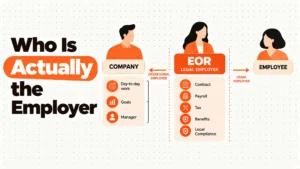
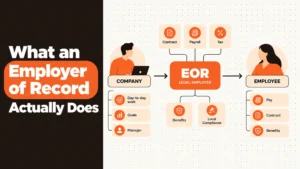
One page, on day one. Which organisation appears on their documents and why, who to contact for what, that their benefits are arranged locally so may differ, and who to ask about anything unclear. It's short and it's the whole intervention.
Written rather than said. A conversation on a first day competes with everything else on a first day, and a page can be reread in month four when it actually matters.
Give them a sentence they can repeat. Not an accurate description they can't summarise. Something usable in front of a relative, a landlord or an official who has thirty seconds.
Test it by saying it out loud. Anything that needs a second sentence to make sense will not survive the moment it is needed.
Tell them before the first payslip. A name explained in advance is administration. The same name discovered on a document is a small shock that recurs every month until somebody addresses it.
The same applies to anything else they will encounter. Surprise is the cost, not the structure.
Establish the documentation route early. Who produces proof of employment or income, and how to ask. Working it out during an application, through an unfamiliar channel, at a deadline, is a genuinely stressful position.
And find out the lead time. A document available in a day and one that takes a fortnight are different pieces of information for somebody planning around a deadline.
Check they're in everything. Directories, lists, whatever triggers review and development conversations. These omissions are accidental and they're read as something else.
Recheck after any system change. A migration or a new tool is exactly where a record that sits unusually gets left behind.
Name somebody they can ask anything. Including things that probably belong elsewhere. The routing will have gaps, and a person who hesitates because they're unsure where something goes will frequently not raise it at all.
Say explicitly that wrong-place questions are welcome. Without that, people apply their own judgement about what counts as appropriate and err towards silence.
The thing worth holding on to is that none of this is about the arrangement being wrong. It's a reasonable way to engage somebody in a country where you have no presence. What's unreasonable is leaving them to work out what it means on their own, when a page and a conversation would settle nearly all of it.
The arrangement is also frequently the only way that job existed at all. Somebody engaged this way has an opportunity they would not otherwise have had, which is worth remembering alongside everything that makes it harder than it needs to be.
Where These Arrangements Go Wrong
| The failure | How it shows up | What would have to change |
|---|---|---|
| Nobody explains the structure | Worked out from a payslip | One page, day one |
| No usable sentence for outside work | Improvising in front of an assessor | Give them the words |
| Documentation route unknown | A stressful mid-application scramble | Establish it in advance |
| Missing from internal systems | Accidental exclusion, read as deliberate | Check every list |
| Benefits difference unexplained | An inference about their standing | Explain the mechanism early |
| No catch-all contact | Things that go unraised entirely | A named person, explicitly |
The second row is the one that lands somewhere genuinely consequential. Somebody explaining their employment badly to a lender or an immigration process, because nobody gave them the words, is dealing with a real-world outcome produced by an internal omission.
The third row is the same failure with a deadline attached, which is what turns an inconvenience into something stressful.
The last row is the quiet one. A person uncertain where to take something takes it nowhere, and a manager who never hears anything concludes there's nothing to hear. The silence and the contentment look identical from your side and are nothing alike.
The fifth row is the version that accumulates into something larger. A difference in benefits, unexplained, becomes evidence for a conclusion about standing, and that conclusion then colours how everything else is read.
What to Put in Writing
| Artefact | Who owns it | When it is written | What it prevents |
|---|---|---|---|
| The one-page explanation | Whoever manages them | Before day one | Working it out from a payslip |
| A sentence they can use outside work | Whoever manages them | Day one | Improvising under pressure |
| Who produces documentation, and how | Whoever manages them | Day one | A mid-application scramble |
| The routing, plus a catch-all name | Whoever manages them | Day one | Things going unraised |
| Which internal systems they are in | Whoever manages them | First week | Accidental exclusion |
| Why benefits may differ | Whoever manages them | Day one | An inference they draw alone |
Every row on this table is written by the same person on the same day and takes about an hour in total. That's the entire intervention this article is recommending, and it's the hour most consistently not spent.
It is not spent because it belongs to nobody. Procurement finishes at signature, the provider handles administration, and the gap between them is exactly where this hour sits.
Questions to Ask Before You Commit
On explanation. Who tells the person how this works? A bad answer is onboarding.
On documents. What will they actually sign, and can we see it? A bad answer is local terms.
On support. What does contacting the provider feel like? A bad answer is dedicated support.
On proof. Who issues employment documentation, and how fast? A bad answer is on request.
On inclusion. Will they appear in our systems like everybody else? A bad answer is where relevant.
On others. Is anybody else engaged this way? A bad answer is not currently.
What Getting This Wrong Costs
The first cost is somebody explaining their own employment badly, to somebody who matters, because nobody gave them the words. A lender, a landlord, an official process. They improvise, the improvisation is imperfect, and an application is delayed or refused for reasons they can't fully account for. That's a real consequence in somebody's life, produced by an hour nobody spent.
And they are unlikely to tell you it happened. Something that went wrong in their personal affairs, connected to a work arrangement they do not fully understand, is not an easy thing to raise with a manager.
The second cost is accidental exclusion that reads as deliberate. Missing from a distribution list, absent from a directory, outside whatever cycle prompts review conversations. Each is an administrative artefact of the arrangement and none was decided. From the inside it's indistinguishable from being regarded as peripheral, and that impression forms quietly and is hard to reverse.
It is also cumulative in a way no single omission suggests. One missing list is an oversight; four of them, over a year, is a pattern that somebody will reasonably read as meaning something.
The third cost is silence mistaken for contentment. A person unsure who to raise something with raises it with nobody, particularly if it's sensitive or if they're the only one in this position. Nothing appears in any record, nobody on your side hears anything, and the first indication that something was wrong is a resignation with a general explanation attached.
The explanation given on the way out is usually about wanting something different, which is true and incomplete, and it leaves the arrangement unchanged for whoever comes next.
So do three things, and all of them take an hour between them. Write the one-page explanation and give it to them before their first day. Give them a sentence they can use when somebody outside work asks. And name a person they can bring anything to, including things that probably belong somewhere else.
Write the page once and reuse it. The second person engaged this way, in any country, needs almost exactly the same explanation with a few details changed.
When You Are Ready to Go Further
Start with the page, because it's the whole intervention and it's never been written. Which organisation is on their documents and why. Who to contact about pay and benefits. Who to contact about work. Why their benefits may differ from colleagues elsewhere. Who to ask about anything else. Five short paragraphs, given to them before they start, in something they can keep.
Ask somebody already engaged this way to read it before you use it, if you have anybody. They will tell you immediately what it fails to explain, because they worked all of it out themselves.
Then check they're actually in everything. Directories, distribution lists, whatever prompts review and development conversations, whatever social things exist. These omissions happen because a person's record sits somewhere unusual, nobody intends them, and they're among the clearest signals somebody can receive about whether they're really part of an organisation.
Go through the lists yourself rather than asking whether they have been added. The answer to that question is usually yes and the reality is frequently otherwise, because nobody knows which lists exist.
Finally, ask them how it's going, specifically about this. Not generally. Whether anything about the arrangement has caused them difficulty, whether they've had to explain it to anybody, whether anything is unclear. They almost certainly won't raise it unprompted, because it feels like their own problem to manage, and the question itself communicates something worth communicating.
Ask it more than once. The first answer is usually that everything is fine, and the second, a few months later, is frequently where something actually comes up.
HROpsLab publishes independent comparison work across HR tooling and global employment. We sell nothing, we take no vendor money, and we publish no paid placements. If the next step is seeing how the providers in this space describe themselves, our comparison work is one place to start.
Frequently Asked Questions
What is it like to be employed through an employer of record?
Mostly ordinary, with a set of small recurring frictions that people outside the arrangement don't see. An unfamiliar company name on the payslip and engagement documents. A support channel rather than a colleague for anything about pay or benefits. A benefits package that may differ from teammates' elsewhere. And a repeated need to explain the structure to people outside work who ask about employment. None of it is severe; all of it accumulates, particularly for somebody who's the only person in their company on this footing.
Whose name is on the payslip?
The provider's, in most arrangements, rather than the company the person would name if asked where they work. It's worth telling somebody this before their first payslip arrives, because a name explained in advance is administration and the same name discovered on a document is a small surprise that recurs monthly. It's also the document they'll produce whenever anybody asks for proof of anything, which means the explanation gets used well beyond the first month.
What do you tell somebody who asks where you work?
The honest everyday answer is the company whose work you do, whose team you're part of and whose manager you report to. Where a form or an official process asks specifically about the employing organisation, the answer involves the provider, and the two not matching is what generates follow-up questions. If you're engaged this way, it's worth asking your manager for a short sentence you can use, and worth establishing for your own circumstances what particular institutions in your country expect.
Does it affect getting a mortgage or a visa?
It can introduce friction, because institutions generally expect a straightforward relationship between a person and a company, and here the names don't align. What any particular lender, landlord or official process accepts differs by country and by organisation, so this isn't something anybody can answer generally and it's worth establishing for your own situation before you need it. What helps practically is knowing in advance who produces employment documentation and how quickly, rather than working that out mid-application.
Who does the person ask about their benefits?
The provider, or whatever local scheme has been arranged, rather than anybody at the company they work for. The awkward part is timing: these questions frequently arise during a medical situation or a family matter, which is a poor moment to be working out an unfamiliar claims process through a support channel in another country. Worth having the details in advance, and worth somebody at your own organisation being willing to help chase if it stalls.
Are they a real employee of your company?
They're a real member of your team in every sense that matters day to day: the work, the colleagues, the manager, the relationship. The formal position is a legal question whose answer differs by jurisdiction and by the specific arrangement, and it isn't something to characterise casually. The practical answer that helps somebody is the split: who directs the work, who handles the administration, and why a different name appears where they might not expect it.
What should you explain at the start?
One page, before day one. Which organisation appears on their documents and why. Who to contact about pay and benefits, and who to contact about the work. That benefits are arranged locally and may differ from colleagues elsewhere. Who produces employment documentation and how to request it. And a named person they can bring anything to, including things that probably belong elsewhere. It takes an hour to write and prevents nearly every difficulty described here.
What is it like being the only person on this arrangement?
Isolating in a way that's easy to miss from the outside. No colleague who's been through the same thing, nobody to ask whether something is normal, and a structure that makes you different in a way unrelated to your work. Each individual friction is small and the accumulation is a sense of sitting adjacent to the organisation rather than inside it. Where other people are engaged the same way, connecting them costs nothing and helps considerably. Where they aren't, ordinary inclusion is what compensates.
From your side it is a procurement decision. From theirs it is their job.