TL;DR
- The core decision: what happens to the people, which is a separate question from the contract.
- When doing nothing is right: when the arrangement still fits and nothing is forcing a change.
- What has to be true: you have established the position for each person, before starting.
- How the options split: by whether the arrangement ends or the person's engagement does.
- Decision rule: take local advice per country and per person, before anything begins.
- Outcome to expect: a transition planned around people rather than around a contract.
The Part Nobody Asked About
The arrangement made sense when you had one person in that country. Now you have several, the numbers point somewhere else, and somebody suggests moving them onto your own footing there.
So you read the agreement. It has a notice period, some terms about winding down, and a clause about final invoices. All perfectly clear, and it answers a question you weren't really asking, because your actual question is what happens to four people who currently have jobs.
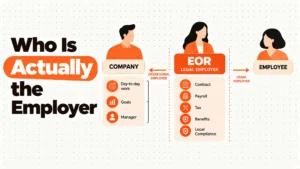
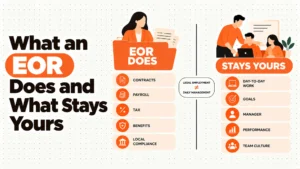
That's the distinction this whole piece turns on. There are two separate questions here and only one of them is in any document you hold. What happens commercially between you and a provider is settled by an agreement. What happens to each individual person is settled by the law of the place they work, their own circumstances, and arrangements you may not have seen, and it differs by country and by person.
Best tools for Employer of Record (EOR) Tools
The reason the confusion is so persistent is that the two questions share vocabulary. Both involve notice, both involve dates, both involve something ending. An agreement will state a notice period, and that feels like an answer to when this can happen, because a period of time is exactly the shape the answer would take. It's an answer to when the commercial relationship can stop, which is a different sentence than it looks like.
And the asymmetry runs the other way too. The people question has no document, no clause reference and no obvious owner inside most organisations. Procurement owns the agreement. Finance owns the invoices. The question of what happens to four individuals in a country where you have no entity tends to land wherever somebody notices it, which is often late and often the person who cares most rather than the person best placed to answer.
Organisations conflate these constantly, and the conflation is understandable because the commercial question has a document with an answer in it and feels like the whole thing. It isn't. It's the easy half.
It's worth being specific about why the easy half feels complete. Somebody reads the agreement, finds it well drafted, and comes away with a clear picture of notice, wind-down, final invoicing and data handling. Nothing about that picture is wrong. The problem is that it's a picture of two companies disentangling, and the thing everybody is actually worried about is a group of individuals whose working lives are attached to the arrangement.
A useful test: read what you have written down about the transition and count how many sentences are about people by name. If the answer is none, the plan is about a contract.
So the reframe: before you think about how to end an arrangement, work out what ending it means for each person in it. That's a question for somebody qualified, in each country, and it needs asking before anything starts rather than while a transition is underway and people have already been told something.
The other reason to ask early is that the answer occasionally changes the plan. What looks like a simple move between arrangements can involve considerations nobody anticipated, and finding that out at the beginning is a different situation from finding it out with a date already announced.
That sequencing point deserves more weight than it usually gets. Advice taken before a plan exists is information. Advice taken after a date has been communicated is a constraint on something already in motion, and by then the options have narrowed to variations on the plan rather than alternatives to it.
There's also a cost argument, since this is the step most often skipped for budget reasons. Establishing the position across three or four countries costs something real at a point where the transition is still an idea. It costs considerably less than discovering a problem partway through, when the discovery arrives alongside commitments, dates and people who have already been told.
One boundary, and it's the tightest in this batch. Nothing here says what happens to anybody's engagement when an arrangement ends, whether anything continues, whether anything transfers, what notice applies, what anybody is owed, or whether a person may be moved between arrangements. Every one of those differs by jurisdiction and by circumstance. Establish your position with local advice, per country, per person, before beginning. Our Global HR material covers the employment side and it needs the same advice.
When You Genuinely Do Not Need to Act Yet
The arrangement still fits and nothing is forcing a change. Worth recognising rather than optimising. These transitions are disruptive and the disruption lands on people.
The numbers are starting to point elsewhere. Headcount has grown and the arrangement is no longer obviously right. That's a reason to look, and looking starts with advice rather than with a plan.
Something has forced the question. A provider is withdrawing, a relationship has broken down, or a strategy has changed. Then the timing isn't yours and the sequencing matters more.
The edge case that forces it. Somebody has resigned, or an engagement is ending, and nobody is sure what happens. That's a live situation needing advice today rather than a planning exercise.
The fourth case is the one that catches organisations who thought they had time. Nothing about the arrangement has changed, no decision has been taken, and then an individual circumstance arrives and the question is suddenly specific and urgent. Having established the general position in advance turns that into a phone call. Not having established it turns it into research conducted under time pressure about somebody who is waiting for an answer.
Five Questions This Reader Asks at 11pm
What happens to the people? The question that matters and the one no general source can answer. It depends on where they are, what their arrangement says, and their individual circumstances. Establish it with local advice for each person before you begin, because the answer shapes everything else.
Is this just a contract termination? No, and treating it as one is the characteristic mistake. The agreement tells you what happens between two companies. What happens to somebody's engagement is a separate question with a separate source of answers.
How long does it take? Longer than the notice period, generally, because the commercial timeline and what's actually possible for each person aren't the same thing. Building a plan from the notice period is how transitions end up rushed at exactly the wrong point.
Can we move people to another provider? Sometimes, and whether and how differs by country and by circumstance. It's not a purely administrative change and it shouldn't be planned as one until somebody qualified has looked at it.
Who tells the people? You should, and early enough that they hear it from a person rather than through a process. Whatever the structure, these are your colleagues and the conversation is yours to have.
What if one country works differently from the others? Assume it will. Organisations with people in several places routinely find the answers diverge, sometimes substantially, and a plan built on one country's answer applied everywhere is a plan that fails in whichever country was not the one you asked about. Ask per country, and expect the timelines to differ too.
Who owns this internally? Worth settling before anything begins, because the work spans procurement, finance, whoever manages the people and whoever is taking the advice. Transitions that go badly are usually not transitions nobody thought about; they are transitions three people each thought somebody else was holding.
Two Separate Questions
| The question | Who answers it | Where it is settled |
|---|---|---|
| What notice do we owe the provider | Your agreement | The document you already hold |
| What happens to each person's engagement | Local advice, per country | Not in any document you hold |
| What final charges arise | Your agreement, and the provider | Commercial terms |
| Whether anything continues for the person | Local advice, per person | Jurisdiction and circumstance |
| What the person must be told, and when | Local advice | Differs, and may be time-bound |
| Who has the conversation | You | A decision, not a rule |
| How long the whole thing takes | Both, and they differ | The longer of the two governs |
| What happens if it goes wrong | Local advice | Established beforehand or not at all |
The first two rows are the split and they're worth keeping physically separate in whatever you write down. Every time they get merged, the commercial answer stands in for both, because it's the one with a document behind it.
The seventh row is where plans go wrong. A timeline built on a notice period assumes the commercial question governs, and it generally doesn't; what's possible for the people involved is usually the longer constraint and the one that matters.
The fifth row is the one with a deadline attached that you may not see coming. What somebody must be told, and when, can be time-bound in ways that differ by place, which means a communication plan built around your own internal readiness may be built around the wrong clock. That's another thing to establish rather than infer.
The last row is the one to establish while nothing is happening. What you'd do if something went wrong partway through is a question with a much better answer when asked calmly than when asked during the thing it describes.
Five Diagnostic Questions You Can Self-Assess Against
Have you taken advice for each country? Not in general. For each place where somebody is engaged, before anything begins. Organisations with people in several countries frequently find the answers differ.
Do you know what each person's arrangement says? The documents they signed, which you may never have read. That's the starting point for any conversation about what changes.
What is your timeline actually built on? If it came from the notice period, it's built on the wrong half. What's possible for the people is the governing constraint.
Who is telling them, and when? Decide before anything is committed. People finding out through a process, or from a provider, is an avoidable failure.
What happens if somebody declines? Or something doesn't work. That's a scenario worth having thought about rather than improvising.
Who owns the transition? One named person, with the authority to change the date. Transitions distributed across procurement, finance and a manager each assuming somebody else holds the people question are how the people question ends up held by nobody until it becomes urgent.
Six Ways an Arrangement Ends, Reviewed
Moving people to an entity you have set up
You've established your own presence there and want people engaged directly. The commonest reason these arrangements end and the one people plan for most.
Where it falls short as a plan is the assumption that this is administrative. What moving somebody between arrangements involves, and what it means for them, differs by country and by their circumstances, and it isn't a transfer of a record between systems.
Take advice before setting any date. And expect the entity work itself to be a separate project with its own timeline, which frequently runs longer than anybody budgeted.
The other thing to check is whether the entity is actually ready for people, as opposed to registered. Registration and the ability to engage somebody are not the same milestone, and the gap between them has stranded more than one transition at the point where the arrangement was already winding down.
Moving people to a different provider
Switching the arrangement while keeping the person in the same place. It earns a place because it happens, for service reasons or commercial ones.
Where it falls short is that the person experiences a change to their engagement for reasons entirely unrelated to them, which is a strange thing to be told. Whether and how this works differs by country, and the mechanics between two providers are the smallest part of it.
Establish the position first, per country, and be honest with people about why. Our vendor comparison work covers switching at the provider level; the question here is what it involves at all.
One practical note on sequencing. A switch that looks like a straight handover often involves a gap, or an overlap, or a period where two arrangements exist at once, and how that is handled is not a detail to leave to whichever provider is more motivated. Ask both what they expect to happen in the days around the change, and compare the answers.
An individual engagement simply ending
One person's engagement finishes while the arrangement continues for everybody else. The most common ending and the least discussed.
Where it falls short is that it's frequently treated as routine administration when it's somebody's job ending. What's required, what notice applies and what anybody is owed differ by jurisdiction and by circumstance, and none of it is inferable from the arrangement's structure.
This needs advice like any other ending, and it needs the conversation to come from somebody the person knows. Global HR's material covers the employment dimension.
What makes this version easy to mishandle is that the arrangement itself continues, so nothing structural changes and it can be processed as an ordinary administrative event. The person on the other end of it is having a considerably larger day than the process suggests.
The person leaving of their own accord
They resign. It earns its place because it's the version nobody plans for and it happens more than any other.
Where it falls short is coordination. There are two organisations to inform, the person may tell the wrong one first, and the administrative steps sit with a provider while the relationship sits with you. Confusion here produces delays in things the person needs.
Make sure they know who to tell and that you'll handle the rest. Somebody leaving on good terms shouldn't be managing a two-party process on their way out.
Worth establishing in advance rather than at the moment: who receives a resignation, what happens next, how long the administrative steps take and who is responsible for making sure nothing the person is owed goes missing between two organisations. A short written answer to those four questions, written while nobody has resigned, saves a scramble later.
The provider withdrawing from that country
They stop covering a place where you have somebody. Uncommon, real, and entirely outside your control.
Where it falls short is timing and options. You're working to somebody else's notice, the alternatives may be limited, and the person involved had no part in any of it.
This is the argument for asking about coverage changes during an evaluation. Establish what notice you'd get and what would happen, while it's hypothetical.
It's also worth knowing whether coverage in a country is held directly or through an arrangement with somebody else, because that determines how many parties have to agree for coverage to continue and how much visibility you'd get before it changed. Providers answer that question straightforwardly when asked during an evaluation and less straightforwardly when asked during a withdrawal.
The relationship ending for a commercial reason
A dispute, a failure of service, or a decision on either side. It earns its place because arrangements do end this way and the circumstances are rarely calm.
Where it falls short is that the people are still there and their engagements are still running while two companies disagree. The commercial dispute is separable from the individuals only if somebody deliberately separates them.
Handle the people question independently and first. Whatever is happening commercially, somebody's engagement shouldn't be a bargaining position.
The practical move is to separate the conversations and the people having them. Whoever is dealing with the commercial dispute should not also be the person the individuals hear from, partly because the two conversations need different tones and partly because the people involved deserve somebody whose attention is on them rather than on a negotiation.
The Decision Table
| Situation | Scale | Setup | Primary Pain | Recommended Starting Point |
|---|---|---|---|---|
| Arrangement fits, nothing forcing change | Any | Live | None | Change nothing |
| Growth points elsewhere | Several people | Live | A real question, not urgent | Advice first, then a plan |
| Treating it as a contract termination | Any | Ending | The easy half answered | Separate the two questions |
| Timeline built on notice period | Any | Ending | The wrong constraint | Ask what is possible for people |
| Moving to your own entity | Several | Ending | Assumed administrative | Advice, per country, per person |
| Moving to another provider | Any | Ending | A change unrelated to the person | Advice, and an honest explanation |
| Somebody has resigned | One person | Live | Two organisations, one leaver | Tell them who to inform |
| Provider withdrawing | Any | Forced | Somebody else's timeline | Establish notice terms now |
| Commercial dispute underway | Any | Ending | People inside a disagreement | Separate them, deliberately |
The third row is the failure this piece exists to prevent. An organisation reads its agreement, finds clear answers about notice and final charges, and proceeds on the basis that the question is settled. It's settled for one of two parties and the other party is a group of people.
The fourth row is the practical consequence of the third. Timelines built on commercial notice periods leave no room for the part that actually takes time, and the compression lands on the people at the end of it.
The seventh row is worth reading even if nobody has resigned, because it's the row most likely to become live without warning. An organisation with a written answer to what happens when somebody resigns under this arrangement handles it in an afternoon. An organisation without one spends a week establishing something it could have established at any point in the previous year.
The Part That Is Not in the Agreement
Two questions, kept separate. What happens between two companies, and what happens to each person. Write them in different places, because merging them lets the documented answer stand in for both.
Advice per country, per person, before anything. Not once, not generally, and not after a date has been set. Organisations with people in several places routinely find the answers differ between them.
The people question governs the timeline. Whatever the notice period says, what's actually possible for the individuals involved is the constraint that matters, and it's usually longer.
Read what they actually signed. The documents defining each person's engagement are the starting point, and many organisations have never seen them. That's a fast thing to fix and it comes before planning anything.
They hear it from you. Whatever the structure, these are colleagues. Somebody learning that their engagement is changing through an administrative process, or from an organisation they've never met, is a failure that costs nothing to avoid.
Plan for a no. Somebody may decline, something may not work, a timeline may slip. Having thought about that in advance is the difference between an adjustment and a scramble.
One named owner. Somebody who holds the whole thing, including the authority to move the date when the advice says the date is wrong. Without that, the commercial timeline wins by default, because it has a document and a counterparty pushing on it, and the people question has neither.
The uncomfortable summary is that the half of this with a document attached is the half that matters least. Everything consequential sits with people, in countries, under rules that differ, and it needs establishing rather than reading.
Where These Arrangements Go Wrong
| The failure | How it shows up | What would have to change |
|---|---|---|
| Contract question answered, people question not | Confidence about the wrong half | Separate them explicitly |
| Advice taken once, or late | Answers that differ by country, found late | Per country, before starting |
| Timeline from the notice period | Compression at the worst point | Build from what is possible |
| Their documents never read | Planning without the starting point | Read them first |
| People told through a process | Learning it from an administrative step | A conversation, from somebody they know |
| No plan for something not working | Improvising during a transition | Think it through beforehand |
The second row is the one that catches organisations with people in several countries. Advice taken for one place, applied generally, produces a plan that works somewhere and not elsewhere, and the discovery arrives midway through with commitments already made.
The fifth row is the one people remember. However well a transition is handled otherwise, somebody finding out about a change to their own engagement from a system notification or an unfamiliar organisation will remember that, and it's entirely avoidable.
The sixth row deserves a mention because it's the one that looks like pessimism when raised early and like foresight when it happens. Something in a transition of this kind will not go to plan, and the useful question is not whether but which part, and what you'd do. Twenty minutes on that beforehand is worth more than any amount of contingency language in an agreement.
What to Put in Writing
| Artefact | Who owns it | When it is written | What it prevents |
|---|---|---|---|
| The two questions, kept separate | Whoever owns the transition | Before planning | The documented answer covering both |
| Advice, per country | You, with local advice | Before any date is set | A plan that works in one place |
| What each person signed | Whoever owns the transition | Before planning | Planning without the starting point |
| The realistic timeline | Whoever owns the transition | After advice, not before | Compression at the end |
| Who tells whom, and when | Named individuals | Before anything is announced | People learning it from a process |
| What happens if something fails | Whoever owns the transition | Before starting | Improvising under pressure |
The second row is the one that can't be shortcut and the one most often deferred, because advice costs money at a point where the transition still feels like a project plan. It's also the row that determines whether the plan is sound, which makes deferring it a false economy of a specific and expensive kind.
The fifth row is the one to write down in the most detail, because it's the part that gets improvised under pressure. Which person has which conversation, in what order, on what day, and what happens if somebody is on leave that week. It reads as over-planning right up until the morning it happens.
Questions to Ask Before You Commit
On separation. Which question does this document answer? A bad answer is all of it.
On advice. Have we established the position per country? A bad answer is broadly.
On timing. What is the timeline built on? A bad answer is the notice period.
On documents. What did each person actually sign? A bad answer is standard terms.
On telling. Who has the conversation, and when? A bad answer is when it is confirmed.
On failure. What if somebody declines? A bad answer is that they will not.
On ownership. Who holds this end to end? A bad answer is a committee.
On divergence. What differs between our countries? A bad answer is nothing significant, offered without having asked.
What Getting This Wrong Costs
The first cost is confidence about the wrong half. An organisation reads a clear agreement, gets clear answers about notice and charges, and plans on that basis. Everything about the commercial side is correct and nothing about the people has been established, and the gap shows up when somebody asks what happens to a specific individual and the answer is that nobody has checked. That's a bad moment to begin checking.
The second cost is a timeline that compresses at the worst point. Built from a notice period, it leaves no room for whatever turns out to be necessary for the individuals, so the pressure lands at the end, on the people, at the moment when things are already uncertain for them. What was a planning decision becomes their problem.
And compressed transitions produce their own second-order problems. Steps get taken out of order, people get told things that later change, and the organisation spends the last fortnight correcting itself in front of the people it most wants to reassure. None of that reflects bad intent. It reflects a timeline that was never achievable, set at a point when nobody had checked what achievable meant.
The third cost is somebody learning about their own situation from a process. A system notification, a message from an organisation they've never dealt with, or a colleague mentioning it. That costs nothing to prevent and it's remembered permanently, because it tells somebody exactly how much thought was given to their part of a decision that was mostly about numbers.
So do three things before any of this starts. Write the two questions separately and answer them separately. Take advice per country and per person, before setting any date. And decide who will have the conversation with each individual, and make sure it's somebody they know.
When You Are Ready to Go Further
Start with advice rather than with a plan, which inverts how most of these begin. Per country, per person, establishing what ending an arrangement actually involves for the individuals concerned. It costs money at a moment when nothing has happened yet, which is exactly why it gets deferred, and it's the input every other part of the plan depends on.
Then read what each person signed. Many organisations have never seen the documents defining their own colleagues' engagements, which makes planning a change to those engagements difficult in a fairly obvious way. It's a request to a provider and it takes days rather than weeks.
While you're asking, ask for it in a form somebody can actually read rather than a portal view, and ask for everything rather than the summary. The difference between a standard template and what a specific person signed is exactly the kind of detail that matters here and exactly the kind that a summary removes.
Finally, build the timeline from what's possible rather than from what's contractual, and decide who's telling whom before anything is announced anywhere. The commercial half will take care of itself; it has a document and two companies with an interest in resolving it. The people half has neither, and it's the half anybody involved will actually remember.
HROpsLab publishes independent comparison work across HR tooling and global employment. We sell nothing, we take no vendor money, and we publish no paid placements. If the next step is seeing how the providers in this space describe themselves, our comparison work is one place to start.
Frequently Asked Questions
What happens when you stop using an employer of record?
Two things, and they need separating. Commercially, an agreement governs notice, wind-down and final charges, and that part is usually clear because it's written down. Separately, something happens to each person's engagement, and what that is depends on the country, their individual circumstances and the arrangements they're under. The second question isn't answered anywhere in the documents you hold, it differs between countries, and it needs establishing with local advice before anything begins rather than while a transition is running.
How do you move people from an employer of record to your own entity?
That's a question for somebody qualified in each country, not a general one, and the answer differs by place and by person. What's worth saying is that it isn't an administrative transfer of a record between systems, which is how it's frequently planned. Take advice before setting any date, read what each person actually signed, and expect the entity work itself to be a separate project with its own timeline that commonly runs longer than anybody budgeted for.
Can you move people to a different provider?
Sometimes, and whether and how differs by country and by circumstance, so it isn't something to plan as a purely administrative change until somebody qualified has looked at it. Worth remembering what it means from the person's side: their engagement is changing for reasons that have nothing to do with them, which is a strange thing to be told. Be honest about why, tell them yourself, and don't present it as a formality if it isn't one.
What happens to the employee when an arrangement ends?
This is the question that matters and the one no article can answer, because it depends on the jurisdiction, the specific arrangements, and the individual's own circumstances. What can be said is that it's a different question from what your agreement says, it isn't settled by any document you already hold, and the answers frequently differ between countries for organisations with people in several places. Establish it with local advice, per person, before beginning anything.
Does length of service continue?
That's precisely the kind of question whose answer differs by jurisdiction and by the specific circumstances, and it's not something to assume in either direction or infer from how an arrangement is structured. It's also one of the questions people ask first, which makes having a properly established answer worth obtaining before you're in a conversation about it. Take local advice for each country, before starting, and be honest with people where you don't yet know rather than offering a reassurance nobody checked.
What notice does an employer of record arrangement require?
The commercial notice is in your agreement and it's straightforward to find. The trap is treating that as the timeline for the whole thing, because what's possible for the individuals involved is a separate constraint and usually the longer one. Plans built from the contractual notice period leave no room for the part that actually takes time, which means the compression arrives at the end and lands on the people. Build the timeline from what advice tells you is achievable.
Who tells the employee?
You should, and it should be somebody they know, early enough that they hear it from a person rather than through an administrative step or from an organisation they've never dealt with. Whatever the formal structure, these are colleagues, and the conversation belongs with whoever has the relationship. It costs nothing and it's remembered permanently in either direction: being told properly, or finding out from a system notification about a change to your own employment.
What should you establish before starting a transition?
Advice for each country and each person about what ending actually involves for them. What each individual signed, which many organisations have never read. A timeline built from what's possible rather than from the notice period. Who tells whom, and when. And what you'd do if something doesn't work or somebody declines, thought through while nothing is urgent. That last one is the difference between adjusting and improvising, and improvising during a transition is felt by the people in it.
The agreement answers the easy half. The other half is four people with jobs.