
TL;DR
- The core decision: which specific tasks stop landing on your desk and which do not.
- When doing nothing is right: when the division is already written down and agreed.
- What has to be true: you have a task list of your own to hold proposals against.
- How the options split: by activity, because service descriptions do not split cleanly.
- Decision rule: write your list first, then force every proposal onto it.
- Outcome to expect: two comparable proposals and no surprises about scope.
Every Proposal Says the Same Thing
You have two proposals open. One says it handles all aspects of employment. The other says it manages the full employee lifecycle. You read both twice and you couldn't tell anybody which does more.
That's not carelessness on anybody's part. Service descriptions in this market are written in verbs designed to sound complete, because a proposal that listed precisely what was excluded would read worse than one that didn't. Handles, manages, takes care of, looks after. Every one of them is a container word, and container words are doing exactly what they're supposed to do, which is to avoid itemising.
The consequence is that the work remaining with you is substantial and appears nowhere. Not hidden, exactly. Just never listed, because listing it isn't what a proposal is for.
Best tools for Employer of Record (EOR) Tools
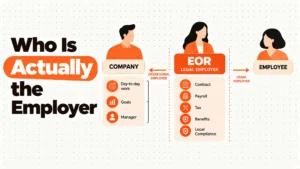
So here's the reframe. Stop reading proposals and comparing them to each other. Write your own list of the tasks involved in having somebody engaged in another country, then take each proposal and mark every item as included, partly included, or still yours. Two documents that looked identical will separate immediately, and the gaps will be visible for the first time.
That exercise takes an afternoon, it needs no specialist knowledge, and it's the single most useful thing you can do before signing anything. It also changes the conversation with a provider, because a specific question about a specific task gets a specific answer, while a general question about scope gets more container words.
One boundary throughout. This is about the division of activity, which is observable and negotiable. Where any of these tasks carries an obligation, and on whom, is a legal question that differs by country and by arrangement and needs establishing with local advice. A proposal saying a provider does something is a description of work, not a statement about who carries what.
When You Genuinely Do Not Need to Act Yet
The division is written down and agreed. Somebody can produce a list showing what sits where, and both parties recognise it. That's the destination.
You are reading proposals and cannot separate them. The common position, and the signal that you're comparing writing rather than scope.
Work keeps arriving that you thought was covered. The arrangement is live and things land on you that nobody expected. That's a scope conversation that should have happened earlier.
The edge case that forces it. Something needed doing, both parties assumed the other was doing it, and it didn't get done. That's the specific failure this whole piece is designed to prevent.
Five Questions This Reader Asks at 11pm
What does handles actually mean? Nothing specific, which is the point. It's a word that covers everything from performing a task end to end, to performing it once you've supplied the inputs, to arranging for somebody else to perform it. The only way to find out which is to ask about a particular task rather than about the service.
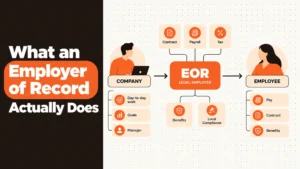
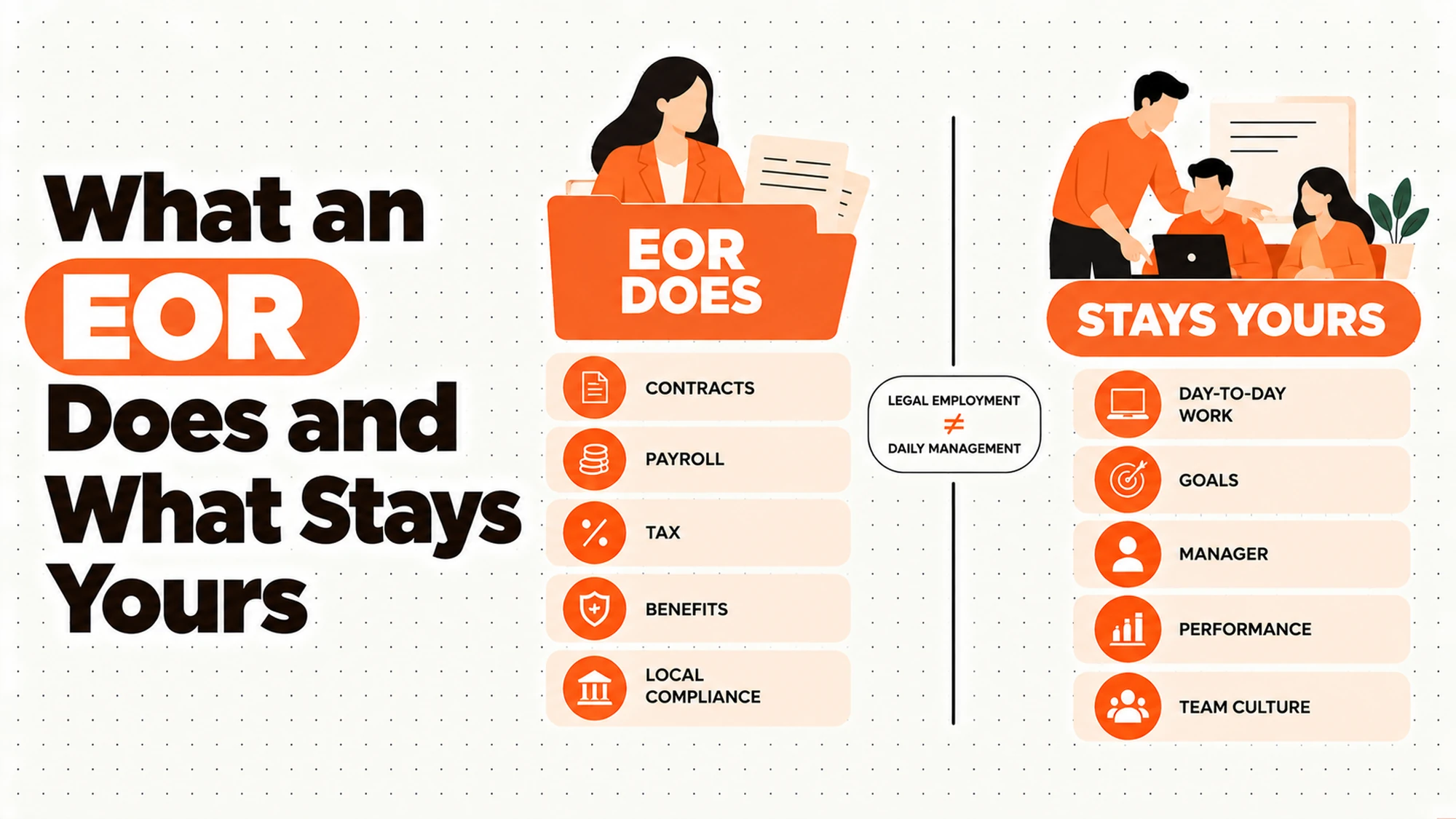
What stays with us? More than most people expect. Deciding the work and managing the person, obviously. Also supplying almost everything the provider needs in order to do their part, which is ongoing effort nobody prices. And anything requiring a judgement about your own organisation.
Do they manage performance? No, and a provider offering to would be doing something you should think hard about. Managing somebody's performance requires knowing the work, the team and the person, none of which a provider has. Assuming otherwise is one of the more common misreadings.
Who answers the person's questions? Depends entirely on the question, and the split isn't obvious to them. Anything about their engagement, pay or benefits goes to the provider. Anything about their work is yours. Things that are both, or sensitive, have no obvious home unless you create one.
How do I compare two proposals? By forcing both onto a list you wrote. Comparing them against each other compares their marketing. Comparing them against a common list compares what they actually do, and it's the only method that works here.
What the Proposal Says and What It Itemises
| The phrase | What it could mean | The question that settles it |
|---|---|---|
| Handles employment | Anything from all of it to some of it | Which specific tasks, listed |
| Manages onboarding | Their part, or the whole process | What do we supply, and by when |
| Takes care of compliance | An activity, not an assurance | Describe the tasks you perform |
| Full lifecycle support | A phrase, not a scope | What happens at each stage, itemised |
| Local expertise | Their staff, or somebody else's | Do you operate there directly |
| Dedicated support | A person, or a queue | Who, reachable how, in what hours |
| Benefits administration | Arranging, or also advising | Who chooses the package |
| Offboarding assistance | Administration, or the whole thing | Who does what, step by step |
The third row is the one to be most careful with. Taking care of compliance describes work being performed, and it's frequently read as an assurance about outcomes. Those are different claims, only one of them is in the proposal, and which obligations sit where is a matter for local advice rather than for a service description.
The distinction is easy to lose because the phrase does real work in a sentence. Asking a provider to describe the specific tasks they perform under that heading converts it back into something checkable.
The fifth row matters more than it looks. A provider operating in a country directly and one working through another organisation there will both describe it as local expertise, and the difference shows up in how long anything takes to resolve.
It also determines who you are actually relying on. An arrangement you have with one organisation, depending on a relationship it has with another, is a longer chain than the proposal suggests.
The sixth row is worth pinning down early. Dedicated support means a named person in some arrangements and a shared queue in others, and the two produce completely different experiences when something is urgent and the person affected is anxious.
The eighth row is the one nobody examines during an evaluation, because ending an arrangement is the last thing on anybody's mind while starting one. It is also the point at which unspecified scope costs the most.
Five Diagnostic Questions You Can Self-Assess Against
Have you written your own task list? Before reading any proposal. If your list came from a vendor document it inherits their categories, which defeats the purpose.
Can you mark each item as included, partly, or yours? For each proposal. The partly column is where the surprises live and it's usually the largest.
What do you have to supply, and when? Every provider needs inputs from you on a schedule. That's real ongoing work and it appears in no proposal as a cost to you.
Who does the person contact for what? If you can't answer, they definitely can't, and their questions are currently going wherever seems most likely.
Which is usually their manager, for everything, including the things their manager has no visibility of at all.
What happens at the end? Offboarding is the least specified part of most proposals and the one where assumptions differ most.
Run these five with whoever will actually operate the arrangement rather than whoever is signing it. The operator is the person who will discover every unspecified item, one at a time, over the following year.
Six Activities and Where They Land, Reviewed
Getting somebody engaged and started
Producing documents, collecting what's needed, registering whatever the country expects, setting up pay. The provider does most of this and it's the clearest part of the arrangement.
Where it falls short is inputs and timing. The provider can't start until you supply details, and what they need and how quickly is frequently underspecified, so a start date slips and nobody predicted it. Your side of onboarding, meaning equipment, access and introducing somebody to a team, is entirely yours and unrelated.
Ask what they need from you and by when, in writing. Then check that somebody on your side owns supplying it, because that person is usually unnamed.
The unnamed owner is the commonest cause of a slipped start. Everybody assumes somebody is assembling the details, the provider waits, and a week passes before anybody notices that waiting is what is happening.
It is also worth agreeing what happens if something is missing. A provider that proceeds with a gap and one that stops until it is filled produce very different outcomes, and neither is obviously right until you have decided which you want.
Paying them each period
Money reaches the person on the local cycle with the right deductions and a payslip. The provider does this and it's the practical reason the arrangement exists.
Where it falls short is upstream. Changes to somebody's pay, hours or circumstances have to reach the provider before their cut-off, and that's your job, every period, forever. It's small and it's recurring and it's the thing most likely to be missed when somebody is on leave.
Name who supplies changes and know the cut-off. What happens to somebody's pay if a change arrives late is a question worth asking before it does.
The recurring nature is what makes this fragile. A task performed every period by one person, with no substitute, will eventually coincide with that person being away, and the consequence lands on somebody's pay rather than on a process.
Worth confirming what the provider does with a late change as well. Carrying it to the following period is a reasonable answer and it is one the affected person needs to be told about rather than discovering.
Arranging and maintaining their benefits
Assembling a package locally and administering it. The provider does this because it has arrangements in that country and you don't.
Where it falls short is choice and explanation. Who decides what the package contains, whether you can add to it, and what it costs to do so are all negotiable and frequently unspecified. Explaining to your colleague why theirs differs from a teammate's elsewhere is yours, and nobody hands you that explanation.
Establish who chooses, what the options are, and what changing something involves. What any country requires as a baseline is separate, differs everywhere, and needs local advice.
The choosing question is the one most often left vague. A provider offering a package assembled to its own standard, and one offering options you select from, are different propositions, and the difference shows up when somebody asks for something specific.
Ask what adding something involves before you need to. Discovering the answer while an employee waits turns an administrative question into a disappointment.
Handling the administration the country requires
Ongoing registrations, filings, records. The provider performs these and it's genuine specialist work you'd otherwise have to buy.
Where it falls short is visibility. You won't see any of it happening and you can't verify most of it, which is a normal feature of buying specialist services and worth being conscious of rather than assuming away.
What you can do is ask for evidence that specific things were done, periodically rather than constantly. A provider that can produce it readily is demonstrating something a description cannot.
Ask what you'd see if something went wrong and how quickly you'd hear. A provider willing to describe their own limits is giving you better information than one implying there are none.
The honest answer is usually that you would hear either from them or from the person, and knowing which is useful. An arrangement where the affected colleague finds out first is one you want to know about in advance.
It is also worth knowing who at your end receives such a message. A notification arriving at a shared address nobody watches is functionally the same as no notification.
Answering the person's day to day questions
Somebody has a query about their payslip, their leave balance, a document they need. The provider fields these through whatever channel it operates.
Where it falls short is the boundary and the tone. Questions about the work come to you and questions about the engagement go to them, but the person doesn't know the boundary, and a query sent to the wrong place can take days to arrive somewhere useful. It's also a channel rather than a colleague, which matters when somebody is worried.
Give the person an explicit routing and a named human on your side for anything ambiguous. That single step prevents most of the friction in this arrangement.
The tone difference matters as much as the routing. A person worried about their pay is dealing with a support channel in another country, and the gap between that and asking a colleague is felt most exactly when somebody is already anxious.
Worth checking how the channel actually performs before you rely on it. Response times quoted in a proposal and the experience of a real query on a Friday afternoon are different pieces of information.
Deciding anything about their work or their future
What they work on, whether it's going well, what happens next for them. This is entirely yours and it always will be.
Where it causes trouble is that container words invite the opposite assumption. Full lifecycle support reads as though somebody else is thinking about this person's development, and nobody is. A person engaged this way can go a long time without the ordinary attention their colleagues get, because everybody assumes somebody else has it covered.
Treat them exactly as you would anybody else on your team. The arrangement is administrative and their working life is yours to look after.
That includes the things that are easy to forget because a system does not prompt them. Somebody engaged through a provider may sit outside whatever cycle reminds managers about reviews, development conversations or pay discussions, so those have to be remembered rather than triggered.
Check which of your internal processes they are actually in. Being absent from a list is how somebody misses a round of something without anybody deciding they should.
The Decision Table
| Situation | Scale | Setup | Primary Pain | Recommended Starting Point |
|---|---|---|---|---|
| Division written down and agreed | Any | Live | None | Change nothing |
| Proposals look identical | Any | Evaluating | Comparing marketing | Write your own list |
| Cannot say what partly included means | Any | Evaluating | The largest column, unexamined | Ask task by task |
| Work arriving you thought was covered | Any | Live | Scope never itemised | Itemise it now |
| Start date slipped | Any | Onboarding | Inputs underspecified | Name who supplies what, by when |
| Pay changes missed during leave | Any | Live | A recurring task nobody owns | Name a person and a substitute |
| Person contacting the wrong party | Any | Live | No routing given | One note, at the start |
| Nobody owns the person's development | Any | Live | Container words read as coverage | Treat them like anybody else |
| Something fell between both parties | Any | Live | Mutual assumption | The itemised list, both sides agreeing |
The second row is where most people are and the fix is entirely on your side. Two proposals written to sound comprehensive will always look similar, and the only thing that separates them is a list neither of them wrote.
The third row is what the list produces once you have one. Partly included is not an evasion by the provider, it is an accurate description of most of these tasks, and it only becomes visible when there is somewhere to put it.
The eighth row is the human cost of this arrangement and it's the one nobody plans for. A person whose administrative employer is elsewhere can quietly fall outside the ordinary attention their colleagues receive, not because anybody decided that but because the arrangement makes it easy to assume somebody else is looking.
The ninth row is the failure the whole exercise exists to prevent, and it is worth noticing that it requires no mistake by anybody. Two reasonable parties each assuming the other holds something is sufficient.
Write Your Own List First
Build it before you read anything. A list assembled from a vendor document inherits that vendor's framing and will quietly omit whatever they omit. Write it from what having a colleague in another country actually involves.
An hour of thinking beats a week of reading here. The list is short, it is obvious once written, and nobody writes it because reading proposals feels more like progress.
Three columns, not two. Included, partly included, still ours. The middle column is where the real information is, and forcing proposals into a binary hides exactly what you're trying to see.
Expect the middle column to be the biggest. Most tasks in this arrangement are shared in some way, and a list where everything sorts cleanly is usually a list that has not been examined closely enough.
Include your own tasks. Supplying data, notifying changes, approving things, answering the person's work questions. None of that appears in a proposal and all of it is ongoing effort you'll be doing.
Estimate how often each recurs. A task performed every pay period and one performed annually are different commitments, and the list reads very differently once the frequency is on it.
Ask task by task. A specific question about a specific activity gets a specific answer. A general question about scope gets more container words, and that's not evasion so much as how the genre works.
And the specificity is welcome at the other end. Salespeople answer precise questions more easily than vague ones, because a precise question tells them what you actually need to know.
Put the answers in writing. What a provider says about scope in a conversation and what the agreement itemises can differ, and a year later only one of them is available.
A short email summarising what you were told is enough. It costs a minute and it is the only version of the conversation that still exists when it matters.
Name an owner on your side for each remaining task. The tasks that stay with you are real work, they recur, and anything without a name against it will be missed the first time somebody is away.
Name a substitute too. Every one of these is a small recurring task, which is precisely the kind that has no cover arrangement until it needs one.
The practical outcome of this exercise is not a better negotiating position, though it helps. It's that both parties end up knowing what the other is doing, which is the only reliable protection against something falling between you.
It also survives people leaving. A written division of labour is the kind of thing that outlasts whoever negotiated it, and these arrangements routinely outlive everybody who was in the room.
Where These Arrangements Go Wrong
| The failure | How it shows up | What would have to change |
|---|---|---|
| Proposals compared to each other | Two documents, no difference visible | A list you wrote |
| Container words read as scope | Assumptions about what is covered | Task by task questions |
| Your own tasks never counted | Ongoing effort nobody planned | Include them in the list |
| Inputs and cut-offs unspecified | A slipped start, a missed pay change | Name what, who and by when |
| Person given no routing | Queries reaching nobody useful | One note on day one |
| Development assumed covered | A colleague nobody is looking after | Treat them like everybody else |
The third row is the cost nobody prices. Supplying details, notifying changes, approving things and answering questions is genuine recurring work that appears in no proposal, and organisations regularly find the arrangement saved less time than expected for precisely this reason.
The fifth row is the cheapest failure to avoid and the one that lands on somebody else. A person with no routing spends their first months guessing, and every guess that goes wrong costs them days.
The sixth row is the one that causes real harm to a person. Everything about the structure invites the assumption that somebody else is thinking about them, and the result is somebody who has been on your team for a long time and has had none of the ordinary conversations about how things are going.
The fourth row is the version of this that shows up immediately rather than slowly. Unspecified inputs and cut-offs produce a slipped start date in the first fortnight, which at least has the merit of being visible.
What to Put in Writing
| Artefact | Who owns it | When it is written | What it prevents |
|---|---|---|---|
| Your own task list | Whoever will run the arrangement | Before reading any proposal | Comparing marketing |
| Each proposal marked against it | Whoever evaluates | During evaluation | Two identical-looking documents |
| What you must supply, and by when | Whoever evaluates | Before signing | A slipped start |
| Who owns each task that stays yours | Named individuals | Before go-live | Recurring work nobody holds |
| The routing, given to the person | Whoever manages them | Day one | Queries going nowhere |
| Scope answers, in writing | Whoever evaluates | At the time | A conversation nobody can produce later |
The first row is the whole method and it's the one step people skip, because reading proposals feels like progress and writing a list feels like preparation. The list is what makes the reading useful.
The sixth row is the cheapest insurance on the list. What a provider says about scope in a meeting is not retrievable a year later, and a short written note of the answers costs nothing at the time.
Questions to Ask Before You Commit
On scope. Which of these specific tasks do you perform? A bad answer is all of them.
On inputs. What do you need from us, and when? A bad answer is the usual details.
On the middle column. What does partly included mean here? A bad answer is that it depends.
On support. Is that a named person or a queue? A bad answer is dedicated support.
On visibility. What would we see if something went wrong? A bad answer is that it won't.
On the end. Who does what when this stops? A bad answer is that it's covered.
What Getting This Wrong Costs
The first cost is something that falls between two parties. Each assumed the other was doing it, nothing in either document said otherwise, and it didn't get done. That's the characteristic failure of any arrangement with an unclear boundary, and here it's likely to involve a filing, a registration or a change that mattered to a specific person. The itemised list exists to prevent exactly this and it's the reason to build one.
The discovery is usually indirect, too. Nobody reports that a task went unperformed; something else surfaces later and the gap is found while investigating it.
The second cost is a saving that didn't appear. Organisations enter these arrangements expecting the administrative burden to go away and find that supplying inputs, notifying changes, approving things and answering the person's questions is real recurring work. It's smaller than running payroll in a foreign country yourself, which is the honest comparison, and it's considerably larger than nothing, which is what the proposals implied.
The comparison matters because the disappointment is usually against the wrong baseline. Measured against doing it yourself the arrangement is a clear improvement; measured against the impression the proposal created it is a shortfall.
The third cost lands on the person. Container words invite everybody to assume somebody else is looking after them, and the result is a colleague who goes a long time without a conversation about how they're getting on, because their manager half-assumes the provider covers that and the provider has never met them. Nobody decided this. It follows from an arrangement where the administrative employer is somewhere else.
It tends to surface as a resignation rather than as a complaint. Somebody who has felt peripheral for a year does not usually raise it; they find something else and explain it in general terms on the way out.
So do three things before you sign. Write your own task list, from what having a colleague abroad actually involves rather than from anybody's proposal. Mark each proposal against it in three columns. And name somebody on your side for every task that stays with you, because those are the ones that get missed.
All three are yours to do and none depends on a provider agreeing to anything, which is what makes them worth starting before any conversation rather than during one.
When You Are Ready to Go Further
Start with the list, and write it before you open a single proposal. Everything involved in having a person engaged in another country: engaging them, paying them, changing their pay, their benefits, the country's ongoing requirements, their questions, their work, and what happens when it ends. It doesn't need to be exhaustive, it needs to be yours.
Build it with whoever has done something similar before, if anybody has. Somebody who has run one of these arrangements can name the tasks that never appear in documentation, which is exactly what the list is for.
Then mark each proposal against it in three columns rather than two, because partly included is where the useful information sits and a yes-or-no forces it into hiding. Ask about anything you can't classify, task by task, and write down what you're told rather than trusting that it'll be in the agreement.
Send the marked list back to the provider and ask them to correct it. A vendor amending your own document is giving you something far more specific than any proposal, and most will do it willingly.
Finally, name an owner for everything in the still ours column. Those tasks are real, they recur every pay period or every quarter, and they're the ones that get missed when somebody is on leave. A list with names against it is the difference between a division of labour and an assumption that the other side has it.
Revisit the names when people change roles. An ownership list assembled at go-live and never touched becomes inaccurate within a year, usually without anybody noticing until something is missed.
HROpsLab publishes independent comparison work across HR tooling and global employment. We sell nothing, we take no vendor money, and we publish no paid placements. If the next step is seeing how the providers in this space describe themselves, our comparison work is one place to start.
Frequently Asked Questions
What do employer of record services actually include?
It varies by provider and the proposals rarely tell you, because they're written in container words like handles and manages rather than as itemised lists. Broadly they cover engaging somebody in the country, paying them on the local cycle, arranging local benefits, performing the ongoing administration that country expects, and answering the person's questions about their engagement. What differs between providers is the detail inside each of those, which is exactly what a general description is designed not to specify.
What stays with the client?
More than most people expect. Deciding what the work is, managing the person, and everything about their role and future remain entirely yours. So does supplying the provider with what they need: details at the start, changes to pay or circumstances every period, approvals when required. That input work is ongoing, it appears in no proposal as a cost to you, and it's a common reason organisations find the arrangement saved less time than they anticipated.
What do handle and manage actually mean in a proposal?
Nothing specific, and that's their function. Each can mean performing a task end to end, performing it once you've supplied everything needed, or arranging for a third organisation to perform it. None of those is wrong and they're materially different for you. The only way to find out which applies is to ask about a particular task rather than about the service, and to get the answer in writing, because what's said in a conversation and what the agreement itemises can differ.
Does an employer of record manage performance?
No, and you shouldn't want one to. Managing somebody's performance requires knowing the work, the team, the context and the person, none of which a provider has or could have. It stays entirely with you, along with priorities, feedback, development and anything about their future. This gets misread surprisingly often because phrases like full lifecycle support imply somebody else is thinking about the person, and the result is a colleague nobody is actually looking after.
Who answers the employee's questions?
It splits, and the split isn't obvious from where they're standing. Anything about their pay, payslip, benefits or engagement documents goes to the provider. Anything about their work, their role or their team is yours. The difficulty is the middle: questions that are both, or anything sensitive, have no obvious home, and a person uncertain where to take something frequently takes it nowhere. Giving them an explicit routing plus a named person for anything ambiguous prevents most of this.
What is not included in an employer of record arrangement?
Whatever the proposal didn't itemise, which is the problem. Reliably outside: anything about the work itself, and anything requiring judgement about your organisation. Frequently outside but assumed inside: choosing the benefits package rather than administering it, advising on anything, and the whole of your own input burden. The way to find out is to write your own task list and mark each proposal against it in three columns, because the partly included column is where nearly all the surprises live.
How do you compare two employer of record proposals?
Not against each other, which compares writing rather than scope and is why they look identical. Write your own list of the tasks involved in having somebody engaged in another country, then mark every item on every proposal as included, partly included, or still yours. Two documents that seemed indistinguishable separate immediately. It takes an afternoon, needs no specialist knowledge, and it also improves the conversation with providers, because specific questions get specific answers.
What should you itemise before signing?
The task list with three columns, what you must supply and by when, who on your side owns each remaining task, how the person routes their questions, and what happens at the end. Offboarding is the least specified part of most proposals and where assumptions differ most, so it's worth pinning down while nothing is urgent. Separately, where any task carries an obligation and on whom is a legal question that differs by country and needs establishing with local advice rather than inferring from scope.
Nobody hides the remaining work. It just never appears on a list.