TL;DR
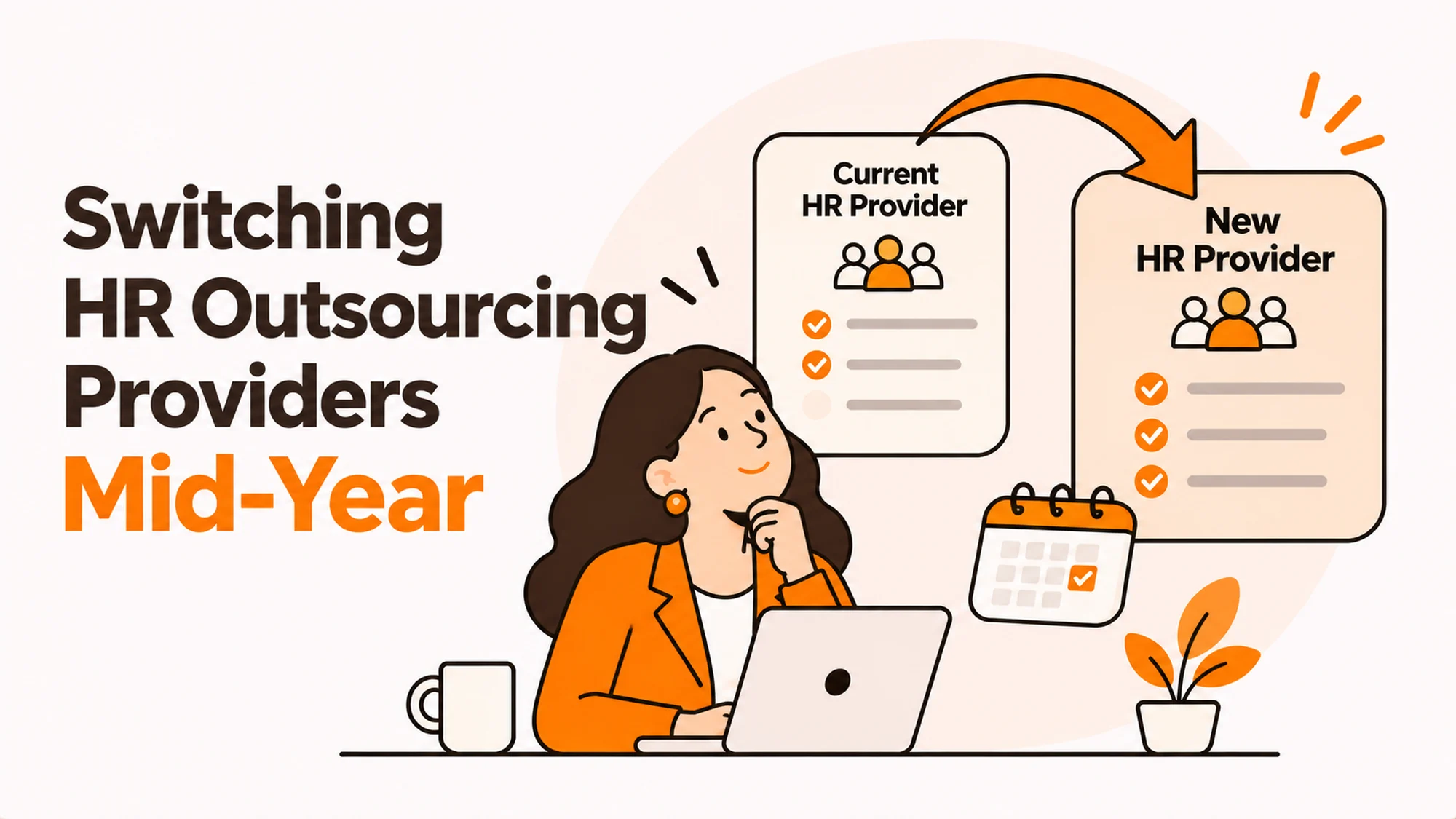
Switching hr outsourcing providers is mostly a data and timing problem. The decision is the easy part. What goes wrong is the handover, and almost all of it is avoidable by securing a few things before you give notice.
- Secure the data export before giving notice.
- Never move across a payroll boundary.
- Read the notice clause twice.
- Run one cycle in parallel if you can.
- Tell employees once, plainly.
- Equipment was never either provider’s job.
Do these in the right order
The single most common mistake is giving notice first, and it is entirely avoidable.
The moment you serve notice, your relationship changes. The outgoing provider has no commercial reason to make the handover smooth and a strong reason to do the minimum the contract requires. Anything you wanted that is not written down becomes a favour.
Best tools for HR Operations
So the sequence runs: read the contract, get the export, confirm the new provider’s timetable, then give notice. Not the other way round.
What to get first
A full data export in a usable format, a written confirmation of what the exit obligations are, and a date by which the new provider can genuinely take over rather than a date they hope to.
That third item is worth pressing on. Incoming providers are optimistic about setup time because optimism wins the work, and the honest answer usually sits a few weeks beyond the first one you are given. Ask what has to be true for their date to hold, and ask what happens to the date if your data arrives a fortnight late, because it probably will.
Never move across a payroll boundary
If you take one thing from this, take this.
Switch between pay cycles, with a clean break, and never halfway through one. A cycle that starts with one provider and finishes with another is where errors land, and errors here are visible to every employee at once.
That constrains your timing more than anything in the contract. Work backwards from the cycle boundary you want, add the new provider’s setup time, add your own data cleaning, and that tells you when notice has to be served.
The adjacent rule: pick a quiet month. Moving across a year end, a bonus cycle, a benefits renewal or a tax period boundary adds a second migration on top of the first.
What is legally required around payroll timing and record keeping differs by jurisdiction, so that part goes to your own adviser rather than to either provider’s helpline. Both have an interest in the answer.
Read the notice clause twice
Four things in it decide how expensive this is, and people typically read only the first.
- Notice length, and whether it can only be served at certain points in the term.
- Auto renewal. Many agreements roll for a further year unless notice lands in a window, and that window is often months before the end date.
- Exit charges. Data extraction fees, final period charges, project work in flight.
- What they must hand over, in what format, and how quickly.
The renewal window is the expensive one. Miss it by a week and the decision is deferred a year, which is how companies end up another twelve months into an arrangement they had already decided against.
Diarise it the day you sign anything, not the day you start thinking about leaving.
Exit charges deserve one specific question rather than a general one: is there a fee for the data extraction itself. A provider entitled to charge for the export holds the one thing you cannot proceed without, and a figure agreed at signing is a very different conversation from a figure quoted after notice is served.
The data handover is the whole job
Everything else is logistics. This is the part that determines whether you keep your history.
Ask for employee records, contracts and variations, pay history, leave balances and accruals, benefits enrolments, performance records, and anything relating to open cases.
Ask for it in a structured format rather than documents. A folder of PDFs is a filing cabinet, not data, and reconstructing leave balances from it is a week nobody budgeted.
| What to request | Good format | What you usually get |
|---|---|---|
| Employee records | Structured export | Structured export |
| Contracts and variations | Files, named by person | A single archive |
| Leave balances | Structured, with accrual rules | Balances only |
| Pay history | Structured, per period | Payslip documents |
| Open cases | Written summary | Nothing unless asked |
The last row is the one that hurts. Open cases live partly in somebody’s head, and that person is about to stop taking your calls. Ask for a written summary of every live matter while they still have a reason to write one.
Run one cycle in parallel if you can
Expensive, inconvenient, and worth it more often than people expect.
For one pay cycle, have the new provider produce the output alongside the old one and compare. Not to catch fraud, but to catch the quiet translation errors: a leave balance that transferred wrong, a benefit that mapped to the wrong code, a reporting line that inverted.
Those errors are cheap to fix before they reach anybody and awkward afterwards. One overlapping cycle buys you a comparison nothing else provides.
If the budget genuinely does not allow it, the fallback is to check the first real cycle line by line rather than spot checking, and to have whoever knows the payroll best do that check personally.
Either way, keep the old provider’s final export somewhere you control rather than only in the new system. A migration you cannot compare against is a migration you have to trust.
Tell employees once, plainly
Internal communication on this is usually either absent or overdone, and both cause avoidable questions.
One message, before anything visible changes. What is changing, when, what they need to do, which is usually nothing, and where to go if something looks wrong on their payslip or in their records.
What not to include: the commercial reasoning, criticism of the outgoing provider, or a promise that nothing will change. Something always changes, usually the route for asking a question, and a promise that breaks in week two costs more than the honest version would have.
Tell managers separately and slightly earlier, because they will be asked first regardless of what the message says. Give them the two or three answers they will actually need rather than a briefing document, since a short answer they can repeat is worth more than a page they will not read.
how switching equipment vendors actually goes covers the same shape of move on the equipment side, and the mechanics rhyme more than you would expect.
Equipment was never either provider’s job
Worth a paragraph because a switch is when people discover it.
Neither the outgoing nor the incoming provider holds a record of who has which laptop, because that was never in either scope. If you have been assuming somebody tracks it, a transition is the moment that assumption surfaces, usually when a leaver and a new starter happen in the same fortnight as the migration.
So treat the equipment register as your own migration task, separate from the HR one. Reconcile the list against reality before the switch rather than after, because during a transition there is nobody to ask.
a managed laptop lifecycle service is the arrangement that holds that register properly, and the questions to ask an equipment vendor covers what to ask before choosing one.
the NIST Cybersecurity Framework treats knowing what you own as the foundation everything else rests on, which is as true of laptops as of servers, and NIST Special Publication 800-88 on media sanitization covers the evidence side when a machine finally leaves.
When not to switch
Three situations where the honest answer is to stay and fix it.
The problem is one person. A poor account manager is a conversation, not a migration. Ask for a different one before concluding the provider is wrong.
The problem is your data. If their output is wrong because what you gave them was wrong, a new provider inherits the same mess plus a migration to blame. Clean it first and the complaint may disappear.
The problem is unclear scope. If the frustration is work nobody agreed to own, that is a scope document, not a switch. A new provider with the same vague scope produces the same gaps in six months.
A switch is worth it when the service is genuinely unreliable, when the provider cannot support where you are going, or when the commercials have drifted far enough that the move pays for itself. It is not worth it as a way of avoiding a difficult conversation, which is what a surprising share of switches turn out to be.
Reconcile the register before the switch, not after. See a laptop retrieval service for remote employees or storage and redeployment for returned laptops.
Frequently asked questions
What is the right order when switching hr outsourcing providers?
Read the contract, get a full data export, confirm the new provider’s real timetable, then give notice. Serving notice first changes the relationship: the outgoing provider has no reason to go beyond the contract, so anything not written down becomes a favour.
When in the year should the switch happen?
Between pay cycles with a clean break, never halfway through one, and in a quiet month. Moving across a year end, a bonus cycle, a benefits renewal or a tax boundary adds a second migration on top of the first.
What is the most expensive clause to miss?
The auto renewal window. Many agreements roll for another year unless notice lands in a window that often sits months before the end date. Miss it by a week and the decision is deferred twelve months. Diarise it the day you sign.
What should we ask the outgoing provider for?
Employee records, contracts and variations, pay history, leave balances with their accrual rules, benefits enrolments, performance records and a written summary of every open case. Ask for structured data rather than documents.
Is running one cycle in parallel worth the cost?
More often than people expect. It catches quiet translation errors: a leave balance that transferred wrong, a benefit mapped to the wrong code, an inverted reporting line. If the budget will not allow it, check the first real cycle line by line instead.
What should employees be told?
One message before anything visible changes: what is changing, when, what they need to do, and where to go if something looks wrong. Leave out the commercial reasoning and any promise that nothing will change, because the question route usually does.
When should we not switch?
When the problem is one account manager, which is a conversation. When the problem is your own data, since a new provider inherits the same mess. And when the problem is unclear scope, which a new contract with the same vagueness reproduces in six months.