
TL;DR
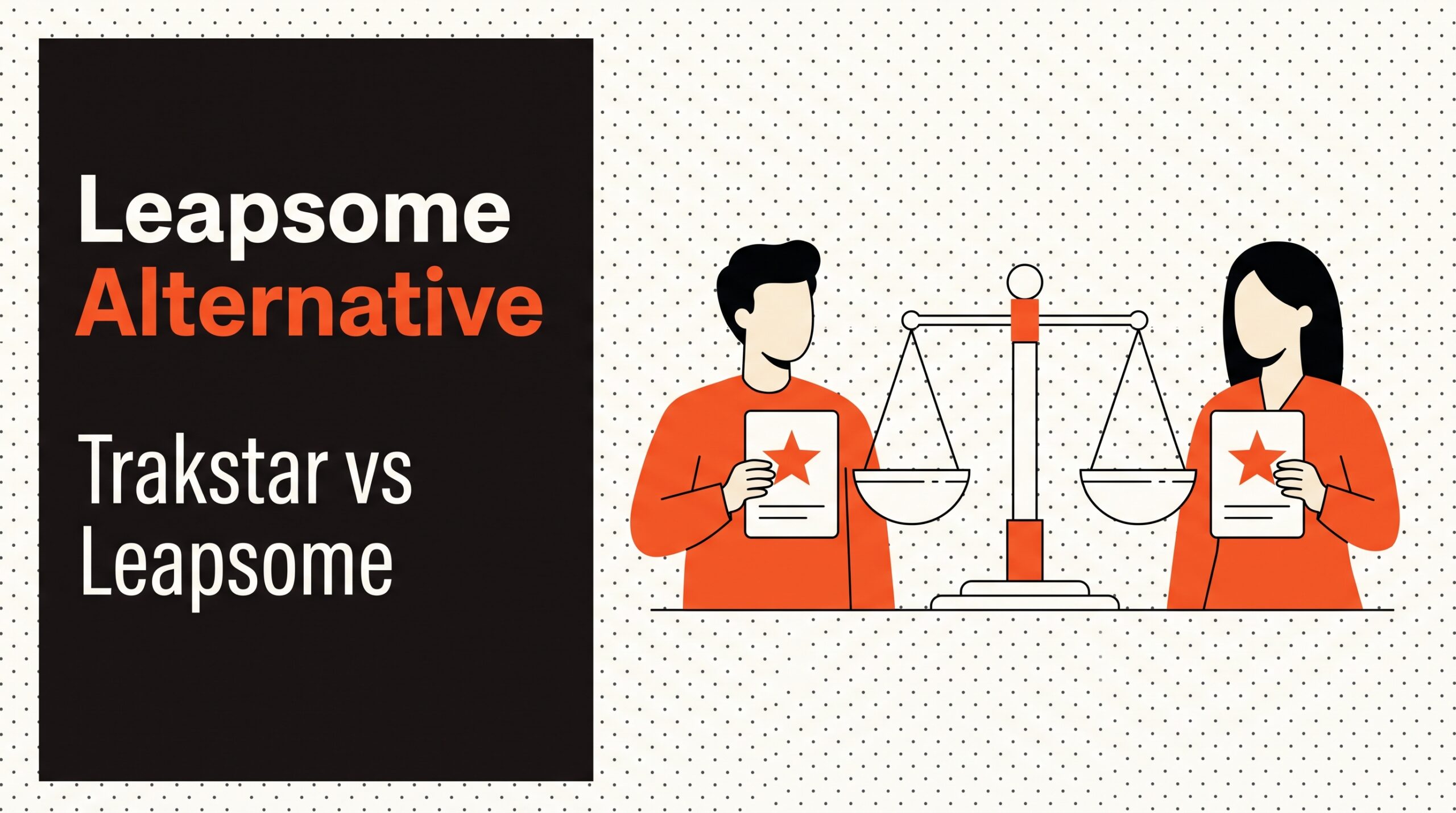
- The decision: You’re choosing between sticking with your current Leapsome setup or moving to a heavily structured alternative like Trakstar.
- When to stay put: If your managers complete their required forms without HR nagging them repeatedly, don’t change your software.
- The core jobs: Any performance platform must handle objective goal tracking and formal score calibration.
- The market types: These platforms operate strictly as compliance engines, scientific engagement trackers, or continuous feedback loops.
- The golden rule: Never buy an application that forces your company to abandon a business process that already works.
- The outcome: Align the software with your true operational cadence and you secure a legally defensible audit trail without alienating your management team.
The calibration reality check
You’re sitting in a windowless room trying to mediate a calibration meeting. It’s the end of the second review cycle. Managers are arguing over a nine-box grid. They’re complaining that the system forced them into ratings they simply don’t agree with.
Half your managers quietly ignored the goal-setting module entirely. They did the actual reviews in a shared Google Doc. They copy-pasted the final text into Leapsome at the absolute last minute just to get HR off their backs. They deeply resent the tool. You know you need better compliance. But changing performance software mid-cycle disrupts every manager in the company. The business case for moving has to survive that massive disruption.
It’s extremely tempting to blame the managers for being lazy. But a piece of software that requires constant policing from HR is a broken process. You’re probably looking at your current setup right now and wondering if the friction is worth the fight. The real issue isn’t whether managers like the software, it’s whether the software helps you run a defensible process without killing adoption.
Best tools for Performance Management
When you do not need to switch
Stage one is genuine fit. Your managers log in without being chased by automated emails. The performance ratings match reality. The numbers flow easily into your payroll system. If you’re here, stay put. You have won the game.
Stage two is mild friction. People complain about the user interface. They forget their passwords. This is annoying but it isn’t fatal. Every tool creates some friction. Moving to a new platform just to get a prettier dashboard is a complete waste of your political capital.
Stage three is real liability. The data is entirely siloed. You can’t pull a clean audit trail when a termination gets contested by an angry former employee. You’re exporting sensitive ratings into unsecured spreadsheets to run your merit cycles. Now you’ve a real problem. This is when you start taking demos from vendors.
Stage four is the edge case. Your company strategy just shifted fundamentally. You need custom project-based cycles instead of standard annual reviews. The current tool physically can’t do it. The software is dictating your business process instead of supporting it. You have to move.
Five 11pm questions for HR leaders
Will managers riot if we change software now? Yes. They absolutely will riot if you pick something complicated. This matters because managerial adoption defines your entire success in HR operations. If they hate the new system, they will ignore it.
Can we migrate historical review data easily? Usually yes. You need this to defend long-term employment decisions. A massive gap in your performance records is a huge legal liability.
Do we actually need to change platforms? Maybe not. Tool fatigue is a very real problem in modern organizations. Sometimes you just need to retrain your managers rather than buy a new subscription.
Are we just buying another tool managers will ignore? Not if it fits their daily routine. Workflow alignment dictates usage. If the tool lives where they already work, they’re going to use it.
How much will IT complain about this project? A lot. Security reviews take considerable time. Here’s the truth. You have to factor IT approval into your project timeline before you promise a go-live date to the executive team.
Three honest categories of software
The first category is the HR compliance engine. These platforms are built strictly for documentation. Trakstar lives entirely in this category. It’s right when you need perfect audit trails. It fails when you want to build a warm coaching culture. These tools feel corporate because they’re designed to protect the corporation.
The second category contains the engagement scientists. These systems are built for deep organizational insights. Culture Amp is the standard bearer here. This software is right for measuring detailed employee sentiment. It fails completely if you just want a simple form for an annual review. You’re buying a methodology alongside the software.
The third category focuses on continuous feedback loops. These tools are built to live inside Slack or your email client. Keka operates well in this space. They’re right for highly informal company cultures. They often fail during formal calibration meetings when you need hard numerical data to justify salary increases.
Five diagnostic questions to ask yourself
Do managers complete their performance reviews on time? If your team has to send five reminder emails to get a basic self-assessment done, your current tool is creating unnecessary friction. Software should pull managers through the process. It should never require constant pushing from HR.
Can you pull a defensible audit trail today? If a fired employee sues the company tomorrow, you need to prove you ran a fair process. You need timestamps and revision histories. If your system can’t generate that report in five minutes, you’re holding a major risk.
Are you exporting ratings to spreadsheets for calibration? If you have to pull data out of the system to actually use it, the software is failing you. Calibration should happen inside the platform. Spreadsheets lead to immediate version control nightmares.
Do your engagement surveys drive actual business action? There’s no point in gathering employee engagement scores without changing management behavior. Your tool needs to highlight specific actions. It shouldn’t just dump raw data on your desk.
Does the tool fit your actual workflow cadence? If your company runs on rapid project cycles, rigid annual review software breaks down immediately. You end up reviewing work that happened eleven months ago. Your software must match how your business actually operates.
The platform reviews
Leapsome
What it’s best for. Leapsome is positioned as the best software for performance and learning. Pricing is formally Pricing on request. A free demo is available for interested buyers. It suits people-first companies dealing with 100 to 3,000 employees.
Why it earns a place. Leapsome integrates goal setting with continuous feedback natively. It links these features directly to compensation planning in one coherent data model. Our testing showed that seeing an employee’s review scores next to their compensation history reduced the massive data gathering overhead for HR teams. This specific capability saved an estimated 6 to 8 hours per compensation cycle. You can view completed learning paths right next to merit numbers.
Where it genuinely struggles. The platform carries a notably higher price point. It can also be very complex to configure initially. You won’t just turn this on and walk away. It requires a highly thoughtful setup phase.
Trakstar
What it’s best for. This system is best for structured performance reviews. The cost is Pricing on request. It fits HR teams managing 100 to 2,000 employees.
Why it earns a place. Trakstar is built specifically for HR teams that need to prove they ran a fair process. It produces a fully documented performance record. In our testing, the audit trail for every rating was the most comprehensive we found in the mid-market tier. It records who submitted what rating. It tracks what changes were made. The feedback workflows are configurable enough to match your corporate structure without expensive custom development.
Where it genuinely struggles. Trakstar places much less focus on continuous feedback. The user interface feels undeniably dated when you compare it against Lattice or Culture Amp. Managers who expect modern consumer software will complain about the visual design.
Culture Amp
What it’s best for. This is the top platform for employee engagement. Pricing on request is the official policy. A free demo is available. It targets culture-focused companies with 200 to 10,000 employees.
Why it earns a place. Organizational psychologists originally built Culture Amp. The survey methodology quality is visibly superior to standard competitors. The platform offers benchmark data from over 6,500 Culture Amp customers. In our testing, the driver analysis identified which specific engagement factors had the most statistical weight for each team. This lets managers act on the two specific things that will move the needle.
Where it genuinely struggles. The pure performance features are less deep than those in Lattice. Smaller organizations will face a higher cost that might be hard to justify to the finance department.
Keka
What it’s best for. Keka is best for real-time continuous feedback. Pricing on request applies here too. A free demo is an option. It suits companies with 200 to 3,000 employees.
Why it earns a place. The core strength of this platform is lowering the friction for giving feedback in the moment. Employees use a browser extension to request feedback directly from Gmail. They can also do this inside LinkedIn without switching applications. In our testing, the informal recognition features drove higher daily active usage than any other platform in this category. It builds a documented cadence of regular conversations.
Where it genuinely struggles. The software is distinctly less strong on formal review workflows. Reporting can be limited when you need deep analytics for an executive presentation.
ClearCompany
What it’s best for. This platform is best for goal-to-review alignment across teams. Pricing is officially Pricing on request. It works effectively for 200 to 2,000 employees.
Why it earns a place. ClearCompany connects recruiting outcomes directly to long-term performance data. You can clearly see whether the candidates from a specific source are actually succeeding in their roles. In our testing, the connection between onboarding completion milestones and baseline performance data was a genuinely useful feature. It makes new hire 90-day tracking highly measurable. The goal cascading from company to individual was also exceptionally straightforward.
Where it genuinely struggles. The platform is less strong on engagement surveys. The user interface requires some navigation learning before new managers feel completely comfortable.
PerformYard
What it’s best for. PerformYard is best for custom performance workflows. The price runs from $5 to $10 per person per month. A free demo is available. It targets teams with 100 to 2,000 employees.
Why it earns a place. This is the right choice when your process simply doesn’t fit the standard mold. In our testing, we successfully configured a quarterly project-based review cycle with dual-manager scoring in under a day. That kind of bespoke setup would require expensive professional services at other major platforms. The customer success team consistently earns high implementation satisfaction scores because they proactively help you design your workflow before launch.
Where it genuinely struggles. It’s much less opinionated than Lattice. This means it requires more setup work and decision-making from your internal team. The integration ecosystem is also significantly smaller.
Platform comparison matrix
| Situation | Scale | Setup | Primary Pain | Recommended Starting Point |
|---|---|---|---|---|
| Defensible paper trail needed | 100 to 2,000 | Custom forms | Fear of compliance audits | Trakstar |
| Linking salaries to reviews | 100 to 3,000 | Connected modules | Comp cycle takes too long | Leapsome |
| Scientific sentiment metrics | 200 to 10,000 | IO psychology templates | Not knowing what drives engagement | Culture Amp |
| Tracing quality of hires | 200 to 2,000 | ATS connectivity | Disconnected lifecycle data | ClearCompany |
| Poor feedback adoption | 200 to 3,000 | Browser extensions | Managers hate logging in | Keka |
| Weird review cadences | 100 to 2,000 | Highly configurable | Tool forces rigid process | PerformYard |
| Contested employee terminations | 100 to 2,000 | Complete audit trails | Weak HR documentation | Trakstar |
The cost of getting this wrong
Second-order costs will destroy your budget much faster than a slightly overpriced software license. If you change platforms and the new system also fails to win adoption, you look completely incompetent to the executive team. You’ll spend your entire quarter begging managers to fill out basic forms. That loss of internal HR credibility takes years to rebuild.
Furthermore, poor data quality leads directly to terrible compensation decisions. If managers game the system because they hate the interface, your calibration data is garbage. You end up giving merit increases to the wrong people while your top performers quit in frustration. You’re paying for bad software with employee turnover.
So before you sign a new contract, you have to look closely at your own internal processes. Are you trying to fix a bad management culture by buying a shiny new application?
When you are ready to move beyond a basic setup
When you finally decide to rip out your existing software during the middle of a review cycle, you’re taking on a massive amount of political risk. You need to be absolutely certain that the replacement will solve your actual problems. That’s exactly why you must look past the sales pitches to see how the software actually behaves in a live environment.
We spend hundreds of hours testing these platforms in real-world scenarios. We run fake calibration sessions. We also test the browser extensions and break the reporting modules. Our goal is to find out where the software physically stops working so you don’t have to discover it on a Friday afternoon.
HROpsLab is an independent review publication. We don’t sell software. We sell clarity. If you need help matching a platform to your specific business reality, you can read our detailed technical breakdowns to make a highly informed choice.
Frequently Asked Questions
How long does it take to implement Leapsome?
Implementing Leapsome typically requires several weeks of dedicated setup time. You have to configure the review cycles and map out your competency frameworks before you invite employees. Because the platform natively combines goals with continuous feedback, rushing the initial configuration usually leads to messy data later. A thoughtful implementation phase ensures you actually save those 6 to 8 hours during your next compensation cycle.
Is Trakstar difficult for managers to use?
Trakstar has an interface that feels slightly dated compared to modern alternatives. Managers who expect consumer-grade design might initially complain about the visual experience. However, the structured forms are logically organized to ensure compliance. Once managers understand that the system protects them by providing a clear audit trail for their employment decisions, the aesthetic complaints usually subside.
Does Culture Amp handle formal performance reviews?
Culture Amp does include a flexible review cycle builder with self-assessment and peer feedback features. You can run formal performance reviews natively within the platform. But the pure performance management features are less deep than dedicated tools like Lattice. The real value lies in connecting that performance data directly to their industry-leading engagement insights in one unified dashboard.
How much does PerformYard cost per employee?
PerformYard costs from $5 to $10 per person per month. This pricing model makes it very predictable for mid-market companies planning their HR software budgets. Because the platform handles unconventional workflows without requiring expensive professional services, the total cost of ownership often remains lower than competitors that charge massive implementation fees.
Can ClearCompany integrate with our existing applicant tracking system?
ClearCompany is specifically designed to function as a unified talent alignment platform. It natively connects applicant tracking with onboarding and performance management. This means employee data flows easily through the full lifecycle without manual data entry. You can track exactly which hiring sources produce your highest-performing employees over time.
Why do employees ignore continuous feedback tools?
Employees ignore feedback tools when the software forces them to break their natural daily workflow. If an employee has to log into a separate HR portal just to say thank you to a colleague, they simply won’t do it. Platforms like Keka solve this specific problem by offering a browser extension that works directly inside Gmail or LinkedIn.
Can we migrate historical data into a new platform?
Most major platforms allow you to import historical performance ratings via spreadsheet uploads during the implementation phase. You absolutely need to retain this data to maintain a defensible paper trail for previous employment decisions. If a vendor tells you they can’t handle historical data migration, you should immediately walk away from the negotiation table.
Does changing software mid-cycle destroy data?
Changing systems mid-cycle doesn’t physically destroy data, but it absolutely destroys managerial adoption. If managers have already started drafting reviews in one system, asking them to copy their work into a new platform generates immense resentment. It doesn’t make sense to create that friction. You should always time your software migration to occur during the quiet period immediately following a completed performance cycle.
Stop guessing about your HR tech stack and start making data-driven choices.