TL;DR
- Deciding between Jobvite and a replacement means justifying the high migration cost to your CFO.
- Stick with your current setup if your main complaint is an old interface or minor formatting glitches.
- An applicant tracking system must capture applications and move candidates through a compliant pipeline.
- The market splits heavily between massive enterprise compliance engines and speed focused mid market tools.
- Choose a new system only when your current technical constraints actively prevent you from filling open headcount.
- A successful move will permanently lower your time to fill for critical engineering roles.
The Real Cost of a Broken Pipeline
You’re staring at the Q3 hiring pipeline on a Tuesday afternoon. The CFO wants to know exactly why engineering time to fill is stretching past eighty days. You know part of the reason is that hiring managers outright refuse to log into Jobvite, choosing instead to trade all their candidate feedback over Slack. Your recruiters are wasting hours manually updating candidate stages just to keep the compliance reporting accurate. It’s an absolute mess.
You’ve been here before. You know perfectly well that ripping out a core HR system is a total nightmare. The data migration alone took six months last time. You are staring at a new demo from SmartRecruiters. They are promising automated compliance workflows. They show you a beautiful internal hiring marketplace. It looks incredibly tempting.
But the internal political capital required to force a software switch is massive. So you must build a business case that survives a brutal finance review. You can’t just say the current user interface feels old. The real issue isn’t whether the interface is pretty, it is whether your current system creates measurable drag on business growth.
Best tools for Applicant Tracking (ATS)
When You Should Stay Exactly Where You Are
Your current setup is genuinely fine. The referral portal works. Employees can search open roles and generate trackable referral links without constant HR involvement. You are annoyed by the extra clicks. But the data remains clean.
You feel some real friction. Hiring managers complain loudly about the login process. The interface feels older than standard consumer apps. Offers still go out on time. And you don’t move core HR systems for mere user complaints.
You face a real liability. Candidates are dropping out because the mobile apply flow breaks repeatedly. GDPR consent is tracked in local spreadsheets because your platform configuration cannot handle multi country rules. You’re bleeding top talent.
You hit the edge case. Your company just acquired another distinct brand. You now have entirely different hiring workflows for different business units. The current setup cannot support two different candidate experiences in one instance.
Five Questions You Ask Yourself at Midnight
Can I deploy this without writing a custom API? Yes, if you pick an ecosystem player. Integrations with core HR software must work natively out of the box.
Will my hiring managers actually use the scorecard? Only if it lives where they already work. Collaboration tools matter because software adoption drops to zero if the interface requires a training manual.
How bad will the implementation be? Usually worse than you initially expect. Speed to value varies wildly between a two hour setup and a massive enterprise deployment.
Does the reporting satisfy the compliance audit? It absolutely must. EEO data collection and audit trails for employment decisions are non negotiable for regulated industries.
Are we paying for features we will ignore? Almost certainly. Many talent teams buy complex AI sourcing modules when they really just need a better careers site.
Three Honest Categories of Hiring Software
The Enterprise Heavyweights. These handle massive scale and complex global compliance workflows. They’re right when you have thousands of employees across heavily regulated geographies. They fail spectacularly when deployed to small teams who lack dedicated operations administrators.
The Collaboration Engines. These prioritise the hiring manager experience and team visibility above all else. They are right when your interview process relies on deep involvement from non HR staff. They fail when you need rigid data segregation between operating brands.
The Attraction Specialists. These focus intensely on top of funnel marketing and employer branding. They are right when candidate pipeline volume is your primary operational constraint. They fail when you need deep post hire onboarding features.
Five Questions to Diagnose Your Current Setup
Are your hiring managers circumventing the system entirely? If feedback lives in email threads rather than your tracking system, your data is already compromised. You can’t fix a broken process by buying new software. But a completely ignored tool is a major warning sign.
How many hours do recruiters spend on manual data entry? Calculate the weekly time spent copying candidate records between your sourcing tools and your core platform. When that number exceeds the cost of a modern integration, the CFO conversation gets much easier.
Can you accurately report on pipeline conversion rates? You need to know exactly where candidates drop out. If your current reporting requires downloading files for manual manipulation, you are flying blind.
Is your candidate experience costing you accepted offers? Look at your drop off rates on mobile applications. High abandonment indicates that your application flow is actively fighting the applicant.
Does your system support your expected headcount scale? A tool built for fifty hires a year will break under the weight of five hundred. You must assess whether the infrastructure can handle your three year growth plan.
Reviewing the Major Options
Jobvite
Positioning: Best ATS with referral and employer branding tools Pricing: Pricing on request. Trial: Free demo available Who it suits: Mid to large companies (500 to 5,000 employees) investing in employee referral programmes alongside traditional ATS workflows. Why we picked it: Jobvite built referral programme management into its core years before competitors. The maturity clearly shows. In our testing, the referral portal let employees search open roles and generate trackable referral links without HR involvement. The platform (now part of Employ Inc.) also has a sophisticated employer brand content management layer. This helps companies control how their brand appears across every hiring channel. Where it struggles: The UI is visibly less modern than newer competitors. It becomes complex for smaller teams to configure properly.
SmartRecruiters
Positioning: Best enterprise ATS for complex hiring operations Pricing: Pricing on request. Trial: Free demo available Who it suits: Large enterprises (1,000+ employees) with complex multi brand or high volume recruiting operations that need a full talent acquisition suite. Why we picked it: SmartRecruiters stands out at enterprise scale with a built in hiring marketplace. This network connects staffing agencies and sourcing vendors directly from the platform. In our testing, the global compliance features handled GDPR candidate consent and EEO data collection without requiring custom workarounds. That is genuinely rare at this price point. AI machine learning models rank applicants by fit based on job requirements. Where it struggles: The configuration is highly complex for smaller teams. There is a very high cost at enterprise scale.
Workable
Positioning: Best easy to use ATS with built in sourcing Pricing: From $189/month. Trial: 15 day free trial Who it suits: Growing companies (10 to 500 employees) needing software live fast, without paying per seat for every hiring manager. Why we picked it: Setup speed is unmatched. Workable was live and posting jobs within two hours in our testing. The People Search feature accesses 400 million+ candidate profiles. This lets recruiters find passive candidates without leaving the platform. Built in video screening tools let teams evaluate more applicants before committing to live interview time. Where it struggles: It has limited depth for enterprise recruiting. The CRM features are less mature than Lever.
iCIMS
Positioning: Best ATS for large enterprise talent operations Pricing: Pricing on request. Trial: Free demo available Who it suits: Large enterprises (2,000+ employees) with high volume recruiting needs across multiple locations. Why we picked it: iCIMS has processed more enterprise hiring volume than almost any other platform. That deep experience shows in its handling of complex configurability. In our testing, setting up completely different hiring workflows for different business units was highly impressive. The TextRecruit SMS engagement module dramatically improves response rates for hourly hiring. The offer module handles digital letters and electronic signature collection smoothly. Where it struggles: The interface feels distinctly dated versus newer competitors. Implementation cycles are notoriously long.
Pinpoint
Positioning: Best ATS for employer branding led hiring Pricing: Pricing on request. Trial: Free demo available Who it suits: In house talent teams (50 to 1,000 employees) that treat employer brand as a competitive advantage and want the best careers site. Why we picked it: Pinpoint was designed entirely for in house talent teams. The careers site builder produces genuinely beautiful pages. We’ve measured a 23% higher apply rate versus a plain careers page in our testing. The candidate portal reduces status check emails to near zero. Applicants simply log in to track their own progress. Where it struggles: They have a smaller market presence than Greenhouse. The CRM functionality remains less developed.
Recruitee
Positioning: Best ATS for collaborative, team based hiring Pricing: From $224/month. Trial: 18 day free trial Who it suits: Companies (50 to 500 employees) where hiring managers are heavily involved in the evaluation process. Why we picked it: Recruitee makes collaborative hiring incredibly accessible to non HR users. Hiring managers consistently praised the candidate card view as the clearest feedback interface they had used. You can distribute roles to 1,000+ job boards from one interface. The talent pools feature helps organise passive candidates by role type. Where it struggles: It offers fewer advanced analytics features. It is fundamentally less suited for massive enterprise scale.
The Migration Decision Matrix
| Situation | Scale | Setup | Primary Pain | Recommended Starting Point |
|---|---|---|---|---|
| Global hiring footprint | 1,000+ employees | Suite and Marketplace | Managing too many vendor contracts | SmartRecruiters |
| Heavy referral reliance | 500 to 5,000 employees | Core ATS | Low employee referral volume | Jobvite |
| Immediate deployment need | 10 to 500 employees | Standalone ATS | No time for long implementation | Workable |
| High volume hourly hiring | 2,000+ employees | Modular Cloud | Low candidate response rates | iCIMS |
| Brand led hiring strategy | 50 to 1,000 employees | ATS and Careers Site | Low application conversion | Pinpoint |
| Hiring manager pushback | 50 to 500 employees | Collaborative ATS | Managers refuse to use software | Recruitee |
| Complex compliance tracking | 1,000+ employees | Full ATS Suite | GDPR and EEO tracking failing | SmartRecruiters |
The Hidden Price of a Botched Migration
The true cost of a failed migration is never just the software licence fee. It’s the lost productivity of your entire recruiting team. When a new system creates bottlenecks, recruiters revert to local spreadsheets. You lose data visibility overnight.
Then you have the severe impact on candidate experience. If your new multi country offer management workflow breaks down, top candidates will simply walk away. The financial cost of losing a single critical engineering hire outstrips your entire annual software budget.
You also burn your internal credibility. If you convince the CFO to fund a major transition and the new tool fails, you won’t get budget for another HR initiative for years. Are you absolutely certain your current pain is worth the risk of a botched migration?
Finding the Right Path Forward
Deciding when to upgrade your recruiting infrastructure requires clear, unbiased information. You need to know exactly how these tools perform in real corporate environments. Marketing brochures won’t tell you about the implementation delays.
HROpsLab exists to provide exactly that clarity. We are an independent review publication focused entirely on human resources technology. We do not sell software. We spend our time testing these platforms so you can make highly informed decisions.
Our editorial team evaluates each applicant tracking system on its actual technical merits. We look closely at the compliance workflows and the real world user experience. We give you the unvarnished facts you need to build a bulletproof business case.
Frequently Asked Questions
What exactly is an applicant tracking system?
An applicant tracking system manages the recruitment process from job posting to offer acceptance. It replaces shared inboxes with a structured candidate database. This ensures no applicant gets lost in the shuffle.
How does Jobvite compare directly to SmartRecruiters?
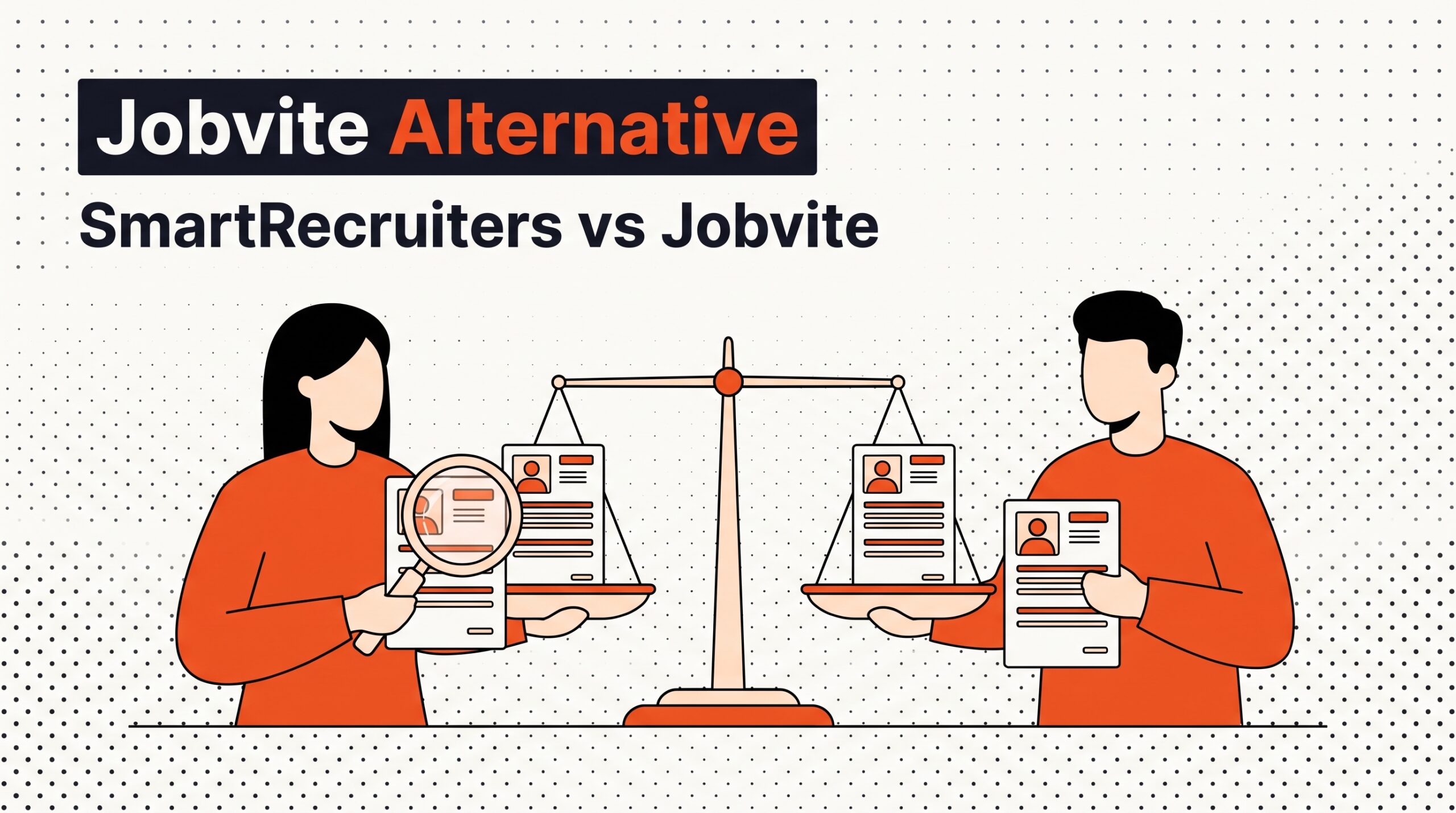
Jobvite excels at employee referrals and employer brand content management. SmartRecruiters focuses on complex compliance and massive enterprise scale. You choose Jobvite for network driven hiring and SmartRecruiters for global operational control.
When should a growing company use Workable?
Workable is ideal when you need software live immediately. In our tests, it was posting jobs within two hours. The flat monthly pricing also makes it highly attractive if you have many occasional hiring managers.
Why avoid migrating if the current interface is just slightly dated?
Switching core HR platforms requires migrating historical candidate data and retraining your entire staff. These are massive hidden costs. You should only pay that price if the current system actively prevents you from hitting headcount targets.
Can iCIMS really handle complex global compliance?
Yes. It has processed immense enterprise hiring volume for years. It successfully supports completely different hiring workflows for different business units within a single software instance.
Does Pinpoint require a web developer to build a careers site?
No. Pinpoint includes a highly capable careers site builder out of the box. It doesn’t require technical resources. Talent teams can launch modern, mobile responsive job pages without writing any code.
Is SmartRecruiters too expensive for a two hundred person company?
Almost certainly. The high cost at enterprise scale makes it difficult to justify for smaller teams. The configuration is also far too complex unless you have dedicated operations administrators.
We give HR leaders the unbiased data they need to build incredible teams.