
TL;DR
- You are deciding whether to rip out Lever for an alternative like Workable, a choice that requires spending massive political capital with your CFO.
- Do not switch if your hiring managers are actually using Lever’s two-way email sync and your only real complaint is a slightly clunky reporting dashboard.
- A successful applicant tracking system must manage open headcount tracking accurately. It also needs to log pipeline stages reliably without chaotic external email threads.
- The tools in this market fall into three buckets. You will find CRM-first platforms for proactive sourcing, fast-setup aggregators for job distribution, or heavy enterprise talent clouds.
- If your main pain point is occasional hiring managers refusing to learn a complex user interface, move to something simple with flat monthly pricing.
- Make the right choice here and you get faster time-to-hire metrics. You will also get hiring managers who actually log into the system voluntarily.
The Reality of Ripping Out Your ATS
It is Tuesday morning. Your VP of Engineering just pinged you about a broken scorecard link. You log into Lever to check the candidate profile. The nurture sequence fired correctly. The two-way email sync caught the candidate’s reply perfectly. But the hiring manager simply refused to click the calendar link. Instead, they started a totally new Slack thread with the recruiter. Now the data is fragmented. Your pipeline velocity metrics are ruined. You start wondering if a simpler tool like Workable would fix this headache. Here’s the reality. You can’t just fix a process problem with a software change.
The temptation to rip and replace is incredibly strong. You remember the demo for Workable. They promised you could be posting jobs within two hours. You look at your current setup. The idea of one-click job board distribution to 200 places sounds like a dream. But then you remember the pain of your last data migration. You recall the lost candidate notes. You remember the panic when compliance reporting broke down entirely. You know the CFO will demand a bulletproof business case before signing off on another implementation. You can’t just ask for budget without hard proof.
Switching software rarely fixes a broken process on its own. You might gain an AI candidate sourcing tool. You might lose the deep talent CRM that your best recruiters rely on every single day. The real issue is not the feature set of your current software, it is whether your recruiting motion aligns with how the platform expects you to work.
Best tools for Applicant Tracking (ATS)
When Staying Put Makes Sense
Your current setup might be genuinely fine. If your talent team relies heavily on proactive sourcing and passive candidate nurturing, Lever is already built for exactly that. Its CRM-first approach is rated 4.6 out of 5 on HROpsLab for a very good reason. It treats every candidate as a potential future hire rather than just a response to an open role. Do not break a working machine just because a few managers complain about the user interface. Keep the tool that works for your core team.
Friction is normal. No platform is perfect. Maybe reporting requires too much configuration. You might spend an extra hour each week exporting CSV files to build the exact dashboard your CEO wants. That is annoying. But it is not a reason to risk a massive data migration. Every system requires workarounds.
Real liability looks different. Liability is when you’re a small growing company of 150 people and you are paying per-seat fees for every hiring manager who logs in twice a year. If your cost structure is actively preventing you from giving system access to the right people, the platform is failing you. That’s when you actually need to build a business case for a move.
The edge case is when your company pivots its entire hiring model. If you suddenly switch from slow executive searches to hiring thousands of hourly workers across 50 locations, Lever will feel wrong. You’ll need a high-volume tool like iCIMS to handle that massive shift. Short of that, think very carefully before jumping ship.
The 11 PM Questions
Will my hiring managers actually use a new system? Probably, if you pick something with a simpler interface like Recruitee. Adoption drives data quality, which means less time chasing feedback.
Can I justify the cost of moving to the finance team? Yes, if you move to a flat monthly pricing model like Workable’s entry tier. Predictable costs win arguments with finance leaders.
Are we going to lose our historical candidate data? Not if you plan carefully, but the risk of losing context on passive candidates is very real. Past relationships are future hires, so data fidelity matters immensely.
Will a new tool really make sourcing easier? It can. Platforms with built-in AI search databases can surface candidates without requiring separate expensive licences. This saves recruiters significant time.
Is our current pain a software problem or a process problem? Most software pain is just bad process in disguise. It won’t fix bad interview habits to simply roll out a new dashboard.
Three Flavours of Applicant Tracking
The CRM-first platforms treat every candidate as a potential future hire. These tools build passive talent pipelines before roles even open. They’re perfect for companies that need to nurture relationships over months or years. They fail completely if your business model relies on posting a job and sorting through thousands of immediate applicants. Tools in this category focus heavily on outbound campaigns. They give recruiters deep historical context. They prevent embarrassing situations where a recruiter messages a candidate who interviewed last year.
The fast-setup aggregators focus almost exclusively on speed to value. They get your jobs distributed to hundreds of boards instantly. They’re right for growing companies that need to hire fast without complex workflows slowing them down. They fall apart when you reach enterprise scale. They also struggle when you need highly customised approval gates for different departments. These platforms thrive on simplicity. They are built for teams that want to turn the software on and start interviewing tomorrow.
The heavy enterprise clouds are built for massive applicant volume. They handle incredibly complex configurations across multiple business units. They are the right choice when you process thousands of applications per month and need deep compliance reporting. They fail for mid-market tech companies because the interface feels dated. The implementation also takes months. You buy these systems when your legal department demands perfect audit trails. You avoid them if agility is your primary goal.
Diagnosing Your True Pain Point
Do your recruiters spend more time hunting passive talent or filtering inbound applications? If they are hunting, you need strong CRM features and automated email sync. If they are filtering, you need automated knockout questions and bulk actions. Know your primary motion before you evaluate software. Buying an inbound tool for an outbound team is a disaster.
Are your hiring managers deeply engaged in the process? If managers ignore your scorecards, moving to a highly collaborative platform might help. Some systems make candidate feedback intuitive enough that non-HR users actually enjoy leaving notes. Look for tools with shared candidate evaluation cards. Stop fighting your managers on data entry. Just buy a tool they will actually use.
How complex are your hiring workflows realistically? Look at your open roles right now. If an engineer and a sales rep go through the exact same five stages, you need a basic tool. If different departments require completely different approval gates, you need an enterprise-grade platform. Be brutally honest about your complexity. Don’t buy enterprise software for a startup workflow.
What is your true budget structure? Paying per seat hurts when you have many occasional users. If your CFO hates variable software costs, you should evaluate platforms with flat monthly pricing. Predictable budgets make everyone happier. Software licences should never dictate who gets to interview a candidate. If they do, your pricing model is wrong.
Do you need deep recruiting analytics natively? Some teams are perfectly fine exporting data to build a pivot table. Others want custom dashboards showing source ROI and interviewer calibration scores natively. Decide what level of data maturity you actually possess before buying a massive analytics engine. Beautiful dashboards are useless if your data hygiene is terrible.
Reviewing the Alternatives
Lever Lever is designed for proactive talent teams that need a CRM-first approach alongside solid workflow management. It is rated 4.6 out of 5 on HROpsLab and ranks second out of ten in our testing. It earns its place by treating passive candidates brilliantly. The nurture campaign feature lets recruiters stay warm with people over months with minimal manual effort. In our testing, the two-way email sync was the cleanest available. Email threads appear in candidate profiles automatically without copy-paste. But it genuinely struggles with out-of-the-box analytics. Reporting requires configuration to get real value. It is also less focused on structured interview kits than some competitors. The platform suits companies between 100 and 2,000 employees. Pricing is strictly on request. A free demo is available to test the waters.
Workable Workable is perfect for growing companies that want an easy-to-use platform with built-in sourcing capabilities. Rated 4.5 out of 5 and ranked third overall, it earns a spot because it is incredibly fast to deploy. In our testing, it was live and posting jobs to 200 boards within two hours. No other platform comes close for speed-to-value. The AI People Search surfaces candidates from a 400-million profile database. This feature lets recruiters find passive candidates without paying extra for expensive sourcing tools. But it struggles with enterprise depth. The CRM features are less mature than Lever, making it weaker for long-term passive talent pooling. The flat pricing starts at $189 per month. A 15-day free trial is available. It suits companies with 10 to 500 employees.
iCIMS iCIMS is built for large enterprise talent operations that need a proven system. Rated 4.3 out of 5 and ranked sixth, it earns its place through sheer scalability. It has processed more enterprise hiring volume than almost any other platform. You can set up completely different hiring workflows for different job families and geographies. The TextRecruit SMS candidate engagement module is a standout for high-volume hourly hiring. But it struggles with modern usability. The interface feels dated compared to newer competitors. The implementation cycles are notoriously long. Pricing is on request. A free demo is available. It targets enterprises with over 2,000 employees.
Recruitee Recruitee is ideal for collaborative teams where hiring managers are heavily involved. Rated 4.1 out of 5 and ranked eighth, it earns its place by making evaluation easy for non-HR users. Hiring managers praised the candidate card view as the clearest feedback interface they had used. The careers site builder lets teams launch a branded jobs page without a developer. You can organise passive candidates into talent pools easily. But it struggles with advanced analytics. It has fewer data features for capacity planning at scale. It isn’t built for massive enterprise volume. Pricing starts at $224 per month. An 18-day free trial is available. It suits companies with 50 to 500 employees.
Ashby Ashby targets high-growth tech companies with data-obsessed talent teams. Rated 4.6 out of 5 and ranked fifth, it earns its place with an unmatched analytics suite. You can see source ROI and interview-to-offer conversion by stage natively. Automated interview scheduling is built right in. Panel coordination and interviewer load balancing are fantastic. But it genuinely struggles with brand maturity. It is less established than older players like Greenhouse or Lever. Some integrations are still in beta. Pricing is on request. A free demo is available. It suits companies between 50 and 2,000 employees.
JazzHR JazzHR fits small businesses making fewer than 50 hires per year. Rated 4.2 out of 5 and ranked seventh, it earns its place by covering the essentials at an incredibly affordable starting price of $75 per month. You get one-click job board distribution to 50 boards. The automated rejection emails are genuinely customisable. The visual pipeline has drag-and-drop stages. But it struggles when you scale past 200 employees. The reporting and analytics are simply too limited for complex operations. A 21-day free trial is available. It integrates with BambooHR and Gusto. It targets small businesses with 5 to 100 employees.
Which Tool Fits Your Reality
| Situation | Scale | Setup | Primary Pain | Recommended Starting Point |
|---|---|---|---|---|
| Proactive sourcing focus | 100 to 2,000 | CRM-first approach | Losing track of passive candidates | Lever |
| Fast setup needed | 10 to 500 | Flat monthly fee | Taking too long to post roles | Workable |
| High-volume hourly hiring | 2,000+ | Enterprise cloud | Managing massive applicant numbers | iCIMS |
| Manager involvement is low | 50 to 500 | Shared profiles | Poor interview feedback rates | Recruitee |
| Obsessed with metrics | 50 to 2,000 | All-in-one suite | Poor visibility into funnel data | Ashby |
| Occasional hiring blocks | 10 to 500 | Flat monthly fee | Per-seat costs are too high | Workable |
| Tight budget constraints | 5 to 100 | Affordable base tier | Software costs are too high | JazzHR |
The Hidden Costs of a Bad Switch
A botched migration doesn’t just cost you the implementation fee. The real damage happens in the business units. When a new system fails to sync calendars correctly, candidate interviews get dropped. Engineering leaders lose faith in the recruiting team. You start seeing rogue hiring managers tracking candidates in personal spreadsheets because they refuse to use the new software. That creates massive compliance risks under data protection rules.
You also lose precious momentum. A talent team distracted by a broken tool stops sourcing. Time-to-fill metrics spike rapidly. Your best recruiters get frustrated doing manual data entry. They might even start answering LinkedIn messages from competing agencies. The secondary costs always dwarf the software licence. Poor system adoption creates a data vacuum that ruins your ability to forecast headcount accurately. It doesn’t happen overnight, but the decay is inevitable.
So before you rip out a system that technically works, ask yourself this. Are you trying to fix a software problem, or are you trying to buy a new process because you don’t want to enforce the old one?
Getting the Right Advice
Evaluating a new applicant tracking system takes hundreds of hours if you do it properly. You have to sit through endless demos. You must also talk to reference customers. It’s exhausting. Most talent leaders do not have the time to track which vendor just updated their reporting suite or whose email sync actually works as advertised. There’s no reason to guess.
We’ve spent all our time testing these platforms. HROpsLab runs independent tests on HR software so you don’t have to guess. We look at the actual user interface. We test the integrations deeply. We verify whether a tool can actually post jobs in two hours or if that is just marketing noise. We know what a scorecard is supposed to look like.
We are a review publication. We don’t sell software. We just give you the unvarnished truth about what works. If you need help making sense of the options, our detailed comparison guides can point you in the right direction without a sales pitch. We want you to find the perfect fit.
Frequently Asked Questions
What is the difference between an applicant tracking system and a Talent CRM?
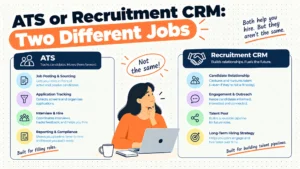
An applicant tracking system processes people who have formally applied for an open role. A Talent CRM helps you build relationships with passive candidates before a job even opens. Tools like Lever combine both functions into one platform.
Is Workable actually cheaper than Lever?
Workable starts at $189 per month with no per-seat fees. Lever offers pricing on request. If you have many occasional hiring managers who need system access, Workable’s flat pricing often works out significantly cheaper.
Do we really need artificial intelligence for sourcing?
It depends entirely on your open roles. Workable’s AI People Search scans 400 million profiles to find passive talent automatically. If you struggle to fill niche technical roles, it is highly valuable. If you hire retail staff, it is unnecessary.
Will our current HR integrations break if we switch systems?
They might. Always check the vendor’s integration list carefully. For example, Ashby integrates with Slack and Zoom natively. If you use a very obscure HRIS platform, you might need an expensive custom build.
How long does an implementation actually take?
JazzHR or Workable can be live in hours or days. Enterprise systems like iCIMS often take months to configure properly. The timeline depends entirely on your workflow complexity.
Can non-HR staff use these tools without extensive training?
Recruitee is famous for an intuitive interface that hiring managers love. Other tools require more formal training. User adoption depends heavily on interface design.
Honest HR software reviews for the people doing the actual work.