
TL;DR
- The primary decision is whether your team has fundamentally outgrown basic applicant tracking or if you just need better internal adoption of the system you already pay for.
- Do not migrate if you have fewer than 100 employees or if your main hiring goal is simply getting occasional jobs posted quickly.
- Any system you select must capture candidate data accurately. It must also coordinate interview schedules without requiring manual calendar matching.
- The software market divides into basic inbound trackers. It also includes collaborative platforms for managers. Heavy data engines exist for massive enterprise teams.
- Evaluate the technical competence of the hiring managers who will actually log into the tool. If they hate the interface, your hiring data will remain completely unreliable.
- Expect a proper system migration to cost weeks of recruiter capacity before the new platform actually begins saving your team time.
The Reality of Outgrowing Your Tools
It’s Tuesday morning. Your head of engineering just slacked you to complain they can’t find the feedback from last week’s panel interview. You know exactly where it is. It’s sitting in a comment thread attached to the wrong candidate profile because JazzHR defaults to a view that confused a junior recruiter. That mistake happens constantly.
You spend your lunch hour manually exporting pipeline data into a spreadsheet. You have to show the CFO why time-to-hire is slipping across technical departments. The CFO looks at the $75 monthly fee you currently pay for JazzHR. They immediately ask why you need more budget for software when the company is trying to control costs.
You start building a pitch deck in your head to justify a massive upgrade. But the real issue is not the software interface, it is that your hiring process now requires heavy collaboration from non-HR staff. Your current tool was built for a single recruiter working alone.
Best tools for Applicant Tracking (ATS)
When Staying Put Makes the Most Sense
Stage One: Your current setup is genuinely fine. If you have 60 employees, staying put makes sense. JazzHR hits the sweet spot for small businesses making fewer than 50 hires per year. It covers every essential workflow at an incredibly affordable entry point. You don’t need a massive enterprise setup to hire an occasional account executive.
Stage Two: You feel internal friction. Hiring managers forget their passwords. The visual pipeline looks messy because recruiters skip dragging stages. These are training problems rather than software deficits. Changing your applicant tracking system won’t fix a broken internal process. A shiny new dashboard cannot cure poor management.
Stage Three: Real liability emerges. You start losing great candidates because interview scheduling physically breaks down. You can’t pull basic EEOC compliance data without manual spreadsheet manipulation. The platform begins freezing when you run bulk candidate actions. This is the exact moment a migration becomes necessary.
Stage Four: The executive edge case. A new Vice President demands the platform they used at their last company. Do not migrate for executive comfort. Switching costs are immensely high. Only move when the current tool prevents your recruiters from hitting their actual targets.
What Talent Leaders Wonder at Midnight
Are my hiring managers actually going to use this? If the interface requires a dense instruction manual, they will simply ignore it. System adoption by non-HR users dictates the accuracy of your hiring data.
Can I justify the price jump to finance? Going from $75 to Recruitee at $224 a month is a material increase. You have to prove the new tool recovers hours currently wasted on interview coordination.
Will our historical candidate data migrate cleanly? It rarely does without significant manual mapping. Knowing this upfront sets realistic expectations for your entire talent operations team.
Do we need a full CRM? A CRM helps you nurture passive talent before roles even open. If your recruiters only review active inbound applicants, paying for advanced pipeline nurturing is wasted budget.
Can we build a careers site independently? Your employer brand matters heavily. If you can’t update a department photo without filing a Jira ticket, your careers page will stagnate entirely.
Three Honest Categories of HR Software
Category One: Basic Application Trackers. These tools capture inbound applications. They push jobs to major boards with minimal friction. They are right for small businesses making under 50 hires a year. They fail completely when you cross 200 employees. They also struggle when you require structured interview calibration.
Category Two: Collaborative Team Platforms. These systems prioritize the hiring manager experience directly. They give non-recruiter users clear candidate cards. They are right for mid-market teams where engineers conduct heavy interviewing. They fail if you need enterprise-level business intelligence.
Category Three: Heavy Data Engines. These massive platforms combine applicant tracking with deep analytics. They are right for data-obsessed talent teams scaling past 500 employees. They fail if your recruiters refuse to adopt highly structured workflows. They will also break a tightly constrained software budget.
Assessing Your Internal Readiness
How many active headcount approvals are you managing right now? If the number is consistently under five, a basic tool will serve you perfectly well. When you hit twenty open roles across different departments, manual tracking becomes impossible. High volume breaks simple tools.
Do your interviewers know what they are scoring before they enter the room? If you rely on gut feelings, you have a serious process problem. Systems that enforce structured scorecards force teams to align on standards before extending offers. Unstructured interviews invite bias.
How much time goes into scheduling panel interviews? Coordinator overhead drains talent teams daily. If your recruiters spend ten hours a week matching Google Workspace calendars, you need native scheduling automation. Calendar tetris destroys recruiter productivity.
Are you proactively sourcing talent? High-volume hourly hiring demands simple text messaging engagement. Searching for specialized software engineers requires long-term email nurture campaigns. The tool must match your exact sourcing motion.
What happens when the CFO asks for source return on investment? If pulling conversion rates by department takes three days of data scrubbing, your current reporting suite is entirely inadequate. Fast-growing companies need dashboards that business leaders can trust immediately.
Reviewing the Core Platforms
JazzHR
JazzHR is rated 4.2 out of 5 on HROpsLab. It ranks number seven out of ten. This tool is best for small businesses managing a low volume of hires.
It earns a place on this list because of its aggressive pricing model. Starting from $75 a month after a 21-day free trial, it offers one-click distribution to 50+ job boards. The platform features native integrations with BambooHR. It also connects smoothly to Gusto. The automated rejection emails are genuinely customisable. You don’t have to send the embarrassing form letters common in other cheap platforms.
Where it genuinely struggles: JazzHR cannot handle complex organizational scale. If your company grows past 200 employees, the limited reporting will deeply frustrate a professional talent acquisition team.
Recruitee
Recruitee is rated 4.1 out of 5. It ranks number eight out of ten. This software is best for companies where hiring managers are heavily involved in the evaluation process.
It earns its spot through pure usability. Starting at $224 a month after an 18-day free trial, it gives teams an incredibly clear candidate card view. During our testing, hiring managers praised this interface as the most intuitive feedback mechanism they’d used. The platform includes a drag-and-drop careers site builder. Teams can launch a branded jobs page without needing a developer. Integrations include Slack. It also connects well with HiBob.
Where it genuinely struggles: Recruitee lacks advanced analytics features. If your VP of People expects detailed source quality breakdowns, this platform will leave them wanting more. It is less suited for enterprise scale.
Ashby
Ashby holds a 4.6 out of 5 rating. It ranks fifth out of ten. It is best for data-driven teams at high-growth tech companies.
It earns a place by combining candidate tracking with deep recruiting analytics. Built by former engineers, it delivers insights like interview-to-offer conversion by stage. This eliminates the need for an external BI tool. The automated scheduling feature is exceptional. It includes self-scheduling links. It also coordinates panel interviews automatically based on available capacity. Pricing is strictly available on request.
Where it genuinely struggles: Ashby has a less established brand than Lever or Greenhouse. Some of its integrations remain in beta testing. This can occasionally create minor operational hiccups for massive deployments.
iCIMS
iCIMS is rated 4.3 out of 5. It ranks sixth out of ten. This system is best for massive enterprise talent operations handling thousands of applications.
It earns its reputation by processing more enterprise hiring volume than almost any competitor. The modular talent cloud handles complex configurability brilliantly. You can set up entirely different hiring workflows for different business units. The TextRecruit SMS module drastically improves response rates for high-volume hourly hiring. Pricing is provided on request. It integrates natively with Workday. It also connects with SAP SuccessFactors.
Where it genuinely struggles: The iCIMS interface feels dated. Compared to newer competitors, it looks old. The implementation cycles are notoriously long for new customers.
Lever
Lever scores 4.6 out of 5. It ranks second overall. It is best for proactive talent teams that want a CRM-first approach to pipeline building.
It earns a spot by treating every candidate as a potential future hire. The talent CRM lets recruiters stay warm with passive candidates over months using automated email sequences. The two-way email sync is exceptional. Email threads appear in candidate profiles automatically without manual logging. It integrates tightly with BambooHR. It also syncs with DocuSign. Pricing is available on request.
Where it genuinely struggles: The reporting module requires heavy manual configuration to yield useful insights. It also places less focus on rigid structured interview kits.
Greenhouse
Greenhouse boasts a 4.7 out of 5 rating. It ranks first out of ten. It is best for mid-size to large companies prioritizing bias-reduced hiring.
It earns its position through an industry-leading interview kit builder. Every interviewer walks in knowing exactly what competencies they must score. The multi-stage approval chains for opening new roles are tracked meticulously. Hiring quality scores reported by Greenhouse customers consistently outperform industry benchmarks. Pricing is strictly on request. The platform links to LinkedIn. It also integrates with Checkr.
Where it genuinely struggles: Greenhouse commands a very high cost for smaller teams. A proper implementation can easily take 6 to 8 weeks to complete.
Decision Matrix
| Situation | Scale | Setup | Primary Pain | Recommended Starting Point |
|---|---|---|---|---|
| Budget strictly capped | 5 – 100 employees | Basic | Getting jobs live quickly | JazzHR |
| Managers hate the interface | 50 – 500 employees | Collaborative | Getting feedback logged | Recruitee |
| Need deep pipeline stats | 50 – 2000 employees | ATS + CRM | Blind on conversion rates | Ashby |
| High volume hourly hiring | 2000+ employees | Enterprise | Slow candidate response | iCIMS |
| Sourcing passive talent | 100 – 2000 employees | CRM first | Losing track of prospects | Lever |
| Unconscious bias focus | 200 – 5000 employees | Structured | Inconsistent interviews | Greenhouse |
| No developer resources | 50 – 500 employees | Collaborative | Ugly careers page | Recruitee |
The Real Cost of a Bad Choice
Choosing the wrong applicant tracking system rarely results in total operational failure. The actual cost hides in the second-order effects. A clunky interface means hiring managers quietly stop leaving written feedback. When they stop leaving feedback, your recruiters have to chase them down in Slack. That delay ruins your metrics.
That specific delay adds two days to every offer extension. In a highly competitive market, two days is the exact window where your best candidate signs a counteroffer elsewhere. You also burn immense political capital with your finance team. Advocating for an expensive software migration that fails to improve time-to-fill metrics damages your credibility permanently. It hurts.
Are you actually prepared to tell your CEO that you spent six weeks of team capacity migrating to a tool nobody wants to use?
Moving Beyond a Basic Setup
The jump from a basic tracker to a specialized platform is intimidating. You have dozens of software vendors promising to fix every broken internal process with artificial intelligence. Sorting the genuine capabilities from the aggressive marketing noise takes hundreds of hours of software evaluation. Nobody has that kind of free time.
We spend our days testing these exact platforms. Our reviewers sit with talent acquisition leads to watch how they actually build scorecards. We document where the integrations fail so you don’t have to find out during a live rollout. We verify the actual workflows.
HROpsLab provides independent review coverage of the HR software market. We sell absolutely no software. We simply aim to give talent leaders the verified facts they need to survive a brutal budget conversation with their finance department.
Common Technical Questions
What exactly is the difference between a CRM and an ATS?
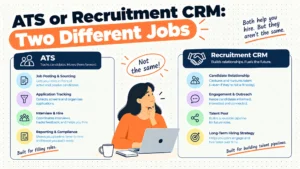
An ATS manages active applicants from the moment they apply to the moment they sign an offer. A CRM helps recruiters track passive prospects before a job even exists. You use a CRM to nurture relationships.
Why does Recruitee cost more than JazzHR?
JazzHR starts at $75 a month. It targets very small businesses with basic needs. Recruitee begins at $224 a month because it offers advanced collaborative evaluation tools. It handles more complex team-based hiring for mid-market companies.
Is switching platforms actually worth the migration headache?
Yes. Do it if your current tool physically blocks your ability to hire fast. If you just want a slightly prettier dashboard, stay exactly where you are. Migrating historical candidate data is brutal work.
Can Greenhouse handle small business needs?
It absolutely can. But the high cost makes it massive overkill for a 50-person startup. The 6 to 8 week implementation period is also a heavy burden. Use Greenhouse when you have the headcount to support rigid structured interview processes.
We have high-volume hourly hiring. Which tool wins?
For massive enterprise volume, iCIMS is a proven entity. Its TextRecruit SMS engagement module drives high response rates from hourly workers. It handles thousands of applications without crashing.
Does Ashby replace our separate scheduling tools?
Yes. Ashby features native automated interview scheduling. It coordinates panel interviews automatically. It handles interviewer load balancing so you can cancel your secondary scheduling subscriptions.
How do we get hiring managers to adopt a new system?
Pick a system with a highly intuitive interface. Recruitee frequently wins praise for its clean candidate card view. If non-HR users can understand the layout in five seconds, they’ll actually use it.
We give talent leaders the unvarnished truth about HR software.