

TL;DR
- The core decision: how long before a shift the person working it finds out.
- When doing nothing is right: when people already know far enough ahead to plan.
- What has to be true: you know what your actual notice is, not what you intend it to be.
- How the options split: by who absorbs the uncertainty, the operation or the household.
- Decision rule: shorten the gap between knowing demand and publishing, not the notice itself.
- Outcome to expect: the same demand volatility, carried by the side better able to hold it.
Publishing on Thursday for Monday
You publish the rota when you can. Demand isn't clear until late in the week, so the rota goes out on Thursday, and people know what they're doing from Monday.
From where you sit that's responsible. Publishing earlier would mean publishing something wrong, and a wrong rota gets changed, and changes are worse than waiting. You're not being careless. You're waiting until you actually know.
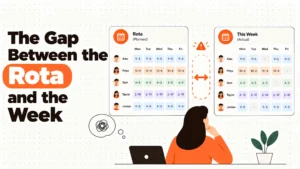
From the other side it looks different. Somebody with a child needs to arrange care and can't book it without dates. Somebody with a second job has to tell the other employer which days they're free. Somebody studying has to decide whether to commit to a class. All of them are making those decisions on Thursday for Monday, every week, which means they're either guessing or paying for flexibility themselves.
Best tools for Employee Scheduling
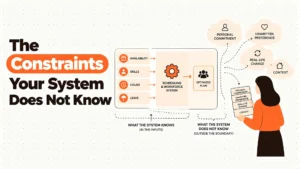
Here's the reframe that makes this tractable. Publishing late doesn't remove uncertainty from the situation. It moves it. The operation is uncertain about demand, and by publishing late you transfer that uncertainty onto the people being scheduled, who absorb it with their own arrangements and their own money. The total amount of uncertainty is roughly constant. What changes is who holds it.
Once you see it that way, the question stops being how late you can publish and becomes which side is better placed to carry the risk, and what it would take to shorten the gap between knowing demand and telling people. Those are operational questions with operational answers.
One thing to settle before any of it. Some jurisdictions set requirements about advance notice of a schedule, and some attach consequences to changes made after publication. Those differ, some are set by agreement rather than by statute, and several have changed recently. Nothing here tells you what applies to you. Establish it with local advice for each population you schedule, and treat everything below as operational reasoning that sits on top of whatever that turns out to be.
When You Genuinely Do Not Need to Act Yet
People know far enough ahead to plan. Whatever your practice is, if the people in the rota can make arrangements around it, it's working. Worth recognising rather than changing.
Somebody has raised it. An individual or a group has said the notice is difficult. Worth taking seriously as information about how the current practice lands, because people rarely raise this.
It's affecting who stays. People are leaving, or declining shifts, or you're struggling to recruit for patterns that were previously fine. Notice is a plausible contributor and it's worth examining.
The edge case that forces it. You've taken on a population with different circumstances, or a site where the usual practice doesn't work. Establish what applies to that group before assuming your existing arrangement extends to them.
Five Questions This Reader Asks at 11pm
How far ahead should we publish? There's no general answer, and anybody offering one is guessing about your operation. What's useful is knowing what your actual notice currently is, measured rather than intended, and what the gap between knowing demand and publishing consists of. Requirements also differ by jurisdiction and by agreement, so establish yours with local advice first.
Doesn't more notice just mean more changes? Frequently yes, and that's the real trade. Publishing earlier means publishing something less certain, which means amending it. Whether that's better depends on how you handle changes, because a rota published early and amended well can still be more useful than one published late, while one published early and amended badly is worse than both.
Can we publish a firm week and a provisional one? Yes, and it's one of the more practical arrangements available. The thing that determines whether it helps is whether people understand which is which, because a provisional schedule that people treat as firm produces exactly the problem you were avoiding.
What if demand genuinely isn't knowable? Then the question moves upstream. How much of your uncertainty is genuinely external and how much is internal, like a decision somebody else makes late or information that exists and doesn't reach you. The internal part is usually larger than it feels, and it's the part you can actually shorten.
What does short notice actually cost us? Harder to see than the operational saving, which is why it's usually left out. It shows up as declined shifts, people leaving, difficulty recruiting for certain patterns, and a workforce that treats your schedule as one of several claims on their time rather than the main one.
What Late Notice Costs the Person
| The arrangement they have to make | Notice it needs | What happens without it |
|---|---|---|
| Childcare or other care | Frequently the longest lead time of anything | They decline, arrive stressed, or pay for cover they may not need |
| A second job | Both employers need the same dates | One of you gets deprioritised, and it may not be you |
| Study or training | Fixed schedules set well in advance | They choose between the course and the shifts |
| Travel to work | Cheaper options need booking ahead | A larger share of the shift goes on getting there |
| A medical or personal appointment | Booked weeks out, hard to move | They cancel, or they miss a shift |
| Anything involving another person | Somebody else's schedule too | Two households absorb one rota |
| Planning household spending | Knowing hours means knowing income | Budgeting on an estimate |
| Simply having a life outside work | Ordinary lead times for ordinary plans | Everything else becomes provisional |
The first and sixth rows are the ones that make this different from an inconvenience. Care arrangements typically need the most notice of anything in a person's life and are the hardest to change at short notice, and anything involving another person means your scheduling practice is being absorbed by a household rather than an individual.
The second row is the one with a direct operational consequence for you. Somebody holding two jobs will commit to whichever employer asks first, so late publication reliably loses you availability to employers who publish earlier. That's a competitive effect, not a goodwill one.
The last row sounds soft and is the accumulation of all the others. A person who can't make ordinary plans more than a few days out experiences their job as taking up more of their life than the hours suggest, and that shows up in whether they stay.
Five Diagnostic Questions You Can Self-Assess Against
What is your actual notice, measured? Not your intention. Look at the last several weeks: publication date against the first shift. Most operations find the real number is shorter and more variable than the one they'd quote.
What's the gap between knowing and telling? Trace it. When does the information that determines the rota become available, and when does the rota go out. The difference is the part you can shorten without taking on more risk.
How much of the uncertainty is internal? A decision made late somewhere else, a figure that arrives on Wednesday because that's when somebody sends it, an approval waiting on one person. Internal uncertainty is usually a larger share than it feels and it's the tractable part.
Who in your population is most exposed? Care responsibilities, second jobs, study, long journeys. Short notice isn't distributed evenly, and knowing who carries it tells you what it's costing in retention.
Do people know what to expect? A stated practice that's imperfect is easier to plan around than a good average with no pattern. Predictability and length are different things and the first is frequently cheaper to improve.
Ask these five of somebody actually in the rota rather than of the person producing it. The two answers about what the notice is routinely differ, and the version held by the people planning around it is the one that matters.
Six Ways Notice Gets Decided, Reviewed
Publishing as late as demand allows
The rota goes out when the picture is clear enough. It earns its place on accuracy: what you publish is close to what will happen, so there's less amending and fewer changes landing on people.
Where it falls short is that the accuracy is bought entirely with somebody else's flexibility. It also tends to drift later over time, because each individual week there's always a reason to wait a little longer, and nothing pulls in the other direction.
Defensible where demand genuinely is unknowable and the population genuinely can accommodate it. Measure what your actual notice has become, because it's usually shorter than when you started.
The ratchet is worth understanding because nobody operates it deliberately. Every individual week, waiting one more day produces a better rota, and no week ever produces a reason to publish earlier. The result is a practice that moves steadily in one direction until somebody looks at the numbers.
A stated floor is the only thing that stops it. Not a target, a floor: the point past which you publish whatever you have, accepting that some of it will change. Without one, the accuracy argument wins every week.
Publishing a fixed number of days ahead whatever happens
You commit to a lead time and publish on schedule regardless of certainty. It earns its place on predictability, which people can plan around even when the rota itself later changes.
Where it falls short is that you'll publish some things you know are provisional, and then amend them. If your change handling is poor, you've created a rota people can't trust, which is its own problem.
Works where changes are handled well. The commitment has to be real: a fixed practice that slips whenever it's inconvenient teaches people not to rely on it, which removes the only benefit.
It also needs somebody's diary to reflect it. A commitment to publish on a particular day fails most often because whoever builds the rota had a busy week, which is an ordinary capacity problem rather than a policy one and needs solving as such.
The upside people underestimate is what predictability does to the volume of questions. When everybody knows when the rota appears, they stop asking whether it's out yet, and that alone recovers a meaningful amount of somebody's week.
Publishing a firm near period and a provisional far period
Part of the horizon is committed and part is indicative. It earns its place as the most honest arrangement available, because it distinguishes what you know from what you expect rather than presenting both as the same thing.
Where it falls short is comprehension. If people don't clearly understand which part is which, they'll treat the provisional part as firm, plan around it, and experience every adjustment as a broken commitment.
Frequently the best answer at moderate volatility. It only works if the distinction is obvious in how people actually see the rota, not merely stated somewhere.
Obvious means visible at the moment somebody looks at their own shifts, not explained in a document nobody opens. If the provisional part looks identical to the firm part on a phone screen, the distinction exists only for the person who published it.
It's also worth deciding what happens at the boundary. A provisional shift becoming firm is an event somebody should be told about, and treating it as a silent transition undoes most of the arrangement's value.
Publishing a repeating pattern that rarely changes
People work broadly the same shape each week, with exceptions handled individually. It earns its place by giving effectively unlimited notice: somebody knows their Tuesdays for months.
Where it falls short is flexibility and fairness. A fixed pattern locks in whatever allocation existed when it was set, including who got the desirable shifts, and it accommodates demand variation poorly unless you flex around the edges.
Excellent where demand is stable. Revisit the pattern periodically, because a rota nobody has looked at in years has usually stopped matching either the demand or the people.
The fairness question is the one that accumulates. Whoever was on the least desirable shifts when the pattern was set is still on them, and new joiners inherit whatever was left over rather than anything anybody decided. That's not visible week to week and becomes very visible over a couple of years.
Building in a stated way to request a change to the pattern is usually enough. Without one, the only route is leaving, which is what people do.
Publishing early and changing frequently
The rota goes out well ahead and is amended as things develop. It earns its place on intention and it's how a lot of operations describe themselves.
Where it falls short is that the notice is illusory. If the published version reliably changes, the effective notice is however long before the shift the last change happens, and people work that out quickly. They then treat the early publication as a draft, which removes its value while you continue paying the cost of producing it.
The arrangement most likely to be self-deceiving. Measure how many published shifts change, because that number is your real notice rather than the publication date.
The measurement is also uncomfortable in a useful way. Teams describing themselves as publishing well ahead frequently find that a substantial share of shifts move afterwards, which means the early publication has been producing work rather than notice for some time.
What to do about it depends on which shifts change. Changes concentrated in one area or one part of the week point at a specific cause that can be addressed, while changes scattered evenly point at a forecast that isn't good enough to publish from yet.
Having no stated practice at all
The rota goes out when it goes out. It earns its place nowhere, though it's extremely common and usually nobody chose it.
Where it falls short is unpredictability rather than length. People can plan around a short but reliable notice; they can't plan around a variable one, because they don't know whether to wait or to make arrangements they may have to cancel.
Worth fixing first, before anything else here. Stating the current practice honestly, even if it's short, costs nothing and is usually the cheapest improvement available.
Honestly is the operative word. Stating a practice more generous than the one you actually keep is worse than saying nothing, because it creates an expectation that gets broken weekly and converts an operational limitation into a trust problem.
It's also the change that requires no system, no budget and nobody's approval. Somebody simply has to decide what the practice is and tell people, which is why it's remarkable how rarely it has been done.
The Decision Table
| Situation | Scale | Setup | Primary Pain | Recommended Starting Point |
|---|---|---|---|---|
| People can plan around it | Any | Any | None | Change nothing |
| No stated practice | Any | Ad hoc | Unpredictability, not length | State the current practice honestly |
| Notice has drifted shorter | Any | Late publishing | Nothing pulls the other way | Measure it, then set a floor |
| Published early, changes often | Any | Early publishing | Notice is illusory | Count changed shifts |
| Uncertainty is mostly internal | Any | Any | A gap you can close | Shorten knowing to telling |
| Demand genuinely unknowable | Any | Late publishing | Real constraint | Firm near, provisional far |
| Demand stable | Any | Any | Nothing forcing lateness | A repeating pattern |
| Losing people to other employers | Any | Late publishing | Availability going elsewhere | Whoever publishes first wins |
| Nobody knows what rules apply | Any | Any | An assumed position | Local advice, per population |
The fourth row is the one most operations are in without realising. A rota published two weeks out that routinely changes in the final days provides the notice of a rota published in the final days, and the earlier publication is doing nothing except generating work. Counting changed shifts settles it in an afternoon.
The fifth row is where the tractable improvement usually is. Most operations find that a meaningful part of their uncertainty is a decision made late, a figure that arrives on a particular day because that's when somebody sends it, or an approval sitting with one person. None of that is external, and closing it gives you extra notice at no risk.
The eighth row is the one with a direct commercial edge to it. Availability isn't fixed, it's allocated by whoever asks first, and an operation publishing later than the business down the road is systematically getting the remainder of somebody's week.
Where the Uncertainty Actually Goes
It doesn't disappear, it moves. Demand is uncertain whatever you do. Publishing late means the operation holds less of that uncertainty and the household holds more, and the household is generally less equipped to carry it.
The household absorbs it with money and arrangements. Care booked provisionally, a second job kept as insurance, cheaper travel foregone. The costs are real and they're paid by people with less capacity to absorb them than the organisation.
You also lose availability to whoever publishes first. Somebody with two employers commits to whichever asks first. That's not loyalty, it's arithmetic, and it means late publication has a direct operational cost that never appears in any comparison.
Predictability is cheaper to improve than length. Going from an unpredictable few days to a reliable few days costs very little and helps a great deal, because people can plan around a short notice they can count on.
The internal share is larger than it feels. Trace the gap between when the determining information exists and when the rota goes out. Some of it is genuinely waiting for demand. Some of it is a report that arrives on Wednesday, an approval, or nobody having time until Thursday.
Capacity is part of it too. A rota that could be built on Tuesday and is built on Thursday because that's when somebody has an afternoon free is a resourcing question wearing a demand-uncertainty costume.
Short notice concentrates on particular people. Care responsibilities, second jobs, study, long commutes. It's not distributed evenly, which means its cost shows up as particular people leaving rather than as a general dissatisfaction anybody measures.
And those people rarely say why. Leaving because the rota made life unmanageable gets described in an exit conversation as wanting something more flexible, which sounds like a preference rather than a consequence of something you control.
The practical conclusion is narrower than it first appears. You probably can't publish much earlier without publishing something wrong. You can almost certainly close part of the gap between knowing and telling, and you can almost certainly be more predictable, and those two together are most of the available benefit.
That's a more useful place to land than a target nobody can meet. An operation that improves predictability and recovers a day or two of internal delay has changed something real for everybody in the rota, without pretending its demand is more knowable than it is.
Where These Arrangements Go Wrong
| The failure | How it shows up | What would have to change |
|---|---|---|
| Notice drifts shorter over time | Nobody decided, it just happened | Measure it, set a floor |
| Early publication that always changes | The stated notice is fiction | Count changed shifts |
| Provisional treated as firm | Every adjustment feels like a broken promise | Make the distinction obvious |
| Internal delay read as external | Waiting for something that already exists | Trace knowing to telling |
| Fixed pattern never revisited | Old allocation frozen in place | Review it periodically |
| No stated practice | People cannot plan at all | State it, even if it is short |
The first row is the one that happens to everybody and that nobody chooses. Each week there's a reason to publish slightly later, and there's never a reason to publish earlier, so the practice ratchets in one direction until somebody measures it and is surprised.
The fourth row is the most recoverable. Uncertainty that's actually internal, an approval or a report or somebody's availability, can be shortened by ordinary operational means, and it buys you notice without taking on any additional risk about demand.
The fifth row is the one that ages badly and quietly. A repeating pattern is genuinely good for notice and it freezes whatever allocation existed the day it was set, so the longer it runs unexamined the further it drifts from anything anybody would choose now.
What to Put in Writing
| Artefact | Who owns it | When it is written | What it prevents |
|---|---|---|---|
| Your measured notice, last several weeks | Whoever runs the rota | Now | An intention mistaken for a practice |
| Changed shifts as a count | Whoever runs the rota | Now | Illusory notice |
| The gap from knowing to telling | Whoever runs the rota | Now | Internal delay read as external |
| Which part of the horizon is firm | Whoever runs the rota | Before publishing that way | Provisional treated as firm |
| The stated practice, told to people | Whoever runs the rota | Now | Nobody being able to plan |
| What applies to your populations | You, with local advice | Before setting anything | A position you assumed |
The first two rows are an afternoon's work and they reliably surprise people. The measured notice is usually shorter than the remembered one, and the count of changed shifts frequently reveals that an early publication date has been decorative for some time.
The fifth row is the cheapest item on the list and the one most often missing. Telling people what to expect requires no system and no budget, and an operation that has never stated its practice is asking everybody to guess every week.
Questions to Ask Before You Commit
On measurement. What is our actual notice? A bad answer is two weeks.
On changes. How many published shifts changed last month? A bad answer is not many.
On the gap. When does the determining information exist? A bad answer is it varies.
On clarity. Do people know what to expect? A bad answer is that it's in the handbook.
On exposure. Who in our population is most affected? A bad answer is everybody equally.
On obligations. What applies to this population? A bad answer is the same as everywhere.
What Getting This Wrong Costs
The first cost is availability going to whoever publishes earlier. People holding more than one job commit to the employer who asks first, and that's a straightforward consequence of publication timing rather than anything about how good an employer you are. Operations that publish late find themselves getting the leftover availability of people who have already committed elsewhere, and they usually attribute that to a tight labour market rather than to their own calendar.
It compounds with the people most worth keeping, too. Somebody reliable enough to hold two jobs is somebody two employers want, and the one who publishes first gets the choice.
The second cost is retention among specific people. Short notice doesn't affect everybody equally: it concentrates on people with care responsibilities, second jobs, studies or long journeys. Those people leave, and the exit conversation says something general about flexibility rather than something specific about publication timing, so the cause stays invisible while the effect repeats.
Recruitment feels it before retention does. Roles that were straightforward to fill become harder, and the explanation offered internally is usually about the market rather than about a schedule that arrives too late to build a life around.
The third cost is the notice you think you have and don't. An operation publishing two weeks ahead and amending heavily in the final days believes it offers two weeks and offers rather less, and it's paying the full cost of early publication while receiving none of the benefit. Everybody in the rota has worked this out. The only people who haven't are the ones producing it.
It distorts everything downstream, too. Recruitment material describing the notice, conversations with people considering a role, and any comparison against other employers are all resting on a number that the people already working there know to be wrong.
So do three things this week, none of which commits you to changing anything. Measure your actual notice over the last several weeks. Count how many published shifts changed. And trace when the information that determines the rota actually becomes available, because the gap between that and publication is the part you can close for free.
All three are observations rather than decisions, which is what makes them worth doing before any conversation about policy. They also tend to settle the conversation, because the numbers are usually more persuasive than anybody's position.
When You Are Ready to Go Further
Start by measuring rather than deciding. Actual publication dates against first shifts, over enough weeks to see the pattern, plus a count of how many published shifts subsequently changed. Those two numbers between them tell you whether you have a notice problem, a change problem, or a predictability problem, and those need different responses.
Then close the internal part of the gap. Whatever separates the moment the determining information exists from the moment the rota goes out is partly genuine demand uncertainty and partly ordinary operational delay, and the second part is free notice. It usually requires somebody sending a figure earlier, or an approval moving, rather than anything structural.
It's worth doing that trace with the people at the other end of each handover. Whoever produces the figure you wait for frequently has no idea a rota depends on it, and has never been asked whether it could arrive a day sooner.
Finally, be explicit about what people can expect, and make firm and provisional visibly different if you use both. A short notice people can rely on is worth considerably more than a longer one they can't, and saying plainly what your practice is costs nothing. Establish what you're obliged to do first, with local advice for each population, because that sets the floor everything else sits on.
HROpsLab publishes independent comparison work across HR tooling and workforce systems. We sell nothing, we take no vendor money, and we publish no paid placements. If the next step is understanding what your current tooling supports here, our comparison work is one place to start.
Frequently Asked Questions
How far in advance should you publish a schedule?
There's no universal answer, and the honest starting point is measurement rather than a target. Find out what your actual notice currently is, by comparing publication dates against first shifts over several weeks, because the measured figure is usually shorter and more variable than the intended one. Separately, requirements around advance notice differ by jurisdiction and are sometimes set by agreement rather than statute, and several have changed recently, so establish what applies to each population you schedule with local advice before deciding anything operationally.
Why does short notice cause problems for staff?
Because the arrangements people make around work need lead time that's frequently longer than the notice they're given. Care arrangements typically need the most notice of anything in somebody's life and are hardest to change late. A second job requires committing dates to another employer. Study means fixed schedules set well in advance. Travel is cheaper booked ahead. Anything involving another person means a second household absorbs your scheduling practice too. None of that is visible from the side producing the rota, which is why it's consistently underweighted.
Does giving more notice mean more schedule changes?
Usually, and that's the genuine trade rather than an excuse. Publishing earlier means publishing something less certain, which means amending it later. Whether that's an improvement depends entirely on how well you handle changes: a rota published early and amended carefully, with changes that reach the affected person, can be considerably more useful than one published late. A rota published early and amended badly is worse than both, because people learn it can't be relied on and treat the publication as a draft.
How do you give notice when demand is genuinely unpredictable?
Split the horizon and be explicit about it, with a firm near period and a provisional far period. That's more honest than publishing one document that's partly reliable, and it lets people plan around the firm part properly. The other move worth making is separating genuine external uncertainty from internal delay. Much of what feels like unpredictable demand turns out to be a figure that arrives on a particular day, an approval waiting with one person, or nobody having time to build the rota until late in the week.
What is a provisional schedule?
A published indication of what's likely, clearly marked as not yet committed, usually covering the part of the horizon beyond what you can confirm. It works well when people understand which part is which and can therefore plan firmly around the near period and provisionally around the rest. It fails when the distinction isn't obvious in how people actually see the rota, because they'll treat everything as committed and experience each adjustment as a broken promise, which leaves you worse off than publishing only the firm part.
Can employees refuse a shift they were told about late?
That depends on the contractual arrangement, the jurisdiction, and in some cases a collective agreement, and it isn't something to assume in either direction. Some places also attach specific consequences to changes or shifts notified late. What applies to you needs establishing with local advice for each population you schedule, ideally before the question arises with a particular person rather than during it. Operationally, what's worth knowing separately is that people who can decline will, and people who can't will often find another employer who publishes earlier.
How do you shorten the gap between knowing demand and publishing?
Trace it first, because most operations have never looked. Identify the moment the information that determines the rota actually becomes available, then identify when the rota goes out, and work through what fills the space between. Some of it is genuinely waiting for demand to clarify. A meaningful share is usually a report that arrives on a particular day, an approval sitting with one person, or the rota being built at a fixed time out of habit. That second category is free notice: closing it gives you more lead time without taking on any extra risk.
What should you establish about notice requirements?
What applies to each population you schedule, from somebody accountable for that answer, before you set any practice. Requirements around advance notice of schedules, and around changes made after publication, differ by jurisdiction, sometimes differ within one, are set by agreement in some cases, and several have changed in recent years. Organisations scheduling people in more than one place, or under more than one agreement, frequently find the answer isn't the same for everybody, which is exactly the situation where a single practice applied uniformly causes a problem.
Uncertainty doesn't disappear when you publish late. It moves to somebody's kitchen table.