TL;DR
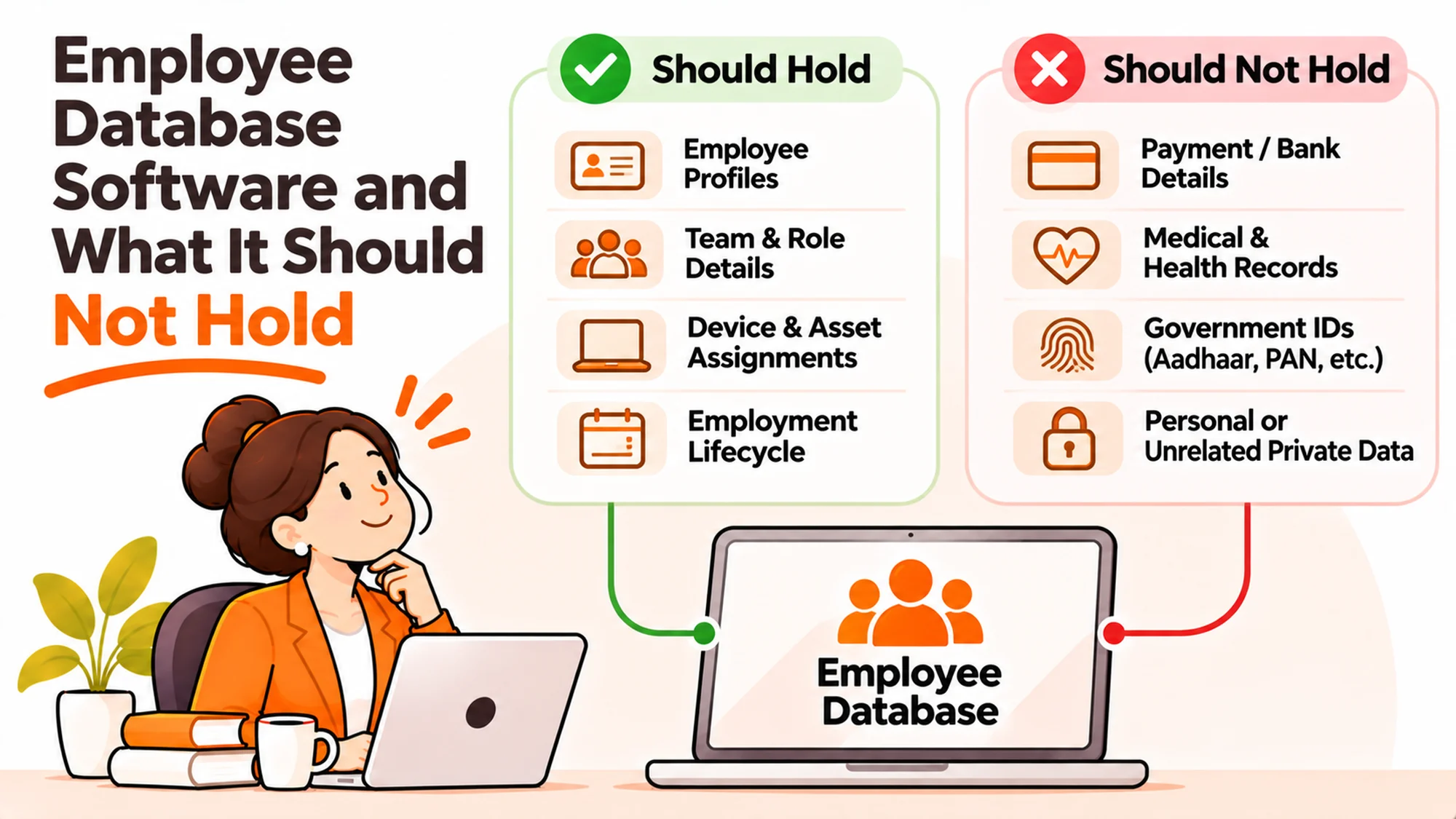
Employee database software fails more often from holding too much than too little. Every field it owns that another system also owns becomes a field that disagrees with itself, and nobody can say which copy is right.
- One field, one owner, written down.
- Duplicated fields diverge, always.
- Equipment belongs elsewhere, linked by person.
- Copies are fine; second sources are not.
- Decide the owner before the integration.
- Fewer owned fields means fewer arguments.
One field, one owner
The principle that prevents most of the pain in this area, and it is usually decided by accident.
For every piece of information about a person, exactly one system should be authoritative. Everything else holds a copy, and a copy is explicitly not allowed to be edited.
Best tools for HR Operations
Sounds obvious. In practice most organisations have three or four systems in which somebody can change a home address, no agreement about which one wins, and no record of a decision ever having been made about it.
The result is not that one is wrong. It is that nobody can tell which is right, so every question becomes an investigation.
Copies are fine
This is not an argument against integration or against data being in several places. It is an argument that only one of those places accepts edits. A payroll system holding a copy of an address is sensible. A payroll system where somebody can change the address is a second source of truth.
How to decide the owner
Three questions settle it in nearly every case, and they are quicker than the debate they replace.
Where does it first get entered? Whoever captures it at source usually has the best claim and the most current value.
Who notices when it changes? The system used by the person who finds out first. Somebody moving house tells HR, not the asset register.
What breaks when it is wrong? If a wrong value in one system causes a payroll error and in another causes a cosmetic issue, the first has the stronger claim.
| Field | Usual owner | Why |
|---|---|---|
| Name and contact details | HR system | Entered at hire, changes reach HR first |
| Start and end dates | HR system | Contractual, and drives everything else |
| Role and manager | HR system | Organisational fact |
| Pay | Payroll | Where the consequence lands |
| Accounts and access | Identity system | Where it is provisioned |
| Devices held | Asset register | Changes on events HR never sees |
deciding which system is the record goes further into the decision. The important part is writing it down, because an undocumented agreement is not an agreement.
Why equipment does not belong in it
The field that gets added most often and causes the most trouble, so it is worth being specific.
Many HR systems offer an assets or equipment section, and it is tempting because it puts everything about a person in one place. It fails for a structural reason rather than a technical one.
Equipment changes on events the HR system never sees. A machine breaks and is swapped. Somebody is issued a second monitor. A device is reassigned between colleagues informally. A laptop goes for repair and a loan unit appears. None of that is an HR event, so nobody updates the HR record, and it quietly becomes a historical note rather than a current fact.
The right relationship is a link rather than a field. The asset register owns the device and references the person by an identifier the HR system owns. Ask who holds what and you join the two; you do not duplicate.
joining an asset register to your HRIS covers building that join. The payoff is that departures in the HR system can automatically produce a device recovery list without the HR system ever claiming to know what anybody holds.
What happens when two systems own the same field
Worth spelling out, because the failure is gradual and nobody notices the moment it starts.
Day one, both systems agree, because one was loaded from the other. Nothing is wrong.
Month three, somebody updates one. There is no error, no alert, and no reason for anybody to look at the other.
Month twelve, a report drawn from one system disagrees with a report drawn from the other. Somebody spends an afternoon working out why.
Month eighteen, people stop trusting both and start asking the person directly, which is the point at which your systems have stopped being systems of record and become two unreliable opinions.
The cost is never a dramatic failure. It is the slow accumulation of verification work: the checks people do because they have learned not to trust the screen. That cost is invisible in every business case and is usually the largest number in this entire subject.
What it genuinely should hold
Having argued for less, it is worth being clear about what belongs here, because the opposite mistake exists too.
The employment relationship. Who this person is, what they are contracted to do, when it started, who they report to, what they are entitled to, and what has been agreed with them. Those are HR facts, they originate in HR processes, and no other system has a better claim.
There is a security dimension worth naming too. Knowing reliably who works for you, and when they stopped, is what every access decision downstream depends on, which is why the NIST Cybersecurity Framework treats identity and the asset inventory as foundations rather than as features. A wrong leaver date in the authoritative system propagates into access that should have ended.
Also, and importantly, the things nothing else will hold: acknowledgements, agreements, signed documents and the dated record of conversations that matter. the HSE guidance on home working is relevant here for teams with home workers, since the arrangements you agree about somebody’s working environment are exactly the kind of record that belongs in the employment file rather than anywhere else.
What this adds up to is a system that is authoritative about the employment relationship and references everything else rather than copying it. That is a smaller product than most vendors describe when they sell you one, and it is considerably more reliable precisely because it claims less. A system that is right about ten fields beats one that is approximately right about forty.
Fixing it when the overlap already exists
Most teams reading this already have duplicated fields, so the question is how to unwind it without a project nobody will fund.
- List the fields that exist in more than one place. Usually a short list and usually surprising.
- Pick an owner for each, using the three questions above. Write the decision down somewhere people will find it.
- Turn off editing everywhere else. The single most effective step, and often just a permissions change.
- Reconcile once where the values already disagree, taking the owner’s value unless there is a reason not to.
- Stop there. Do not attempt to clean history. Correct going forward and let the old divergence age out.
Step three does most of the work and costs almost nothing. Step five is the one teams get wrong, usually by launching a data cleanup that consumes months and is overtaken by new divergence before it finishes.
Where to write the decision down
Not in a policy document, because nobody consults one while configuring a system. The decision belongs somewhere the people making integration choices will trip over it: the same place your integration configuration lives, or a single page linked from wherever new systems get evaluated.
The format that works is a table with three columns. The field, the system that owns it, and one line on why. The third column matters more than it looks, because in two years somebody will want to change the answer and the reasoning is what tells them whether the original decision still holds.
Keep it to one page. A twenty page data dictionary is a project artefact; a one page ownership table is a thing people actually read before wiring two systems together.
When none of this matters yet
Two cases.
One system and a spreadsheet. With a small team and a single HR tool, there is no second source to disagree with. Spend the effort on keeping the one record current rather than designing an architecture for systems you do not have.
You are about to replace the system anyway. Deciding field ownership in a tool you are retiring is wasted effort, though the decisions themselves carry over and are worth making during selection rather than after implementation.
One thing worth doing at any size, because it costs an hour and prevents the most common dispute: write down which system is authoritative for the leaver date. That single field drives access removal, final pay, equipment recovery and reporting, and when two systems disagree about it, all four go wrong at once. a laptop retrieval service for remote employees and everything like it depend on that date being right and being available.
The asset register owns the device and references the person. See a managed laptop lifecycle service or storage and redeployment for returned laptops.
Frequently asked questions
What should employee database software own?
The employment relationship: identity, contracted role, start and end dates, reporting line, entitlements, and signed agreements. Those originate in HR processes and no other system has a better claim. Most other fields are better owned elsewhere and referenced.
Why should equipment not be held in the HR system?
Because equipment changes on events the HR system never sees: swaps, repairs, loan units, informal handovers, extra monitors. None is an HR event, so nobody updates the record, and the field quietly becomes historical rather than current.
How do we decide which system owns a field?
Ask where it first gets entered, who finds out first when it changes, and what breaks when it is wrong. The system used by whoever notices the change soonest, and where a wrong value does the most damage, usually has the strongest claim.
Is it a problem for data to exist in two systems?
Only if both accept edits. A copy is fine and often necessary. A second place where somebody can change the value is a second source of truth, and the two will diverge without any error being raised.
What actually goes wrong when fields are duplicated?
Nothing dramatic, which is why it persists. Values drift apart silently, reports disagree, somebody spends an afternoon reconciling, and eventually people stop trusting either system and start verifying by hand. That verification work is the real cost and it appears in no business case.
How do we fix duplication we already have?
List the fields that exist in more than one place, pick an owner for each, and turn off editing everywhere else, which is usually a permissions change and does most of the work. Reconcile the current values once and do not attempt to clean history.
Which single field is most worth agreeing on?
The leaver date. It drives access removal, final pay, equipment recovery and reporting, so when two systems disagree about it all four go wrong simultaneously. Writing down which system owns it takes an hour and prevents the most common dispute in this area.