

TL;DR
- The core decision: Swapping providers means legally terminating your entire global workforce and asking them to sign new employment agreements.
- When staying put is right: If your employees get paid on time and your only complaint is the monthly invoice, you should touch absolutely nothing.
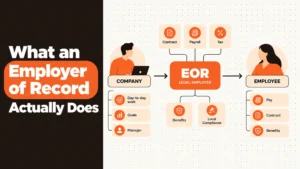
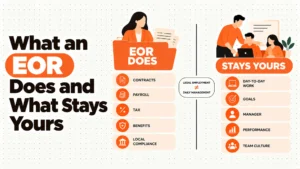
- The real job: An Employer of Record acts as a legal firewall to absorb local compliance liability, not just a simple payroll calculator.
- The market split: Providers either establish their own legal entities in foreign countries or they white-label a network of local third-party agencies.
- The decision rule: Only trigger a full migration if your current vendor commits major compliance failures or your company demands highly complex equity administration.
- The expected outcome: A successful transition takes roughly ninety days and requires deep legal review to prevent accidental statutory severance triggers.
| Provider | Rating | Pricing | Trial | Best for |
|---|---|---|---|---|
| Remofirst (your current provider) | 4.3/5 | From $199/month per employee | Free plan + free demo | Best affordable EOR for growing global teams |
| Deel | 4.8/5 | From $49/month per contractor | Free demo available | Best overall EOR for global teams of any size |
| Remote | 4.7/5 | From $299/month per employee | Free demo available | Best EOR for IP protection and owned legal entities |
| Multiplier | 4.6/5 | Pricing on request | Free demo available | Best EOR for fast employee onboarding |
| Papaya Global | 4.5/5 | Pricing on request | Free demo available | Best enterprise EOR with automated compliance |
| Oyster HR | 4.5/5 | From $399/month per employee | Free demo available | Best EOR for employee experience and benefits |
| Velocity Global | 4.4/5 | Pricing on request | Free demo available | Best EOR for complex employment compliance |
| Globalization Partners | 4.3/5 | Pricing on request | Free demo available | Best EOR for large enterprise global operations |
| Atlas HXM | 4.2/5 | Pricing on request | Free demo available | Best EOR when transitioning to a local entity |
| Horizons | 4.2/5 | Pricing on request | Free demo available | Best EOR for Asia-Pacific hiring |
The Migration Trap
Your finance lead just reviewed the quarterly vendor spend. They noticed the monthly invoices for your international team and asked if you could find a cheaper option. You open a new tab and start looking at alternatives. You're treating this like swapping out your project management software.
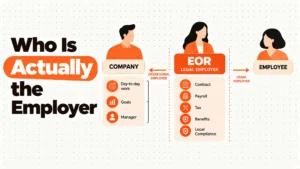
This is a terrible mistake. An Employer of Record isn't just a software platform. It's a heavy legal firewall sitting directly between your executive team and foreign employment law.
The real issue isn't the monthly software fee. The real issue is that changing providers means terminating every single global employee in one legal entity before attempting to re-hire them into an entirely new one.
Best tools for Employer of Record (EOR) Tools
When To Stay With Remofirst
Staying put is often the smartest choice. If your setup is genuinely fine and your employees get paid on time, you shouldn't touch anything. Repapering employment contracts introduces massive administrative friction.
Cost friction alone rarely justifies a move. Remofirst charges from $199/month per employee. You might find a provider offering a slightly lower promotional rate for the first year. But moving twenty people to save a few hundred dollars a month isn't worth it. It'll cost you infinitely more in external legal consulting fees.
Real risk is an entirely different conversation. If your current provider ignores major statutory changes or repeatedly misses payroll funding deadlines, you can't stay. Compliance failures in foreign jurisdictions carry massive financial penalties.
Then you've the edge case. Your company might suddenly need to issue complex equity grants across multiple distinct tax jurisdictions. Remofirst caters primarily to straightforward employment scenarios for startups. If your legal needs outgrow their standard benefits administration, a migration becomes strictly necessary.
The 11pm Questions
What happens to tenure when we switch providers? It completely resets unless you secure explicit tripartite legal agreements to recognize prior service. This matters because local statutory severance calculations rely heavily on unbroken continuous tenure.
Are we creating permanent establishment risk? You might be if your remote workers start signing local sales contracts. You aren't shielded from everything. An EOR only handles your employment liability, so it does nothing to protect your corporate tax exposure.
What if the new provider drops a country we operate in? You'll have to scramble to find a local payroll partner immediately. Provider country lists change frequently based on geopolitical shifts, so you absolutely need a secondary fallback plan.
Do employees have to sign the new contracts? Yes. Every single employee must explicitly consent to the legal termination and the new offer. If one single person refuses the new terms, you face a massive legal headache.
Who pays the severance if a transition triggers it? You do. Terminating an employee from the old entity can automatically trigger mandatory statutory severance pay. It doesn't magically disappear, and the transition plan must account for this sudden cash flow hit.
How The EOR Market Actually Splits
The Employer of Record industry divides into two distinct models. You have providers that build and own their legal entities. Then you've aggregators who rely on a local partner network.
The wholly-owned model means the provider sets up a corporate entity in every single country they offer. Remote operates this way. This approach guarantees direct control over HR disputes and offers superior intellectual property protection. It works best when you need tight security for sensitive proprietary code. It fails when you need to hire rapidly in obscure emerging markets where setting up a legal entity takes years.
The partner network model relies on third-party local agencies to act as the actual legal employer. The provider builds a beautiful software layer over the top of these local partners. This allows for massive geographic coverage very quickly. It's right for companies needing to hire in 170+ countries like Remofirst offers. It fails when a payroll error occurs and your urgent support ticket gets bounced endlessly between the software vendor and an unknown local agency.
Self-Assessment
Do you strictly need to offer complex stock options to your international team? If you're granting equity, you need a provider with heavy corporate legal infrastructure. Simple annual cash bonuses require much less compliance weight.
Are you planning to open your own legal entity in these foreign countries eventually? Some providers will proactively help you transition your EOR staff into your own local subsidiary. Others just want to keep you on their proprietary platform forever, so they won't assist you.
How sensitive is your proprietary company source code? Major tech companies must ensure absolute intellectual property assignment tightness. Aggregator models inherently introduce a third-party partner into your delicate chain of IP custody.
Do your top remote engineers frequently complain about their health insurance? Basic statutory benefits often fail to attract premium tier talent. You might desperately need a platform offering highly competitive supplemental benefits packages.
Can your internal HR team handle a grueling two-month administrative nightmare? A full legal EOR migration violently drains internal team resources. You need dedicated project managers to carefully handle the contract negotiations and soothe employee anxieties.
The Nine Alternatives, Reviewed
Deel
Deel stands as the best overall EOR for global teams of any size needing an all-in-one compliance platform. It supports full-time employees in 90+ countries alongside an excellent contractor management system. The fast onboarding process and transparent contractor pricing from $49/month make it a dominant market player. But Deel can become prohibitively expensive for large employee counts, and certain country-specific edge cases require manual intervention.
Remote
Remote provides the best solution for tech companies demanding strict IP protection. They own 100% of their legal entities without relying on third-party aggregator partnerships. This direct ownership guarantees comprehensive invention assignment clauses and superior stock option management. But this deep infrastructure demands a higher price point starting from $299/month per employee, and the contractor onboarding process feels noticeably slower than Deel.
Multiplier
Multiplier serves as the best choice for fast employee onboarding. The platform features streamlined digital workflows that get new hires signed and enrolled in statutory benefits in just 24 to 48 hours. They also run multi-currency payroll operations across 150+ countries. But Multiplier operates strictly with pricing on request, and the brand remains less established outside the Asia-Pacific region.
Papaya Global
Papaya Global functions as the best enterprise EOR for deep automated compliance. They offer dedicated coverage across 160+ countries with an AI-powered compliance engine that scans every single payroll run for statutory errors. The real-time payroll cost dashboards integrate beautifully with external business intelligence tools. But implementation times for these complex enterprise deals stretch long, and they operate strictly with pricing on request.
Oyster HR
Oyster HR delivers the best employee experience for remote-first organizations. They publish their full pricing transparently on their website starting from $399/month per employee. The platform offers locally competitive Equity-Plus benefits packages that drastically reduce employee turnover. But this premium benefits focus results in a much higher per-employee cost, and their total country coverage remains smaller than Deel.
Velocity Global
Velocity Global handles complex employment compliance better than anyone else. They routinely manage dual-status workers and complicated executive-level contracts that most standard providers immediately decline. The platform also delivers exceptional multi-jurisdiction immigration support services. But this highly specialized expertise operates entirely with pricing on request, and the software offers far less self-service functionality.
Globalization Partners
Globalization Partners remains the best choice for large enterprise global operations. They boast a 15-year track record with deep in-country legal expertise in key markets. Their dedicated experts provide real-time employment law guidance rather than just spitting out automated contract templates. But their user interface feels less modern than newer competitors, and they only offer pricing on request for their services.
Atlas HXM
Atlas HXM operates as the ideal bridge when you plan to transition to a local entity. They combine standard EOR employment with expert company registration advisory services. Their dedicated in-country teams provide brilliant guidance for expanding into emerging markets across Africa and Asia. But they're less suitable as a pure software-only solution, and they completely restrict their fees to pricing on request.
Horizons
Horizons excels as the best platform for dedicated Asia-Pacific hiring. They employ in-house legal teams across China and key Southeast Asian markets rather than using aggregator networks. Their Shanghai staff easily handles the most complex social insurance and housing fund regulations in China. But their coverage across the Americas feels much thinner than their APAC presence, and their pricing remains strictly on request.
The Decision Table
| Situation | Scale | Setup | Primary Pain | Recommended Starting Point |
|---|---|---|---|---|
| Simple global hiring | 10 to 50 | Partner network | High software fees | Remofirst |
| Strict IP needs | Any | Owned entity | Code ownership risk | Remote |
| Heavy APAC focus | 20 to 100 | Owned regional | Local tax complexity | Horizons |
| Massive global scale | 500+ | Blended model | Payroll analytics | Papaya Global |
| Entity transition | 50 to 200 | Advisory heavy | Need local subsidiary | Atlas HXM |
| Fast contractor growth | Any | Software first | Slow onboarding | Deel |
| Employee retention issue | 10 to 200 | Benefits focused | Poor health coverage | Oyster HR |
| Dual-status executives | 100+ | Highly complex | Multi-country visas | Velocity Global |
The Real Cost Of A Bad Migration
Second-order costs will destroy your budget if you mishandle this transition. A botched migration creates massive misclassification exposure. If you terminate an employee from your old provider but fail to properly enroll them in the new one before their next shift, they're technically working without a valid employment contract.
This administrative gap can leave an employee completely unpaid while two different software vendors argue over liability. Their tenure quietly resets. A country you hired in last year might suddenly become a jurisdiction you can't legally operate in next quarter.
The direct monthly software fee is the absolute smallest financial variable in this entire equation. Are you genuinely prepared to ask your top international engineers to sign new employment contracts just to save a few pennies on administrative overhead?
Moving Beyond The Basics
Finding the right international employment partner requires looking past the glossy marketing websites. Every provider claims to offer complete global compliance. The reality of how they actually handle local tax audits or sudden statutory changes varies wildly.
We built HROpsLab to cut through this vendor noise. We are an independent review publication focused entirely on human resources operations. We don't sell EOR software. We don't accept payment to hide negative platform reviews.
Our editorial team tests these platforms directly. We interview the finance leaders who use them and we track the hidden fees that never appear on the pricing page. When you're ready to evaluate a new vendor, our detailed platform tear-downs provide the unfiltered truth.
Frequently Asked Questions
Can an Employer of Record shield us from all local taxes?
No. An EOR only handles payroll taxes and statutory employment deductions. You still carry permanent establishment risk if your remote workers generate local revenue or sign commercial contracts. So you must consult a specialized corporate tax advisor to evaluate your corporate liability.
How long does a full EOR migration actually take?
You should plan for at least ninety days. You must account for statutory notice periods and the time it takes to draft localized contracts. Attempting to rush a transition in under a month usually triggers severe compliance failures.
Do employees have a legal right to refuse a new EOR contract?
Yes. EOR employees are fully protected by their local employment laws. You can't force them to accept a new legal employer. If they won't accept the new agreement, you must either negotiate terms or proceed with a formal termination and pay standard local severance.
What is the difference between an EOR and a PEO?
A Professional Employer Organization requires you to own a registered local entity and acts as your co-employer. An Employer of Record acts as the sole legal employer on paper when you've no local entity at all. You use an EOR when you lack physical infrastructure in a foreign country.
Can we migrate just one specific country to a new provider?
Yes. Many enterprise companies use multiple providers simultaneously to optimize for regional strengths. You could keep your European staff with your current vendor while moving your Asian workforce to a specialist platform. This multi-vendor approach requires exceptional internal HR administration.
Why do some providers charge flat fees while others take a percentage?
Flat fees provide predictable monthly billing and treat high-earning software engineers exactly like junior support staff. Percentage-based pricing scales with the employee salary and often hides massive profit margins. You should always demand flat-rate pricing to protect your long-term budget.
Find the exact employment partner your global team deserves today.