

TL;DR
- The core decision: Moving away from your current Employer of Record means legally terminating and re-hiring every affected employee across multiple jurisdictions.
- When staying put is right: If your enterprise operations require automated payroll compliance across 160+ countries and your BI integrations are already working, the disruption of moving rarely pays off.
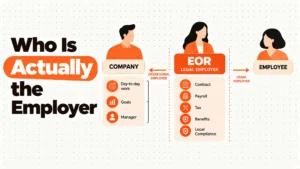
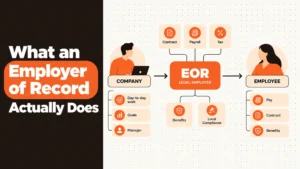
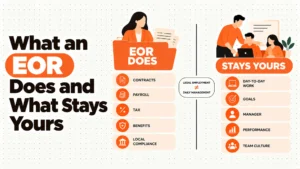
- What an EOR actually does: They shield you from local employment law by sitting directly between your company and the employee on paper.
- How this market splits: Some providers own their legal entities entirely, while others rely on aggregators and local partner networks to process payroll.
- A decision rule: Base your choice on IP protection requirements and budget constraints rather than just the flat monthly per-employee fee.
- The outcome to expect: Changing providers resets the legal clock on probation and tenure.
| Provider | Rating | Pricing | Trial | Best for |
|---|---|---|---|---|
| Papaya Global (your current provider) | 4.5/5 | Pricing on request | Free demo available | Best enterprise EOR with automated compliance |
| Deel | 4.8/5 | From $49/month per contractor | Free demo available | Best overall EOR for global teams of any size |
| Remote | 4.7/5 | From $299/month per employee | Free demo available | Best EOR for IP protection and owned legal entities |
| Multiplier | 4.6/5 | Pricing on request | Free demo available | Best EOR for fast employee onboarding |
| Oyster HR | 4.5/5 | From $399/month per employee | Free demo available | Best EOR for employee experience and benefits |
| Velocity Global | 4.4/5 | Pricing on request | Free demo available | Best EOR for complex employment compliance |
| Globalization Partners | 4.3/5 | Pricing on request | Free demo available | Best EOR for large enterprise global operations |
| Remofirst | 4.3/5 | From $199/month per employee | Free plan + free demo | Best affordable EOR for growing global teams |
| Atlas HXM | 4.2/5 | Pricing on request | Free demo available | Best EOR when transitioning to a local entity |
| Horizons | 4.2/5 | Pricing on request | Free demo available | Best EOR for Asia-Pacific hiring |
The Migration Headache
You're looking at a Slack message from your VP of Engineering at nine in the morning. She wants to know why her lead developer in Berlin is suddenly asking about a brand new probationary period. You check the vendor dashboard with a sinking feeling in your stomach. Your finance team just initiated a migration to a cheaper Employer of Record provider to save a few dollars a month. Nobody warned you that moving a German employee from one provider to another requires a formal legal termination followed by a completely new employment contract.
This isn't like swapping out your email marketing software. Changing EOR providers means you're asking human beings to sign new legal agreements they don't fully understand. And you risk resetting their statutory notice entitlement. You might accidentally trigger mandatory severance payments because the old local entity has to formally fire them before the new one can legally hire them. Securing individual consent from every single employee is a logistical nightmare.
People think they're buying a software platform with a slick interface. But they're actually buying a heavy legal shield. The real issue isn't the monthly SaaS fee, it's the underlying legal infrastructure your employees are permanently attached to.
Best tools for Employer of Record (EOR) Tools
When To Keep What You Have
Sometimes the hardest advice to swallow is that your current setup is genuinely fine. Papaya Global positions itself as the best enterprise EOR with automated compliance. If your business relies on their AI-powered compliance engine to scan every payroll run for statutory errors across 160+ countries, tearing that out will cause massive internal friction. Moving away from enterprise-grade security just because a competitor offered a cheaper per-head price is a classic false economy.
Cost friction is the next barrier you've to consider. Moving away from an established setup means burning internal project hours. Your HR team will spend weeks answering worried employee questions about their health insurance. Legal counsel will need to review all the new service agreements. The soft costs of a complex migration frequently wipe out any annual software savings you modeled in Excel.
Then you hit real legal risk. Terminating employees in certain jurisdictions triggers automatic payouts whether anyone intended that or not. Even if the new provider promises to recognize past tenure, local labour courts often disagree. You have to secure individual written consent from every single person on your payroll to make this transition work. If one top performer refuses to sign the new contract, you've a massive operational problem.
Finally, consider the actual edge cases. You might have employees scattered across emerging markets with highly complex tax residency status. Papaya Global handles these scenarios with dedicated in-country compliance teams. Changing EORs is a terrible idea if you suddenly discover your new vendor relies on unreliable local partners to process payroll in your most important growth market.
Five Questions To Ask At 11 PM
Does this new provider expose us to permanent establishment risk? They might, depending on exactly how they structure their corporate entities. This matters because triggering permanent establishment means your company suddenly owes corporate tax in a foreign country. You must take local advice.
What happens if the provider drops a country? You have to terminate those employees or quickly scramble to set up your own local entity. This matters because geopolitical shifts or regulatory changes regularly force EORs to exit markets unexpectedly.
Will this migration reset employee tenure? Yes, unless explicitly structured and legally permitted otherwise in that specific country. This matters because tenure dictates severance requirements alongside statutory leave entitlements.
Do we actually own our intellectual property? Only if the employment contract contains comprehensive IP assignment clauses that are enforceable locally. This matters because investors will absolutely check this documentation during due diligence.
Are we using an aggregator or a direct entity? An aggregator uses third-party local partners, while direct models own their legal entities outright. This matters because it changes who actually holds liability when a major payroll error happens.
How This Market Actually Splits
The Direct Entity Owners These providers own their legal entities entirely in every country they operate. They don't rely on local partner networks to process payroll. This model provides stronger legal accountability alongside better IP protection. It's right for tech companies heavily focused on strict confidentiality agreements. It fails when you need to hire in a tiny obscure jurisdiction where the provider hasn't yet built their own infrastructure.
The Aggregator Networks Aggregators build a software layer over a massive network of local third-party payroll providers. This allows them to offer enormous geographical coverage incredibly quickly. It's right when you need to hire fast in countries where direct providers simply don't operate. It fails when a serious compliance issue arises. You're left waiting while your EOR argues with their local partner about who is actually at fault.
The Hybrid Enterprise Platforms These combine standard EOR capabilities with complex equity management or multi-country immigration support. They comfortably handle dual-status workers. This approach is right for large scale-ups dealing with highly non-standard working arrangements. It fails for small startups. You will overpay for compliance infrastructure you simply don't need yet.
Assess Your Actual Needs
Are you hiring contractors or full-time employees? A platform optimized for fast contractor payments might struggle with the nuances of statutory benefits for full-time staff. Knowing your exact worker classification ratio dictates whether you need a lightweight tool or heavy legal infrastructure.
Do you plan to open your own local entities eventually? If you're just testing a market before incorporating, you want a provider that offers active transition services. Some platforms trap you in their ecosystem, while others actively help you move off their EOR and onto your own payroll.
How sensitive is your intellectual property? If your remote employees are writing core proprietary code, the chain of IP assignment must be bulletproof. A cheap provider using a third-party aggregator introduces a massive gap in that chain.
What is your threshold for employee complaints? A poor EOR experience means late payslips or confusing tax documents. If your HR team is already overwhelmed, choosing a provider with a terrible self-service portal will generate hundreds of support tickets.
Are you willing to pay a premium for compliance guarantees? You get exactly what you pay for in global employment. A vendor offering a flat, ultra-low monthly fee is likely cutting corners on in-country legal expertise.
The Nine Alternatives, Reviewed
Deel
Deel is the best overall EOR for global teams needing fast onboarding alongside an all-in-one compliance platform. It earns its place by allowing you to hire full-time employees in 90+ countries while simultaneously managing contractors across 150+ countries. The platform handles local contracts, benefits enrolment, and multi-currency payments in a single flow. But it genuinely struggles with massive enterprise scaling, as the flat $49 per month contractor fee or standard employee pricing can become expensive for large employee counts, and some country-specific edge cases still require manual handling.
Remote
Remote is the best EOR for tech companies prioritizing strict IP protection. It earns a spot because it owns 100% of its legal entities in every operating country rather than using a third-party aggregator model. This allows them to include comprehensive IP assignment clauses in every single employment contract. However, the $299 per month starting price is a higher price point than some competitors, and onboarding contractors is noticeably slower than Deel.
Multiplier
Multiplier is the best EOR for fast employee onboarding. It earns a place by offering streamlined digital workflows that get employees signed and enrolled in local statutory benefits within 24 to 48 hours. They also run multi-currency payroll directly through in-country teams. The main weakness is geographical reach, as their country coverage is narrower than Deel or Remote, and they have a less established brand outside the Asia-Pacific region.
Oyster HR
Oyster HR is the best EOR for remote-first companies demanding a premium employee experience. It earns its position through completely transparent pricing published directly on their website from $399 per month. They also offer a beautifully designed employee self-service portal for accessing payslips or expense submissions. But the platform genuinely struggles with footprint and cost, featuring smaller country coverage than Deel alongside a higher per-employee cost.
Velocity Global
Velocity Global is the best EOR for extremely complex employment compliance. It earns a place by expertly managing dual-status workers, complicated equity arrangements, and multi-country immigration support services. They tackle the executive-level contracts that standard EOR platforms routinely decline. The primary weakness is approachability, as they carry a higher price point for smaller teams and offer less self-service functionality than Deel or Oyster.
Globalization Partners
Globalization Partners is the best EOR for large enterprise global operations. It earns a spot by utilizing a 15-year EOR track record alongside dedicated in-country legal experts in key markets. They offer real-time employment law guidance rather than just spitting out automated templates. It struggles with modern software expectations, as the interface is less modern than Deel or Remote, and it remains more expensive than newer competitors for similar coverage.
Remofirst
Remofirst is the best affordable EOR for growing global teams. It earns its place by offering global EOR employment from $199 per month per employee. This is the lowest flat-rate pricing available for their 170+ country coverage, and they even throw in free basic contractor management. It struggles with deep compliance complexity, offering a support team smaller than Deel or Remote and showing less depth on complex employment scenarios.
Atlas HXM
Atlas HXM is the best EOR when transitioning to a local entity. It earns a place by combining EOR employment with company registration advisory services. Dedicated in-country advisors help you employ staff today while planning your corporate transition for tomorrow. It struggles as a permanent software solution, proving less suitable as a pure EOR-only platform due to a smaller technology investment than Deel or Remote.
Horizons
Horizons is the best EOR for Asia-Pacific hiring. It earns a spot by utilizing dedicated in-house teams across China, Singapore, or Japan rather than relying on third-party aggregators. And they act as deep China employment specialists handling complicated social insurance requirements alongside complex employment law. The major weakness is global balance, as their EMEA and Americas coverage is thinner than APAC, resulting in less brand recognition outside Asia-Pacific.
The Decision Table
| Situation | Scale | Setup | Primary Pain | Recommended Starting Point |
|---|---|---|---|---|
| Heavy tech IP requirements | 50-200 employees | Full-time only | Fear of IP leakage | Remote |
| Extreme budget constraints | 10-200 employees | Straightforward roles | High EOR software fees | Remofirst |
| Enterprise automation needed | 500+ employees | High complexity | Statutory errors in payroll | Papaya Global |
| Fast regional scaling | 10-50 employees | Mixed workforce | Slow contract turnaround | Multiplier |
| Mixed global workforce | Any size | Contractors & FTEs | Managing multiple systems | Deel |
| High employee turnover | 10-500 employees | Remote-first | Poor statutory benefits | Oyster HR |
| Need immigration support | 200+ employees | Dual-status workers | Visas delaying start dates | Velocity Global |
| Bridging to local entities | 100+ employees | Emerging markets | Need corporate tax advice | Atlas HXM |
The Hidden Costs of Bad Decisions
The real price of a botched migration is never the monthly per-head fee. It's the second-order costs that destroy your operational efficiency. Misclassification exposure is a massive risk when changing systems. If your new vendor incorrectly classifies a full-time worker as an independent contractor during the move, local tax authorities will eventually demand back taxes. You could easily leave an employee stranded and unpaid while two competing providers argue over who is responsible for the transition payroll run.
Worse, you might quietly reset someone's legal tenure without realizing it. If a local jurisdiction views the EOR switch as a break in continuous employment, that employee just lost their accrued redundancy rights. Next quarter, you might discover your new vendor can't actually hire people in a country you desperately need to expand into. The Employer of Record model relies heavily on invisible legal infrastructure.
When you strip away the slick marketing dashboards, you're trusting a vendor with your company's core legal liability. Are you really willing to risk a costly labour dispute just to save a few thousand dollars a year?
Moving Beyond the Basics
Evaluating global employment infrastructure requires more than reading marketing materials. The differences between these platforms hide deep in their terms of service. You need to know exactly how they handle equity vesting or local statutory benefits before you ask your team to sign new agreements.
This is where independent research matters. HROpsLab provides unbiased analysis of HR platforms. We look past the sales pitches to understand how these systems actually function in the real world. Our team digs into the technical realities of international payroll so you don't have to.
HROpsLab is a review publication. We don't sell EOR software. Our only goal is to equip you with the hard data required to make an informed infrastructure decision.
Frequently Asked Questions
Can an EOR sponsor work visas for our employees?
Yes, but the success rate depends entirely on the provider's local legal entity status. Providers like Velocity Global specialize in multi-country immigration support alongside their employment services. You must verify if the EOR has the specific licensing required to sponsor visas in your target market. Relying on an aggregator network for immigration support often leads to severe delays.
Do we need a local entity to use an Employer of Record?
No, that's the exact problem an EOR solves. The provider acts as the legal employer on paper using their own local corporate entity. This allows you to hire international talent without spending months registering a new business in a foreign jurisdiction. You maintain day-to-day management of the employee while the EOR handles payroll compliance.
What is the difference between an EOR and a PEO?
An Employer of Record hires employees on your behalf in countries where you lack a legal entity. A Professional Employer Organization co-employs staff alongside you in jurisdictions where you already have an established business entity. You use an EOR to expand globally without opening entities. You use a PEO to outsource HR administration for your existing legal entities.
How long does it take to onboard an international employee?
Market leaders like Multiplier can complete the digital onboarding process in 24 to 48 hours for standard jurisdictions. However, complex markets or executive-level contracts can delay this by several weeks. Always ask the provider for their average onboarding time in your specific target countries. Expect slower turnaround times if the EOR uses a third-party partner network.
Who handles severance if we terminate an EOR employee?
The EOR executes the formal termination, but your company pays the financial cost. The provider determines the statutory severance payout based on local labour laws. They then bill you for the final amount. You can't bypass local severance laws simply by using a third-party employment platform.
Is employee equity complicated under an EOR?
Extremely complicated. Stock options or equity grants are subject to distinct tax rules in every single country. You need a provider with dedicated equity management features to track vesting schedules. The system must also handle tax reporting at the exercise event to keep you compliant.
Clear, independent HR infrastructure research.