

TL;DR
- The core decision: Moving away from Oyster HR isn't a simple software migration. It requires terminating every affected employee and rehiring them under a new legal entity.
- When staying put makes sense: Keep Oyster if your primary concern is employee experience. They still lead the market for locally competitive benefit packages.
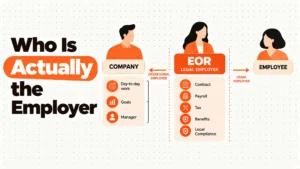
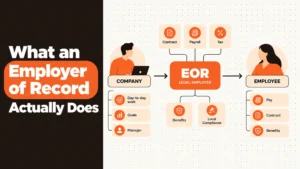
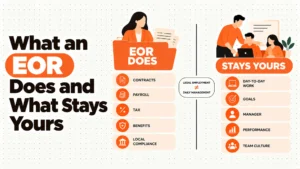
- The reality of EORs: Your provider sits directly between you and local employment law. They're the legal employer of record responsible for statutory compliance.
- The market split: Providers divide strictly into models of ownership. They either own their local entities outright or use third-party in-country aggregators.
- A simple decision rule: If you need to hire contractors alongside full-time employees in 150+ countries, Deel wins on speed. If intellectual property protection matters most, Remote's wholly owned entity model is safer.
- The expected outcome: Changing providers will temporarily disrupt your operations. Expect a transition period where tenure resets and probationary periods are renegotiated.
| Provider | Rating | Pricing | Trial | Best for |
|---|---|---|---|---|
| Oyster HR (your current provider) | 4.5/5 | From $399/month per employee | Free demo available | Best EOR for employee experience and benefits |
| Deel | 4.8/5 | From $49/month per contractor | Free demo available | Best overall EOR for global teams of any size |
| Remote | 4.7/5 | From $299/month per employee | Free demo available | Best EOR for IP protection and owned legal entities |
| Multiplier | 4.6/5 | Pricing on request | Free demo available | Best EOR for fast employee onboarding |
| Papaya Global | 4.5/5 | Pricing on request | Free demo available | Best enterprise EOR with automated compliance |
| Velocity Global | 4.4/5 | Pricing on request | Free demo available | Best EOR for complex employment compliance |
| Globalization Partners | 4.3/5 | Pricing on request | Free demo available | Best EOR for large enterprise global operations |
| Remofirst | 4.3/5 | From $199/month per employee | Free plan + free demo | Best affordable EOR for growing global teams |
| Atlas HXM | 4.2/5 | Pricing on request | Free demo available | Best EOR when transitioning to a local entity |
| Horizons | 4.2/5 | Pricing on request | Free demo available | Best EOR for Asia-Pacific hiring |
The Hidden Cost of Changing Your Mind
You're looking at a renewal notice from Oyster HR. The monthly cost feels a bit heavy. Another vendor emailed you yesterday promising lower per-employee fees. So your finance lead is asking if a switch makes sense. It sounds like a standard vendor consolidation play. You just export the data from one platform and upload it to another.
That isn't how this works. When you change an Employer of Record, you don't just move data. You terminate the employment of real people. You must end their contract with Oyster's local entity and ask them to sign a brand new agreement with a completely different company. Every single employee has to consent to this change.
Some of them will have questions. A software developer in Germany might ask what happens to their continuous service date. Your sales director in Singapore might refuse to restart a probationary period. Tenure resets can trigger massive severance liabilities. So the real issue isn't whether a competitor charges fifty dollars less per month. The real issue is whether the operational risk of terminating your global workforce justifies the savings.
Best tools for Employer of Record (EOR) Tools
When to Stick with Oyster HR
Your current setup might be genuinely fine. Oyster remains the top choice for companies with 10 to 500 global employees that prioritize employee experience. If your remote team praises their localized benefits, you've built a stable workforce. Messing with that stability is rarely worth a slight reduction in platform fees. Happy employees stick around.
Then you must consider the friction of the move itself. Migrating means repapering every employment contract across your international team. That takes hundreds of hours of HR coordination. You have to answer panicked questions about healthcare coverage and chase down digital signatures. If you're doing this just to save a few thousand dollars a year, the internal cost of friction will completely wipe out your savings.
Real risk enters the equation when you look at local labor laws. In many jurisdictions, transferring an employee between two legal entities triggers a formal redundancy. That means paying statutory severance whether anyone intended to or not. Oyster's Equity-Plus benefits packages sit above statutory minimums. Replicating those exact packages with a new provider might be impossible.
Finally, consider the edge cases of transparent pricing. Oyster publishes their full pricing on their website starting at $399 per month per employee. There are no hidden fees. Many alternatives that look cheaper on day one will nickel and dime you on foreign exchange markups. If your finance team values predictable budgeting without dealing with a sales team, Oyster is exactly where you belong.
The Midnight Anxiety Check
What happens if my EOR triggers a Permanent Establishment risk? You could owe corporate tax in a foreign country. Permanent establishment happens when an employee starts negotiating contracts or making executive decisions locally. Your EOR protects you from employment law, but you remain fully exposed to corporate tax liability. Take local advice before putting a sales director on an EOR.
What if the provider quietly drops support for a country we operate in? You'll have to terminate your employee or scramble to set up a local entity. This matters because geopolitical shifts happen fast. If an EOR pulls out of a jurisdiction, you're left holding the bag.
Do we own the intellectual property our foreign developers create? Only if the local employment contract includes air-tight IP assignment clauses. This is vital because different countries treat invention ownership differently. An EOR must transfer that local IP from their entity directly to your parent company.
Will a new provider honor our employees' existing tenure? Usually not by default. You have to explicitly negotiate continuous service recognition into the new contracts. This matters immensely for statutory notice periods and mandatory redundancy payouts.
Who actually pays the severance if we fire someone? You do. The EOR executes the termination and calculates the legal minimums. But they invoice your company for every cent. Don't mistake an EOR for a shield against the financial cost of firing people.
How the EOR Market Actually Splits
The Employer of Record market looks identical from the outside. Every vendor promises global reach. But under the hood, the infrastructure divides strictly into three distinct models.
First, there are the wholly owned entity providers. Companies like Remote build and own their legal corporate structures in every country they support. They don't use third parties. This model is right for tech businesses that need absolute certainty over IP protection. Because they own the entity, liability sits squarely with them. The downside is speed of expansion, because building local entities takes years.
Second, there's the local partner network model. These providers act as aggregators. They build a beautiful software front-end but rely on third-party local agencies to actually employ your staff. This is right for startups that need immediate coverage in obscure markets. But this model fails when things go wrong. You're entirely dependent on someone else's service level agreement.
Third, you've the hybrid approach. These vendors own entities in major hubs like the UK and Germany but rely on partners for the long tail of emerging markets. It offers a pragmatic balance of speed and control. But you must ask explicitly which model applies to the specific countries where you intend to hire.
Assess Your Global Setup
Are you hiring primarily full-time employees or a high volume of independent contractors? If your workforce heavily skews toward contractors, paying a premium EOR fee makes little sense. You need a platform built explicitly for fast contractor onboarding.
Do your remote employees handle highly sensitive intellectual property? Tech companies writing proprietary code need rock-solid IP assignment clauses that hold up in local courts. A provider that owns their local entities outright will offer much stronger legal protection.
Is your company planning to establish its own foreign subsidiaries soon? If an EOR is just a temporary bridge until you open a real office, you need a provider who actually helps with corporate entity setup. Some platforms actively guide your transition to a wholly owned subsidiary.
Are you dealing with complex equity arrangements or dual-status workers? Basic platforms handle standard salaries perfectly well but panic at complex compensation. If you issue multi-jurisdiction stock options, you must pick a provider equipped for cross-border tax reporting.
Where exactly is your next wave of hiring going to happen? Don't buy a platform promising global coverage if you only plan to hire in Singapore and Japan. Choose a vendor with genuine in-house expertise in your specific target markets.
The Nine Alternatives, Reviewed
Deel
Deel is the best overall EOR for global teams of any size that need fast onboarding and an all-in-one compliance platform. It earns a place here for its unmatched speed and a massive footprint covering 150+ countries for contractors starting at $49 per month. You can run multi-country payroll for owned entities and manage EOR employees in a single flow. However, it can become very expensive for large employee counts, and certain country-specific edge cases still require manual handling.
Remote
Remote is the best choice for IP-sensitive businesses that require full legal entity ownership from their provider. They own 100% of their entities in every supported country, providing the strongest possible intellectual property protection. It's also an excellent platform for managing complex equity and stock options across different tax jurisdictions. And their starting price of $299 per month sits higher than budget alternatives, while their refusal to use third-party partners means their contractor onboarding is noticeably slower than Deel's.
Multiplier
Multiplier excels for growing global teams that demand the absolute fastest employee onboarding available. They can get employees signed and fully enrolled in local statutory benefits within 24 to 48 hours in most supported countries. Their local benefits packages are highly competitive for businesses focused on the Asia-Pacific region. Their weakness is a narrower overall country coverage than the biggest players, and they lack strong brand recognition outside of Asian markets.
Papaya Global
Papaya Global is the premier enterprise platform for large organizations needing automated compliance across 160+ countries. They provide an AI-powered compliance engine that scans every single payroll run for statutory errors and regulatory changes instantly. You get incredible real-time payroll cost dashboards that integrate directly with enterprise BI tools. But implementation times for complex enterprise deals are notoriously long, and their pricing model is far less transparent than the self-serve platforms.
Velocity Global
Velocity Global is built for enterprises dealing with incredibly complex employment compliance scenarios. They handle dual-status workers and multi-country immigration requirements that basic EORs immediately reject. Their global equity management and direct visa sponsorship support make them a powerhouse for relocating senior talent. The tradeoff is a premium price point that locks out smaller startups, and their platform relies far less on self-service automation than newer competitors.
Globalization Partners
Globalization Partners suits massive enterprises that value a 15-year track record over flashy new software interfaces. They offer dedicated in-country legal experts in key markets who provide real-time employment law guidance instead of just generating automated templates. Their history of handling public compliance incidents gives conservative finance teams immense due diligence confidence. But their user interface feels distinctly less modern than newer alternatives, and they charge a premium price for that legacy expertise.
Remofirst
Remofirst is the most affordable alternative for startups that need broad geographical reach without burning cash. They offer flat-rate EOR employment starting at just $199 per month per employee across 170+ countries. You also get basic contractor management at no extra cost, making it incredibly easy to test international markets before committing to full employment. However, their customer support team is much smaller than the category leaders, and they lack the technical depth to handle complex cross-border tax scenarios.
Atlas HXM
Atlas HXM is the perfect partner for companies using an EOR specifically as a bridge to establishing their own local corporate entities. They combine standard employment services with deep in-country advisory teams who actively help you register and transition to your own corporate structure. They're especially strong in emerging markets across Africa and the Middle East where compliance complexity is extreme. But they're a poor fit if you just want a pure software-driven EOR, as their technology investment lags behind the market leaders.
Horizons
Horizons dominates the market for companies building distributed teams specifically across the Asia-Pacific region. They use dedicated in-house teams in highly complex markets like China and key Southeast Asian markets rather than relying on third-party aggregators. Their deep China-specific expertise easily handles the nightmare of local social insurance and IIT withholding. Their weakness is that their coverage across the Americas and EMEA is noticeably thinner, making them less suitable for a truly global rollout.
The Decision Table
| Situation | Scale | Setup | Primary Pain | Recommended Starting Point |
|---|---|---|---|---|
| Need fastest contractor onboarding | Any size | Mixed workforce | Contractors waiting weeks to get paid | Deel |
| High IP security requirements | 10 to 500 | Tech and engineering | Fear of losing code ownership abroad | Remote |
| Budget-constrained global expansion | Under 200 | Simple employment | High per-employee monthly EOR fees | Remofirst |
| Prioritizing employee experience | 10 to 500 | Remote-first teams | Benefits-driven staff attrition | Oyster HR |
| Moving toward owned entities | Any size | Bridge strategy | Blind to local incorporation rules | Atlas HXM |
| Extreme APAC payroll complexity | Any size | China and Japan focus | Local tax and social insurance errors | Horizons |
| Enterprise global compliance | Over 500 | Highly complex | Blind spots in multi-country payroll | Papaya Global |
| Dual-status executive hiring | Over 500 | Executive mobility | Standard platforms rejecting complex contracts | Velocity Global |
The secondary costs of a botched EOR migration are brutal. If you transition a worker from Oyster HR to a new vendor and misclassify their new contract, you expose your parent company to massive permanent establishment risks. We've seen employees left completely unpaid for six weeks while two different providers argue over who is legally responsible for a final payroll run.
Worse, administrative errors during the switch can quietly reset an employee's continuous tenure. A senior developer might suddenly lose three years of statutory notice entitlement. If that developer resigns in disgust, you might find out your new vendor doesn't actually support the specific regional province where you urgently need to hire their replacement. You save fifty dollars a month but lose access to your best talent pool.
So you must ask your finance lead a very simple question. Is the minor annual saving on vendor platform fees truly worth risking the legal continuity of our entire international workforce?
Finding the right global employment infrastructure requires looking past glossy marketing sites. Most providers sound exactly the same until you actually read their master service agreements. You need to know which platforms own their local entities and which ones just act as highly polished middlemen.
This is exactly why HROpsLab exists. We spend our time testing these platforms, interviewing frustrated founders, and tearing apart complex compliance claims. We are an independent review publication. We don't sell EOR software, and we don't manage your payroll.
Our editorial team provides the unvarnished truth about global HR tools. We help you figure out what happens when the sales promises collide with local tax laws. Read our detailed platform breakdowns when you're ready to make a change that actually protects your business.
Frequently Asked Questions
What is the difference between an EOR and a PEO?
A Professional Employer Organization acts as a co-employer for your staff within your own country, meaning you share legal liabilities. An Employer of Record becomes the sole legal employer for your international staff in countries where you don't own a corporate entity. The EOR takes on the local statutory compliance entirely. You direct the employee's daily work, but the EOR handles all local legal obligations.
Can an EOR protect my company from permanent establishment risk?
No. An EOR protects you from local employment law compliance and payroll tax errors. Permanent establishment is a corporate tax concept triggered by what your employee actually does. If your remote worker signs sales contracts or acts as a dependent agent in a foreign country, local tax authorities can claim your company owes corporate tax there. You must consult a local tax advisor to mitigate this specific risk.
Why do some EOR providers charge a flat fee while others take a percentage?
The industry has largely moved toward flat monthly fees because it provides predictable budgeting for finance teams. Providers that charge a percentage of the employee's salary usually operate in highly complex emerging markets where local compliance costs scale with the compensation package. A flat fee like Oyster's $399 per month is generally safer for highly paid tech talent.
Do employees notice when we change EOR providers?
They notice immediately. Changing providers requires terminating their existing employment contract and forcing them to sign a new one. Their payroll portal changes and their payslip format will look entirely different. This is a highly visible disruption to their daily working life.
How long does it actually take to migrate from Oyster HR to a competitor?
You should plan for a minimum of 60 to 90 days. You have to negotiate new benefits packages and get every single worker to sign new legal documentation. Rushing this process guarantees catastrophic payroll errors in the first month. Speed is your enemy during a global compliance migration.
Can an EOR help us issue stock options to foreign employees?
Yes, but the quality of that help varies wildly. Issuing equity across borders triggers complicated local tax events both at the grant date and upon exercise. Platforms like Remote and Velocity Global have built specific global equity management tools to track these vesting schedules safely. Basic providers will just tell you to consult your own lawyers.
What happens to statutory benefits when we change providers?
Your new provider must try to match the existing statutory and supplemental benefits to avoid triggering constructive dismissal claims. If the new EOR can't secure the same level of premium health insurance in a specific country, the employee might legally refuse to sign the new contract. This is the single biggest roadblock to successfully changing your global HR vendor.
Clear, unbiased HR tech advice for global teams.