

TL;DR
- The core decision: You must weigh the massive friction of terminating then rehiring every employee against the specific compliance upgrade you want.
- When staying put is right: If your team is mostly in the Asia-Pacific region and getting employees onboarded in 24 to 48 hours is your top priority.
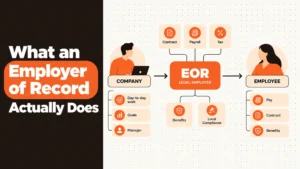
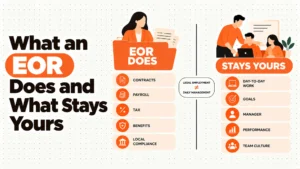
- What an employer of record actually does: They absorb the legal liability of employing staff in jurisdictions where you don't own a registered corporate entity.
- How this market splits: The biggest divide is between providers who own their local entities and those who rent legal structures through partner networks.
- The decision rule: Move providers only when your current vendor can't legally support a strategic hire or actively risks your intellectual property.
- The outcome to expect: A migration will reset employee tenure and trigger new probationary periods. Always take local legal advice before moving anyone.
| Provider | Rating | Pricing | Trial | Best for |
|---|---|---|---|---|
| Multiplier (your current provider) | 4.6/5 | Pricing on request | Free demo available | Best EOR for fast employee onboarding |
| Deel | 4.8/5 | From $49/month per contractor | Free demo available | Best overall EOR for global teams of any size |
| Remote | 4.7/5 | From $299/month per employee | Free demo available | Best EOR for IP protection and owned legal entities |
| Papaya Global | 4.5/5 | Pricing on request | Free demo available | Best enterprise EOR with automated compliance |
| Oyster HR | 4.5/5 | From $399/month per employee | Free demo available | Best EOR for employee experience and benefits |
| Velocity Global | 4.4/5 | Pricing on request | Free demo available | Best EOR for complex employment compliance |
| Globalization Partners | 4.3/5 | Pricing on request | Free demo available | Best EOR for large enterprise global operations |
| Remofirst | 4.3/5 | From $199/month per employee | Free plan + free demo | Best affordable EOR for growing global teams |
| Atlas HXM | 4.2/5 | Pricing on request | Free demo available | Best EOR when transitioning to a local entity |
| Horizons | 4.2/5 | Pricing on request | Free demo available | Best EOR for Asia-Pacific hiring |
The Migration Headache
You've just received a frantic email from your head of engineering. Your lead developer in Spain is panicking. They need a visa renewal document signed immediately by their legal employer. Multiplier is taking a few days to route the request through their local partner. Your engineer is terrified of deportation. You're furious.
It's incredibly tempting to rip out the vendor and start fresh. You call a meeting with finance to demand a switch to a platform with wholly owned entities. They ask if the new provider is cheaper. You pause. Nobody in the room actually knows what terminating a Spanish employment contract entails.
Swapping your EOR isn't like changing your payroll software. You don't just export a spreadsheet and flip a switch. You have to terminate every single person in their current local entity. Then you must rehire them under an entirely new local entity. The real issue isn't the monthly software fee. The real issue is asking a developer to sign a new contract that legally resets their strict statutory severance rights.
Best tools for Employer of Record (EOR) Tools
When Multiplier is Still the Right Answer
Your current setup might genuinely be fine. If your distributed team is largely concentrated in Singapore or India. If they get their local statutory benefits on time. You don't need to tear up contracts just because a competitor sent you a shiny sales deck. Multiplier is built for speed. Onboarding employees in 24 to 48 hours is a massive operational advantage.
Then comes the cost friction. Finance complains about the monthly invoices. Someone points out that a different tool charges a fraction of the cost per head. But saving a few dollars a month per employee will never cover the internal HR hours required to manage a global migration project.
Real risk appears when you expand outside their core markets. Multiplier has strong coverage across the Asia-Pacific region. But if you need to hire ten executives in Germany with complex stock options. You might find the legal framework stretching thin. That's when you actually investigate a move.
The final stage is the true edge case. You're preparing for an IPO. Your auditors demand absolute proof of IP assignment in countries where your EOR uses a third-party aggregator. You have to move. Re-papering employment contracts is a genuine nightmare. But losing your proprietary code is worse.
The Midnight Anxiety Check
What happens if my provider quietly drops a country? They give you thirty days to transition the employee to another legal structure or terminate them entirely. This matters because country coverage isn't permanent. Losing a jurisdiction means losing that staff member.
Does this setup trigger permanent establishment risk? If your remote sales director closes deals on your behalf, local tax authorities might declare you've a permanent establishment regardless of the EOR. This matters because corporate tax liabilities bypass the EOR and hit your balance sheet directly. Take local advice immediately.
Are we accidentally resetting statutory tenure? Yes, unless you execute a complex legal transfer of undertakings. This matters because employees lose their built-up protection against unfair dismissal. They will demand you underwrite that risk.
Who actually owns the intellectual property? The legal employer owns the IP until it legally assigns it to you. This matters because aggregator EORs pass IP through a chain of contracts. A weak link breaks your ownership.
Can a provider stop my employee from working for a competitor? Probably not. Non-competes are highly localized and notoriously hard to enforce across borders. This matters because you can't rely on standard platform templates to protect your trade secrets.
Three Honest Categories of EOR
The market looks like a blur of identical dashboards. Under the hood, the legal plumbing splits into three distinct models.
The Wholly Owned Giants. These platforms register and maintain their own legal entities in every jurisdiction they sell. Remote does this aggressively. Because there's no middleman, liability is direct. When a payroll error happens, you speak to the entity that actually cut the cheque. This model is right when IP protection is paramount. It fails when you need to hire in a tiny emerging market where they haven't yet incorporated.
The Aggregator Networks. These companies own entities in major hubs but rent local partners in the rest of the world. Multiplier uses this model to achieve broad coverage fast. Liability passes through a chain. Fixing a mistaken tax deduction takes longer because support tickets bounce between companies. It's right for testing new markets quickly. It fails when you need complex, non-standard employment contracts.
The Managed Transition Partners. These are consultancies wrapped in software. Atlas HXM fits here. They employ your people today while actively helping you register your own local business. It's right for a company planning a permanent local office. It fails completely if you just want a cheap, hands-off way to pay a lone designer in Brazil.
Is It Time to Move?
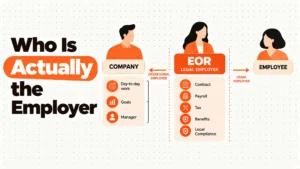
Do you know exactly who legally employs your team? You should be able to name the specific local corporate entity on the bottom of their contract. If your vendor uses undisclosed subcontractors, your legal foundation is built on sand.
Are your remote employees complaining about benefits? Statutory minimums are rarely enough to retain top talent. If your current provider offers no supplementary health insurance in a key market, you're going to lose staff to local competitors.
Do you need to issue equity across borders? Managing stock options in fifteen different tax jurisdictions is a highly specialized skill. If your vendor treats equity as an afterthought, you're creating a massive future tax headache for your people.
Are you planning to open your own entities soon? Using an EOR forever is incredibly expensive. If you've fifty people in the UK, you should probably open a UK company. Your vendor should be helping you plan that exit strategy.
Have you actually quantified the migration cost? Changing vendors requires every single employee to sign a new contract. You must map out the exact legal consequences in every affected country before you cancel your current subscription.
The Nine Alternatives, Reviewed
Deel
This is the best overall EOR for global teams of any size. It earns its spot because it offers transparent pricing from $49 a month per contractor and runs EOR onboarding incredibly quickly. The platform handles contractors in 150+ countries and full-time employees in 90+ countries within one unified flow. But Deel can become quite expensive for large employee counts where enterprise volume discounts matter.
Remote
Remote is the best EOR for IP protection. It owns 100% of its legal entities without relying on third-party aggregators. This creates a much stronger legal shield for your code and trade secrets. Its primary weakness is a higher starting price point of $299 a month per employee alongside a slightly slower contractor onboarding process.
Papaya Global
Large enterprises building complex workforces should look closely at Papaya Global. It provides an AI-powered compliance engine that scans every payroll run across 160+ countries for statutory errors. The analytics layer integrates beautifully with major BI tools for financial planning. However, the implementation timeline for enterprise deployments is notoriously long.
Oyster HR
Oyster HR excels at employee experience. They publish their pricing clearly on their website starting from $399 a month per employee. The platform offers highly competitive Equity-Plus benefits packages that exceed statutory minimums to reduce attrition. Their genuine weakness is a narrower country coverage footprint than the biggest market leaders.
Velocity Global
When you've executives working simultaneously across multiple borders, Velocity Global handles the compliance perfectly. They manage complex multi-jurisdiction equity grants and coordinate local immigration support services. But they offer far less automated self-service functionality for simple, single-country hires.
Globalization Partners
This provider boasts a fifteen-year track record in global employment. They maintain dedicated in-country legal teams rather than just relying on software template libraries. That deep history gives auditors massive confidence during due diligence. Unfortunately, their user interface feels significantly less modern than newer tech-first competitors.
Remofirst
Startups looking for the most affordable broad coverage usually land on Remofirst. They charge a flat $199 a month per employee and offer free basic contractor management across 170+ countries. This makes them highly attractive for early-stage budgets. The genuine catch is a smaller support team that struggles with deeply complex compliance edge cases.
Atlas HXM
Atlas HXM acts as a strategic bridge for companies planning to open their own local offices. They provide dedicated in-country advisory teams that guide your market entry strategy. They have exceptional knowledge of emerging markets across Africa and the Middle East. It's a poor fit if you just want a pure software-driven EOR without the consulting overlay.
Horizons
Horizons dominates employment across the Asia-Pacific region. They maintain direct in-house teams in difficult markets like China and Japan. Their China employment specialists handle social insurance and housing funds better than anyone. Their clear weakness is a very thin presence across the Americas.
The Decision Table
| Situation | Scale | Setup | Primary Pain | Recommended Starting Point |
|---|---|---|---|---|
| Rapid expansion in Asia | 10 to 50 | EOR only | Need employees active in two days | Multiplier |
| Codebase needs tight protection | 50 to 200 | Owned Entities | Aggregator IP leaks | Remote |
| Mixed workforce globally | 100+ | EOR + Contractors | Fragmented systems | Deel |
| Enterprise payroll automation | 500+ | Global Payroll | Data blind spots | Papaya Global |
| Heavy focus on retention | 20 to 100 | EOR only | Uncompetitive local benefits | Oyster HR |
| Transitioning to local entity | 50 to 150 | Hybrid | Lack of market strategy | Atlas HXM |
| Extremely tight startup budget | 1 to 20 | EOR only | High monthly minimums | Remofirst |
| Dual-status executive hires | 200+ | Complex EOR | Non-standard contracts | Velocity Global |
The Hidden Costs of a Bad Migration
The monthly software fee that your finance department keeps arguing about is essentially a rounding error compared to the terrifying true cost of botching a massive international employer of record migration project. If you mishandle the transition badly enough, a single employee could be left entirely unpaid for a month while two different software vendors spend weeks arguing about a specific local tax code. You also face immediate misclassification exposure if a new local contract accidentally changes a worker from an employee to a contractor.
Worse, you might quietly reset a team member's statutory tenure. In many European nations, protections against unfair dismissal lock in after two years of continuous service. If a poorly executed vendor swap resets that clock to zero, you've severely damaged your relationship with that employee. They will notice. They might even sue.
You also run the risk of a new provider suddenly refusing to support a specific country right before a massive hiring push. If your whole strategy relies on a jurisdiction your vendor just abandoned, your growth stalls instantly. Will a cheaper monthly license fee truly cover the legal mess of terminating and rehiring your most critical talent?
When You Outgrow the Basics
Migrating your global team isn't a weekend project. You need to map out the exact legal and financial implications for every single person on your payroll. The risk of losing key talent during a clumsy transition is terrifyingly high.
This is why objective data is so vital. You can't rely solely on the sales pitches of vendors eager to capture your headcount. You need to see exactly how these platforms perform in the real world when the legal complexities pile up.
HROpsLab tracks these exact compliance scenarios. We are an independent review publication. We sell no software. We simply gather the operational facts so you can protect your company and your people. Take local legal advice. Verify the in-country realities. Then make an informed choice.
Frequently Asked Questions
What is the true cost of an EOR migration?
The real cost isn't the setup fee. It's the legal bill you'll pay to local employment counsel to verify that your new contracts don't strip away accrued employee rights. You must also factor in the massive amount of internal HR time spent holding the hands of nervous employees. Nobody enjoys signing a termination notice just to keep their current job.
Why do some EORs charge vastly different prices?
Pricing models reflect the underlying legal infrastructure. Platforms that build and maintain wholly owned entities globally carry massive overheads and charge a premium. Providers that rent local legal structures through aggregators can offer much lower prices. You're fundamentally paying for the degree of direct liability the vendor accepts.
Can an EOR protect me from permanent establishment?
No provider can offer absolute protection against permanent establishment risk. An EOR handles the local employment mechanics and payroll compliance. But if your remote employee is actively signing commercial contracts and generating revenue in a foreign country, local tax authorities will notice. You must consult corporate tax specialists to structure your operations safely.
How long does an EOR migration actually take?
A safe migration takes at least sixty to ninety days. You need time to consult local counsel. You must draft new agreements and secure individual consent from every affected worker. Rushing the process guarantees that someone will miss a strict statutory notice period. A fast software implementation can't override rigid local employment laws.
Does resetting an employee contract trigger severance?
In several jurisdictions, terminating an EOR contract technically triggers a mandatory severance payment. This happens even if the worker is immediately rehired by your new vendor. The old legal entity ceases to employ them. The local government treats it as a standard dismissal. You have to negotiate who covers that specific cost before you sign a new vendor agreement.
Can I use multiple EORs at the same time?
You can split your workforce across different platforms. Many enterprise companies use one provider for their core European team and a local specialist for Asia. It complicates your internal reporting and forces your finance team to reconcile multiple invoices. But it dramatically reduces the risk of being completely paralyzed if one vendor suffers a critical compliance failure.
Delivering smarter HR decisions through unvarnished truth.