

TL;DR
- The core decision: Migrating away from Horizons means terminating every affected employee and rehiring them under a brand new legal entity.
- When staying put makes sense: If your headcount is heavily concentrated in China or Singapore and nobody is complaining about payroll delays, you shouldn't move.
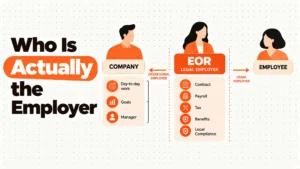
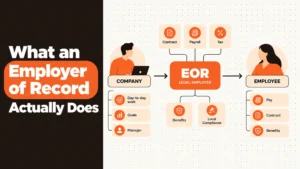
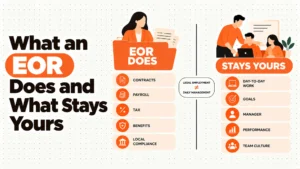
- The reality of the EOR model: An employer of record sits directly between you and local employment law, taking on statutory liability while you direct the daily work.
- How the market splits: Providers either own their legal entities outright or they string together a network of local partner agencies.
- A simple decision rule: Only switch providers if your current setup introduces unacceptable compliance risk or actively blocks you from hiring in a necessary region.
- The likely outcome: A migration will take three times as long as sales reps promise and will require individual consent from every single employee.
| Provider | Rating | Pricing | Trial | Best for |
|---|---|---|---|---|
| Horizons (your current provider) | 4.2/5 | Pricing on request | Free demo available | Best EOR for Asia-Pacific hiring |
| Deel | 4.8/5 | From $49/month per contractor | Free demo available | Best overall EOR for global teams of any size |
| Remote | 4.7/5 | From $299/month per employee | Free demo available | Best EOR for IP protection and owned legal entities |
| Multiplier | 4.6/5 | Pricing on request | Free demo available | Best EOR for fast employee onboarding |
| Papaya Global | 4.5/5 | Pricing on request | Free demo available | Best enterprise EOR with automated compliance |
| Oyster HR | 4.5/5 | From $399/month per employee | Free demo available | Best EOR for employee experience and benefits |
| Velocity Global | 4.4/5 | Pricing on request | Free demo available | Best EOR for complex employment compliance |
| Globalization Partners | 4.3/5 | Pricing on request | Free demo available | Best EOR for large enterprise global operations |
| Remofirst | 4.3/5 | From $199/month per employee | Free plan + free demo | Best affordable EOR for growing global teams |
| Atlas HXM | 4.2/5 | Pricing on request | Free demo available | Best EOR when transitioning to a local entity |
The Migration Mirage
It's a Tuesday morning and your Slack is lighting up. An engineering manager in Vietnam wants to know why their new employment contract resets their probation period. Your finance lead is asking why the new employer of record wants a three-month deposit instead of one. You just wanted to cut your monthly software bill. Now you're acting as an unlicensed labour lawyer across three time zones.
Swapping EOR providers looks like a software procurement exercise on a spreadsheet. In reality, it's a mass termination event. You can't just port an employee over like a phone number. Every single person must resign or be dismissed from the old entity and sign a brand new employment agreement with the new one. This triggers statutory payout requirements in some jurisdictions. It resets tenure. It makes employees nervous.
You might think you're solving a cost problem. The real issue isn't the monthly per-employee fee, it's the hidden liability of uprooting an established global workforce.
Best tools for Employer of Record (EOR) Tools
When To Stay Put
Sometimes the pain of moving outweighs the benefits. Your current setup with Horizons is genuinely fine if your distributed team sits almost entirely within the Asia-Pacific region. They have dedicated in-house teams in places like China and Japan. That local presence handles statutory deductions effectively. Stay put.
Next comes the friction of cost. A competitor might quote you a lower monthly fee for contractor management. But factor in the internal hours your HR team will spend auditing new contracts and explaining the transition to panicked staff. A fifty-dollar monthly saving per head evaporates the moment you need external legal counsel to review a tricky severance clause in Vietnam.
Then we hit real risk. If Horizons is currently handling your China-specific IIT withholding and complex social insurance laws without incident, be very careful. Moving that specific jurisdiction to a provider that relies on a third-party aggregator is a massive gamble.
Finally, consider the edge case. If you've employees on long-term medical leave, terminating and rehiring them is often legally impossible. You might have to leave them behind on the old EOR anyway.
Midnight Anxieties
What happens if the new provider drops a country? They will give you notice to find a new legal employer for those people. Usually they offer 30 to 90 days. This matters because geopolitical shifts happen fast. You need to know if your EOR will dump your talent to protect their own bottom line.
Does using an EOR shield me from permanent establishment risk? No, it doesn't. The EOR handles employment compliance and local payroll. If your employee is negotiating sales contracts or generating local revenue, local tax authorities can still claim you owe corporate tax. Take local tax advice before hiring a sales director abroad.
Who pays the severance if the transition goes wrong? You do. The EOR agreement requires you to indemnify them against all employment costs. This matters because a botched termination and rehire can accidentally trigger statutory severance payouts that hit your balance sheet immediately.
Can an employee refuse to sign the new contract? Yes. They're under no obligation to accept employment with your new provider. If they refuse, you either lose the employee or you've to keep paying the old EOR just for them.
Will my employees' stock options be affected? It depends heavily on your specific plan rules. A change in legal employer can sometimes trigger an unintended exercise event or break continuous service clauses.
How The Market Splits
The global employment market breaks down into three distinct operational models. Understanding the difference tells you exactly who holds the bag when things go wrong.
The wholly-owned entity model means the provider has gone through the pain of incorporating their own business in every country they support. They hire local HR staff and run their own payroll. This is right for IP-sensitive tech companies and businesses that need direct accountability. It fails when you need to hire in obscure jurisdictions where the provider hasn't yet built an entity.
The aggregator network relies on a web of third-party local agencies. The brand you buy from is essentially a software layer sitting on top of dozens of unbranded local employment firms. This model is right for companies that need massive global coverage instantly. It fails miserably when you've an urgent compliance question and your account manager has to wait 48 hours for a local partner to reply.
The hybrid approach blends the two. These providers own entities in major markets like the UK or Singapore but use partners for the rest. This works well for companies transitioning from a basic setup to a more complex global footprint. It falls down when a provider obscures which countries are owned and which are outsourced.
Assess Your Situation
Do you actually need to move everyone, or just contractors? Shifting contractors between platforms is relatively straightforward. Moving full-time employees requires legal terminations. If your pain points are strictly contractor-related, you might not need to touch your EOR employees at all.
Where is your headcount geographically concentrated right now? If most of your team is in China and Japan, Horizons is already tailored for you. If you're rapidly expanding into EMEA and the Americas, their coverage starts to look thin.
Are you planning to open your own entities soon? If you expect your UK team to hit twenty people next year, you'll want to incorporate there. You need an EOR that actively supports transitioning employees to your own local entity rather than penalising you for it.
How much of your intellectual property is being generated by these remote workers? Software engineers writing core proprietary code need bulletproof IP assignment clauses. Providers with wholly-owned entities generally offer much stronger legal protection for your IP than sprawling aggregator networks.
Is your payroll data currently a black box? If your finance team spends four days a month reconciling spreadsheets because your EOR couldn't provide consolidated multi-currency reporting, the administrative burden might actually justify a migration.
The Nine Alternatives, Reviewed
Deel
Deel is best for companies of any size that need an all-in-one platform for full-time employees and international contractors. It earns its place by offering exceptionally fast onboarding and a massive footprint across 150+ countries for contractors. The platform consolidates EOR services with global payroll in 90+ countries. But Deel can become quite expensive as your large employee headcount scales up. Some highly specific local edge cases also require manual handling outside their automated workflows.
Remote
Remote is built for tech firms and IP-sensitive businesses that require airtight intellectual property protection. It earns its spot because it owns 100 percent of its legal entities in every supported country. This ensures you aren't dealing with a third-party aggregator when a critical employment issue arises. Remote struggles with slower onboarding timelines for contractors compared to its faster rivals. The starting price of $299 per month per employee is also higher than some budget alternatives.
Multiplier
Multiplier works incredibly well for growing global teams that demand very fast employee onboarding. It earns a place here by getting employees documented and enrolled in competitive local statutory benefits within 24 to 48 hours. And they handle multi-currency payroll effectively for distributed teams across 150+ countries. Their country coverage is noticeably narrower than industry giants like Deel. Multiplier also has less brand recognition outside of its core Asia-Pacific markets.
Papaya Global
Papaya Global serves large enterprises with more than 500 global employees that need heavily automated payroll compliance. It stands out by offering an AI-powered compliance engine that scans payroll runs across 160+ countries for statutory errors. The global payroll analytics are top-tier for finance teams. Papaya suffers from very long implementation times for complex enterprise deals. Their pricing structure is also far less transparent than their direct competitors.
Oyster HR
Oyster HR is ideal for remote-first companies that prioritise a premium employee experience. It earns its ranking through totally transparent published pricing starting at $399 per month per employee. They offer fantastic locally competitive benefits packages that actively reduce benefits-driven attrition. Oyster has a smaller overall country coverage footprint than Deel. And the higher per-employee cost can become a burden for cash-strapped startups.
Velocity Global
Velocity Global is the right choice for scale-ups managing highly complex global employment arrangements. It handles dual-status workers and multi-country immigration requirements flawlessly. They offer extensive global equity management across different jurisdictions. The platform lacks the slick self-service capabilities found in newer competitors like Deel or Oyster. They're also priced at a premium that makes no sense for tiny teams.
Globalization Partners
Globalization Partners fits massive enterprise operations that value a long, proven track record over flashy new software. It earns its place with 15+ years of EOR history and deeply embedded in-country legal experts. You get real-time employment law guidance from actual humans. Their user interface is noticeably less modern than newer market entrants. You will also pay a significantly higher price for similar coverage compared to newer competitors.
Remofirst
Remofirst is the most logical choice for startups needing broad country coverage at the lowest possible price. It shines by offering EOR employment from just $199 per month per employee across 170+ countries. They even include basic contractor management entirely for free. The support team is substantially smaller than what you find at Deel or Remote. They also lack deep expertise when dealing with extremely complex statutory compliance scenarios.
Atlas HXM
Atlas HXM exists for companies that treat the EOR model strictly as a temporary bridge to local entity setup. It pairs standard EOR services with heavy corporate advisory support for eventual entity registration. They excel in emerging markets across Africa and the Middle East where compliance is notoriously difficult. Atlas is less suitable for companies seeking a pure EOR-only solution. Their technology platform has seen less investment than Deel or Remote.
The Decision Table
| Situation | Scale | Setup | Primary Pain | Recommended Starting Point |
|---|---|---|---|---|
| Heavy APAC concentration | 10-50 | EOR only | Complex statutory deductions | Horizons |
| Shifting to owned entities | 100+ | Hybrid | Need transition advisory | Atlas HXM |
| Enterprise multi-country | 500+ | Global Payroll | Statutory payroll errors | Papaya Global |
| Heavy IP generation | 50-200 | EOR + Contractors | Intellectual property risk | Remote |
| Need global reach on a budget | 1-20 | EOR only | High monthly provider fees | Remofirst |
| High volume contractor hiring | 50+ | Contractors | Slow onboarding processes | Deel |
| Complex executive equity | 200+ | EOR + Immigration | Dual-status tax issues | Velocity Global |
| Stable APAC operations | 20-100 | EOR only | Status quo is fine | Horizons |
The True Cost of Migration
The monthly per-head fee is a rounding error compared to the second-order costs of a botched migration. If two providers start arguing over who holds liability during a transition month, your employee might simply go unpaid. Misclassification exposure skyrockets if the new provider reviews a contractor agreement and decides local law requires them to be classed as a full-time employee immediately.
You must also consider the hidden damage to morale. An employee whose tenure is quietly reset to zero loses their statutory protection against unfair dismissal. A country you successfully operated in last quarter might suddenly become a place you can't hire in next quarter if the new vendor drops coverage.
Are you genuinely prepared to manage thirty individual resignation and rehire conversations just to save a few thousand dollars a year?
Finding The Right Partner
When your international hiring outgrows a basic setup, the stakes get considerably higher. You need clear visibility into exactly how a provider manages statutory compliance. You also need to know whether they own their legal entities.
HROpsLab spends hundreds of hours investigating these operational models. We test the employee portals and map out the true geographical footprints of each vendor. Our independent comparison work strips away the marketing claims to reveal how these platforms actually function under stress. We do this so you don't have to.
We exist to help HR leaders make structurally sound decisions about their global tech stack. Take the time to review our detailed breakdowns before you initiate a complex migration.
Frequently Asked Questions
Do I have to migrate all my employees at once?
No. Many companies run a phased migration by moving contractors first, followed by full-time employees in less complex jurisdictions. You can technically leave difficult cases with your old provider indefinitely. Managing two different EOR platforms simultaneously does create duplicate administrative work for your finance team.
Will a new EOR recognize an employee's original start date?
Most providers will state the original start date in the new contract for internal company purposes like calculating vacation accrual. But local employment authorities usually view the new contract as day one of a brand new job. That doesn't mean statutory protections carry over, as protections tied to tenure will reset entirely in the eyes of local law.
Can my EOR sponsor work visas?
Providers like Velocity Global and Globalization Partners offer extensive immigration support. They can often sponsor visas through their local legal entities. The employee is legally tied to the EOR, so if you ever move them to your own entity, the visa must be transferred.
What is the difference between an EOR and a PEO?
An Employer of Record becomes the sole legal employer for your international staff in countries where you don't own a legal entity. A Professional Employer Organization acts as a co-employer alongside your own existing legal entity. You only use a PEO when you already have a registered business in that specific country.
Why do EORs require a security deposit?
They require deposits because they're legally liable for the employee's payroll and statutory severance. If your company goes bankrupt and stops paying invoices, the EOR must still pay the employee according to local labor laws. The deposit ensures they won't be left covering your payroll out of their own pocket.
Does an EOR protect my intellectual property?
They include standard IP assignment clauses in the employment contracts they issue. Providers with wholly-owned entities like Remote offer much stronger protection than those relying on third-party partners. You should always have your own legal counsel review the specific IP clauses for critical engineering hires.
Clear, unbiased HR tech insights for operators who build.