

TL;DR
- The core decision: Moving away from Globalization Partners requires terminating your employees in one legal entity and re-hiring them into another.
- When staying put is right: If your primary motivation is saving fifty dollars a month per head, don't move.
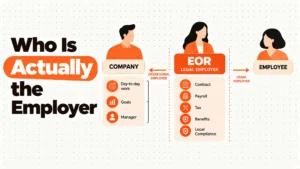
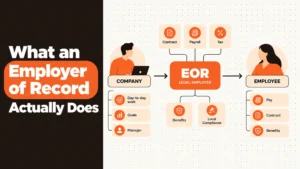
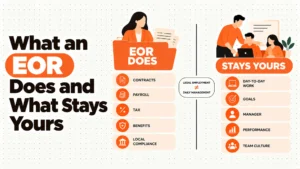
- The actual job of an EOR: An employer of record sits between you and local employment law to shield you from compliance failures.
- How this market splits: Some providers own their legal entities entirely, while others rely on a network of third-party local partners.
- A simple decision rule: If you need the absolute lowest flat rate for standard employment, Remofirst at $199 a month is your baseline.
- The expected outcome: A successful migration will take careful local legal advice and clear internal communication to prevent resetting employee tenure.
| Provider | Rating | Pricing | Trial | Best for |
|---|---|---|---|---|
| Globalization Partners (your current provider) | 4.3/5 | Pricing on request | Free demo available | Best EOR for large enterprise global operations |
| Deel | 4.8/5 | From $49/month per contractor | Free demo available | Best overall EOR for global teams of any size |
| Remote | 4.7/5 | From $299/month per employee | Free demo available | Best EOR for IP protection and owned legal entities |
| Multiplier | 4.6/5 | Pricing on request | Free demo available | Best EOR for fast employee onboarding |
| Papaya Global | 4.5/5 | Pricing on request | Free demo available | Best enterprise EOR with automated compliance |
| Oyster HR | 4.5/5 | From $399/month per employee | Free demo available | Best EOR for employee experience and benefits |
| Velocity Global | 4.4/5 | Pricing on request | Free demo available | Best EOR for complex employment compliance |
| Remofirst | 4.3/5 | From $199/month per employee | Free plan + free demo | Best affordable EOR for growing global teams |
| Atlas HXM | 4.2/5 | Pricing on request | Free demo available | Best EOR when transitioning to a local entity |
| Horizons | 4.2/5 | Pricing on request | Free demo available | Best EOR for Asia-Pacific hiring |
The Friction of Changing Providers
You're looking at a renewal quote from Globalization Partners. The monthly fees have crept up. A board member forwarded you a thread about a newer platform with a sleeker interface. They want to know why your global payroll costs are so high. You've fielded questions about European notice periods this week. Your finance lead wants options.
Switching software is easy. You export a file. You map some data fields. Changing an employer of record is entirely different. You're legally terminating every single international employee on your payroll today. You then have to convince each one of those people to sign a brand new employment agreement with a corporate entity they've never heard of. It requires their individual consent. If you do this badly, you reset their tenure. You might accidentally wipe out their accrued benefits. In certain European jurisdictions, this paper exercise triggers statutory severance requirements whether you intended it or not.
This is a migration of human beings. The legal paperwork is just the exhaust fume of that transition process. The real issue isn't finding a cheaper monthly fee. It's managing the hidden risk of a mass legal transition.
Best tools for Employer of Record (EOR) Tools
Why You Might Not Want to Move
Sometimes your current setup is genuinely fine. Globalization Partners has a 15-year track record in this space. They have dedicated in-country legal teams. If your employees are paid on time and your HR team understands the platform, the disruption of moving is rarely worth a slight user interface upgrade. Staying with a known provider gives you documented case studies and public customer references. This provides greater due diligence confidence than newer platforms can offer.
Then there's cost friction. If you only have three employees in Germany and one in Spain, migrating them to save a tiny margin on your monthly payroll is a bad trade. The legal bills to review the new employment contracts will wipe out your savings for the entire year. You're spending a dollar to save a dime.
Real risk is where the calculation changes. If you're preparing for an IPO or a major acquisition, the buyer will forensically audit your international employment contracts. Re-papering everyone mid-diligence is a nightmare. Auditors recognize the Globalization Partners entity. Changing your legal structure right before a liquidity event introduces variables that slow down negotiations.
Finally, consider the edge cases. If you rely heavily on GP for complex immigration support, a cheaper alternative might leave you stranded. Changing providers means changing the sponsoring entity for local work visas. That's a fast way to get an employee deported.
Late-Night EOR Questions
Does changing providers trigger permanent establishment risk? It absolutely can. You need local tax advice before signing anything. This matters because triggering permanent establishment means your company owes corporate tax in that foreign country.
What happens if a provider drops a country from their coverage? You have to scramble to find a new employer of record immediately. This matters because you can't legally employ or pay those people once the provider withdraws.
Do we've to pay severance during a migration? In some jurisdictions, technically yes. A termination is a termination under local law. This matters because a simple vendor swap can suddenly cost you months of unexpected payroll.
Will employee probation periods restart? They might. It depends on whether the new contract explicitly recognizes prior tenure. This matters because employees will rightfully panic if they lose their employment protections overnight.
Who owns the intellectual property created during the transition? The chain of title can get incredibly messy between the termination date and the new start date. This matters because IP gaps can ruin future valuation events.
How the EOR Market Actually Splits
The first category relies on wholly-owned legal entities. Providers in this bucket own one hundred percent of the companies in every country they operate in. There are no third-party partnerships. This model offers the strongest intellectual property protection. It's right for tech companies that can't risk IP leaks. But it fails if you need to hire quickly in a tiny market where the provider hasn't yet built an entity. Liability rests entirely with the provider. When payroll breaks, you're talking directly to the people who can fix it.
The second category uses an aggregator or partner network model. These providers build a great software layer on top of local payroll partners in dozens of countries. This allows them to scale rapidly. It's right for startups needing broad coverage fast. It fails when a complex legal dispute arises. Liability can become a blame game between the software vendor and their local partner. When problems occur, resolution is slower because tickets must be routed through external third parties.
The final category is the advisory hybrid. These providers handle EOR employment, but their real focus is helping you transition to your own local entity later. They have deep in-country corporate structuring expertise. This is right when you're testing a market before incorporating. It fails if you want a pure, automated software play.
Diagnostic Questions for Your Team
Do your international employees actually complain about the current platform? Talk to them before you initiate a global migration. If the self-service portal is working and payslips are accurate, you're solving a finance problem at the expense of employee experience. Happy employees rarely care about your backend HR software costs. They just want to be paid accurately on the final Friday of every month. Disrupting that rhythm creates unnecessary resentment.
Are you hiring contractors or full-time employees? Some platforms excel at contractor payments but struggle with complex statutory benefits for full-time staff. Knowing your workforce mix determines which provider model fits best. You don't want to pay a premium for EOR features if your team is mostly freelance. Conversely, relying on a contractor platform to handle deep French employment law is a recipe for compliance failure.
How sensitive is your intellectual property? If you're a deep-tech software company, you need water-tight invention assignment clauses. A provider with fully owned legal entities offers better protection than an aggregator network. You can't afford gaps in your chain of title. Investors will penalize your valuation if they discover your overseas engineers own parts of your core codebase.
Are you planning to open your own entities soon? If your headcount in the UK is approaching thirty people, you should probably incorporate. You need an EOR that helps you offboard easily rather than trapping you in their system. Some vendors actively punish you for graduating from their platform. You need an exit strategy written into your initial service agreement.
Does your legal team have the bandwidth for this? Migrating means reviewing dozens of new employment contracts under unfamiliar local laws. If your general counsel is already underwater, this project will stall for months. You will end up paying for two overlapping systems while waiting for legal approval. Bottlenecks in the legal department will frustrate the exact finance leaders who demanded this transition.
The Nine Alternatives, Reviewed
Deel
Deel is best for global teams of any size needing fast onboarding alongside an all-in-one platform for both contractors and full-time employees. It earns its place by offering global contractor management across 150+ countries. But it can become very expensive for large employee counts as you scale up your operations. Some specific country edge cases also require manual handling outside their automated workflows.
Remote
Remote is best for IP-sensitive tech businesses that require their provider to use wholly-owned legal entities without any third-party aggregator partnerships. It earns its place through comprehensive IP assignment clauses included in every contract. However, the onboarding speed for contractors is noticeably slower than Deel. The price point starting at $299 a month is also higher than several newer competitors.
Multiplier
Multiplier is best for fast EOR onboarding in the Asia-Pacific region. It earns its place by getting employees documented and enrolled in competitive local benefits within 24 to 48 hours in most supported countries. Its weakness is a narrower country coverage compared to the largest global players like Deel or Remote. The brand is also much less established outside of its core Asian markets.
Papaya Global
Papaya Global is best for large enterprises needing automated compliance checks across complex global operations. It earns its place with an AI-powered compliance engine that scans payroll runs across 160+ countries for statutory errors. Its weakness is a notoriously long implementation time for enterprise deals. The pricing structure is also less transparent than Deel or Oyster HR.
Oyster HR
Oyster HR is best for remote-first companies prioritizing employee experience and locally competitive benefits packages. It earns its place by publishing completely transparent pricing from $399 a month per employee directly on its website. But its overall country coverage is smaller than Deel. The per-employee cost is also on the higher end of the market for standard employment scenarios.
Velocity Global
Velocity Global is best for enterprises dealing with dual-status workers and complex equity-heavy compensation arrangements. It earns its place by taking on non-standard working arrangements and executive-level contracts that most typical EORs decline. Its weakness is a distinct lack of modern self-service software compared to Oyster or Deel. The pricing is also prohibitive for smaller teams with basic needs.
Remofirst
Remofirst is best for startups needing broad country coverage at the absolute lowest price point. It earns its place by offering flat-rate EOR employment from $199 a month across 170+ countries alongside free basic contractor management. Its weakness is a smaller internal support team than Remote. The platform also lacks depth when handling highly complex legal compliance scenarios for enterprise clients.
Atlas HXM
Atlas HXM is best for companies using an EOR as a temporary bridge before building their own local corporate entities. It earns its place by combining EOR employment with deep in-country advisory services for corporate registration across emerging markets. Its weakness is a smaller investment in pure technology. It's less suitable as a permanent EOR-only solution if you never plan to incorporate.
Horizons
Horizons is best for companies building distributed teams specifically across Asia-Pacific markets like China and Japan. It earns its place by maintaining dedicated in-house teams for deep local compliance rather than using third-party aggregators. Its weakness is thin coverage across the Americas and EMEA regions. It also has very little brand recognition outside of APAC.
The Decision Table
| Situation | Scale | Setup | Primary Pain | Recommended Starting Point |
|---|---|---|---|---|
| Heavy IP sensitivity | 10 – 500 | Pure EOR | Need absolute legal entity control | Remote |
| Rapid contractor scaling | Any size | Mixed workforce | Slow onboarding times | Deel |
| Deep APAC expansion | 50 – 200 | Pure EOR | Complex Chinese employment law | Horizons |
| Tight startup budget | 10 – 50 | Pure EOR | High per-employee monthly fees | Remofirst |
| Enterprise IPO prep | 500+ | Complex global | Need proven compliance track record | Globalization Partners |
| Pre-entity bridging | 100 – 300 | EOR to local | Need local registration advisory | Atlas HXM |
| Retention issues | 10 – 200 | Remote-first | Poor employee benefits experience | Oyster HR |
| Complex equity grants | 200+ | Mixed workforce | Dual-status taxation rules | Velocity Global |
The true cost of an EOR mistake rarely shows up on a monthly software invoice. It appears six months later as a second-order disaster. If your new provider misclassifies a worker or fails to register them with the local tax authority properly, the fines fall directly on your balance sheet. Worse, if two providers argue over transition dates during a migration, an employee gets left unpaid. That breaks trust instantly.
You also face the silent risks of migration. An administrative error can quietly reset an employee's statutory tenure. That wipes out their legal protections. If a cheap provider suddenly drops coverage in a specific market, you might find yourself with a country you can't hire in next quarter. Your talent pipeline vanishes overnight.
Are you trying to solve a real compliance problem, or are you just tired of your current user interface?
When you're ready to move beyond a basic setup, you need unbiased data. Vendor sales decks are built to highlight their strengths while hiding their glaring operational gaps. You need to know what happens when things break in a difficult jurisdiction.
HROpsLab tracks these exact failure points. We monitor how EOR providers handle difficult transitions and complex equity arrangements. Our editorial team interviews finance leaders to understand the actual reality of these platforms post-implementation. We cut through the marketing noise to find out who actually answers support tickets on a Friday afternoon.
We're an independent review publication. We sell no software. Our goal is to give you the unvarnished operational facts so you can make a clean, defensible choice for your global workforce.
Frequently Asked Questions
What is an Employer of Record?
An Employer of Record legally employs workers on your behalf in countries where you don't have a corporate entity. They handle the local employment contract and statutory compliance. You direct the employee's daily work. The provider assumes the primary legal liability for employment law compliance. This arrangement allows you to hire talent globally without spending thousands of dollars to register a foreign corporate subsidiary.
Why is migrating from Globalization Partners so difficult?
You can't just transfer employees like files on a server. Every worker must be formally terminated by Globalization Partners and then re-hired by the new EOR's local entity. This requires explicit written consent from each employee. It carries significant risks regarding continuous service recognition and accrued statutory benefits. A sloppy transition can leave your workers exposed to unnecessary probationary periods.
Do cheaper alternatives provide the same level of legal protection?
Not always. Providers charging $199 a month often rely on third-party aggregators rather than owning their legal entities. This can dilute intellectual property protections. And you must review the specific contractual indemnities before migrating. A cheaper monthly fee often means you're taking on a higher percentage of the hidden compliance risk.
How long does an EOR migration actually take?
A safe migration takes at least sixty to ninety days. You need time to review new contracts and align with local payroll cutoff dates. Rushing the process is how statutory benefits get dropped. You have to sync the termination dates perfectly with the new entity start dates to ensure continuity of coverage.
Will changing EORs disrupt my employees' daily work?
The legal transition itself takes significant administrative time from your HR team. For the employee, the disruption is mostly mental anxiety about signing a new contract. Once the transition is complete, their daily tasks remain unchanged. You just need to over-communicate the reasons for the change to prevent unnecessary panic.
Can we use multiple EOR providers at the same time?
Yes. Many large enterprises use different providers for different regions. You might use Horizons for your APAC team and Remote for your European engineers. This reduces your reliance on a single vendor but increases your internal administrative overhead. Managing multiple invoices and varying support systems requires a highly organized human resources department.
Does Deel handle contractor management better than Globalization Partners?
Deel was built originally for contractor payments before expanding into full EOR services. They offer automated tax document generation across 150+ countries. So this makes them a strong choice if your workforce leans heavily toward international freelancers. Their core infrastructure was designed from the ground up to handle flexible cross-border payments.
Independent reviews for global HR leaders.