

TL;DR
- The core decision: Changing your employer of record means terminating every foreign worker and re-hiring them into an entirely new legal entity.
- When staying put is right: You should not migrate if your only complaint is the monthly subscription fee.
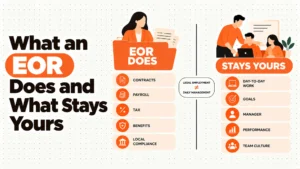
- What an EOR actually does: They hold the legal risk directly between your business and local labor courts.
- Market structure: Providers either own their legal entities outright or rent them from local partner networks.
- The decision rule: Choose your vendor based on the compliance complexity of your most difficult country.
- Expected outcome: Individual employees will question their new contracts and demand reassurance about their job security.
| Provider | Rating | Pricing | Trial | Best for |
|---|---|---|---|---|
| Deel (your current provider) | 4.8/5 | From $49/month per contractor | Free demo available | Best overall EOR for global teams of any size |
| Remote | 4.7/5 | From $299/month per employee | Free demo available | Best EOR for IP protection and owned legal entities |
| Multiplier | 4.6/5 | Pricing on request | Free demo available | Best EOR for fast employee onboarding |
| Papaya Global | 4.5/5 | Pricing on request | Free demo available | Best enterprise EOR with automated compliance |
| Oyster HR | 4.5/5 | From $399/month per employee | Free demo available | Best EOR for employee experience and benefits |
| Velocity Global | 4.4/5 | Pricing on request | Free demo available | Best EOR for complex employment compliance |
| Globalization Partners | 4.3/5 | Pricing on request | Free demo available | Best EOR for large enterprise global operations |
| Remofirst | 4.3/5 | From $199/month per employee | Free plan + free demo | Best affordable EOR for growing global teams |
| Atlas HXM | 4.2/5 | Pricing on request | Free demo available | Best EOR when transitioning to a local entity |
| Horizons | 4.2/5 | Pricing on request | Free demo available | Best EOR for Asia-Pacific hiring |
The Migration Illusion
Your Chief Financial Officer just forwarded the latest software expense report. It highlights your monthly billing from Deel. The email asks if you've considered a cheaper option for the upcoming fiscal year. You glance at the invoice covering contractor payouts and full-time employee administration. It looks like a simple line item on a busy spreadsheet.
You might assume this is a standard procurement exercise. You evaluate the competing features. You migrate the historical data. You update your bookmarks. You expect a quiet transition over a single weekend. You think your team will barely notice the change.
But this isn't a software swap. You aren't just moving data files between cloud servers. The real issue isn't the monthly software subscription, it's the underlying employment contract.
Best tools for Employer of Record (EOR) Tools
When To Do Absolutely Nothing
Let's talk about the four stages of using Deel. You likely started here because it was the absolute fastest route to market. Your setup is genuinely fine. You have contractors paying $49 per month. You employ a handful of full-time staff scattered abroad. The platform works exactly as advertised.
Then you experience cost friction. The headcount grows. The monthly invoice expands. You wonder if another vendor could save you a few thousand dollars annually. You start browsing alternative websites. You book a few demo calls with rival sales teams.
Next comes real risk. An employee in Germany needs to be terminated. You realize you don't know the local labor laws. Deel manages local contracts and payroll tax filing across 90+ countries. Their team handles the legal exposure. You rely entirely on their compliance shield. You realize the premium fee covers actual legal protection.
Finally, you hit the edge case. You consider leaving. But repapering employment agreements is legally dangerous. Individual employees must consent to a brand new contract. Don't move unless your compliance requirements genuinely exceed your current setup. Re-papering employment contracts is a genuine reason to stay right where you're.
The Midnight Panic Questions
Are we triggering permanent establishment risk? If your foreign employees generate revenue directly, local tax authorities might view them as a taxable corporate branch. This creates massive corporate tax liabilities. You need to know exactly how your vendor structures their local legal entities.
What happens if the provider drops a country? Vendors sometimes lose their local licenses due to regulatory changes. They give you thirty days to figure out a local entity or terminate the employee. You must understand their legal continuity plans before you sign a master service agreement.
What if an employee refuses the new contract? Employees are legally allowed to decline the transfer. You're then left with an unwanted termination process. This destroys team morale and delays your product roadmap.
Are there hidden severance triggers in the fine print? Some jurisdictions treat a vendor transition as a constructive dismissal. You might owe statutory severance pay just for changing software platforms. This completely wipes out any subscription savings.
Will our intellectual property leak through a subcontractor? If your vendor uses third-party aggregators, your intellectual property assignment clauses might not hold up in court. The chain of custody gets very muddy. You can't enforce a non-compete through a subcontractor.
How The EOR Market Actually Splits
The Direct Ownership Model. Providers in this category own their legal entities in every single country they operate. They never rely on local subcontractor agencies. This is the right choice when you need airtight intellectual property protection. It gives you absolute certainty over who actually employs your engineers. It fails when you need to hire immediately in a very small emerging market where they haven't built a corporate entity yet.
The Local Partner Network. These platforms act as a software layer over a massive network of local HR agencies. This model works beautifully for total global reach. You can hire someone in almost any territory on earth. It falls apart when a complex legal dispute requires fast answers. You end up waiting for the software vendor to email their local partner for a translation.
The Enterprise Compliance Engine. Some providers focus entirely on deep payroll analytics across hundreds of countries. They integrate directly with major business intelligence tools. This suits large corporations with established foreign entities. It fails spectacularly for a startup trying to hire their very first remote designer.
Assess Your Actual Need
Do you prioritize intellectual property protection above all else? If your core product relies on proprietary code, you need a provider with ironclad assignment clauses. A leaked algorithm costs far more than a software subscription.
Are you focused primarily on the Asia-Pacific region? Some vendors maintain dedicated in-house teams in Singapore and China. Others rely entirely on local subcontractors to handle complex social insurance requirements.
Do you plan to build your own legal entities eventually? You need a partner who advises on corporate structure transitions. Some vendors actively hinder this process to keep you paying their monthly fees.
Is the employee experience causing high attrition? Your remote workers want competitive local health insurance. They don't want bare minimum statutory coverage that leaves their families exposed.
Are budget constraints your absolute primary pain point? You might need to accept a smaller support team. You can secure a lower flat rate if you compromise on enterprise reporting features.
The Nine Alternatives, Reviewed
Remote
This platform is best for IP protection and owned legal entities. It earns a place on this list because Remote owns 100% of its legal entities across all supported countries without using third-party aggregator partnerships. You get comprehensive IP assignment clauses in every employment contract. The genuine weakness is a price point starting from $299 per month per employee. It also features slower onboarding for contractors than Deel.
Multiplier
This vendor is best for fast employee onboarding. It earns a place by getting employees signed and enrolled in benefits within 24 to 48 hours in most supported countries. They provide excellent multi-currency payroll in local currencies. The weakness is a narrower country coverage than Deel. It also suffers from a less established brand presence outside the Asia-Pacific region. Pricing is available on request.
Papaya Global
This platform is the best enterprise EOR with automated compliance. It earns a place through an AI-powered compliance engine that scans every payroll run for statutory errors across 160+ countries. You gain access to real-time payroll cost dashboards with deep business intelligence integrations. The weakness is a highly protracted implementation time for enterprise deals. Pricing is available on request and is noticeably less transparent than Deel.
Oyster HR
This platform is best for employee experience and benefits. It earns a place by offering a beautifully designed self-service portal for accessing payslips. The company publishes full pricing directly on their website with absolutely no hidden fees. The weakness is a higher per-employee cost starting from $399 per month. They also offer smaller overall country coverage than Deel.
Velocity Global
This vendor is best for complex employment compliance. It earns a place by handling dual-status employment and complex equity arrangements that most competitors automatically decline. You get dedicated immigration support services for work permits. The weakness is a punishingly high price point for smaller teams. The platform also offers less self-service functionality than Oyster. Pricing is available on request.
Globalization Partners
This vendor is best for large enterprise global operations. It earns a place through a fifteen-year track record featuring documented case studies. They supply dedicated in-country legal experts rather than just automated contract generation. The genuine weakness is an interface that feels significantly less modern than newer competitors. It's also more expensive for similar coverage. Pricing is available on request.
Remofirst
This platform is the best affordable option for growing global teams. It earns a place by offering EOR employment from just $199 per month per employee across 170+ countries. You get access to basic contractor onboarding at absolutely no cost. The weakness is a much smaller support team than Remote. They also offer less depth when handling highly complex compliance scenarios.
Atlas HXM
This vendor is best when transitioning to a local entity. It earns a place by combining standard employment with corporate registration advisory services. They maintain deep expertise in emerging markets across Africa and the Middle East. The weakness is they're less suitable as a pure software-only solution. They also feature a smaller technology investment than Deel. Pricing is available on request.
Horizons
This vendor is best for Asia-Pacific hiring. It earns a place by using dedicated in-house teams across Singapore and Japan rather than third-party partners. They act as deep China employment specialists handling complicated social insurance withholding. The weakness is that EMEA coverage is significantly thinner than their APAC presence. They have much less brand recognition outside the Asia-Pacific market. Pricing is available on request.
The Decision Table
| Situation | Scale | Setup | Primary Pain | Recommended Starting Point |
|---|---|---|---|---|
| Need ironclad IP protection | 1-500 employees | Mixed remote team | Fear of IP leakage | Remote |
| Fast hiring in Singapore | 10-200 employees | APAC focus | Slow onboarding | Multiplier |
| Strict budget constraints | 10-200 employees | Broad distribution | High monthly fees | Remofirst |
| Building local entities later | 50+ employees | Emerging markets | Legal entity setup | Atlas HXM |
| Large enterprise with BI tools | 500+ employees | 160+ countries | Complex payroll data | Papaya Global |
| Standard contractor payments | Any size | Mixed global | Manual tax documents | Deel |
| Highly complex equity plans | 100+ employees | Dual-status roles | Non-standard contracts | Velocity Global |
| Employees demand better benefits | 10-500 employees | Remote-first | High employee attrition | Oyster HR |
The Hidden Cost of Migration
Migrating an employer of record is a corporate restructuring masquerading as an IT project. The second-order costs will shock you. You face massive misclassification exposure if a contractor is ported over incorrectly. Local labor courts don't care about your software transition.
Imagine an employee left unpaid for a month while two providers argue over the final payroll run. Their statutory tenure might be quietly reset. You might suddenly find yourself unable to hire in a key country next quarter because the new vendor lacks a local license.
Are you truly prepared to risk your team's financial livelihood just to save a minor subscription fee?
Beyond the Basic Setup
Eventually you outgrow the initial chaotic phase of global hiring. You need mature processes. You need independent verification of vendor claims. You can't rely on sales pitches forever.
HROpsLab exists to provide that clarity. We spend our time testing HR software so you don't have to. We are an independent review publication. We look at the actual contracts.
We sell absolutely nothing. Our only goal is to help you build a better workplace. We give you the facts you need to make intelligent decisions.
Frequently Asked Questions
What is an employer of record?
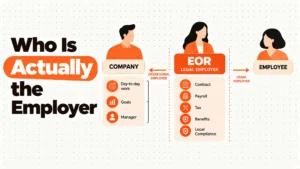
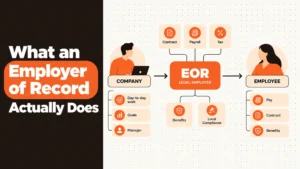
An employer of record is a third-party company that becomes the legal employer of your foreign workers. They handle local payroll and tax compliance. You retain day-to-day management of the employee's actual work. They sit permanently between your business and local labor laws.
Can an employer of record fire my employee?
Yes. They're the legal employer. If you instruct them to terminate a worker, they will execute the dismissal according to local labor laws. They hold the ultimate legal authority over the employment contract.
Do employer of record workers get equity?
You can grant equity to these workers. The process requires specific legal agreements to avoid tax penalties. The vendor doesn't own the equity. You issue it directly from your corporate entity.
How does EOR pricing actually work?
Most providers charge a flat monthly fee per employee. Some legacy vendors charge a percentage of the worker's salary. You also have to fund the payroll and mandatory local taxes before the money goes out.
What happens if I want to open my own local entity?
You can transition workers from the vendor to your new corporate entity. This requires terminating their existing contract. You then re-hire them under your new local company. Some vendors charge exit fees for this process.
Is it legally dangerous to switch providers?
It carries significant risk. You must terminate the employee in one entity and re-hire them in another. Individual employees must consent to the change. This can trigger statutory severance payments.
Do I need an EOR for independent contractors?
No. You can pay independent contractors directly. But many companies use a specialized platform to manage contractor tax documents. This helps defend against misclassification claims if local tax authorities audit your business.
Does my company own the intellectual property?
Your contract with the vendor must contain strict assignment clauses. The employee assigns the rights to the vendor. The vendor then assigns those rights to your business. A weak link in this chain exposes your code to theft.
You deserve honest software reviews.