

TL;DR
- The Core Decision: You must decide whether the financial savings of a new provider outweigh the immense legal risks of re-papering international employment contracts.
- When to Stay Put: If your current setup works flawlessly and your only goal is saving a few dollars, keep your current provider.
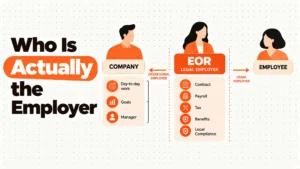
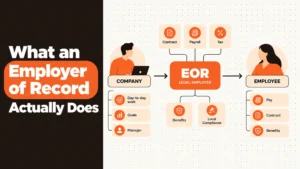
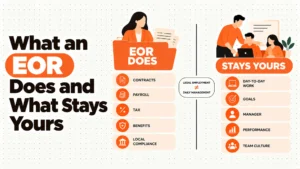
- The EOR Reality: An employer of record handles local payroll and employment compliance, but it never shields you from corporate tax liabilities.
- The Market Split: The market divides strictly between providers who own their local entities directly and those who rely heavily on local third-party agencies.
- The Decision Rule: Choose an owned-entity model if intellectual property protection is paramount, or choose a partner network if you need massive global coverage quickly.
- The Expected Outcome: A successful transition gives you better compliance tools, but a botched move triggers unexpected severance payouts and furious employees.
| Provider | Rating | Pricing | Trial | Best for |
|---|---|---|---|---|
| Atlas HXM (your current provider) | 4.2/5 | Pricing on request | Free demo available | Best EOR when transitioning to a local entity |
| Deel | 4.8/5 | From $49/month per contractor | Free demo available | Best overall EOR for global teams of any size |
| Remote | 4.7/5 | From $299/month per employee | Free demo available | Best EOR for IP protection and owned legal entities |
| Multiplier | 4.6/5 | Pricing on request | Free demo available | Best EOR for fast employee onboarding |
| Papaya Global | 4.5/5 | Pricing on request | Free demo available | Best enterprise EOR with automated compliance |
| Oyster HR | 4.5/5 | From $399/month per employee | Free demo available | Best EOR for employee experience and benefits |
| Velocity Global | 4.4/5 | Pricing on request | Free demo available | Best EOR for complex employment compliance |
| Globalization Partners | 4.3/5 | Pricing on request | Free demo available | Best EOR for large enterprise global operations |
| Remofirst | 4.3/5 | From $199/month per employee | Free plan + free demo | Best affordable EOR for growing global teams |
| Horizons | 4.2/5 | Pricing on request | Free demo available | Best EOR for Asia-Pacific hiring |
The Reality of Switching Providers
Imagine staring at an invoice for a severance payment you never authorized. You hired a senior engineer in a country you've never visited. Now you're dealing with local labor courts. This is reality.
Let's be clear. Switching EOR providers requires terminating every employee in one legal entity and rehiring them into another. You have to secure individual consent from every single person. Tenure resets. Probation periods restart. You might accidentally trigger statutory severance just by changing the paperwork.
So when your finance lead asks if another provider would be cheaper, they're asking the wrong question. Saving fifty dollars a month per head is meaningless if a botched migration triggers a lawsuit. The real issue isn't the software fee. It's whether your current provider shields you from risk or actively creates it.
Best tools for Employer of Record (EOR) Tools
When Sticking With Your Current Provider Makes Sense
Stage one is admitting your setup is fine. If your team gets paid on time and your compliance record is clean, don't move. You don't re-paper international employment contracts for fun.
Stage two involves cost friction. Finance wants to save money. But moving providers to shave a few percentage points off your markup rarely pays off. Legal fees for reviewing new agreements will destroy any perceived financial win.
Stage three introduces real risk. If your provider starts missing payroll deadlines, you've to move. This is no longer about saving money. It's about protecting your company from foreign tax authorities.
Stage four is the edge case. Atlas HXM built its reputation on helping companies transition from EOR to their own local entities. They provide combined EOR employment and company registration advisory. If you plan to open your own entity in an emerging market next year, keeping Atlas HXM is the smartest move you can make.
The 11 PM Questions
Am I exposed to permanent establishment risk? Probably. If your foreign employees generate direct revenue locally, tax authorities might claim you've a taxable presence. An EOR doesn't magically erase corporate tax liability. Take local advice immediately.
What happens if my provider drops a country? You scramble. If your provider abruptly exits a market, your employees lose their legal employer overnight. You will have weeks to find a new provider or fire your staff.
Who owns the intellectual property? It depends. If your EOR uses a third-party partner network, your IP transfers through multiple foreign companies before it reaches you. This chain of custody complicates future funding rounds.
Can I force employees to migrate? Absolutely not. You must secure individual consent from every single worker. If a key engineer refuses to sign the new employment contract, you either terminate them or leave them behind.
Are we accidentally triggering severance? You might be. Terminating an employee from your current EOR to re-hire them on a new one is legally a dismissal. The government might mandate a severance payout regardless.
How This Market Actually Splits
The Owned Entity Model. Some providers own their legal entities in every country they service. They incorporate local companies and hold direct legal responsibility. This gives you maximum control over intellectual property. It also means problems get fixed quickly because you're dealing directly with the legal employer.
The Partner Network Model. Other platforms rely on local partners. They build a beautiful software front-end but farm out actual employment to local agencies. This allows them to advertise massive country counts instantly. The downside is liability. You're inserting middlemen into your employment relationships.
The Hybrid Approach. A few massive players use a blended model. They own entities in major hubs. They use partner networks for smaller markets. You get stability in your biggest markets while maintaining global hiring flexibility.
Five Diagnostic Questions for Your Team
Are you trying to hire in a market where you plan to open a real office? If you intend to hit thirty local headcounts within a year, you need an entity transition plan. You don't just need a basic payroll tool. You need advisory services that handle corporate registration correctly.
Does your company handle highly sensitive intellectual property? Tech companies can't afford weak IP assignment. If your software code is your entire valuation, you need a provider that owns its local entities directly. Handing your IP over to an unknown local aggregator introduces unnecessary risk.
Are you heavily reliant on independent contractors? Some platforms treat contractor management as an afterthought. If you've two full-time employees but fifty global freelancers, you need a system built primarily for fast contractor onboarding. You shouldn't pay premium EOR prices for simple freelance payments.
Do you've complex equity compensation schemes? Managing stock options across multiple tax jurisdictions is a miserable experience. Most basic EORs will refuse to handle vesting schedules or exercise events for international staff. If you offer equity, you need an enterprise-grade provider immediately.
Can your internal HR team handle intense administrative burdens? A cheap provider often means a tiny support team. If you buy a discount solution, expect your own staff to spend hours chasing missing payslips. You pay for white-glove support one way or another.
The Nine Alternatives, Reviewed
Deel
Deel is the best overall EOR for global teams of any size. It handles full-time employees in 90+ countries and manages contractors in 150+ countries with incredibly fast onboarding. It earns its place by offering an all-in-one compliance platform starting at $49/month per contractor. However, Deel can be expensive for large employee counts, and some country-specific edge cases still require manual handling.
Remote
Remote is the best choice for tech businesses needing strict intellectual property protection. They operate a 100% owned entity model with absolutely no third-party aggregator partnerships. This structure delivers the strongest IP assignment clauses and equity management available today. But Remote charges a higher price point than some competitors, starting at $299/month per employee, and their contractor onboarding is notably slower than Deel.
Multiplier
Multiplier focuses heavily on fast employee onboarding across the Asia-Pacific region. They get employees signed and enrolled in local statutory benefits within 24 to 48 hours. This speed makes them ideal for growing global teams demanding quick market entry, with custom pricing available on request. Unfortunately, their country coverage remains narrower than Deel, and they have a less established brand outside their core markets.
Papaya Global
Papaya Global serves large enterprises needing automated compliance across 160+ countries. Their AI-powered engine scans every payroll run for statutory errors, feeding real-time payroll cost dashboards. They're the strongest choice for complex integrations, offering specific pricing on request. However, the implementation time for enterprise deals is famously long, and their pricing is noticeably less transparent than Deel.
Oyster HR
Oyster HR focuses entirely on employee experience and locally competitive benefits packages. They publish their transparent pricing directly on their website, starting from $399/month per employee. Their beautifully designed self-service portal makes accessing payslips or submitting expenses remarkably easy. Their main weakness is a smaller country coverage map than Deel, alongside a higher per-employee cost.
Velocity Global
Velocity Global handles the messy realities of complex employment compliance. They manage heavy equity arrangements and multi-country immigration requirements. If you need work permit applications coordinated alongside EOR employment, they're the clear winner, with pricing on request. They do lack the self-service ease of Oyster, and they carry a higher price point for smaller teams.
Globalization Partners
Globalization Partners targets large enterprise operations needing proven compliance management. They hold a 15+ year track record, employing dedicated in-country legal experts to provide real-time employment law guidance. They provide intense operational stability, offering specific pricing on request. Their interface is noticeably less modern than Remote, and they're generally more expensive for similar coverage.
Remofirst
Remofirst built its reputation on being the most affordable EOR for growing teams. They offer an astonishing 170+ country coverage with EOR employment starting from just $199/month per employee. They even provide basic contractor management completely free of charge. Predictably, their support team is smaller than Deel, leaving them with less depth on complex compliance scenarios.
Horizons
Horizons dominates the Asia-Pacific hiring market. They employ dedicated in-house teams across China and Singapore to handle deep regional complexities. They run multi-currency payroll directly without using aggregators, keeping their custom pricing on request. Their coverage across EMEA and the Americas is significantly thinner, giving them less brand recognition outside Asia-Pacific.
The Decision Table
| Situation | Scale | Setup | Primary Pain | Recommended Starting Point |
|---|---|---|---|---|
| High-volume contractor hiring | Any size | Mixed contractors and FTEs | Messy tax documentation | Deel |
| Core tech team expansion | 10 – 200 employees | IP-sensitive software development | Weak intellectual property assignment | Remote |
| Fast Asia-Pacific hiring | Growth stage | Distributed across Singapore and India | Slow onboarding times | Multiplier |
| Complex enterprise payroll | 500+ employees | 160+ countries | Manual statutory errors | Papaya Global |
| Bridging to local entities | Any size | Planning to open local offices | Emerging market complexity | Atlas HXM |
| Extremely tight budget | Startups | Broad global hiring | High monthly software fees | Remofirst |
| Complex dual-status workers | Scale-ups | Hard-to-cover countries | Multi-country immigration hurdles | Velocity Global |
| Deep China operations | Any size | Heavy APAC presence | Complex local social insurance | Horizons |
The Hidden Costs of a Bad Migration
Moving EOR providers without a flawless transition plan creates massive secondary costs. Misclassification exposure is the biggest hidden threat. If your new provider incorrectly sets up an independent contractor arrangement, local governments will eventually audit you. And the resulting back taxes will completely dwarf whatever software fees you thought you were saving.
Then you've the human cost. Imagine an employee left unpaid for four weeks because two software providers are arguing about a local banking integration. Even worse, if you accidentally reset an employee's tenure during the paper transfer, you might legally erase their accumulated maternity leave.
Finally, a botched transition can lock you out of a specific market entirely. If your new EOR partner violates a local labor code during the transfer, local authorities can freeze their ability to sponsor work permits. Are you truly prepared to risk your global hiring roadmap just to secure a cheaper invoice?
Moving Beyond a Basic Setup
Eventually, your global team will outgrow simple solutions. When your headcount expands significantly, you'll need systems that handle complex equity grants. The decisions you make today will directly impact how easily you can secure funding or acquire other companies tomorrow.
This is exactly why independent analysis matters. The HROpsLab Editorial Team spends thousands of hours testing these platforms. We read the fine print on liability caps. We check the actual onboarding times against the marketing claims.
HROpsLab is an independent review publication. We don't sell software. Our only goal is to provide honest assessments of the HR technology market. By comparing real-world performance, we give you the data needed to protect your business.
Frequently Asked Questions
Do I need individual employee consent to change my EOR provider?
Yes. You must secure written consent from every single employee before moving them to a new platform. Because the EOR is the legal employer, switching providers requires terminating the current employment agreement entirely. The employee must then voluntarily sign a brand new contract with the new provider's local entity. If they refuse to sign, they can't be transferred.
Will changing providers reset my employees' tenure?
It often does. Unless your legal counsel explicitly negotiates a continuation of service agreement with the new provider, local law usually views this as a brand new job. A tenure reset can wipe out accumulated vacation time. It might restart statutory probation periods. This creates immense friction with your international staff.
Can I use multiple EOR platforms at the same time?
You absolutely can. Many enterprise companies use one provider like Deel for their high-volume contractor payments while using Remote specifically for highly paid engineers. This multi-vendor approach lets you match the right compliance model to the right risk profile. It does require more internal administrative work to manage two separate software systems.
Does an Employer of Record protect me from permanent establishment risk?
No. An Employer of Record only handles local employment law and basic payroll compliance. If your foreign workers are signing commercial contracts or generating direct local revenue, local tax authorities can still rule that your company has a taxable local presence. You still need independent corporate tax advice when entering a new market.
Why do some providers charge flat fees while others charge percentages?
Flat fees are highly predictable and make internal budgeting much easier. Percentage-based models scale with the employee's salary. A percentage model might save you money on low-wage entry-level roles. But it will punish you severely when hiring expensive senior executives. We generally recommend seeking out flat-fee models for long-term predictability.
What happens if my EOR gets sued by an employee?
The EOR takes the initial legal hit because they're the legal employer on paper. But virtually every EOR contract includes strict indemnification clauses. If the employee sues because you ordered an unfair termination, the EOR will pass the entire legal cost straight back to your company. You aren't fully insulated from bad management decisions.
Clear data for complex HR decisions.