TL;DR
Secure it asset disposition is sold almost entirely on paperwork. You hand over a pallet of laptops and you get back a certificate. The question nobody asks at the point of signature is what that certificate actually evidences, because the answer varies enormously between vendors and the weakest version proves only that a lorry arrived.
- A certificate proves what the vendor chose to record, nothing more.
- Serial-level reporting is the line between evidence and a receipt.
- Chain of custody matters more than the wipe standard.
- R2 and e-Stewards certify the vendor, not your shipment.
- Ask what happens to a device that fails the wipe.
- The audit gap is almost always the devices that never arrived.
What the certificate actually proves
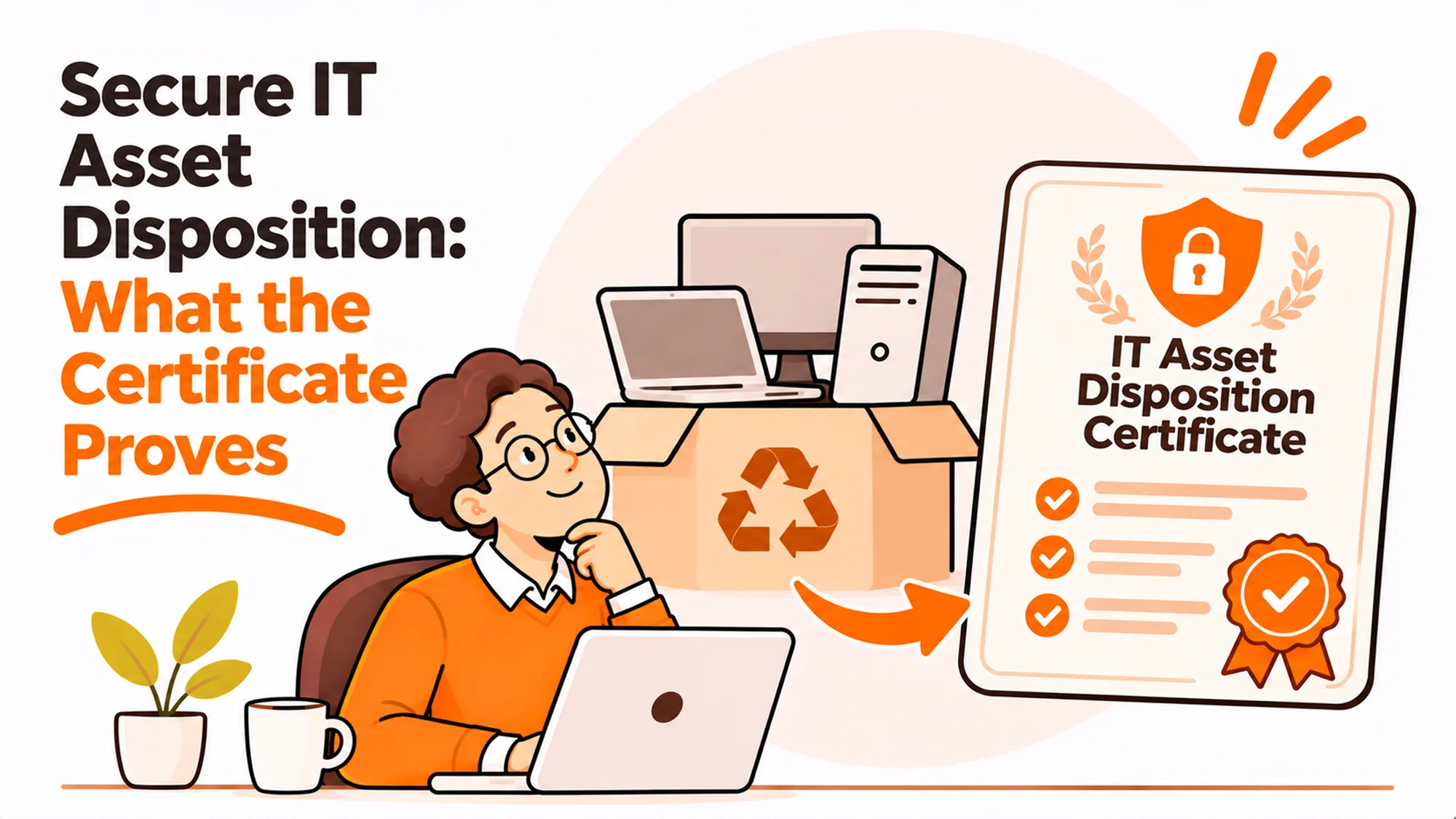
Read one closely and the scope is narrower than the name suggests.
Most certificates attest that a quantity of devices was received and processed on a date. Some list serial numbers. Some state the sanitisation method. A few record the outcome per device, including failures.
Best tools for Device Management
The difference between those is the difference between evidence and a receipt. A certificate with a count and no serials cannot answer the only question an auditor asks, which is whether this specific laptop was dealt with.
NIST Special Publication 800-88 on media sanitization sets out the recognised methods: clear, purge and destroy. A vendor naming one of those is telling you something checkable. A vendor saying “securely erased” is not.
The line to hold in procurement
Serial-level reporting, the method used per device, and the outcome per device. Three columns. If a vendor cannot produce those, the paperwork is reassurance rather than proof.
Chain of custody beats the wipe standard
Teams spend their evaluation time comparing sanitisation methods. The methods are mostly fine. The gap is earlier.
A device is at its most exposed between the employee’s desk and the processor’s dock. That window includes a courier, possibly a consolidation point, and often a period sitting in someone’s hallway.
Ask who holds the device at each step and what record exists at each handover. A vendor that collects directly, scans on receipt and reports discrepancies within a fixed window is managing the risk. One that sends a label and waits is transferring it to you.
| Stage | Record that should exist | Common gap |
|---|---|---|
| Employee hands over | Serial captured at collection | Nothing until arrival |
| In transit | Tracked, insured | Uninsured economy post |
| Receipt at processor | Scanned, dated, reconciled | Counted, not scanned |
| Sanitisation | Method and result per serial | Batch statement only |
| Disposal or resale | Downstream named | Not disclosed |
That last row matters more than it reads. Responsibility for what happens downstream does not end when the device leaves your building.
What R2 and e-Stewards actually certify
Both are real and both are worth asking about. Neither certifies your shipment.
the R2 standard for responsible recycling certifies the processor’s practices, including how it handles data, downstream vendors and materials. the e-Stewards certification programme does something comparable with a stricter line on export of hazardous material.
So a certification tells you the vendor operates to a standard. It does not tell you that your forty laptops were handled under it, which is why the serial-level report still matters.
Two questions separate a serious answer from a logo on a website. Which certification, and what is the scope of the certificate? A processor may be certified for one site and not another, and the pallet goes where the capacity is.
Where the regulation sits
In Europe the framework is the WEEE regime, described by the European Commission on waste electrical and electronic equipment. In the United States the EPA publishes guidance covered in the EPA guidance on electronics and battery management. Neither replaces a contract term, and both are useful context when finance asks why the cheap option is not the chosen one.
Ask what happens when a wipe fails
This is the question that reveals how a vendor really operates, and almost nobody asks it.
Drives fail. Devices arrive locked. Some machines cannot be sanitised in place and have to be physically destroyed. All of that is normal.
What you want to know is the default. Does a failed wipe trigger destruction, a return to you, a second attempt, or a quiet reclassification as scrap? And does the report tell you which happened?
A vendor with a documented exception path will answer immediately. One without will describe the happy path again in different words.
Worth agreeing in advance: destruction is the safe default for a device that cannot be verified, even though it costs the resale value. RemoAsset’s data wiping and offboarding service documents the per-device outcome rather than reporting a batch, which is the shape that survives an audit.
The devices that never arrived
Here is the finding that embarrasses most programmes. The disposal process is usually fine. The gap is upstream.
If your asset register says eighty devices left the business last year and your disposal vendor processed sixty two, the certificate for those sixty two is perfect and you still cannot close the question. The other eighteen are the audit finding.
That is a retrieval problem wearing a disposal costume, and no certificate will fix it. ISO 55001 on asset management frames this as asset management rather than waste management, which is the right frame.
The reconciliation that settles it
- Devices recorded as leaving the business in the period.
- Devices received by the processor, by serial.
- Devices still in storage, by serial.
- The remainder, named and explained.
The fourth line is the only one anybody cares about. RemoAsset’s laptop retrieval service for remote teams exists to make it short, and our guide to IT asset disposal services covers the vendor selection side.
A scope worth signing
Six things to put in the contract rather than the brief.
Serial-level reporting as standard, not on request. A named sanitisation method mapped to a recognised standard. A stated turnaround from collection to certificate. A defined exception path for failures. Named downstream processors. And a discrepancy window, so a missing device surfaces in days rather than at year end.
Then one thing to leave out: a guaranteed resale value. Device values move and a vendor promising a number is either padding it elsewhere or will revise it on receipt.
When you do not need this at all
Under roughly thirty devices a year, with no regulated data and an in-house person who can verify a wipe, a certified processor is a reasonable expense rather than a necessary one. our comparison of data destruction companies covers the smaller end honestly.
The threshold is not device count, it is whether anyone would believe your own records without a third party attached to them.
One more thing to settle up front
Who pays for the collection. It sounds administrative and it decides how many devices come back.
If the leaver has to arrange and fund the return, a meaningful share will not bother, and chasing them costs more than the courier would have. If the company sends a prepaid, tracked label with a collection slot already booked, return rates improve sharply.
That is the cheapest intervention in this entire article, and it sits in the offboarding process rather than in the disposal contract, which is why it is so often nobody’s job.
What a secure it asset disposition contract should say about volume
Most disposal pricing assumes pallets. A distributed team sends ones and twos, continuously, from different countries, which is a different commercial shape entirely.
Ask whether the vendor accepts single device collections and what that costs against a consolidated batch. Some will only quote for volume, which pushes you into holding devices until there are enough, and a cupboard of unwiped laptops waiting for a pallet is its own risk.
The alternative is consolidating at a storage point first and sending batches from there, which keeps the unit cost sensible without leaving devices scattered. That is worth deciding before signing, because retrofitting it means renegotiating.
[Two-CTA block: Case Studies | Talk to Expert]
Frequently asked questions
What does a secure it asset disposition certificate prove?
Only what the vendor chose to record. Most attest that a quantity of devices was received and processed on a date, which is a receipt rather than evidence. The version that holds up lists serial numbers, the sanitisation method used per device, and the outcome per device including failures. If a certificate carries a count and no serials, it cannot answer the question an auditor will actually ask, which is whether one specific laptop was dealt with.
Is the wipe standard the most important thing to compare?
Usually not. The recognised methods are well defined and most vendors handle them competently. The larger risk sits earlier, in the window between the employee’s desk and the processor’s dock, which involves a courier and often a period sitting in somebody’s hallway. Ask who holds the device at each step and what record exists at each handover. That question separates a vendor managing the risk from one transferring it to you.
Do R2 or e-Stewards certificates cover my shipment?
No, and this is widely misunderstood. Both certify the processor’s practices, including data handling, downstream vendors and materials, with e-Stewards taking a stricter line on export of hazardous material. Neither certifies that your particular devices were handled under the standard. Ask which certification applies and what the scope is, because a processor may be certified for one site and not another, and your pallet goes where the capacity is.
What should happen when a device cannot be wiped?
Agree the default before you sign. Drives fail, devices arrive locked, and some machines cannot be sanitised in place. The safe default is physical destruction, even though it costs the resale value, with the outcome recorded against that serial. What you are testing by asking is whether the vendor has a documented exception path at all. One that does will answer immediately; one that does not will describe the happy path again in different words.
Why does my disposal paperwork not satisfy the auditor?
Almost always because the gap is upstream rather than in disposal. If your records show eighty devices left the business and the processor handled sixty two, the certificate for those sixty two can be perfect and the other eighteen are still the finding. That is a retrieval problem wearing a disposal costume. The fix is a reconciliation between devices recorded as leaving, devices received by serial, devices still in storage, and a named explanation for the remainder.
What belongs in the contract rather than the brief?
Six things. Serial-level reporting as standard rather than on request. A named sanitisation method mapped to a recognised standard. A stated turnaround from collection to certificate. A defined exception path for failures. Named downstream processors. And a discrepancy window so a missing device surfaces within days rather than at year end. Leave out any guaranteed resale value, because device prices move and a promised figure is either padded elsewhere or revised on receipt.
When is a certified processor not worth the cost?
Under roughly thirty devices a year, with no regulated data, and somebody in house who can verify a wipe, it is a reasonable expense rather than a necessary one. The honest threshold is not device count though. It is whether anyone outside your team would believe your own records without a third party attached to them. If the answer is yes, you can defer. If your records are already contested internally, a certificate will not fix that either.