
TL;DR
- The core decision: whether the day is for transferring information or for making somebody feel expected, because it can't do both well.
- When doing nothing is right: when people arrive one at a time and their manager already handles the first day properly.
- What has to be true: somebody who has never been here could get through their first afternoon without having to ask a stranger.
- How the options split: by how much is delivered live, which is the choice that determines how much gets retained.
- Decision rule: if it could be a document somebody finds later, it shouldn't be in the room.
- Outcome to expect: a shorter day, remembered better, with the content still available when it's needed.
The Day That Is Mostly Forgotten
A new starter sits through a day of sessions. Someone explains the organisation's history and structure. Someone covers the systems. Someone runs through policies. There's a tour, a lunch, a set of logins, and a folder of material to read.
Ask them a fortnight later what was covered and you'll get the lunch, one or two people's names, and a vague sense that policies were mentioned. That isn't a failure of attention. It's what happens when a large volume of information is delivered to somebody with no framework to attach it to, no immediate use for any of it, and a level of background anxiety that reduces how much anybody absorbs.
The response is usually to improve the day. Better material, more interactive, a video instead of a presentation. It rarely changes the outcome, because the constraint isn't the quality of the delivery. It's that almost nothing said on a first day can be retained, and the organisation keeps trying to transfer information on the one day of somebody's employment when they're least able to receive it.
Best tools for Onboarding & LMS
What makes this worth getting right anyway is that the day does other things, and those other things work. A new person learns whether they were expected. They learn whether this place is organised. They form a first impression of the people they'll work with, and those impressions are unusually durable. None of that depends on content, and all of it is affected by how the day is arranged.
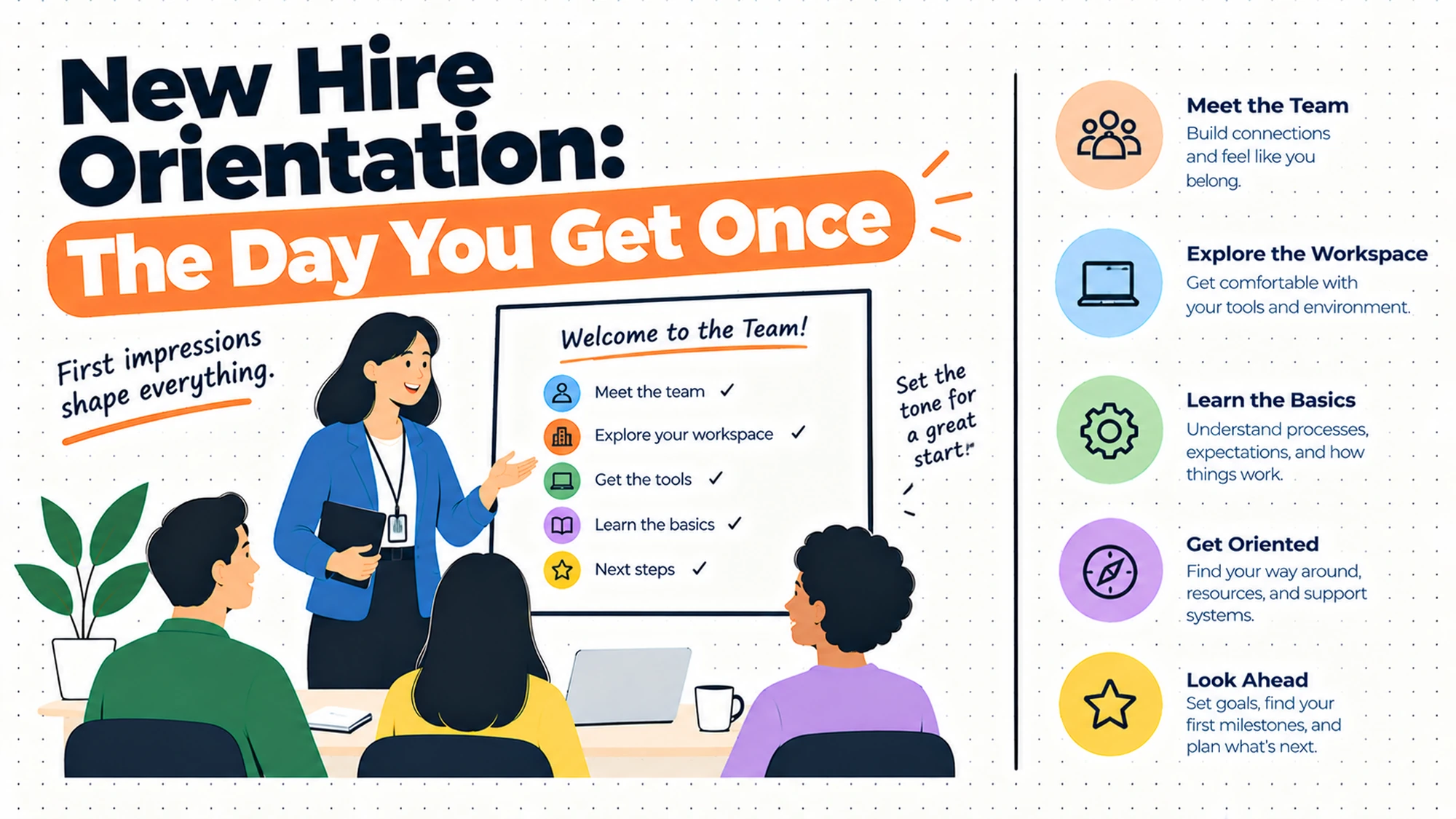
So the useful reframing is this: orientation is not an information transfer with a social element attached. It's a social event with a small amount of information attached, and almost every common complaint about orientation comes from having those the wrong way round.
When You Genuinely Do Not Need to Act Yet
Your current setup is genuinely fine. People arrive one or two at a time, their manager takes the first day seriously, and new starters describe their start as normal. A central orientation programme built for that volume is a solution to a coordination problem you don't have.
Friction is starting to show. New people are arriving more often, two managers handle the first day very differently, or somebody spent their first afternoon with nothing to do. Those are signals for a light structure, which means a short agreed shape for the day rather than a programme.
It has become a real cost. Several people start each month, the same questions get asked by every new starter, or somebody senior has noticed that first days vary from good to embarrassing. At that point a consistent minimum is worth building, and the work is mostly in deciding what to leave out.
The edge case that forces it. Certain content has to be delivered, recorded, or delivered before somebody can do particular work. What's required, when, and what records must be kept differ by jurisdiction and by sector, and in some roles the requirement attaches to the individual rather than the employer. Establish what applies to you specifically, take local advice, and build the rest of the day around those fixed points rather than fitting them in afterwards.
Five Questions This Reader Asks at 11pm
What should a new hire orientation cover? Much less than it currently does. The genuinely necessary content is whatever they need to get through the first two days without being stuck, plus anything that's required and has to happen live. Everything else, which is most of it, is better as material they can find when they need it. The test for any item is whether they'll use it this week.
How long should orientation be? Shorter than a day for most organisations, which surprises people. Half a morning of well-chosen content plus real introductions leaves them with an afternoon to start doing something, and starting to do something is worth more than any additional session. Long orientations persist because they look thorough, not because they work better.
Should it be one day or spread out? Spread, where you can. The same content delivered in short pieces across a first week lands better, because each piece arrives closer to when it's relevant and the person has somewhere to put it. The exception is anything that benefits from people being together, which is worth concentrating.
Do we need a formal orientation at all? Only if the manager isn't doing it well, or if there are several people arriving and consistency matters. A central orientation exists to solve a variability problem and a scale problem. If you don't have either, the manager sitting down with somebody properly is better than anything a programme produces.
What actually sticks from day one? Whether somebody was expecting them. Whether their equipment worked. Who was friendly. Whether the place seemed organised. That's roughly the list, and none of it is content. Designing the day around those four is a completely different exercise from designing it around what people should know.
What Orientation Can and Cannot Do
Being clear about this saves a lot of wasted effort, because most orientation programmes are attempting something the format can't deliver.
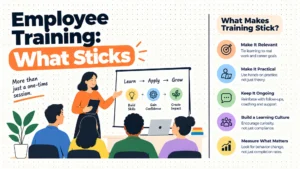
It can't transfer knowledge that won't be used soon. Anything explained on a first day and needed in two months will be gone. This isn't about how well it's explained. It's a property of information with nothing to attach to and no immediate application, and no amount of engaging delivery changes it.
It can't teach a skill. Watching somebody demonstrate a process produces the belief that you could do it, which is different from being able to do it. Systems training in particular fails this way, and the person will need to be shown again the first time they actually have to use the system.
It can't substitute for a manager. A new person who has an excellent orientation and an absent manager has had a good day and a bad start, and they'll remember the second.
It can make somebody feel expected. This is the thing it does best and the thing most often left to chance. Being met by name, having a desk that's ready, finding your accounts already working, and having somebody who's clearly set time aside communicates more about an organisation than anything said in a session.
It can establish where things are. Not what's in them, but where. Somebody who leaves knowing where to find the answer to a question is better equipped than somebody who was told the answer to thirty questions, because they'll have forgotten the answers and retained the map.
It can create a small number of useful relationships. Meeting fifteen people produces nothing. Meeting three people the person will genuinely need, with a clear sense of what each does, produces something they'll use in their first week.
Five Diagnostic Questions You Can Self-Assess Against
How much of the content will they use this week? Go through the agenda item by item. Anything that won't be used within days is being delivered at the point of lowest retention, and it belongs somewhere they can find it later. This usually removes a substantial part of the day.
Was everything ready before they arrived? Desk, accounts, equipment, a named person expecting them. If any of it wasn't, that's the thing they'll remember, and no amount of good content compensates. It's also the cheapest part to fix and the part most often left until the morning.
Who did they actually talk to? Not who presented at them. A day of sessions can pass with the new person speaking to nobody, which produces someone who has been in the building for eight hours and still knows no one.
Is the manager present, genuinely? A manager in back-to-back meetings on somebody's first day has said something they'd never say out loud. Whatever else the day contains, this is the part that gets read as a signal about how much the person matters here.
Could they do something real by the end of day two? If not, ask why. The first days are usually spent being told about work rather than doing any, and the transition to actually doing something is where the discomfort of being new starts to lift.
Six Orientation Formats, Reviewed
The full-day group session
A scheduled day covering the organisation, the systems, the policies and the tour. It earns its place on coverage and on consistency: everybody gets the same thing, nothing depends on which manager they got, and anything required to be delivered is demonstrably delivered to everybody.
Where it falls short is retention, which is the point of most of it. A day of content produces a small residue, and the residue isn't chosen by importance, it's chosen by what happened to be interesting or immediately relevant. It also spends the entire first day on the organisation talking at somebody, which is a specific and not especially warm message about the relationship.
If you run one, treat the content as secondary and put the effort into the parts that do work: the readiness, the introductions, and getting them into something real quickly afterwards.
One change makes a full day considerably better for no extra effort, which is to put the sessions people are most likely to have questions about early and the necessary-but-dry material last. The standard running order does the opposite, opening with history and structure while everybody is still alert and reaching the things that affect somebody's actual week when attention has gone. Reversing it costs nothing and changes what survives.
Half a day, first morning only
A compressed version covering only what's needed immediately, finishing by lunch. It earns its place because it accepts the retention limit rather than fighting it, and because it leaves an afternoon for the new person to start being somewhere rather than being processed.
Where it falls short is the temptation to compress rather than cut. A day of content delivered in half a day is worse than either, because the pace prevents questions and the questions were the part with value. The discipline required is removing items, not speaking faster.
This is the right shape for most organisations. Decide what comes out by asking what they'll use this week.
Expect resistance to the cutting, and expect it to come from the people who own each removed item. That resistance is usually genuine, because each item does matter to somebody, and it's also beside the point: the question isn't whether the content is important but whether a first morning is where it works. Offering the owner a findable page instead of a slot in the agenda tends to settle it, since their material ends up being read more often rather than less.
Spread across the first week in short blocks
Content broken into pieces delivered over several days, each close to when it becomes relevant. It earns its place on retention, straightforwardly: each piece arrives with somewhere to attach itself, and the person has context by the time the later pieces land.
Where it falls short is coordination and drift. Several short sessions across a week is harder to arrange than one block, and the later pieces are the ones that get postponed when something urgent happens, which means the content that most needed the delay is the content most likely to be dropped. It also keeps the person partly in orientation mode for longer.
Worth it where the content genuinely benefits from sequencing. Put the later blocks in the calendar at the same time as the first, or they won't happen.
There's a second benefit to spreading it that rarely gets mentioned. Short blocks across a week give the new person repeated contact with somebody outside their immediate team, which matters for anybody whose team turns out to be quiet or unusually busy in their first days. That contact is often the thing that makes an uneven first week tolerable.
A short welcome plus self-serve material
A brief live session covering only the essentials, with everything else available as written or recorded material to consult. It earns its place because it matches the format to the content: reference material is consulted at the point of need by somebody actively looking for it, which is the ideal condition for it being retained and used.
Where it falls short is findability and the assumption that material exists. Most organisations overestimate how easy their own documentation is to locate, and a new person who can't find something will ask a colleague instead, which works but costs somebody else's time and teaches them the documentation is decorative.
The work here is in the material, not the session. Keep it short, keep it current, and check that somebody new can actually find it.
The check is worth doing literally rather than assuming. Ask the next person who joins to find three specific things without help and watch where they go. Most organisations discover that their material is reachable only by people who already know what it's called, which is precisely the group that doesn't need it.
Manager-led, with no central programme
The manager handles the first day and week entirely. It earns its place because the manager is the person who knows what this specific person needs, and because it puts the relationship that matters most at the centre of the first day rather than at the edge of it.
Where it falls short is variability. Two managers will do this very differently, and the difference is invisible to everybody except the people it happens to. Anything required to be delivered also becomes unreliable, since it depends on each manager remembering, and requirements of that kind differ by jurisdiction and sector and are not a good fit for individual memory.
Good at small scale. Add a short written list of what the manager must cover, which is a much lighter thing than a programme.
The list also protects the manager, which is worth saying to them. Without one, a first day is an open-ended obligation that expands to fill whatever guilt they have about not doing enough, and managers respond to that by either overloading the day or avoiding it. A short defined minimum turns it into something finishable, and finishable things get done.
Cohort-based, on fixed intake dates
New starters join on set dates and go through orientation together. It earns its place on two things people underrate: the cohort itself, which gives each person a small group of peers in the same position, and the efficiency of running one session rather than many. The peer group in particular tends to outlast the orientation by a long way.
Where it falls short is the waiting. Fixed dates mean somebody either starts before their orientation, in which case the first days are unstructured, or waits to start, which is rarely acceptable. It also suits organisations hiring in volume and is awkward for everybody else.
Where hiring is continuous and substantial, this is a reasonable design. Where it isn't, the delay costs more than the cohort is worth.
A middle option exists and is underused: let people start whenever suits, and run the cohort session for whoever has joined since the last one. The peers are slightly less synchronised and the benefit largely survives, without anybody waiting to begin.
The Decision Table
| Situation | Scale | Setup | Primary Pain | Recommended Starting Point |
|---|---|---|---|---|
| One or two hires at a time, manager does it well | Under twenty | Single site | None | A short list for the manager |
| First days vary from good to embarrassing | Any | Several managers | Variability nobody sees | Agree a minimum shape for day one |
| Full day of sessions, little retained | Any | Any | Wrong format for the content | Cut to what they use this week |
| Same questions asked by every starter | Any | Any | Material that cannot be found | Fix findability before adding sessions |
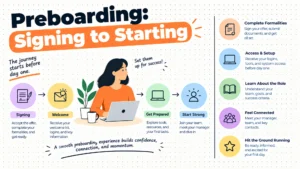
| Equipment or accounts not ready on arrival | Any | Any | Timing, not effort | Trigger setup at offer acceptance |
| Several people start each month | Over two hundred | Any | Coordination and consistency | A cohort day, kept short |
| New person spoke to nobody all day | Any | Any | Presented at, not introduced | Three real introductions, not fifteen |
| Content required by regulation | Any | Regulated sector | Not discretionary | Establish requirements, then design around them |
| Remote starters | Any | Distributed | Nothing happens by proximity | Schedule what would have been incidental |
The third row is where most organisations are, and the instinct is to make the day better. That rarely works, because the problem is the volume rather than the quality. Removing items is the intervention, and the removal test is simple enough to apply in an hour: go through the agenda and mark anything the person won't use within their first week. What's left is the orientation.
Where Orientation Days Go Wrong
| The failure | What the new person experiences | What would have to change |
|---|---|---|
| Too much content for one day | A blur, with a small random residue | Cut to what is needed this week |
| Nothing was ready when they arrived | A morning waiting, and a conclusion drawn | Setup triggered at offer acceptance |
| Presented at, never introduced | Eight hours in the building, nobody known | A few real introductions with context |
| The manager was busy | A clear signal about how much they matter | The manager blocking the day properly |
| Systems shown, not practised | Confidence that evaporates on first use | Shown again at the point of use |
| No real work until week two | Being new for longer than necessary | Something genuine ready for day two |
The second row deserves more weight than it usually gets. Equipment and access not being ready is read as carelessness about the individual, even though it's almost always a scheduling problem, and it's the single most common complaint from people about their first day. The fix isn't more attention on the morning; it's starting the setup when the offer is accepted rather than when the start date approaches.
The last row is the one organisations get wrong out of kindness. Protecting somebody from real work for a fortnight feels considerate and is experienced as doubt, or as being ornamental. A genuine task on day two, small enough to finish and real enough to matter, does more for how somebody feels about a new job than any amount of welcome.
The Three Things Worth Spending the Day On
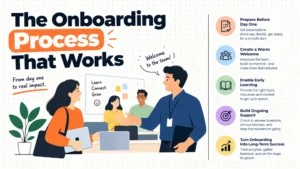
If you strip orientation back to what the format can actually deliver, three things are left, and they're worth the whole day between them.
Being expected. Everything visible on arrival either says somebody prepared for this or says they didn't. A desk that's ready, a login that works, a person waiting who knows their name, a lunch arranged. This is almost entirely a matter of doing things earlier rather than doing more of them, and it's the part that forms the impression that colours everything else.
Knowing where things are. Not the content of the policies, the systems or the processes, but where each lives and who to ask. Somebody who leaves the first day with an accurate map is equipped, and somebody who leaves having been told a great deal is not, because the telling didn't survive the day. This is also the part that's cheapest to do well, since a short written page of where-to-find-what outperforms hours of explanation.
A small number of real introductions. The standard approach is to introduce the new person to as many people as possible, which produces a sequence of names attached to nothing. Three or four introductions, each with a sentence about what that person does and why this person will need them, produces relationships that get used in the first week. The rest can happen naturally.
Doing introductions well takes a little more thought than a tour. The useful ones aren't necessarily the senior people; they're the ones the new person will have to ask something. Whoever administers the system they'll live in, whoever knows how the awkward process actually works, whoever sits nearby and is approachable. Naming the approachable person explicitly matters, because the hardest thing about a first week is not knowing whether interrupting somebody is acceptable, and being told plainly that a particular person expects to be interrupted removes it. Tell that person too, in the same words, so they treat the questions as part of their week rather than as something eating into it.
For remote starters, all three of these need building deliberately, because none happens by proximity. Being expected means the equipment arriving before the start date rather than during the first week, which takes longer than anybody plans for. Knowing where things are matters more, since there's nobody to lean over and ask. And introductions have to be scheduled, including the informal ones that would otherwise have happened by accident in a corridor.
The piece most often missed remotely is the ambient one. On site, a new person picks up how things are discussed, who defers to whom and what counts as urgent simply by being present, and none of that transfers. Being added early to the channels where the work is actually argued about does more of that job than any scheduled call.
What to Put in Writing
| Artefact | Who owns it | When it is written | What it prevents |
|---|---|---|---|
| What the first day must include, minimum | HR, once | Before the next hire | First days that vary by manager |
| A short page of where to find what | HR, kept current | Before it is needed | The same questions from every starter |
| Who the three introductions are, per role | The manager | Before the start date | A tour that produces no relationships |
| What is ready, and who confirmed it | Whoever sets it up | The day before | A morning spent waiting |
| What must be delivered and recorded | HR, with local advice | Before relying on it | A requirement discovered afterwards |
| The task they will do on day two | The manager | Before they arrive | A fortnight of being ornamental |
The second row repays the effort more than anything else here. Most of what gets presented on a first day is material somebody will need at some point and not today, and a single findable page that says where each thing lives converts the whole category from a session into a reference. It also keeps working for everybody else, which the session doesn't.
Questions to Ask Before You Commit
On content. What will they use this week? A bad answer is that it's all useful eventually.
On readiness. Was everything working before they arrived? A bad answer is that it usually is.
On people. Who will they actually talk to? A bad answer is that they'll meet the team.
On the manager. Is the day blocked out? A bad answer is that they'll be around.
On the map. Where do they look things up? A bad answer is that they can ask.
On day two. What will they do? A bad answer is more orientation.
What Getting This Wrong Costs
The first cost is an impression you can't revise. First days are remembered in disproportionate detail, and somebody whose equipment wasn't ready, who sat through sessions they retained nothing from, and who spoke to nobody has formed a view about how this place operates. That view then shapes how they interpret ordinary things afterwards, and the people most likely to draw a firm conclusion are the experienced hires who have something to compare it against.
The second cost is the time, which is larger than it appears because it's paid twice. A full day of orientation is a day of the new person's time plus the time of everybody presenting, and where the content doesn't survive the week, it's paid again when somebody has to explain the same things at the point they're actually needed. Organisations rarely count the second payment, because it arrives as ordinary questions rather than as a scheduled cost.
The third cost is the slower start, which compounds. Every day spent being told about the work rather than doing any is a day before the person begins the process that actually makes them useful, which is trying something, getting it partly wrong, and being corrected. Extending orientation delays the start of that loop, and the loop is where all the real learning happens.
So before redesigning the day, do the cheap thing. Take the agenda, mark every item the person won't use within their first week, and delete it from the day. Put the deleted items somewhere findable. Then spend what you've freed up on the three things that work: being expected, knowing where things are, and a few introductions that matter.
When You Are Ready to Go Further
None of this needs a programme. It needs the setup triggered early enough that everything works on arrival, a short findable page of where things live, three deliberate introductions, and something real to do on day two.
The step beyond that, once the day is right, is to find out what it's actually like. Ask three people who started recently two questions: what were you waiting for, and what did you have to find out by asking somebody. Both produce specific answers that point at particular gaps, and the same two or three items will come up repeatedly. Those recurring items are your orientation, whatever the agenda says.
HROpsLab publishes independent comparison work across HR tooling, applicant tracking and payroll. We sell nothing, we take no vendor money, and we publish no paid placements. If the next step is looking at what your current tooling actually supports here, our comparison work is one place to start.
Frequently Asked Questions
What is new hire orientation?
It's the introductory part of joining, usually a session or a first day, covering who the organisation is, how things work and where things are. It's a component of onboarding rather than the whole of it, and treating the two as the same thing is how organisations end up with a well-produced first day followed by nothing. The most useful way to think about it is as a social event with a small amount of information attached, rather than an information transfer with a social element, because that ordering matches what the format can actually achieve.
What should be covered in new hire orientation?
Only what the person will use in their first week, plus anything that's genuinely required to be delivered live. Everything else belongs in material they can find when they need it, because information delivered on a first day has nothing to attach to and no immediate application, and it will be gone within a fortnight regardless of how well it's presented. Applying that test to an existing agenda usually removes a substantial part of it, which is the intended result rather than a sign of cutting corners.
How long should new hire orientation be?
For most organisations, shorter than a full day. Half a morning of well-chosen content, real introductions and a working setup leaves the afternoon for the person to start doing something, which is worth more than any further session. Long orientations persist because they look thorough rather than because they produce better outcomes. The discipline that makes a short one work is removing items rather than delivering the same volume faster, since speaking quickly prevents the questions that were the most valuable part.
What is the difference between orientation and onboarding?
Orientation is the introduction, usually a day or a session at the very start. Onboarding is the whole arc from accepting an offer to being fully capable in the role, which runs for weeks or months and includes the administrative setup, the operational access and the building of actual capability. Orientation is one early piece of that. The confusion matters because organisations that run a good orientation frequently believe they have onboarding covered, and the part that determines whether a hire succeeds happens well after the first day.
What do new hires actually remember from their first day?
Whether they were expected, whether their equipment and access worked, who was friendly, and whether the place seemed organised. That's most of the list, and none of it is content. Designing the day around those four is a different exercise from designing it around what somebody ought to know, and it's considerably cheaper, because being expected is mostly a matter of doing the setup earlier rather than doing more of it. The content that does get remembered tends to be whatever happened to be immediately relevant.
Should orientation be one day or spread across the week?
Spreading it generally works better, because each piece arrives closer to when it's relevant and the person has context to attach it to. The trade-off is coordination: several short sessions are harder to arrange than one block, and the later pieces are the ones that get postponed when something urgent comes up, which means the content that most benefited from the delay is the most likely to be dropped. If you spread it, put every block in the calendar at the same time as the first.
How do you run orientation for remote starters?
The same three things matter and none of them happens by itself. Being expected means equipment arriving before the start date rather than during the first week, which needs more lead time than anybody plans for. Knowing where things are matters more than on site, because there's nobody to lean over and ask. And introductions have to be scheduled deliberately, including the informal ones that would have happened by accident, plus naming one person whose job is explicitly to be interrupted with small questions.
Do you need a formal orientation programme at all?
Only if you have a variability problem or a scale problem. A central programme exists to make first days consistent when several managers are running them, and to handle volume when people arrive regularly. If you hire occasionally and the manager takes the first day seriously, what they do will be better than a programme, because it's tailored to the specific person and role. What's worth adding in that case is a short written list of what a first day must include, which is a much lighter thing to maintain.
Orientation is a social event with a little information attached. Most of them are built the other way round, and no amount of improving the content will fix that.