TL;DR
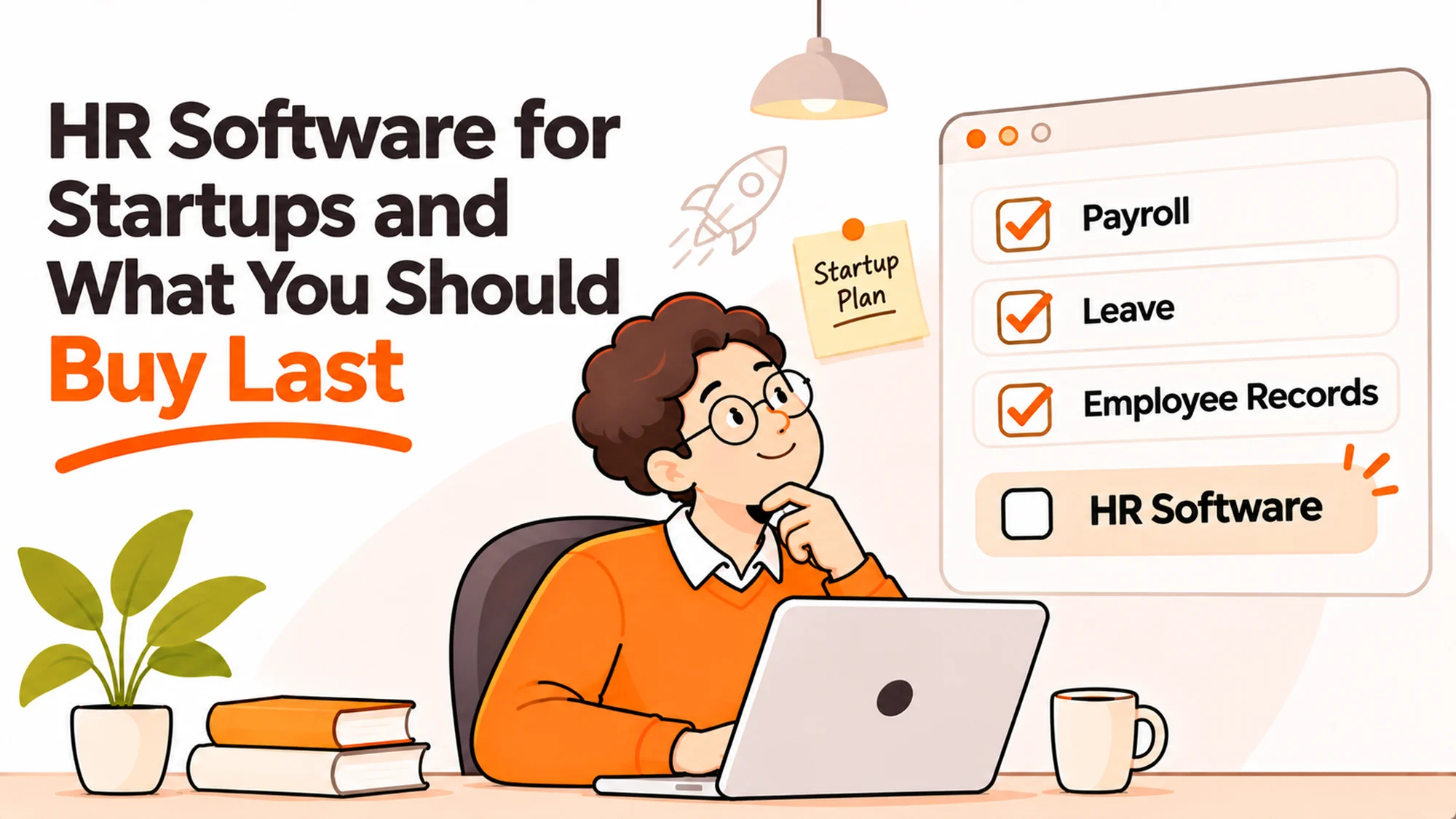
Most hr software for startups is bought before it is needed, in response to a feeling that the company should have it rather than a problem it solves. There is an order that works, and one line item that is missing from every stack diagram and arrives as a surprise around the twentieth hire.
- Buy in order of pain, not in order of category.
- Payroll first. Everything else can wait.
- Under twenty people a spreadsheet genuinely works.
- Buy for eighteen months, not for forever.
- Hardware is the line item nobody diagrams.
- Switching later is cheaper than over-buying now.
Buy in order of pain
Not in order of category, which is how vendor websites are organised and is a poor guide to what you need first.
Payroll is first and is not optional, because getting it wrong has consequences nothing else on the list does.
Best tools for HR Operations
A single source of truth for who works here comes second, which at small scale can be a spreadsheet everybody trusts rather than a system.
Applicant tracking arrives when hiring volume makes email unmanageable, usually somewhere past a handful of simultaneous roles.
Everything else is later than people think: performance, engagement, learning, analytics.
The common error is buying an all-in-one platform at fifteen people because it covers all of the above. You then pay for six modules to use one, and the one you use is the one a cheaper tool did better. The sales argument for the suite is that you will grow into it, which is true and is also true of the cheaper tool you would replace later at a fraction of the configuration cost.
Under twenty, a spreadsheet works
Said plainly because it is true and rarely said by anybody selling software.
Under about twenty people, one person knows everybody, every start date and every holiday balance. A well maintained spreadsheet plus a shared calendar answers the same questions an HR system would, instantly and free.
Three signals that you have outgrown it. Somebody has to ask around to answer a basic question about headcount or holiday. The spreadsheet has more than one version in circulation. Or a compliance requirement has arrived that needs an audit trail the file does not keep.
Until then, the money is better spent elsewhere, and the discipline of maintaining it properly is the thing that makes a later migration easy.
The migration argument, honestly
It is used to justify buying early and is mostly backwards. Migrating twenty rows is trivial. Migrating two hundred from a system configured badly at fifteen people is not.
Buy for eighteen months
Rather than for the company you hope to be, which is the framing that causes over-buying.
A tool that fits your next eighteen months and is cheap to leave is a better purchase than one that fits a hundred people and is painful to configure at twenty.
Three things to check before committing. Can you export your own data in a usable form, which is the thing nobody tests until they want to leave. What is the notice period. And does the price step sharply at a headcount you expect to cross, which several tools do without making it obvious.
Switching costs real time and is survivable. Over-buying costs money continuously and is harder to reverse, because somebody has now configured it and leaving feels like waste.
| Headcount | Usually needs | Usually does not |
|---|---|---|
| Under 20 | Payroll, a spreadsheet | An HR platform |
| 20 to 50 | Payroll, a people system | Performance, analytics |
| 50 to 100 | Add ATS, structured onboarding | Engagement suites |
The line item nobody diagrams
Hardware. It appears in no HR stack diagram and arrives as a surprise around the twentieth hire.
Up to a point, equipment is handled by somebody ordering a laptop and bringing it to the office. Then three things change at once. People join remotely, sometimes in other countries. Devices accumulate and nobody is sure how many exist. And somebody leaves holding one.
At that point a company has an equipment operation it never decided to start, run by whoever is nearest.
This is not an argument for buying something immediately. It is an argument for deciding who owns it before it becomes urgent, because the default answer is the office manager or the first engineer, and neither chose it.
equipping your first 50 hires covers what this looks like through the first fifty hires. RemoAsset for startups is the outsourced version of the same function if you would rather not build it internally.
What startups underestimate
Four costs that are not on the quote and land anyway.
Implementation time. Somebody configures the tool, and at a small company that somebody has another job.
Per-seat growth. A per-employee price is pleasant at fifteen and is a real line at sixty, especially where several tools price that way.
Integration gaps. Tools that do not talk to each other produce manual re-entry, which is where small companies lose most of the time software was meant to save.
Equipment, per hire, which is usually the largest single onboarding cost and the one absent from the software comparison entirely. equipment cost per hire covers how to work out your own figure.
Budget the fourth alongside the first three and the picture changes materially.
What to take seriously early
Two things, and they are not the ones vendors lead with.
Payroll accuracy and whatever obligations attach to employing people where you employ them. Those differ by jurisdiction and by circumstance, and your own advisers settle them. Nothing here states what any law requires.
Knowing what you own and who has it. Unglamorous, and it becomes an audit question sooner than most founders expect, particularly once there is external investment or a security questionnaire from a customer.
Everything else, including most of what is marketed as compliance tooling, can wait until there is a specific requirement attached to it. HSE guidance on home working is a reasonable reference on the home working side, which is where a startup’s first real obligations usually land once people stop sharing one room.
CISA and the Secure Our World guidance is a reasonable baseline for the security practices a customer questionnaire will ask about, most of which cost nothing.
A workable sequence
Five steps, in order, for a company growing from nothing to fifty.
Payroll first, and properly.
One list of people everybody trusts, whatever it is built in.
Decide who owns equipment before it becomes urgent, which is around hire fifteen rather than hire fifty.
Add an ATS when hiring volume demands it rather than before.
Add a people system when the spreadsheet visibly fails, using the three signals above.
Leave performance, engagement and analytics until somebody asks a question you genuinely cannot answer. IT asset management software covers the asset side when step three becomes real.
What to do when the founder wants the platform anyway
A common situation and worth handling rather than arguing.
The instinct behind it is usually reasonable: a sense that the company should look organised, particularly before fundraising or a first enterprise customer. That is a real requirement even when the tool is not.
What satisfies it more cheaply is evidence of order rather than a platform. A clean list of people, documented policies, payroll running properly and a register of what the company owns will pass any diligence conversation that a half-configured HR suite would.
So the useful response is not no, it is to ask what the platform is meant to demonstrate and then demonstrate that directly. The purchase usually becomes unnecessary and the underlying concern gets addressed, which is a better outcome than winning the argument.
The test before any purchase
Ask it of every renewal too, not only every purchase, since the tools that quietly stop earning their place are rarely the ones anybody reviews.
What question can we not answer today that this tool answers? If the answer is vague, it is too early, and being too early is more expensive than being slightly late.
The hardware line arrives before the HR platform does. RemoAsset handles it from the first hire. See RemoAsset for startups or RemoAsset’s pricing.
Frequently asked questions
What order should hr software for startups be bought in?
In order of pain rather than category. Payroll first and not optional, because getting it wrong has consequences nothing else does. Then a single source of truth for who works here, which at small scale can be a spreadsheet everybody trusts. Then applicant tracking when hiring volume makes email unmanageable. Everything else, including performance and engagement, is later than people think.
Is a spreadsheet really enough?
Under about twenty people, yes. One person knows everybody, every start date and every holiday balance, and a well maintained spreadsheet plus a shared calendar answers the same questions instantly and free. Three signals that you have outgrown it: somebody has to ask around to answer a basic headcount question, more than one version is in circulation, or a compliance requirement needs an audit trail.
Does buying early make migration easier?
Mostly the opposite, and it is the argument used to justify over-buying. Migrating twenty rows is trivial. Migrating two hundred out of a system that was configured badly at fifteen people is not. Buy for the next eighteen months rather than the company you hope to be, and check you can export your own data in a usable form before committing.
What is missing from every HR stack diagram?
Hardware. It arrives as a surprise around the twentieth hire, when three things change at once: people join remotely and sometimes in other countries, devices accumulate and nobody is sure how many exist, and somebody leaves holding one. At that point a company has an equipment operation it never decided to start, run by whoever is nearest.
What costs do startups underestimate?
Four that are not on the quote. Implementation time, since whoever configures the tool has another job. Per-seat growth, which is pleasant at fifteen people and a real line at sixty. Integration gaps, where tools that do not talk produce manual re-entry. And equipment per hire, usually the largest single onboarding cost and absent from the software comparison entirely.
What should we take seriously early?
Two things, and not the ones vendors lead with. Payroll accuracy and whatever obligations attach to employing people where you employ them, which differ by jurisdiction and are for your own advisers. And knowing what you own and who has it, which is unglamorous and becomes an audit question sooner than most founders expect, especially with external investment or a customer security questionnaire.
What is the test before any purchase?
What question can we not answer today that this tool answers? If the answer is vague, it is too early, and being too early is more expensive than being slightly late. A tool that fits your next eighteen months and is cheap to leave beats one that fits a hundred people and is painful to configure at twenty.