The best lms for sales team use isn't the most feature-rich learning platform on the market — it's the one that gets a new rep from hire to first quota-carrying call in under three weeks. Docebo wins if you're already investing in AI-driven content curation and have budget above $25K/year. TalentLMS wins if you need something live in a week and your training content is mostly onboarding checklists and product decks. Absorb LMS sits in between, and it's the strongest pick if certifications, compliance tracking, and a polished admin experience matter more than flashy AI features. If your real problem is a broken new-hire ramp process rather than a stale course catalog, none of these three will fix it alone — go fix onboarding first.
TL;DR
- Pick Docebo if you're a 200+ person sales org with a dedicated enablement team and want AI-assisted content tagging and social learning.
- Pick TalentLMS if you're a lean HR/ops team of 1-2 people managing training as a side responsibility, not a full-time job.
- Pick Absorb LMS if certification tracking, audit trails, and a clean admin UI matter more than cutting-edge AI features.
- Walk away from all three if your actual bottleneck is a disorganized onboarding process — fix that with dedicated onboarding software before layering on an LMS.
- Budget $3-8 per user/month for TalentLMS, $6-12 for Absorb, and $8-20+ for Docebo at 200 seats, depending on modules.
- Sales teams with high turnover (25%+ annually) should weight implementation speed and rep self-service over enterprise reporting depth.
- If you're integrating tightly with Salesforce or HubSpot for enablement content, test Docebo's and Absorb's native connectors before signing — TalentLMS's CRM integrations are thinner.
Quick comparison table
| Dimension | Docebo | TalentLMS | Absorb LMS |
|---|---|---|---|
| Best for | Mid-to-large sales orgs with dedicated L&D | Lean teams needing fast, simple setup | Teams needing strong compliance/cert tracking |
| Starting price (200 seats) | ~$1,600-3,300/mo | ~$600-1,200/mo | ~$1,200-2,000/mo |
| Implementation time | 4-8 weeks | 1-2 weeks | 3-5 weeks |
| AI content tools | Strong (auto-tagging, content discovery) | Minimal | Moderate |
| CRM integration depth | Native Salesforce/HubSpot connectors | Zapier-based, shallow | Native + API, solid |
| Certification tracking | Good | Basic | Best in class |
| Mobile app quality | Strong | Good | Strong |
| Admin learning curve | Moderate-steep | Low | Moderate |
Docebo vs TalentLMS vs Absorb LMS: Which Fits a 200-Person Sales Team?
For a 200-person sales team specifically, Absorb LMS or TalentLMS will fit most budgets and timelines better than Docebo, unless you already have a dedicated enablement hire who can run a more complex platform. The decision hinges less on feature checklists and more on three variables: how fast reps need to ramp, how much you're willing to pay per seat, and who on your team actually owns training administration.
Why team size alone doesn't decide this
Two hundred sales reps sounds like a clean enterprise-tier number, but the real driver is turnover and hiring velocity, not headcount. A 200-person sales team hiring 5 reps a month needs a platform that makes onboarding content self-service and searchable. A 200-person team that's stable and focused on ongoing certification (financial services, insurance, regulated industries) needs stronger audit trails and compliance reporting. Docebo leans toward the former with its content discovery AI; Absorb leans toward the latter with its certification and audit features; TalentLMS is agnostic but simple, which works for both if your content library is small.
Best tools for Onboarding & LMS
The practical test
Run this exercise before you shortlist: pull your last 90 days of new sales hires. If ramp time to first deal closed averages under 45 days, your bottleneck likely isn't the LMS — it's onboarding structure, manager coaching cadence, or lead flow. An LMS purchase in that scenario is a nice-to-have, not the fix. If ramp time is 60+ days and reps report not knowing where to find current pricing decks or objection-handling scripts, that's a genuine content discoverability problem, and Docebo's AI tagging or Absorb's structured course paths will show measurable impact.
Where the funnel matters
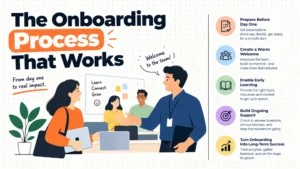
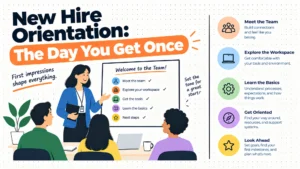
Many HR and RevOps leads evaluating LMS platforms for a sales team are actually trying to solve a broader new-hire ramp problem that starts before day one. If your onboarding workflow — offer letter to first 30 days — isn't already systematized, adding a learning platform on top of a messy process just gives reps more places to get lost. It's worth reviewing onboarding software built for structured 30-60-90 day ramps before finalizing an LMS contract, since several onboarding platforms now include lightweight training modules that overlap with what you'd pay Docebo or Absorb for.
What to do:
- Pull 90-day ramp data before shortlisting vendors.
- Separate "content discoverability" problems from "process" problems.
- Loop in your onboarding software vendor to check for overlap before buying a standalone LMS.
Which LMS for Sales Team Ramps New Reps Fastest?
TalentLMS ramps administratively fastest (live in 1-2 weeks); Absorb LMS ramps reps fastest once live, thanks to structured learning paths and certification gating. Docebo takes longer to configure but can outperform both once its AI content recommendations are trained on your library.
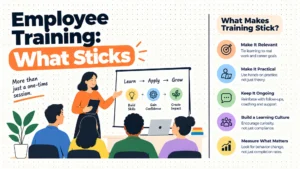
Speed has two dimensions people conflate: how fast you can launch the platform, and how fast a new rep becomes productive inside it. TalentLMS wins the first race easily — a lean HR team can build a course catalog, assign a new-hire learning path, and go live inside two weeks without a dedicated administrator. That matters if you're backfilling a departed L&D hire or running training as a shared responsibility across HR ops.
Absorb LMS takes a bit longer to configure (typically 3-5 weeks with their implementation team) but its structured "learning path with gates" model means a rep can't skip ahead to shadowing calls before completing product certification. For a 200-person sales floor with a formal ramp curriculum — week 1 product, week 2 process, week 3 live calls — that gating matters more than raw setup speed.
Docebo takes the longest to configure meaningfully (4-8 weeks is realistic once you factor in content migration and AI training), but once the system has learned from usage patterns, its content discovery surfaces the right battlecard or case study to a rep mid-deal, inside Salesforce if you've built that integration. That's a different kind of speed — not ramp-to-competency, but time-to-answer during an active deal.
A worked example
A 200-person SaaS sales org with 15% monthly attrition on the SDR team ran TalentLMS for six months. Ramp time held steady around 21 days to first qualified meeting, mostly because the platform never became the bottleneck — content was simple enough that reps didn't need AI assistance to find it. A similarly sized enterprise sales team selling a technical product with a longer, more complex catalog found TalentLMS's flat course structure insufficient once they had 40+ courses; they migrated to Absorb LMS specifically for its path-gating and saw drop-off in incomplete onboarding modules fall by roughly a third, based on internal completion reporting.
What to do:
- If content volume is under 30 courses, TalentLMS's simplicity outperforms fancier platforms.
- If you need gated, sequential ramp paths, Absorb's structure is worth the extra setup weeks.
- Only invest in Docebo's AI discovery if reps already struggle to find content mid-deal, not during onboarding.
Does Docebo's AI Actually Help With Sales Enablement?
Yes, but only after 60-90 days of usage data and a properly tagged content library — Docebo's AI is a compounding asset, not an instant fix. Teams expecting immediate lift from the AI features are usually disappointed in month one.
Docebo's content discovery engine works by learning from what reps search for, click, and complete, then surfacing similar or adjacent content proactively. For a 200-person sales team with a sprawling library of battlecards, competitor comparisons, and vertical-specific pitch decks, this can meaningfully cut the time reps spend hunting for the right asset mid-cycle. But the AI needs volume and time to become useful — a freshly migrated content library with thin tagging metadata will produce mediocre recommendations for the first quarter.
Where it earns its price premium
The clearest ROI case is a sales org with high content churn — pricing changes quarterly, competitive positioning shifts, new verticals get added. In that environment, a static course catalog goes stale fast, and reps stop trusting it. Docebo's AI-assisted tagging reduces the admin burden of manually re-categorizing content every time something changes, which is where the platform's higher price tag starts to make sense against Absorb or TalentLMS.
Where it doesn't
If your sales motion is stable — same product, same vertical, same objections for the past two years — the AI layer adds cost without proportional benefit. A 200-person team selling one product to one buyer persona doesn't need machine-learned content discovery; it needs a well-organized folder structure, which any of the three platforms can deliver. Several HR ops leads who purchased Docebo primarily for the AI features reported in vendor review forums that they underused it because their content set was too small (under 50 assets) for the recommendation engine to differentiate meaningfully.
The honest cost-benefit
Docebo's AI tier typically adds several dollars per seat per month over its base tier. At 200 seats, that's a real budget line — often $1,000-2,000/month incremental. Before committing, ask Docebo for a benchmark on minimum content volume needed for the AI to perform well; if you're under that threshold, negotiate down to a lower tier and revisit in a year.
Checklist:
- Confirm your content library exceeds ~75-100 tagged assets before paying for AI discovery.
- Ask for a 90-day trial period specifically to evaluate AI recommendation quality, not just base LMS function.
- Budget for a content tagging cleanup project before go-live — garbage in, garbage out applies directly here.
Is TalentLMS Too Basic for a 200-Person Sales Org?
Not inherently — TalentLMS scales fine to 200 users functionally, but it lacks the certification gating, advanced reporting, and native CRM depth that larger, more complex sales motions eventually need. The ceiling is real, but many 200-person teams never hit it.
TalentLMS was built for simplicity, and it delivers on that promise at scale better than its reputation suggests. Course creation, assignment rules, and basic completion tracking work reliably at 200+ users, and the mobile app is genuinely good for reps who train between calls. Pricing also stays predictable — TalentLMS's tiered model is transparent compared to Docebo's more custom, quote-based enterprise pricing.
Where the ceiling shows up
The limitations surface in three places. First, reporting: TalentLMS's out-of-box reports are fine for completion rates but thin for correlating training completion with sales performance (quota attainment, deal velocity). If your VP of Sales wants a dashboard connecting "completed advanced objection-handling module" to "average deal size," you'll be exporting to a BI tool manually rather than pulling it natively. Second, certification tracking: TalentLMS handles simple certificates but doesn't offer the expiration workflows, re-certification triggers, or audit trails that regulated sales environments (insurance, financial services, healthcare sales) typically require. Third, integrations: TalentLMS connects to Salesforce and HubSpot mainly through Zapier or third-party middleware rather than a native, deeply built connector, which means real-time content surfacing inside the CRM isn't really on the table.
Who should stay with TalentLMS anyway
A 200-person inside sales team selling a single product with a stable script, managed by one HR ops generalist with no dedicated enablement headcount, is a strong fit. The simplicity is a feature, not a limitation, in that context — fewer settings to misconfigure, faster onboarding for new admins, and a lower total cost that a CFO won't push back on. Teams in this bucket often over-buy when they choose Docebo or Absorb for "future-proofing" and end up paying for capability they never use.
The migration question
If you do outgrow TalentLMS, migration to Absorb or Docebo is a real project — expect to budget 4-6 weeks for content export, restructuring, and rebuild rather than a simple lift-and-shift, since TalentLMS's course structure doesn't map one-to-one onto either platform's path/curriculum models.
What to do:
- If you lack a dedicated enablement hire, default to TalentLMS and revisit in 12-18 months.
- Stress-test TalentLMS's reporting against your actual sales leadership's dashboard requests before buying.
- Confirm your compliance requirements (if any) before assuming TalentLMS's basic certificates are sufficient.
What Does Absorb LMS Do Better Than Docebo and TalentLMS?
Absorb LMS's strongest advantages are certification and audit-trail depth, plus an admin interface that ranks as the most intuitive of the three for non-technical HR ops staff. It's the middle-ground choice that rarely wins on any single dimension but rarely loses badly on any either.
For a 200-person sales team operating in a regulated vertical — insurance, mortgage, healthcare sales, financial products — Absorb's certification engine is the differentiator worth paying for. It handles expiration dates, automatic re-enrollment triggers, and generates audit-ready completion reports without custom report-building, which matters when a compliance officer asks for proof that every licensed rep completed required annual training by a specific date. Neither TalentLMS nor Docebo's base tiers match this out of the box; Docebo can get there with add-ons, but at additional cost and configuration time.
Admin experience as a real cost factor
The other underrated advantage is admin usability. HR ops leads managing Absorb consistently report a shorter learning curve for building courses, setting up automation rules, and managing user groups compared to Docebo, whose flexibility comes with a genuinely steeper configuration interface. For a team without a dedicated LMS administrator — where this responsibility sits with someone already juggling benefits, payroll questions, and recruiting coordination — that difference in learning curve translates directly into hours saved per month, which is easy to underweight during vendor evaluation but shows up fast in year-one satisfaction surveys.
Where Absorb falls short
Absorb's AI and content-discovery features are noticeably behind Docebo's — it doesn't have the same machine-learned recommendation engine, so if your enablement strategy leans heavily on dynamic content surfacing during live deals, Absorb won't match Docebo's ceiling. Its social/collaborative learning tools (peer discussion, user-generated content) are also less developed than Docebo's, which matters less for a sales team focused on structured ramp-up but more for orgs trying to build a peer-coaching culture inside the LMS itself.
Pricing position
Absorb typically lands between TalentLMS and Docebo on price at 200 seats — expect a base platform fee plus per-seat pricing that puts total cost meaningfully above TalentLMS but usually below Docebo's AI-enabled tiers, depending on the specific modules and support tier negotiated.
Checklist:
- If you operate in a licensed/regulated sales vertical, weight Absorb's certification engine heavily.
- If your team lacks a dedicated LMS admin, factor in the usability advantage as a real cost saving.
- Don't expect Absorb to match Docebo on AI content discovery — that's not its strength.
How Do These Platforms Integrate With Your CRM and Onboarding Stack?
Docebo and Absorb both offer native Salesforce and HubSpot integrations with reasonable depth; TalentLMS's CRM connections rely mostly on Zapier or third-party middleware and are shallower. None of the three natively replaces a dedicated onboarding platform — they handle training content, not the broader hire-to-productivity workflow.
For a 200-person sales team, CRM integration usually serves one of two purposes: pulling performance data into the LMS to trigger targeted training (a rep with declining win rate gets auto-assigned an objection-handling refresher), or pushing content recommendations into the CRM so reps don't have to leave their workflow to find a battlecard. Docebo's native Salesforce connector supports both directions reasonably well, and it's a genuine differentiator if your sales stack is Salesforce-centric. Absorb's integration is solid for data sync (completions, enrollments) but less developed for the reverse flow of surfacing content inside the CRM interface itself.
Where TalentLMS falls short here
TalentLMS can connect to Salesforce or HubSpot, but typically through Zapier automations or the API directly, which means you're building and maintaining the integration logic yourself rather than relying on a vendor-supported native connector. For a lean HR ops team, that's added maintenance overhead every time Salesforce changes a field or workflow. It's workable for simple triggers (new hire created in HRIS → auto-enrolled in onboarding path) but not for anything resembling real-time content surfacing.
The onboarding stack gap
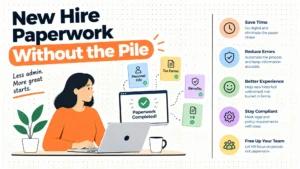
None of these three platforms is a substitute for dedicated onboarding software — they manage courses and completions, not the full pre-boarding-to-90-day workflow (paperwork, equipment provisioning, manager task checklists, buddy assignments). If you're evaluating an LMS specifically because your new-hire ramp feels disorganized, it's worth separating the two problems: an LMS fixes "reps can't find training content," while onboarding software fixes "new hires don't know what to do in week one." Several HR ops teams end up buying both and connecting them via API, with the onboarding platform triggering LMS enrollment automatically on day one.
A realistic integration stack
A common setup for a 200-person sales org: HRIS (Rippling or BambooHR) handles the hire record and triggers onboarding workflows, a dedicated onboarding platform manages the 30-60-90 day checklist, and the LMS (Docebo, Absorb, or TalentLMS) handles the actual course content and certification tracking, triggered via API when the onboarding platform marks a new hire as "week 1 complete."
What to do:
- Map your required integration flows (HRIS → LMS, CRM → LMS, LMS → CRM) before comparing vendor feature lists.
- If Salesforce-native content surfacing matters, shortlist Docebo or Absorb over TalentLMS.
- Evaluate whether your real gap is training content or the broader onboarding workflow before buying an LMS at all.
What's the Real Implementation Timeline for Each Platform?
Realistic go-live timelines run 1-2 weeks for TalentLMS, 3-5 weeks for Absorb LMS, and 4-8 weeks for Docebo, assuming a 200-seat deployment with existing content to migrate. Vendor sales teams often quote faster timelines than what HR ops teams report actually experiencing.
TalentLMS: the fast path
TalentLMS's self-serve setup model means an HR ops lead can build course structure, upload content, and configure user groups without a dedicated implementation consultant, though TalentLMS does offer paid onboarding support for larger accounts. The tradeoff is that a fast, self-managed setup often means simpler configuration — you get live quickly, but the same simplicity that speeds implementation also caps how customized your setup can get without more manual work later.
Absorb: the middle path
Absorb typically assigns an implementation specialist for accounts of 200 seats, and the 3-5 week timeline accounts for content migration, certification rule configuration, and admin training sessions. This is where Absorb earns some of its price premium over TalentLMS — the guided setup reduces the risk of misconfiguration that a lean HR team might hit going it alone, particularly around certification expiration logic, which is easy to set up wrong on a first attempt.
Docebo: the longer, deeper path
Docebo's longer timeline reflects both its configuration depth and the AI training period discussed earlier — even once the platform is technically live, the content discovery features won't perform well until the system has accumulated usage data, effectively extending the "real" implementation period well beyond go-live day. Budget for a dedicated internal project owner (not necessarily full-time, but with meaningful weekly hours) for the first two months.
Hidden timeline risks across all three
Content migration is almost always underestimated. If you're moving from a legacy LMS or a folder of PowerPoint decks and PDFs, converting that into structured, tagged courses takes longer than any vendor's quoted implementation window suggests — plan for this as a separate project phase with its own timeline, not something that happens automatically during vendor onboarding. SSO configuration with your identity provider (Okta, Azure AD) can also add 1-2 weeks if your IT team isn't looped in early.
Checklist:
- Assign an internal project owner before kickoff, regardless of vendor.
- Budget content migration as a separate timeline item, not part of vendor implementation.
- Loop in IT for SSO configuration in week one, not week four.
- Ask each vendor for a reference customer at similar seat count for a realistic (not sales-quoted) timeline.
Which LMS Scales If You Grow From 200 to 500 Reps?
Docebo scales most comfortably to 500+ seats without a platform change, followed by Absorb; TalentLMS is workable but shows the most friction as complexity and reporting demands grow past 200-300 users. Growth trajectory should factor into the decision even if you're buying for 200 today.
If you're at 200 reps now and hiring aggressively — think a Series C SaaS company scaling its go-to-market team — the cost of a platform migration in 18 months is real: lost content, retraining admins, disrupted ramp continuity for reps mid-onboarding during the switch. That risk alone can justify paying more upfront for Docebo or Absorb rather than optimizing purely for today's headcount and price.
What actually breaks at scale with TalentLMS
TalentLMS's course-based (rather than path-based) structure gets harder to manage cleanly once you're running multiple sales segments (SMB, mid-market, enterprise) with different certification requirements, different ramp timelines, and different product specializations. Admins end up duplicating course structures across segments rather than managing them centrally, which becomes a real maintenance burden past roughly 300 users in practice, based on patterns reported by ops teams in vendor review communities.
What holds up well
Absorb's group and role-based permission structure handles segment differentiation better — you can build distinct learning paths per sales segment without duplicating the entire course catalog, and its reporting can roll up or filter by segment cleanly. Docebo goes further with its multi-domain feature, letting you effectively run separate branded learning portals for different sales segments or regions under one license, which becomes valuable once you're operating in multiple geographies with localized content needs.
The cost-of-migration math
A rough rule worth using in a board or CFO conversation: if you expect to double headcount within 24 months, the cost of migrating platforms later (estimate 6-10 weeks of admin time, plus a real risk of ramp disruption for reps mid-training during the cutover) often exceeds the price premium of starting with the more scalable platform now. If growth is uncertain or modest, that math flips, and starting lean with TalentLMS and re-evaluating in 18 months is the more defensible CFO conversation.
What to do:
- Get a real 24-month headcount forecast from sales leadership before finalizing the LMS decision.
- If multi-segment or multi-region training is likely, weight Docebo's multi-domain feature or Absorb's group permissions heavily.
- Ask each vendor directly what breaks (not just what's possible) at 2-3x your current seat count.
How Do Certification and Compliance Tracking Compare?
Absorb LMS leads on certification and compliance tracking, with automated expiration and re-certification workflows; Docebo is capable with configuration; TalentLMS handles only basic certificate issuance without expiration logic. For regulated sales verticals, this comparison alone can decide the purchase.
Sales teams in insurance, mortgage lending, healthcare products, and financial services often carry licensing requirements that go beyond internal product training — reps may need state-specific continuing education credits, annual compliance attestations, or documented proof of specific disclosures training. Absorb's certification engine was built with this use case in mind: it tracks expiration dates automatically, triggers re-enrollment reminders before lapse, and generates exportable audit reports that satisfy most compliance officer requests without custom report-building.
Docebo's approach
Docebo can replicate most of this functionality but requires more manual configuration of automation rules and doesn't offer it as cleanly out of the box — expect to spend implementation time building the specific expiration and re-certification workflows rather than toggling them on. For teams with an in-house LMS administrator comfortable with configuration, this isn't a dealbreaker; for lean teams, it's added setup burden.
TalentLMS's gap
TalentLMS issues certificates on course completion but doesn't build in expiration tracking or automated re-certification triggers natively — you'd need to manually manage renewal cycles or build a workaround using its automation rules, which is possible but clunky at 200+ users with staggered certification dates. For a sales team without regulatory certification requirements — most B2B SaaS sales orgs, for instance — this gap simply doesn't matter, and it's not worth paying more for capability you won't use.
A worked scenario
A 200-person insurance sales team needs proof that every licensed agent completed state-mandated ethics training within the last 12 months, with individual audit trails available on demand for a state examiner. Absorb handles this natively: a compliance dashboard shows exactly who's current, who's approaching expiration, and who's lapsed, with one-click export for an examiner request. The same requirement on TalentLMS would require a manually maintained spreadsheet cross-referenced against completion dates — workable but risky at scale, and a real audit exposure if someone forgets to update it.
Checklist:
- If any portion of your sales team carries licensing or regulatory training requirements, prioritize Absorb's certification engine.
- If you have no compliance requirements, don't pay a premium for this feature set — TalentLMS is sufficient.
- Ask Docebo specifically for a certification workflow demo, not just a feature-list confirmation, before assuming parity with Absorb.
What Do Sales Managers Need From Reporting and Analytics?
Sales managers generally need training completion tied to performance data (quota attainment, ramp time, deal velocity) more than raw completion percentages — and none of these three platforms does this natively without some integration work. Docebo's reporting is the most flexible out of the box; TalentLMS's is the most limited.
The single most common complaint HR ops leads report after six months on any LMS is that sales leadership wants a dashboard connecting training activity to pipeline results, and no LMS delivers that connection without exporting data to a BI tool (Looker, Tableau) or building a custom integration with the CRM's reporting layer. Setting that expectation early with sales leadership — before the platform is even selected — saves a difficult conversation later.
Docebo's reporting depth
Docebo offers the most granular native reporting of the three, including custom report builders and the ability to segment by team, region, or manager, and its Salesforce integration makes pulling performance correlation data somewhat more feasible than with the other two platforms, though still not a true native feature. For a 200-person sales org with a RevOps function already comfortable pulling data into a BI tool, Docebo's export capabilities and API access are the strongest starting point.
Absorb's middle ground
Absorb's reporting covers the compliance and completion side thoroughly (which matters for the certification use case above) but is less flexible for the kind of ad hoc, performance-correlated analysis a VP of Sales tends to request mid-quarter. Expect to export to Excel or a BI tool for anything beyond standard completion and certification dashboards.
TalentLMS's limitations
TalentLMS's native reporting is the most basic of the three — solid for completion rates, time spent, and quiz scores, but without the segmentation flexibility or export sophistication that a growing sales org's leadership team will eventually want. For a 200-person team with a single sales manager reviewing training data monthly, this is sufficient. For a team with multiple regional VPs each wanting their own segment view, it becomes a bottleneck.
Setting realistic expectations
Before signing with any vendor, ask sales leadership specifically what questions they want answered — "did completing the new objection-handling module correlate with improved close rate for reps who took it in the last 90 days?" is a fair ask, but it's a BI project layered on top of the LMS, not a button inside any of these three platforms today.
Checklist:
- Get specific reporting requirements from sales leadership before vendor selection, not after.
- Budget for a lightweight BI export/dashboard project regardless of which vendor you choose.
- Weight Docebo's export flexibility more heavily if you already have a RevOps analyst who can build the correlation reports.
What Are the Hidden Costs Buyers Miss?
The three most commonly underestimated costs are content migration/creation, admin time (especially without a dedicated L&D hire), and integration maintenance — all of which can exceed the vendor's quoted per-seat price over a 12-month period. Sticker price comparisons between Docebo, TalentLMS, and Absorb routinely miss these.
Content creation and migration
None of these vendors builds your course content — they're the delivery mechanism, not the content itself. If you're starting from scratch or migrating from an unstructured folder of onboarding materials, budget for either an internal project (weeks of a marketing or enablement person's time) or a vendor-recommended content partner, which can run several thousand dollars depending on scope. This cost is identical regardless of which of the three platforms you choose, but it's frequently left out of the initial budget conversation entirely.
Admin overhead without dedicated headcount
A platform with a lower sticker price but a steeper admin learning curve can end up costing more in practice if it eats 5-8 hours a week of an HR ops generalist's time who's already stretched across benefits, payroll, and recruiting support. This is where TalentLMS's simplicity and Absorb's usability advantage translate into real, if unbudgeted, savings compared to Docebo's more configuration-heavy admin experience — worth factoring in even if Docebo's feature set looks stronger on paper.
Integration maintenance
As covered earlier, TalentLMS's Zapier-based CRM integrations require ongoing maintenance whenever Salesforce or HubSpot fields change, which is a small but recurring time cost that native integrations (Docebo, Absorb) largely avoid. Over a year, this can add up to a meaningful chunk of admin time that doesn't show up in any pricing comparison.
Support tier upsells
All three vendors offer tiered support, and the base tier is often insufficient for a 200-seat deployment with any real complexity — expect sales reps to quote base pricing, then recommend a premium support tier during negotiation that adds 10-20% to the effective per-seat cost. Ask for the fully-loaded price, including the support tier you'll realistically need, before comparing vendor quotes.
What to do:
- Request an all-in quote including support tier, not just the base per-seat price.
- Budget a separate line item for content creation/migration regardless of vendor.
- Factor admin time cost into the total cost of ownership, not just license fees.
- Ask current customers (via reference calls) what they wish they'd budgeted for that wasn't in the initial quote.
Pricing breakdown
Pricing for all three vendors is largely quote-based at 200 seats, and published rate cards should be treated as starting points for negotiation rather than final numbers. The figures below are approximate ranges as of 2026, based on published tier information and typical enterprise discount patterns at this seat count — confirm current numbers directly with each vendor, since LMS pricing structures change frequently and often bundle support tiers differently.
| Platform | Estimated monthly cost (200 seats) | Pricing model | Notes |
|---|---|---|---|
| TalentLMS | ~$600-1,200/mo | Tiered per-seat, published pricing | Most transparent pricing; enterprise tier needed at 200 seats |
| Absorb LMS | ~$1,200-2,000/mo | Base platform fee + per-seat | Quote-based; certification module may cost extra |
| Docebo | ~$1,600-3,300/mo | Custom quote, tiered by feature set | AI/content discovery tier adds significant premium |
Expect all three vendors to offer annual contract discounts of roughly 10-20% versus month-to-month, and expect implementation/onboarding fees (typically $1,000-5,000 depending on vendor and scope) to be quoted separately from the recurring license cost. Multi-year contracts can lower per-seat pricing further but reduce your use to renegotiate or switch if the platform underperforms — weigh that tradeoff carefully given how much implementation friction a migration involves, as covered above.
Related reading
Frequently asked questions
Is Docebo worth the price premium over TalentLMS for a 200-person sales team?
It's worth it primarily if you have a dedicated enablement function and a content library large enough (75+ tagged assets) for the AI discovery features to add value. For smaller or simpler content sets, the premium buys capability you won't use, and TalentLMS delivers comparable core functionality for less.
Can TalentLMS handle certification tracking for a regulated sales team?
Not well natively — TalentLMS issues completion certificates but lacks automated expiration and re-certification workflows. Regulated sales verticals (insurance, financial services) should prioritize Absorb LMS or a heavily configured Docebo instance instead.
How long does it take to implement an LMS for 200 sales reps?
Realistic timelines run 1-2 weeks for TalentLMS, 3-5 weeks for Absorb LMS, and 4-8 weeks for Docebo, not counting content migration, which is almost always underestimated separately from the vendor's core implementation timeline.
Do any of these platforms replace onboarding software?
No. All three manage training content and completions, not the broader hire-to-productivity workflow (paperwork, provisioning, manager tasks). Pair whichever LMS you choose with dedicated onboarding software for a complete new-hire ramp process.
Which platform integrates best with Salesforce?
Docebo and Absorb both offer native Salesforce connectors with reasonable depth; TalentLMS relies mainly on Zapier or API-based integrations, which require more ongoing maintenance and don't support real-time content surfacing inside the CRM.
What's the biggest hidden cost across all three platforms?
Content creation and migration, followed by admin time for teams without a dedicated L&D hire. Both costs apply regardless of vendor choice and are frequently left out of initial budget estimates.
Should a 200-person team plan for future growth when choosing an LMS?
Yes, if headcount is expected to roughly double within 24 months. Migration costs (6-10 weeks of admin time, ramp disruption risk) often exceed the price premium of starting with a more scalable platform like Docebo or Absorb.
Is Absorb LMS a good middle-ground choice if we can't decide?
Generally yes — Absorb rarely wins on any single dimension against Docebo (AI) or TalentLMS (price/simplicity) but offers the strongest certification tracking and one of the more intuitive admin experiences, making it a defensible default for teams without a strong reason to specialize.
Final verdict
- Choose Docebo if you're a 200+ seat sales org with a dedicated enablement team, a content library over 75-100 assets, and budget above roughly $2,000/month — the AI content discovery and multi-domain scalability justify the premium at this profile.
- Choose TalentLMS if you're a lean HR ops team managing training as a side responsibility, your content set is simple, and you have no regulatory certification requirements — it's the fastest to launch and the lowest total cost of ownership.
- Choose Absorb LMS if certification and compliance tracking matter (regulated sales verticals) or if you want the most intuitive admin experience without Docebo's steeper configuration curve.
- Skip all three for now if your ramp-time problem is really an onboarding process problem — disorganized week-one workflows, unclear manager expectations, missing 30-60-90 day structure — since no LMS fixes that on its own.
- Reassess in 18-24 months regardless of choice, since sales team growth, content volume, and compliance requirements all shift fast enough to change the right answer.
If the real gap in your sales ramp is what happens before day 30 — not which platform hosts the training videos — start by reviewing HROpsLab's breakdown of the best onboarding software for structured, fast-scaling sales teams, then layer an LMS decision on top of a process that's already working.