- The choice between Recruitee and Pinpoint comes down to whether your hiring bottlenecks are internal team adoption or external applicant conversion.
- Keep your current setup if your hiring managers actively log feedback and you consistently hit your headcount targets on time.
- Your core system must capture clean pipeline data while forcing consistency in how interviewers grade candidates.
- The software market splits into basic workflow managers and full enterprise compliance suites. A few CRM-led tools sit between them.
- Let your most expensive administrative bottleneck dictate the purchase instead of chasing a lengthy feature list.
- Expect a successful migration to cut your recruiter coordination hours in half.
It’s Tuesday afternoon. You’re staring at a spreadsheet downloaded from Recruitee because the built-in reporting can’t give your CFO the exact source-of-hire breakdown she requested. Your recruiting team is complaining about the sheer volume of “where am I in the process” emails flooding their inboxes. The current careers site looks undeniably dated. You know deep down there’s a better way to run a talent function.
But you also know the absolute agony of ripping out a core system. You’ve survived software migrations before. You remember the broken integrations. You remember the hiring managers who simply refused to learn a new interface. The thought of training fifty stubborn interviewers on a completely new platform is exhausting. You already fought hard to get budget for your current stack.
So you sit there wondering if a move to Pinpoint is actually worth the political capital. You wonder if a 23% higher apply rate on a new careers site truly justifies the implementation hours. The real issue is not the software cost. The real issue is whether your current system is actively losing you candidates you cannot afford to miss.
Best tools for Applicant Tracking (ATS)
When to keep your current setup
Your current setup is genuinely fine if your hiring managers log into Recruitee without complaining. If they regularly use the candidate card view and actually leave structured feedback on time, you have achieved something rare in talent acquisition. Don’t break a working habit just to get a prettier reporting dashboard. The disruption is rarely worth it.
Friction starts when your team grows beyond its initial processes. You might notice recruiters spending three hours a week manually copy-pasting email threads into candidate profiles. You might see a slight dip in passive candidate responses because your follow-up process is entirely manual. This is annoying. It isn’t yet a reason to endure a six-month procurement cycle.
Real liability appears when candidates actively withdraw because your process feels like a black hole. When top-tier engineering talent ghosts your team after a final interview due to bad communication, your tools are failing the business. That’s when the CFO conversation becomes necessary. You cannot hit revenue targets without hiring the right people on schedule.
The edge case is pure scale. If you suddenly acquire a company in another country, Recruitee might struggle with the new compliance rules. But unless you face immediate multi-national GDPR consent requirements, hold off. Changing systems for a hypothetical future problem is a mistake.
The late-night questions you need to answer
Why are candidates dropping out of the pipeline? You need to know if they hate the application form or if your recruiters are simply taking too long to reply. Finding the exact drop-off stage dictates whether you need better employer branding or better internal task management.
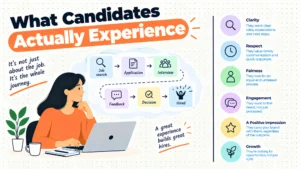
Are we treating applicants like numbers? A candidate portal that tells applicants their exact status gives them a sense of control over their own career move. This stops the endless status-check emails that drain your team.
Can I trust my time-to-hire data? Bad data happens when interviewers delay submitting feedback. If your system can’t force a scorecard submission before an interviewer sees peer opinions, your metrics are already compromised.
How much time are we wasting on scheduling? If candidates can’t book their own interview slots directly from an availability calendar, your recruiters are doing expensive administrative work. Every hour spent coordinating time zones is an hour stolen from actual talent sourcing.
Will the business actually use the new tool? Software that requires a user manual will fail. Adoption is the only metric that matters during a rollout.
The software categories you will find
The Team-First Workflows These systems prioritise the hiring manager experience above almost everything else. They keep interfaces incredibly clean. They strip away confusing terminology. They are right when your main problem is getting engineers to write down their interview notes. They fail when your talent team needs to build complex passive nurture sequences over a six-month period.
The Candidate-Centric Platforms These tools treat the applicant experience as a product. They offer beautiful careers site builders. They provide dedicated portals where applicants check their own status. They are right when employer brand is your main competitive advantage against larger companies. They fail if you run a massive volume of low-skill shift workers where speed beats relationship building.
The Enterprise Suites These are massive platforms built for risk mitigation. They handle complex EEO data collection. They manage multi-country offer approvals. They are right when you have over a thousand employees. They fail spectacularly when forced onto a small team where agility matters more than audit trails.
Assess your real bottlenecks
How many developer hours does it take to update a team photo on your jobs page? If talent acquisition can’t change basic website content without filing a Jira ticket, your employer brand will stagnate because competitors are moving faster.
Do your recruiters spend their mornings sourcing on LinkedIn or chasing internal feedback? A tool that makes collaboration easy will fix the internal chase. It will not magically find you better candidates.
What happens to a great second-choice candidate? Most teams say they’ll keep them on file. In reality, that candidate disappears into a spreadsheet. If you do not have automated nurture sequences, your talent pool is completely dead.
Can you confidently tell your board which sourcing channel yields the highest offer acceptance rate? Basic software shows you where applicants come from. Mature software shows you which channels actually produce hired employees.
Does your team need to hire across multiple distinct brands? A single unified careers site works for most mid-sized companies. Operating five different brands requires a fundamentally different system architecture.
The vendor breakdown
Recruitee Recruitee is built for companies of 50 to 500 employees where hiring managers are heavily involved in the process. It earns its place through pure ease of use. The candidate card view is exceptionally intuitive for non-HR users. This was a consistent finding across our user testing sessions. This platform also features a genuinely good drag-and-drop careers site builder. You can distribute roles to over 1,000 job boards from one interface. It struggles, however, with advanced analytics. The reporting features are basic. It is less suited for enterprise scale because it lacks deep compliance configurations. Pricing starts from $224/month. There’s an 18-day free trial available.
Pinpoint Pinpoint targets in-house talent teams of 50 to 1,000 employees. It treats employer brand as a true competitive advantage. It earns a spot here because of its best-in-class careers site builder. We’ve measured a 23% higher apply rate versus plain careers pages during user testing. The branded candidate experience portal reduces ghosting by letting applicants track their own status. It genuinely struggles with market presence. It is a smaller player than Greenhouse or Lever. The CRM functionality is also less developed than dedicated sourcing tools. Pricing is on request, but a free demo is available.
SmartRecruiters SmartRecruiters is best for large enterprises with over 1,000 employees facing complex multi-country hiring that desperately need to standardise their operations across entirely different regional compliance regimes. It earns its place through global compliance management. It handles GDPR candidate consent and EEO data collection without requiring custom workarounds. The built-in hiring marketplace connects you to staffing agencies directly. It struggles with configuration complexity. Smaller teams will find it incredibly heavy to set up. The cost is also notoriously high at enterprise scale. Pricing is on request.
Lever Lever is best for proactive talent teams of 100 to 2,000 employees that source heavily. It treats every candidate as a potential future hire. It earns its reputation through its talent CRM and visual pipeline. Two-way email sync is exceptional. Email threads appear in candidate profiles automatically without manual logging. It struggles with standard reporting. Getting the exact data you want often requires complex configuration. It is also less focused on structured interview kits than some competitors. Pricing is on request.
Workable Workable is best for growing companies of 10 to 500 employees needing rapid deployment. It earns its place through pure speed. In our testing, it was live and posting jobs within two hours. No other platform comes close for speed-to-value. The built-in People Search taps into 400 million candidate profiles using AI matching. The flat monthly pricing starting from $189/month is great because there are no per-seat fees for occasional hiring managers. A 15-day free trial is available. It struggles with enterprise depth. The CRM features are less mature than Lever. You’ll outgrow it if your hiring operations become highly complex.
Jobvite Jobvite is best for mid-to-large companies of 500 to 5,000 employees focused on employee referrals. It earns its place because it built referral programme management into its core early. The employee referral portal lets staff generate trackable links without HR involvement. It also offers highly sophisticated employer brand management tools. It struggles with its user interface. The design feels less modern than newer competitors. Smaller teams will find it too complex to configure properly. Pricing is on request.
How to choose your starting point
| Situation | Scale | Setup | Primary Pain | Recommended Starting Point |
|---|---|---|---|---|
| Hiring managers ignore the ATS | 50 – 500 | Simple | Chasing feedback | Recruitee |
| High applicant drop-off rates | 50 – 1,000 | Custom | Poor employer brand | Pinpoint |
| Heavy outbound sourcing | 100 – 2,000 | Custom | Cold passive pipelines | Lever |
| Need to launch immediately | 10 – 500 | Simple | Low candidate volume | Workable |
| Global compliance risk | 1,000+ | Complex | Multi-country rules | SmartRecruiters |
| High employee network usage | 500 – 5,000 | Complex | Low referral volume | Jobvite |
| Heavy reliance on career site | 50 – 1,000 | Custom | Candidate ghosting | Pinpoint |
The hidden price of a bad decision
The licence fee is never the actual cost of a failed implementation. The real cost is the lost productivity of your engineering managers. When a system is hard to use, interviewers simply stop logging their notes. They revert to private Slack channels. You lose the audit trail entirely.
Then you lose the candidates. A slow, disjointed process tells a top-tier applicant everything they need to know about your company operations. If you take four days to consolidate interview feedback, the candidate has already accepted an offer from a competitor. Your employer brand suffers quiet damage.
Your talent team will eventually burn out from doing administrative work that software should handle automatically. Are you really buying a software licence, or are you buying back your recruiting team’s capacity to actually build relationships?
Getting independent perspective
Making a final call on core HR software carries significant professional risk. Vendor sales pitches always look perfect on a demo screen. They rarely show you the clunky workarounds needed for edge cases. You need to see exactly how a platform handles the reality of messy human behavior.
We spend our time mapping out exactly where these platforms excel and where they break down. HROpsLab tests tools directly to find the friction points before you sign a contract. We are an independent review publication. We don’t sell software. We only care about telling you the truth.
When you need to build a business case for the CFO, you need objective data. You can read our detailed vendor teardowns to understand the actual deployment realities.
Common questions about switching systems
What is the difference between an ATS and a recruiting CRM?
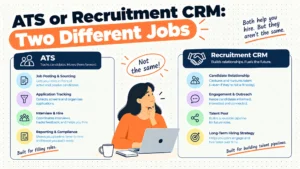
An applicant tracking system manages the workflow of an active open role. It handles scorecards and interview scheduling. A candidate relationship management platform builds pipelines of passive talent before a role even exists. Tools like Lever blend both. Recruitee leans heavily toward the ATS side.
Will we lose our historical candidate data if we migrate?
It depends entirely on your current data hygiene. Most modern systems can import basic CV files and contact details. Migrating historical interview feedback or internal notes is notoriously difficult. Assume you’ll lose some context on older candidates.
Why does the careers site builder matter so much?
Because candidates judge your company by its digital front door. A generic job board look signals a lack of investment in your culture. Pinpoint produces beautiful, high-converting pages without requiring a developer.
Can we just use our HRIS for recruiting?
Platforms like Workday or BambooHR offer basic recruiting modules. These are fine for low-volume hiring. They often lack the advanced pipeline visuals or two-way email sync found in dedicated tools. Your recruiters will eventually complain about the clunky interface.
How long does a typical implementation take?
Workable can be live in two hours for a basic setup. That’s highly unusual. For mid-market tools, expect four to six weeks. For enterprise platforms like SmartRecruiters, an implementation can easily span four to six months.
Do we really need AI sourcing?
Not if you hire mostly entry-level roles where inbound flow is high. If you’re hunting software engineers or niche sales talent, AI sourcing becomes highly valuable. Workable uses AI to search 400 million profiles. That saves recruiters hours of manual searching.
We help HR leaders make software decisions they won’t regret.