TL;DR
Kitting a new office goes wrong in a predictable way. Somebody budgets for the headcount in the plan, buys it before anybody moves in, and a year later a third of the desks have never been used. Phase the purchase against people actually sitting there, rent what you cannot predict, and buy properly only the few things that genuinely reward it.
- Buy for people who have started, not for the headcount plan.
- Desks and chairs are the big spend and the easiest to get wrong.
- Rent or lease the meeting room technology until the usage pattern is real.
- Three things reward buying well: chairs, network, and the main room’s audio.
- Count the equipment people already have at home before buying duplicates.
- An office opening is also a retrieval moment. Collect what is now surplus.
Why kitting a new office over-buys
The budget is built from the headcount plan, because that is the only number available when the lease is signed.
Headcount plans are forecasts. Hiring slips, roles get cut, and the pattern of who actually comes in differs from the plan in ways nobody predicted. Meanwhile the furniture arrived on the day the lease started.
Best tools for Device Management
So the office opens fully equipped for a population that does not exist yet, and in many cases never will in that shape.
The hybrid complication
Even where the hiring plan lands, attendance rarely matches headcount. A team of forty with three days a week in the office does not need forty desks, and the number it does need is not a simple calculation either, because attendance clusters on particular days.
The honest answer is that you cannot know the ratio before you open. Anybody who tells you a confident number for your company is quoting somebody else’s.
Which argues for starting deliberately short and adding, rather than starting complete and discovering you over-bought. Adding desks is a purchase. Removing them is a disposal problem with a storage cost attached.
A phasing that survives contact with reality
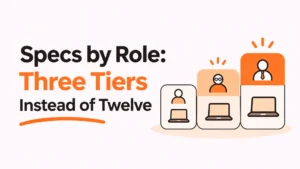
Three phases, keyed to occupancy rather than dates.
| Phase | Trigger | What to buy |
|---|---|---|
| Open | Doors open | Enough for people who have actually started, plus a small margin |
| Settle | Three months of real attendance data | Fill to the observed peak day, not the headcount |
| Mature | Pattern stable | The nice things, and anything the first two phases proved you need |
The second phase is the valuable one, because by then you have attendance data instead of assumptions. Count the busiest day over a few weeks and buy to that, not to the register.
What a small margin means
Enough spare capacity that nobody is hunting for a seat on a busy day, and not so much that rows sit empty. In practice that is a handful of positions rather than a percentage, and it is better delivered as flexible space than as fixed desks.
The failure to avoid is buying the margin in the same style and specification as everything else, because that is how an over-buy becomes permanent. Spare capacity should be the cheap, movable kind.
What to buy, what to rent, what people already have
Disclosure: RemoAsset, named below, is owned by the same people who publish HROpsLab. It is described with its limitations stated, on the same terms as every other supplier. This site takes no vendor money and sells no placements.
Three categories, and most teams put everything in the first.
Buy properly: chairs. People sit in them for years, a bad one causes real discomfort, and the cheap ones fail within eighteen months and get replaced anyway. This is the line not to economise on, and it is usually the first one cut.
Buy properly: network. Cabling and access points are disruptive to redo once people are working, and the cost difference between adequate and good is small relative to the disruption of a retrofit.
Buy properly: the main meeting room’s audio. One room where the sound genuinely works is worth more than five with cheap speakerphones, because that is the room where external calls happen.
Rent or lease: everything else in meeting rooms. Screens, cameras and room systems date quickly and the right configuration depends on how the rooms actually get used, which you will not know for months.
Already owned: laptops, monitors, docks, keyboards. This is the category teams forget entirely.
The duplicate purchase nobody notices
If your people have been remote, they already hold monitors, docks and keyboards. Buying a full set for every office desk duplicates equipment the company already paid for once.
Two options are both better than buying twice. Ask people to bring a setup in, which suits anybody mostly office based. Or collect surplus home equipment from people who no longer need two sets, and use it to kit the office.
That second option is a retrieval exercise, and it only works if somebody arranges packaging and collection. A collection service that handles packaging and courier booking is what makes it practical at any scale. The limitation is honest: bulky items such as monitors cost more to move than laptops, so the economics are tighter and worth checking per item before committing.
The decision table
| Situation | Scale | Setup | Primary pain | Recommended starting point |
|---|---|---|---|---|
| First office, fully remote until now | Under 50 | Everyone has home kit | Risk of buying twice | Audit home equipment before ordering |
| Replacing a larger office | Any | Existing furniture | Assuming all of it moves | Measure fit before shipping anything |
| Hybrid, attendance unknown | 50 to 200 | Policy of three days | Desk count is guesswork | Open short, measure, then fill |
| Fast hiring planned | Any | Headcount plan drives budget | Plan may not land | Phase against actual starts |
| Office closing elsewhere | Distributed | Surplus equipment | Storage costs rising | Redeploy before buying new |
An office opening is also a collection moment
This is the part that gets missed, and it is where some of the money comes back.
When an office opens, some people stop needing a full home setup. Others were holding equipment for an office that is closing. A few have been carrying spare monitors in cupboards since the last reorganisation.
Opening a location is the natural moment to collect all of that, because there is somewhere to put it and a reason to ask.
Run it as one exercise
Ask what people are holding that they no longer use, offer collection with packaging provided, and route the usable items into the new office rather than into storage.
Two rules make it work. Make returning easy, because a monitor with no box will not come back. And do not ask for things you will not use, since collecting equipment into storage so it can age is worse than leaving it where it is.
Whatever is genuinely surplus after that should be disposed of properly rather than stored indefinitely. the European framework for waste electrical and electronic equipment sets out the European expectations for electrical waste, and your disposal supplier should be working to a named sanitization standard such as NIST Special Publication 800-88 on media sanitization before anything leaves.
On the accounting side, moving equipment between locations and disposing of surplus both touch the asset register, and under IAS 16 on property, plant and equipment the useful life and carrying amount assumptions should reflect what actually happened rather than the original plan. Tell finance during the move, not at year end.
For the ongoing question of what to provide people at home alongside an office, see our guide to docks and peripherals.
See how surplus equipment is collected and redeployed at device storage and redeployment, or read our guide to docks and peripherals.
Frequently asked questions
How many desks should a new office have?
Fewer than your headcount, and you cannot know the right number before you open. Attendance clusters on particular days, so a team of forty on three days a week does not need forty desks, and the real ratio is specific to your company. Open deliberately short with a small flexible margin, measure the busiest day over a few weeks, then fill to that. Adding desks is a purchase; removing them is a disposal problem.
What is worth buying properly rather than cheaply?
Three things. Chairs, because people sit in them for years and the cheap ones fail within about eighteen months and get replaced anyway. Network cabling and access points, because retrofitting them once people are working is disruptive and the cost gap between adequate and good is small. And the audio in your main meeting room, since one room where sound works beats five with cheap speakerphones.
What should we rent instead of buy?
Most meeting room technology. Screens, cameras and room systems date quickly, and the right configuration depends on how the rooms actually get used, which takes months to learn. Renting through the first year lets the usage pattern emerge before you commit, and it avoids the common outcome of three identical rooms where only one is ever booked.
Do we need to buy monitors for every desk?
Check what people already hold first. If your team has been remote they own monitors, docks and keyboards the company already paid for once, and buying a full set per office desk duplicates that. Either ask mostly office based people to bring a setup in, or collect surplus equipment from those who no longer need two sets and use it to kit the office.
How do we collect equipment people no longer need?
Treat the office opening as the collection moment, because there is somewhere to put things and an obvious reason to ask. Two rules make it work: provide packaging and book the courier, since a monitor with no box will not come back, and do not ask for anything you will not actually use. Collecting equipment into storage so it can age is worse than leaving it alone.
What if we are closing another office at the same time?
Redeploy before buying. Surplus from a closing site is the cheapest equipment available to you, and the window is short because storage costs start immediately. Measure what fits the new space before shipping anything, though, since assuming existing furniture will suit a different floorplan is a common and expensive mistake.
When should we buy the rest?
Against occupancy triggers rather than dates. Open with enough for people who have actually started plus a small flexible margin, fill to the observed peak day after about three months of real attendance data, then buy the remaining items once the pattern is stable. Keep the margin in cheap movable form, because buying spare capacity in the same specification as everything else is how an over-buy becomes permanent.