
TL;DR
- The core decision: You must weigh the political cost of a system migration against the daily complaints from your frustrated hiring managers.
- When staying put makes sense: High-volume operations hiring thousands of hourly workers across dozens of locations should likely keep iCIMS.
- The actual job: An applicant tracking system must move candidates from initial screening to a final offer without creating administrative drag.
- How the market splits: Alternatives divide cleanly into massive enterprise suites, interview-focused platforms, or sourcing-heavy CRM tools.
- A decision rule: If your hiring managers completely refuse to log in, you need a new system regardless of your sunk contract costs.
- The expected outcome: A successful software swap will temporarily annoy your recruiters but permanently speed up your time to fill.
| Tool | Rating | Pricing | Free trial | Best for |
|---|---|---|---|---|
| iCIMS (your current tool) | 4.3 / 5 | Pricing on request | Free demo available | Best ATS for large enterprise talent operations |
| Greenhouse | 4.7 / 5 | Pricing on request | Free demo available | Best ATS for structured, bias-reduced hiring |
| Lever | 4.6 / 5 | Pricing on request | Free demo available | Best CRM + ATS for proactive talent teams |
| Workable | 4.5 / 5 | From $189/month | 15-day free trial | Best easy-to-use ATS with built-in sourcing |
| SmartRecruiters | 4.4 / 5 | Pricing on request | Free demo available | Best enterprise ATS for complex hiring operations |
| Ashby | 4.6 / 5 | Pricing on request | Free demo available | Best ATS for data-driven, high-performance teams |
| JazzHR | 4.2 / 5 | From $75/month | 21-day free trial | Best affordable ATS for small businesses |
| Recruitee | 4.1 / 5 | From $224/month | 18-day free trial | Best ATS for collaborative, team-based hiring |
| Jobvite | 4 / 5 | Pricing on request | Free demo available | Best ATS with referral and employer branding tools |
| Pinpoint | 4.2 / 5 | Pricing on request | Free demo available | Best ATS for employer branding-led hiring |
The Midnight Migration Fear
You’re sitting in a tense budgeting meeting when the finance director asks the question you’ve been dreading for weeks. They point at the massive renewal invoice for iCIMS sitting on the table. Then they mention that the Vice President of Engineering just expensed a rogue software subscription because her team absolutely refuses to use the official HR system.
You know exactly why this internal rebellion is happening right now. The interface feels incredibly dated compared to the consumer apps your team uses daily. Implementation took months of your life that you’ll never get back. But you also know exactly what migrating to an entirely new platform actually costs a business. It costs significant political capital. It drains your recruiters of their sanity while they learn new workflows.
You’re caught between a deeply frustrated hiring panel and a rigid procurement team trying to cut costs. The real issue isn’t the software license fee itself. The real issue is whether your current talent technology stack is actively bottlenecking your company’s headcount growth.
Best tools for Applicant Tracking (ATS)
When iCIMS Actually Makes Sense
First, your setup is genuinely fine. If your company has over 2,000 employees with high-volume recruiting needs across multiple locations, iCIMS is doing exactly what it was built to do. Its automated application routing handles massive volume beautifully. The two-way text messaging tool dramatically improves response rates for hourly workers. You don’t need to change a thing.
Second, you hit early friction. Your newer recruiters start complaining that the interface feels a bit old compared to what their friends use at tech startups. But the system remains highly stable under pressure. The knock-out question filtering is still keeping unqualified applicants out of your pipeline. You stay put because the pain of migration outweighs the minor interface annoyance.
Third, you reach a state of real liability. This happens when your hiring managers start typing all their interview feedback into hidden Google Docs to avoid logging into the ATS entirely. The system is no longer just ugly to look at. It’s actively breaking your compliance process by scattering candidate data across unmonitored shadow systems.
Fourth is the edge case where the core business model shifts entirely. You might pivot from high-volume retail hiring to highly specialized technical recruitment. Your bulk communication tools suddenly matter far less than structured interview rubrics. Now you actually have to move to a new platform because the old tool can’t support your new strategy.
The Midnight Questions
Will a new system actually fix my hiring managers’ terrible behavior? No software can magically cure a broken corporate culture. But a consumer-grade interface removes their most common excuse for avoiding the process entirely. This matters because managerial adoption directly drives your recruitment data quality.
How much of our historical candidate pipeline will we actually lose? You’ll undoubtedly lose some granular notes during a messy database migration. This matters because your passive talent pool is usually your most valuable sourcing asset.
Can my team survive another brutal eight-week implementation cycle? Yes, they can. You already survived the massive iCIMS rollout. Many modern platforms are designed to spin up much faster than legacy systems.
Will procurement kill this project if the new tool costs more money? They’ll certainly try to block the purchase order. You must frame the extra software cost against the expensive engineering hours lost to manual interview coordination.
Is there actually a perfect platform out there waiting for us? Absolutely not. Every vendor has a specific weakness that they actively hide during the sales demo.
How the Market Actually Splits
The first category is the massive enterprise suite. Tools like SmartRecruiters try to do absolutely everything from careers page hosting to complex compliance tracking. This is right for global operations with heavy audit requirements. It fails completely when a smaller tech startup buys the software and drowns in endless configuration settings.
The second category focuses obsessively on structured hiring workflows. Platforms like Greenhouse fall strictly into this bucket. They’re right when you care deeply about reducing unconscious bias across your organization. They fail miserably if your recruiters just need to blast job postings out to a hundred boards as fast as humanly possible.
The third category is the sourcing-first platform. Lever and Workable dominate this specific space. These are perfect when your talent team spends most of their working hours hunting down passive candidates on other networks. They struggle when you scale up into massive enterprise complexity requiring specialized regional permissions.
Evaluate Your Reality
Do your recruiters spend more time formatting interview scorecards than talking to actual humans? If your team is manually assembling feedback packets every single Friday, you lack the core structured interview tools that modern platforms provide out of the box.
Are you losing great candidates simply because scheduling takes four days? Automated scheduling is no longer a luxury feature for elite tech companies. If your coordinators are sending six emails back and forth just to book a panel interview, your current setup is actively hurting your employer brand.
Does your executive team actually trust your time-to-hire reports? Data paranoia is a very real problem in corporate HR departments. When business leaders constantly question the recruiting funnel numbers, you usually have a severe system adoption issue hiding underneath the math.
Are you currently paying separate vendors for your CRM software and your video interviewing tools? The iCIMS platform features a modular Talent Cloud that handles these specific functions natively. If you aren’t using their modules, you’re likely overpaying by stitching together disjointed point solutions.
Do your hiring managers actually write and submit their own job descriptions? If they completely refuse to use the requisition approval workflows inside your system, the software has clearly failed the basic ease-of-use test.
The Nine Alternatives, Reviewed
Greenhouse
This platform is best for mid-size to large companies prioritizing structured hiring processes. It earns its number one spot with pre-built interview kits that force consistent candidate assessment. But it carries a very high cost for smaller teams. Implementation can also take up to eight weeks to complete.
Lever
Lever is best for proactive talent teams needing a CRM-first approach to pipeline building. It shines because of its visual drag-and-drop board and automatic two-way email sync. But its reporting dashboards require significant manual configuration. It’s also less focused on providing structured interview kits.
Workable
This tool is best for growing companies wanting an easy-to-use platform with built-in AI sourcing. Workable lets recruiters access over 400 million candidate profiles without paying for an expensive LinkedIn Recruiter seat. But it lacks sufficient depth for complex enterprise operations. Its CRM features are also far less mature than Lever.
SmartRecruiters
SmartRecruiters is the best choice for complex hiring operations spanning multiple global brands. It offers an excellent built-in marketplace to connect with staffing agencies without negotiating separate vendor contracts. But initial configuration is highly complex for smaller teams. The premium pricing at enterprise scale can also be a massive barrier.
Ashby
Ashby is perfect for data-obsessed talent teams wanting powerful analytics and scheduling automation in one place. It successfully replaces separate scheduling tools while offering the absolute best funnel analysis in the category. But it has a much less established brand presence than Greenhouse. Some of its integrations are currently still in beta testing.
JazzHR
This is the best affordable platform for small businesses making fewer than 50 hires per year. Starting at just $75 per month, it automatically distributes jobs to over 50 different boards with one click. But it offers very limited reporting for talent leaders. It’s poorly suited for companies scaling past 200 employees.
Recruitee
Recruitee is ideal for collaborative environments where non-HR team members evaluate candidates heavily. It provides a clean interface where peers can leave structured feedback easily. But it lacks advanced analytics for sophisticated operations. It isn’t built to handle massive enterprise scale.
Jobvite
This platform suits mid-to-large companies relying heavily on employee referral programs. It features a branded portal where employees can generate trackable links without bothering HR staff. But the user interface feels noticeably less modern than newer competitors. Smaller teams will find it overly complex to set up.
Pinpoint
Pinpoint works best for in-house teams treating employer brand as a major competitive advantage. It features a brilliant careers site builder that requires absolutely no web developer support. But it has a smaller market presence than its major rivals. Its CRM functionality is also notably less developed.
The Decision Table
| Situation | Scale | Setup | Primary Pain | Recommended Starting Point |
|---|---|---|---|---|
| High-volume retail recruiting | 2,000+ employees | Centralized HR | Sorting thousands of applications | iCIMS |
| Bias-reduced technical hiring | 200 – 5,000 employees | High manager involvement | Inconsistent interview feedback | Greenhouse |
| Passive sourcing focus | 100 – 2,000 employees | Dedicated sourcers | Managing candidate nurture campaigns | Lever |
| Rapid startup growth | 10 – 500 employees | Lean talent team | Need candidates fast on a budget | Workable |
| Multi-brand global hiring | 1,000+ employees | Decentralized units | Managing multiple staffing agencies | SmartRecruiters |
| Obsessive funnel tracking | 50 – 2,000 employees | Data-driven ops | Too much time spent scheduling | Ashby |
| Local small business operations | 5 – 100 employees | No dedicated recruiter | Tiny budget for HR software | JazzHR |
The Cost of a Botched Migration
The true cost of a failed vendor switch is rarely the software license itself. The real penalty is measured in the silent erosion of trust from your business partners. When a rollout stalls or a new system is too hard to use, busy recruiters simply revert to hidden spreadsheets to get their jobs done.
This behavior creates a massive data black hole that ruins your headcount planning for the next fiscal year. You end up paying for an expensive platform that nobody uses while suffering the brutal administrative drag of manual coordination. Excellent candidates start slipping through the cracks because your team is fighting the software instead of building relationships.
So don’t ask if a new system is slightly cheaper than your current contract. Ask yourself if the proposed software will actually make your hiring managers want to participate in the process?
Moving Beyond a Basic Setup
When you finally outgrow your current operational setup, finding the right replacement requires strictly objective information. Vendor demos are carefully designed to hide glaring product flaws. Sales representatives will always tell you that their specific platform handles your unique workflow perfectly.
You desperately need perspective from people who have actually run these complex systems in production environments. HROpsLab exists to provide exactly that kind of clarity for talent leaders. We actively research and test talent technology to see where it breaks under pressure.
HROpsLab is a fiercely independent review publication. We don’t sell software. We just provide the unfiltered insights you need to make a confident architectural decision for your talent team.
Frequently Asked Questions
How much does it actually cost to replace an applicant tracking system?
Software costs vary wildly from Workable starting at just $189 per month up to massive enterprise contracts with SmartRecruiters. But the true expense always includes implementation consulting and a temporary dip in recruiter productivity. You must budget for the internal hours your team will spend configuring the new workflows. A cheap license fee often hides a massive setup cost.
How long does a migration project usually take?
A lightweight platform for a small business can be completely live in two weeks. An enterprise system for a thousand employees usually takes between six and twelve weeks to configure properly. This timeline stretches significantly if you’ve dirty legacy data that needs extensive cleaning before the import.
Can we export all our candidate notes from iCIMS?
Yes. Most major platforms allow a full data export of candidate records and compliance history. The real challenge lies in mapping those old status fields to the modern workflows of your new system. You’ll need a solid data mapping strategy to prevent a total mess in your new database.
Why do hiring managers hate our current software?
Hiring managers despise systems forcing them through ten clicks just to leave a simple interview score. And they will complain loudly to anyone who listens. Modern platforms win by moving the evaluation process directly into email or Slack where your managers already work. If your platform feels like a tax on their valuable time, they’ll avoid it completely.
Do we need to buy a separate CRM tool?
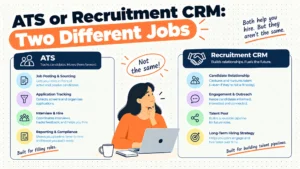
If you’re heavily focused on proactive sourcing, dedicated CRM functionality is absolutely vital. Tools like Lever combine these functions natively so you don’t have to pay for two separate platforms. Smaller teams relying entirely on inbound applicants can usually skip the CRM entirely.
Is AI sourcing actually useful for recruiters?
It’s highly useful for specific high-volume roles. Platforms matching profiles against your job description can save countless hours of manual resume review. But artificial intelligence can’t close a highly sought-after engineering candidate who has three other offers on the table.
We provide the clear technical truths that talent leaders need to build better operations.