

TL;DR
- The core decision: when the person building the rota finds out what it costs.
- When doing nothing is right: when they already know before they publish.
- What has to be true: the number reaches the person making the trade, while they can act.
- How the options split: by how late in the cycle the cost becomes visible.
- Decision rule: move the number earlier, even if it gets less precise.
- Outcome to expect: the same total, decided by somebody who could see it.
Somebody Else Finds Out Later
The rota is built. It goes out, the week happens, and a few weeks after that a figure appears in a report and somebody asks why the period cost what it did.
By then the answer is archaeology. The person who built that rota made a series of small decisions, each reasonable, none of which they could price at the time. Somebody stayed late on Tuesday. A shift got covered by whoever was available rather than whoever was cheapest. An extra person went on Friday because Friday had been difficult the week before. All defensible. None of them visible as a number until long after they could be changed.
That's the whole problem in this area, and it isn't really about cost control. It's that the decision and the consequence are separated, both in time and between people. The person choosing makes the trade blind. The person seeing the number can't do anything about it. Weeks apart, and they have the same conversation every month.
Best tools for Employee Scheduling
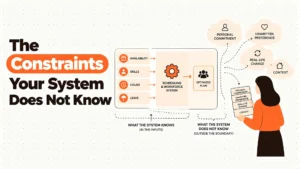
The reframe worth holding: coverage and cost are the same dial read from two ends. Every rota decision is simultaneously a judgement about having enough people and a judgement about spending. Treating them as separate concerns owned by separate functions guarantees that neither is made well.
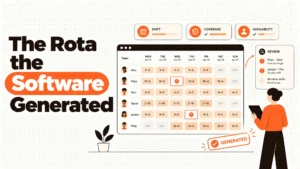
Which leads somewhere specific. The useful move isn't better cost reporting, it's earlier cost visibility. A rough number in front of the person building the draft changes more than a precise one in front of somebody reviewing a finished month, because only one of those people can still do anything.
One thing to establish before any of it. What particular hours, patterns, changes or arrangements attract additional payment differs by jurisdiction, is sometimes set by agreement, and changes. Nothing here tells you what applies to you. Establish it with local advice for each population, because the cost of a rota depends entirely on rules you have to know rather than infer.
When You Genuinely Do Not Need to Act Yet
The builder already sees the cost. They know roughly what the draft costs while it's still a draft, and they adjust accordingly. That's the arrangement everything else here is trying to reach.
Cost arrives weeks later, in a report. Common, and it means the trade is being made blind every week. Worth changing even if the number you can surface early is approximate.
The same argument happens every month. Somebody queries the figure, somebody explains the week, nobody can reconstruct the decisions. That's a symptom of the separation rather than of anybody's carelessness.
The edge case that forces it. A period cost far more than expected and nobody can say why. That's the point at which the absence of in-flight visibility becomes a management problem rather than an inconvenience.
Five Questions This Reader Asks at 11pm
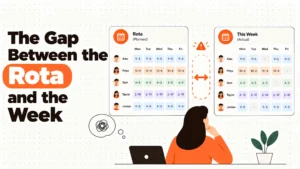
Why does the week cost more than the plan? Because the plan was a starting point and the week was a sequence of events. People stay late, shifts get covered differently, somebody is called in, a scheduled person doesn't arrive and somebody else absorbs it. Each is small and none appears anywhere until the figures are assembled.
Should the person building the rota see the cost? Yes, and this is the single highest-return change available here. They're making the trade whether or not they can see the number, and giving it to them doesn't add a decision, it informs one that's already happening.
Won't that make them under-staff? A real risk and worth designing against. Cost shown alone pushes one way. Cost shown alongside the coverage requirement, and understood as one input rather than a target, is a different thing. What actually causes under-staffing is a cost figure with a target attached and no visible consequence for being short.
How accurate does the number need to be? Less than people assume. The decision it informs is comparative: is this version of the week better or worse than that one. Two estimates wrong in the same direction still answer that correctly, so a rough figure available now beats a precise one available later.
What about the rules that affect cost? Which hours, patterns or changes carry additional payment differs by jurisdiction and by agreement. That's not something to infer from your own data or to let a system assume. Establish it with local advice and then check whether what you've configured reflects it.
Six Points Where Cost Becomes Visible
| When you see it | Who sees it | What they can still do |
|---|---|---|
| While the rota is a draft | Whoever is building it | Everything, this is the moment |
| At the point of publication | Whoever approves it | Send it back, at some disruption |
| When a change is made mid-week | Whoever makes the change | Choose differently, if they know |
| After the week is worked | Nobody useful | Nothing about that week |
| When pay is produced | Finance, and whoever reconciles | Nothing, it's a record now |
| In a management report later | Somebody senior | Ask a question nobody can answer |
| Never, as a per-week figure | Nobody | The pattern continues indefinitely |
| Only as a monthly total | Whoever reviews it | Argue about a number with no detail |
The first row is where the whole value sits. The person assembling the week is making every decision that determines the cost, and they're the only person who can trade one arrangement against another while it's still free to do so. Putting a number in front of them, even an approximate one, converts an invisible consequence into a visible one at the exact moment it matters.
The third row is the one people forget and it's a large share of the variance. Changes made during the week are where a planned cost becomes an actual one, they're made quickly and under pressure, and the person making them usually has no idea what the alternatives would have cost.
The last two rows describe most operations. A monthly total with no per-week detail produces a recurring argument in which somebody asks why the figure is what it is and nobody present can reconstruct the week that produced it.
Five Diagnostic Questions You Can Self-Assess Against
Does the rota builder see a cost figure? If not, that's the finding, and it's the one thing on this list worth fixing before anything else.
When does the number first exist? Trace it. In many operations the first cost figure for a week appears after pay has been produced, which is several weeks after every decision was made.
What moves the number after publication? List the events: staying late, cover, calling somebody in. If you can't say which of these is the biggest contributor, nobody can manage it.
Who gets asked about the figure? Frequently somebody who didn't build the rota and can't account for it. That mismatch is why the monthly conversation goes nowhere.
Do you know what carries a premium? For your populations, established properly rather than assumed. If a system is calculating cost on an assumption nobody checked, the early number is confidently wrong.
Run these five with the builder and whoever queries the monthly figure, in the same conversation if possible. The gap between what one can see and what the other expects them to have managed is usually the whole finding.
Six Points Where Cost Becomes Visible, Reviewed
While the rota is still a draft
The builder sees a running figure as they assemble the week. It earns its place as the only point where cost information can change anything at no disruption, which makes it worth more than every later point combined.
Where it falls short is precision and pressure. The number rests on assumptions about hours and rates that may be incomplete, and a builder watching a figure climb may make choices for the wrong reason if the coverage requirement isn't equally visible.
The change worth making first. Show it next to the coverage requirement rather than alone, so the trade is visible as a trade.
It's worth being explicit with the builder about what the number is and isn't. An estimate presented without qualification invites both false confidence and, when it later differs from the actual, a loss of trust in a figure that was doing its job perfectly well.
Watch what it does to behaviour in the first few weeks. A running figure is a strong signal and people respond to it quickly, so it's worth checking early whether the response is better trades or simply fewer people.
At the point of publication
An approver sees the cost before the rota is released. It earns its place as a genuine control and as the last moment before people start arranging their lives around the week.
Where it falls short is what the approver can realistically do. Sending a rota back means the builder rebuilds it and publication is delayed, which costs notice, and under time pressure approval becomes automatic.
Useful as a check rather than as the primary visibility. If this is your only cost gate, the approver is being asked to catch something they can barely act on.
The realistic value here is the conversation rather than the rejection. An approver who queries one thing, gets an explanation, and lets the rota go has still made the reasoning explicit, which is more than happens when nobody looks.
Where an approval is going to be given regardless, it's better to say so. A gate everybody knows is nominal wastes a step and creates a record suggesting scrutiny that didn't occur.
When a change is made mid-week
The cost implication of an amendment is visible at the moment of amending. It earns its place because this is where a large share of the variance is created and where visibility is rarest.
Where it falls short is the circumstances. Mid-week changes are made quickly, frequently by somebody covering a problem, and adding a number to that moment helps only if there was a genuine alternative.
Worth having where the system supports it. The value is less about restraint and more about knowing afterwards which changes drove a figure.
The attribution is the part that makes the monthly conversation possible. A week that cost more than expected, with a record of which amendments contributed, is explicable; the same week without it produces the argument that never resolves.
It also identifies patterns worth acting on upstream. Where the same kind of change keeps driving the figure, the answer is usually in the forecast or the coverage level rather than in asking anybody to make fewer changes.
After the week has been worked
The cost of the week is assembled once it's over. It earns its place as the first accurate figure, and accuracy has its uses for planning ahead.
Where it falls short is that nothing about that week can be changed. It's a record, not a decision aid, and treating it as management information encourages the belief that cost is being controlled when it's only being counted.
Keep it for patterns across weeks. Don't mistake it for a control, because by this point every decision it describes is final.
The comparison across weeks is genuinely useful and underused. A figure that moves substantially between similar periods is pointing at something, and the something is usually visible in what changed mid-week rather than in how the rota was built.
Be careful what gets done with it. Retrospective figures used to challenge the person who built the rota, without giving them anything to act on next time, is the arrangement this whole piece is trying to replace.
When pay is produced
The figure emerges as hours become payments. It earns its place as the authoritative number and as the point where any discrepancy between what was scheduled and what was worked has to be resolved.
Where it falls short is distance. It's the furthest point from the decisions, it's owned by a different function, and the detail that would explain it sits in a different system.
The handover point rather than a management tool. What happens on the pay side of it belongs with our payroll material.
The reconciliation at this boundary is worth somebody owning explicitly. Hours scheduled and hours paid will differ, regularly, and if nobody is named to resolve the difference it gets resolved differently each period by whoever notices.
It's also the point where an error in the early estimate becomes visible. Where the two numbers diverge consistently in the same direction, the assumption behind the draft figure is wrong and worth correcting.
In a management report later
A figure appears for somebody senior to review. It earns its place for trends across periods and for spotting drift that individual weeks don't reveal.
Where it falls short is as a prompt for action, because the action it prompts is a question, and the question arrives weeks after anybody could answer it specifically. It also tends to produce pressure on the builder without giving them anything to work with.
Fine for trends. Pair it with per-week detail, or the monthly conversation will keep being an argument about an unexplainable number.
The pairing matters more than the report's design. A total with no route down to individual weeks can only produce a general question, and a general question about cost lands as general pressure on whoever is nearest.
Worth agreeing in advance who attends that conversation. If the person who built the rotas isn't there, nobody in the room can account for the number, and the meeting becomes a ritual.
The Decision Table
| Situation | Scale | Setup | Primary Pain | Recommended Starting Point |
|---|---|---|---|---|
| Builder sees cost while drafting | Any | Any | None | Change nothing |
| Cost first appears in a monthly report | Any | Any | Decision and consequence separated | Get a rough figure into the draft |
| Approver sees it, builder does not | Any | Any | Caught too late to act | Move it one step earlier |
| Mid-week changes drive the variance | Any | Any | Invisible at the moment of choosing | Cost on the change screen |
| Same argument every month | Any | Any | Nobody can reconstruct the week | Per-week detail, not just totals |
| Builder pushed on cost with no data | Any | Any | Pressure without information | Give them the number first |
| Premiums assumed, not established | Any | Any | Confidently wrong early figures | Local advice, then configure |
| Coverage requirement not shown alongside | Any | Shows cost | One side of the trade visible | Show both together |
| Nobody owns the figure | Any | Any | An unanswerable monthly question | Name who explains it |
The sixth row is the situation worth avoiding above all others. Asking somebody to control a cost they can't see, and then querying the result monthly, produces pressure with no route to act on it, and what it generally produces in practice is quiet under-staffing rather than better decisions.
The ninth row is the one that makes the monthly conversation survivable. A named person who can account for a week turns an argument about a total into a discussion of specific choices, which at least has somewhere to go.
The eighth row is the guard that makes early cost visibility safe. A figure shown on its own invites minimisation. The same figure next to what the period requires presents it as a trade, which is what it actually is, and people make trades reasonably when they can see both sides.
The fourth row is the one that accounts for most of the difference between planned and actual, and it's the least instrumented part of the whole cycle. Changes are made quickly, by whoever is dealing with a problem, with no number in front of them at all.
Seeing It While It Is Still a Draft
The decision and the number have to meet. Every rota decision is a spending decision, and in most operations the two are separated by weeks and by a function boundary. Closing that gap is the entire improvement available here.
Everything else on this list is a variation of that one move. Earlier, rougher, in the same place as the work, next to the requirement: all of it is bringing the number and the choice into contact.
Rough beats late. The choice being made is comparative, so a figure that's approximately right and available now serves it better than a precise one that arrives after publication. Perfectionism about the number is the most common reason this never gets built.
Consistency matters more than accuracy. An estimate that's always somewhat low still ranks two options correctly, which is the only thing the builder needs it to do.
Show the requirement next to the cost. Cost alone pushes one way. Cost beside the coverage requirement presents an honest trade, and it's the difference between informing somebody and pressuring them.
Both numbers, same screen, same moment. Separated by a click, the second one stops being part of the decision.
Mid-week changes are where the variance lives. The plan is a starting point and the week is a sequence of events. Where you can make the cost of an amendment visible at the moment it's made, you're addressing the part that actually moves.
Attribution beats restraint here. Knowing afterwards which changes drove a figure is more useful than hoping somebody hesitates at the moment of making one.
Pressure without information produces under-staffing. Somebody asked about cost with no visibility will reduce the only thing they control, which is people on shift, and the consequence lands on whoever is working rather than in any figure.
And they will be praised for it. The figure improves, nothing records the harder shifts, and the arrangement gets held up as an example.
Somebody has to be able to explain a week. When a number is queried, the answer has to be reconstructable. That means per-week detail rather than monthly totals, and it means the person who built the rota being the one asked.
An unanswerable question becomes general pressure. Where nobody can account for a figure specifically, the conversation defaults to spending less, which is the least useful instruction available.
The practical version is narrower than a cost control programme. Get an approximate figure in front of the builder, show it alongside what the period needs, and keep enough per-week detail that a question has an answer. That's most of the benefit and none of it requires anybody to spend less.
That last point is worth making explicitly when proposing it. This is an information change rather than a savings initiative, and framing it as the second guarantees it arrives as pressure and produces the thinner rotas everybody was trying to avoid.
Where These Arrangements Go Wrong
| The failure | How it shows up | What would have to change |
|---|---|---|
| Cost visible only after the fact | A monthly argument, every month | A rough figure in the draft |
| Cost shown without the requirement | Quiet under-staffing | Show both sides of the trade |
| Pressure applied without data | The builder reduces the only lever they have | Give them the number first |
| Mid-week changes unpriced | Variance nobody can attribute | Cost at the moment of change |
| Monthly totals only | A question with no answer | Per-week detail |
| Premiums assumed by the system | A confident early number that is wrong | Establish, then configure |
The second and third rows are the failure this piece most wants to prevent, because they're what happens when cost visibility is introduced carelessly. A figure and a target, with no visible coverage requirement and no consequence for being short, reliably produces thinner shifts rather than better decisions.
That outcome is worse than the blind decision it replaced, which is the uncomfortable part. Introducing this badly doesn't leave you where you started.
The sixth row undermines everything else. An early cost figure is only useful if it's roughly right, and a system calculating on assumptions about premiums that nobody established will produce confident numbers that misprice exactly the arrangements you most need to understand.
The fifth row is the one that keeps the monthly meeting alive. Totals without detail can only generate a question, and a question nobody can answer generates another meeting.
What to Put in Writing
| Artefact | Who owns it | When it is written | What it prevents |
|---|---|---|---|
| When the first cost figure exists | Whoever runs the rota | Now | Not knowing how blind the decision is |
| What moves the number after publication | Whoever runs the rota | Ongoing | Unattributable variance |
| The coverage requirement, alongside cost | Whoever sets it | Before showing cost | One-sided pressure |
| Who explains a queried week | Named individual | Before the next query | An unanswerable question |
| What attracts additional payment | You, with local advice | Before configuring | Early figures that are wrong |
| Whether the builder sees anything at all | Whoever owns the system | Now | The whole problem |
The last row is the one to check this week, and it takes a conversation. Plenty of operations assume the person building the rota can see a cost figure, and the answer when you ask is frequently that they can't, or that it's somewhere they never look.
The fifth row is the one to settle before the figure is trusted. An estimate built on an assumption about what carries a premium will be wrong precisely on the arrangements that cost most, which is the opposite of useful.
Questions to Ask Before You Commit
On timing. Can the builder see cost while drafting? A bad answer is it's in reporting.
On the trade. Is the coverage requirement shown alongside? A bad answer is separately.
On changes. Does a mid-week amendment show its cost? A bad answer is it recalculates.
On detail. Can we explain one week specifically? A bad answer is monthly summaries.
On rules. How does it know what carries a premium? A bad answer is it's configured.
On ownership. Who answers when a figure is queried? A bad answer is the operations team.
What Getting This Wrong Costs
The first cost is a decision made blind, every week. The person assembling the rota is making the trade between coverage and spending whether or not anybody gives them the information, and without it they're guessing. The organisation then reviews the result monthly and applies pressure, which is a complete inversion: the data goes to the person who can't act and the accountability goes to the person who can't see.
Inverted arrangements like that are stable, which is why they persist. Nobody in them is behaving unreasonably, everybody is working with what they have, and the fix requires somebody to notice the shape rather than to try harder within it.
The second cost is the under-staffing that pressure produces. Somebody asked to control a figure they can't examine will reduce the one thing available to them, which is how many people are on shift. That doesn't show up as a cost problem because it isn't one, it shows up as a harder week for the people working it, and nothing in the reporting connects the two.
It also looks like success from a distance. A falling cost figure with no corresponding measure of how the shifts felt reads as improvement, which is why it can continue for a long time before anybody questions it.
The third cost is a monthly argument that can never resolve. A total with no per-week detail invites a question nobody present can answer, so the conversation becomes about the number rather than about the decisions, and it repeats indefinitely because nothing about it produces a finding.
It also damages the relationship between the functions involved. Two groups meeting monthly to have an unwinnable exchange will eventually stop treating each other as useful, and that costs more than the figure being discussed.
So do three things. Find out whether the person building your rota can see a cost figure at all, because the answer is frequently no. If they can't, get an approximate one in front of them, shown next to what the period requires. And establish properly what carries additional payment for your populations, with local advice, because an early figure built on an assumption is worse than no figure.
The first of those is a five-minute conversation and it settles whether the rest is needed. Operations vary enormously on this and most have never asked.
When You Are Ready to Go Further
Start by asking the builder what they can see. Not what the system reports, what's in front of them while they're assembling a week. The answer is frequently nothing, or a figure they'd have to go and find, and either way it tells you how blind the weekly trade currently is.
A figure they'd have to go and find is effectively no figure. Under time pressure nobody opens a separate screen to price a decision they're about to make, which means visibility has to be where the work happens or it doesn't exist.
Then get something approximate in front of them, and resist the pull towards precision. The number informs a comparison between two versions of a week, so it needs to be wrong in a consistent direction rather than exactly right, and waiting for an accurate figure is the most common reason this never happens at all.
Label it as an estimate where it appears. That prevents both the false confidence and the later objection that the draft figure didn't match the actual, which it never will and doesn't need to.
Finally, show it next to the coverage requirement, and make sure that being short has a visible consequence somewhere. Cost visibility without that guard produces thinner shifts rather than better weeks, and the people who absorb the difference are the ones with the least say in it.
A simple count of short shifts is usually enough of a counterweight. It doesn't need to be precise, it needs to exist, so that one side of the trade isn't the only one with a number attached.
HROpsLab publishes independent comparison work across HR tooling and workforce systems. We sell nothing, we take no vendor money, and we publish no paid placements. If the next step is understanding what your current tooling can show while a rota is still a draft, our comparison work is one place to start.
Frequently Asked Questions
How do you see labour cost before publishing a rota?
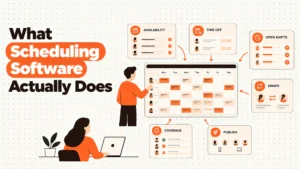
Some scheduling systems can show a running figure as the week is assembled, and where that exists it's the highest-return thing to switch on in this whole area. Where it doesn't, an approximate calculation is usually achievable, since the inputs are hours and rates you already hold. The instinct to wait until the number is accurate is the main reason this never gets built: the decision it informs is a comparison between two versions of a week, so a figure wrong in a consistent direction answers it perfectly well.
Why does a week cost more than the plan said?
Because the plan was a starting point and the week was a sequence of events. Somebody stays beyond their scheduled end, a shift gets covered by a different person, somebody is called in when a scheduled person doesn't arrive, a difficult period gets an extra pair of hands. Each is small, each was reasonable at the time, and none of them produces a number anybody sees until the figures are assembled afterwards. That's why mid-week changes are where most of the variance is created and where visibility is rarest.
Should the person building the rota see the cost?
Yes, and it's the change most worth making. They're already making the trade between coverage and spending every time they place a shift, so showing them the number doesn't add a decision, it informs one that's happening regardless. The thing to do alongside it is show the coverage requirement in the same place. Cost displayed on its own invites minimisation; cost displayed next to what the period actually needs presents it honestly as a trade, which is what it is.
Will showing cost cause managers to understaff?
It can, and the way to prevent it is specific rather than a matter of trust. Under-staffing comes from cost visibility paired with a target and no visible consequence for being short: the manager can see one number, is accountable for it, and the harm from being thin lands on people rather than on any figure. Showing the coverage requirement alongside, and making short shifts something that gets recorded, keeps both sides of the trade present. Without those, pressure reliably produces thinner rotas.
Does scheduling software show labour cost?
Many do, with varying usefulness, and the question worth asking a vendor is not whether it shows cost but where and when. A figure available in a report after the week is different from one visible while a draft is being built, and only the second changes anything. Also worth asking how it knows what carries additional payment, because the answer determines whether the early number is roughly right or confidently wrong, and what applies differs by jurisdiction and by agreement.
How does coverage trade against cost?
They're the same dial read from either end. Every additional person on a shift is more coverage and more cost, and every reduction is the reverse, which means treating them as separate concerns owned by separate functions guarantees neither is decided well. The practical consequence is that the two numbers need to be in front of the same person at the same moment. Where they aren't, the trade still gets made, just blind, and the organisation reviews the outcome weeks later with no ability to change it.
What happens to cost when you change a published rota?
It moves, frequently more than the change appears to justify, and usually with nobody seeing the number at the moment of deciding. Cover arranged quickly, somebody staying on, an extra person called in: these are made under pressure by somebody solving a problem, and the alternatives that might have cost less are rarely visible. Separately, whether a late change attracts additional payment differs by jurisdiction and by agreement, so establish that with local advice rather than letting a system assume it.
Who should explain the cost of a particular week?
Whoever built the rota, which sounds obvious and frequently isn't what happens. In many operations the figure is queried with somebody who didn't make any of the decisions and has no per-week detail available, so the conversation becomes an argument about a total rather than a discussion of choices. Making a week explicable requires two things: detail at the level of the week rather than the month, and the person who assembled it being the one asked about it.
The trade gets made whether or not anybody can see it.