TL;DR
Laptop lease buyout options are usually presented as one fleet wide choice and are nearly always better decided device by device. Machines in good condition with long tenured holders are often worth buying. Rough ones go back. The expensive mistake is treating end of term as a finance decision when most of the cost comes from recovery.
- Decide per device, not per fleet. Condition and holder tenure vary enormously.
- Price all three routes: buy, return, extend, including charges you would avoid.
- Start recovery at 90 days. Machines are spread across homes and countries.
- Reconcile the register first. You cannot return devices you cannot locate.
- Buying out a machine you then redeploy is often the cheapest option available.
- Handle erasure before hardware moves, and get evidence per serial number.
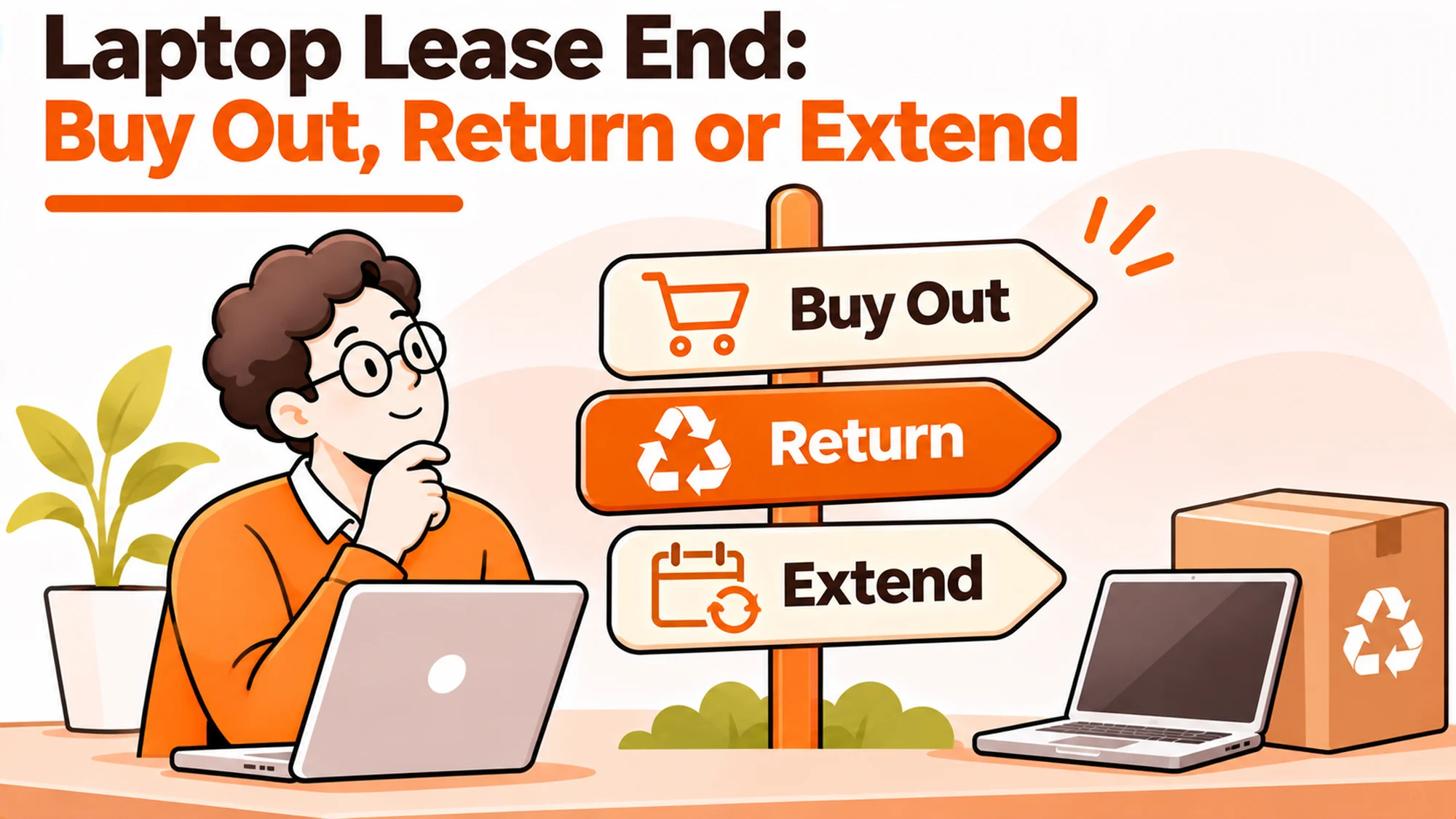
The three routes and what each really costs
Every agreement offers some version of these. The prices are rarely comparable as presented.
Return
Looks free and is not. You pay for collection, for any condition charges assessed against the agreement’s standard, and for holdover rent on anything late. On a distributed estate you also pay for devices that never arrive, at a price the contract sets.
Best tools for Device Management
Buy
A stated figure, sometimes fair market value and sometimes a nominal amount depending on how the lease was written. Worth it when the machine has useful life left and you have somewhere for it to go. Pointless when it is four years old and tired.
Extend
Useful when a refresh is already planned but not yet funded, or when a team is mid project. Check the rate, because holdover pricing is sometimes higher than the original rather than lower.
The route that gets overlooked is buying out a good machine and redeploying it to the next joiner. That is a laptop you do not purchase, and it is frequently the cheapest line available.
Why laptop lease buyout options are a per device decision
Fleet wide decisions are easier to make and usually wrong, because the fleet is not uniform.
Four things vary machine by machine. Age within the term, since devices were added at different times. Condition, which depends on the holder more than on the model. Holder tenure, because buying out a machine held by somebody who has just joined is different from one held by a leaver. And spec against current need, since the machine that was adequate three years ago may not be now.
A simple sort handles it. Good condition plus a long tenured holder plus adequate specification means buy. Rough condition or a stale specification means return. Anything held by somebody leaving within the quarter means return, because you will have to recover it either way.
That sort takes an afternoon on a two hundred device fleet and routinely beats the fleet wide answer by a visible margin.
Start with recovery, not with the finance
Most of the cost at end of term comes from logistics rather than from the buyout price, and the logistics have a long lead time.
At 90 days, reconcile the register. Sample twenty rows and confirm each device exists and the named holder still works for you. Teams running this for the first time typically find between two and six discrepancies in twenty, which scales into a real problem on a large fleet.
At 60 days, confirm addresses. People move, and the address captured at issue is often stale. Ask the holder directly rather than trusting the HR record.
At 45 days, send packaging and book collections. Asking somebody to find a box and arrange a courier is where the process stalls, and nothing happens to them if it does.
At 30 days, escalate the stragglers and decide which devices you will buy out rather than chase, because a buyout is sometimes cheaper than a contested recovery.
Deal with the data before the hardware moves
Returned machines go to somebody else. Whatever is on them travels unless something removed it.
Ask your lessor who performs the erasure, against what standard, and what evidence you receive per device by serial number. A certificate covering a batch processed on a date tells an auditor nothing about the one machine they are asking about, and that is always the machine that held something sensitive.
NIST Special Publication 800-88 on media sanitization sets out the recognised approaches to media sanitization and is a reasonable standard to ask a supplier to name in writing. Where a drive fails verification it should be physically destroyed rather than passed on, and you should receive something saying so.
Where you buy a machine out and dispose of it yourself rather than returning it, the disposal route ”
is yours to choose. The EPA lists certified electronics recyclers and the certifications they hold, which is a quicker filter than asking each firm what it is accredited to do.
On machines encrypted from first boot where the key is destroyed, the data is unreadable without overwriting anything. That is faster and widely accepted, and it depends entirely on encryption having been enabled at enrolment, which is a decision made years before the lease ends.
Who can help, and where each falls short
Disclosure: RemoAsset, named below, is owned by the same people who publish HROpsLab. It is described with its limitations stated, on the same terms as every other supplier. This site takes no vendor money and sells no placements.
Three kinds of supplier appear at end of term, and they solve different parts.
The lessor’s own return service. Convenient and priced into the agreement. The conflict is obvious: the party assessing condition is the party charging for it. Ask for the standard in writing and for photographs at collection.
Independent ITAD firms. Strong on erasure, certification and resale value, and genuinely useful if you are buying machines out and disposing of them separately. They are not usually set up to collect single devices from homes in several countries.
Lifecycle providers. Workwize, Firstbase, Fleet, Allwhere, GroWrk and Esevel operate here. RemoAsset publishes a subscription from 1,499 dollars a year, states coverage of 80 or more countries, and handles collection from individual leavers across markets, which is the part that usually fails.
Where it struggles. It will not negotiate your buyout price or assess condition against your lessor’s schedule, because that is a commercial matter between you and the finance company. It also publishes no per device rate, so a one off end of term recovery cannot be modelled from the published subscription pricing without asking.
The decision table
| Situation | Scale | Setup | Primary pain | Recommended starting point |
|---|---|---|---|---|
| Good condition, long tenured holder | Per device | Machine in daily use | Replacing something that works | Buy out and keep it in service |
| Rough condition or stale spec | Per device | Aging hardware | Support cost rising | Return it and refresh |
| Holder leaving this quarter | Per device | Exit in progress | Recovery either way | Return, and start collection on the last working day |
| Refresh planned but not funded | Fleet | Budget timing | Cash in this period | Extend, after checking the holdover rate |
| Devices scattered, holders unknown | Any | Register unreliable | Cannot return what you cannot find | Reconcile now, then use a retrieval service |
What getting this wrong costs
The visible cost is the buyout figure, and it is the number everybody negotiates.
The first hidden cost is holdover rent. Agreements commonly continue at the full rate, sometimes higher, until every device is back. A fleet that trickles in over two months pays two extra months on the whole agreement, not on the stragglers.
The second is condition charges against a standard nobody read. These are assessed by the party collecting them, which is why the standard and photographs at collection matter more than the rate ever did.
The third is the machine nobody can find. The contract prices it, not the market, and on a distributed estate there is always more than one.
If your lease ended in sixty days, how many of your devices could you physically produce?
Making the next term easier than this one
Most of the pain at end of term is created at the start, by signing a long agreement without a recovery plan.
Three things make the next one easier. Keep a six field register with a named owner and sample it quarterly, so the end of term reconciliation is a check rather than a reconstruction. Agree the condition standard and the buyout basis in writing when you sign, not when you exit. And decide in advance who physically collects devices from people in each market you hire in.
Where that last one has no answer, a provider handling managed devices and collection across countries is solving the part that actually costs money, rather than the part that gets negotiated.
Our guides to IT equipment leasing and unreturned equipment cover each side of this.
See how storage and redeployment between holders works, or read our guide to planning a hardware refresh cycle.
Frequently asked questions
Should we buy out a laptop at the end of a lease?
Device by device rather than fleet wide. A machine in good condition, held by somebody who is staying, with a specification that still suits the work, is often worth buying because you then avoid purchasing a replacement. One that is tired, outdated or held by somebody leaving should go back. A simple sort on condition, holder tenure and specification takes an afternoon and usually beats the fleet wide answer.
What does it cost to return leased laptops?
More than the zero it appears to be. You pay for collection, for condition charges assessed against the agreement’s standard, and for holdover rent on anything returned late, which commonly continues at the full rate across the whole agreement rather than just the stragglers. On distributed teams you also pay a contract set price for devices nobody can locate, and there is usually more than one.
When should we start the end of term process?
Ninety days before the term ends. Reconcile the register at 90 days by sampling twenty rows, confirm holder addresses at 60, send packaging and book collections at 45, and escalate stragglers at 30. Thirty days is not enough on a distributed fleet because devices are in homes across several countries, some holders have left and some addresses captured at issue are already stale.
Is fair market value or a nominal buyout better?
It depends on what the lease was written to do rather than on which sounds cheaper. A nominal buyout usually means you paid more during the term, and it often changes the tax and accounting treatment because the agreement looks more like a financed purchase. Fair market value keeps the monthly cost lower and leaves the end price uncertain. Confirm the treatment of either with your accountant before signing.
Who wipes the data when leased machines go back?
The lessor or their processor, which means erasure happens outside your control by design. Ask who performs it, against what standard, and what evidence you receive per device by serial number. NIST Special Publication 800-88 sets out the recognised approaches to media sanitization and is reasonable to name in the agreement. Ask what happens when a drive fails verification, because those should be destroyed rather than passed on.
Can we extend a laptop lease instead?
Usually, and it is the right answer when a refresh is planned but not funded this period, or when a team is mid project and a hardware change would be disruptive. Check the holdover rate before assuming it helps, because extension pricing is sometimes higher than the original rate rather than lower, since the lessor priced the first term around getting the asset back on a known date.
What if we cannot find some of the devices?
You will pay the contract price for them, which is set by the agreement rather than by what the machine is worth, so the gap can be substantial on older hardware. Decide early which devices you will chase and which you will simply buy out, because a contested recovery across borders sometimes costs more than the buyout. Then close them in the register with a stated approval threshold so it stops carrying fiction.