
TL;DR
- The core decision: You're choosing between optimizing a screening bottleneck or rethinking your entire talent architecture.
- When staying put is right: Paradox (Olivia) remains top tier if your only goal is automating interviews for thousands of hourly roles.
- The compliance reality: Any AI tool scoring humans must survive regulatory scrutiny. An opaque algorithm is a massive legal liability.
- How the market splits: Vendors divide sharply into narrow workflow automation, deep analytical layers or massive enterprise talent platforms.
- A simple decision rule: If you can't explain exactly why the machine rejected a candidate, don't buy the software.
- The outcome to expect: Moving away from a basic chatbot requires complex implementation work but yields actual strategic talent intelligence.
| Tool | Rating | Pricing | Trial | Best for |
|---|---|---|---|---|
| Paradox (Olivia) (your current tool) | 4.6/5 | Pricing on request | Free demo available | Best AI recruiting assistant for candidate screening |
| Eightfold AI | 4.7/5 | Pricing on request | Free demo available | Best AI platform for talent intelligence |
| HireVue | 4.5/5 | Pricing on request | Free demo available | Best AI video interviewing and assessment platform |
| Textio | 4.5/5 | Pricing on request | Free demo available | Best AI for bias-free job descriptions and feedback |
| Leena AI | 4.4/5 | Pricing on request | Free demo available | Best AI chatbot for HR helpdesk automation |
| SeekOut | 4.4/5 | Pricing on request | Free demo available | Best AI for diverse talent sourcing |
| Visier | 4.5/5 | Pricing on request | Free demo available | Best AI platform for people analytics |
| Beamery | 4.3/5 | Pricing on request | Free demo available | Best AI for skills-based talent lifecycle management |
| Phenom | 4.4/5 | Pricing on request | Free demo available | Best AI-powered talent experience platform |
| Kira Systems | 4.1/5 | Pricing on request | Free demo available | Best AI for contract and document review in HR |
The Demo Illusion
You're sitting in a conference room on a Thursday afternoon. The vendor on the screen is showing you how their AI can screen a thousand applicants in ten seconds. The user interface looks beautiful. The sales engineer clicks a button. A neatly ordered shortlist of perfect candidates appears. Your hiring managers would love this. They're tired of drowning in unqualified CVs.
Then you ask the obvious question. You ask how the algorithm decided that candidate number six was not good enough. The sales engineer smiles. They use the phrase 'proprietary machine learning' to change the subject. They don't know. Nobody in that room knows. And that's a terrifying position for a talent leader to be in.
The buying question is no longer just whether the software works. Tools that score or screen candidates are heavily regulated. New York City requires an annual independent bias audit of automated employment decision tools with notice to candidates. The EU AI Act treats employment-related AI as high risk. So the buying question isn't only does it work, it's whether you can legally defend the decisions it makes. You must always seek your own legal advice regarding your specific jurisdiction. The real issue isn't whether a tool can automate your top of funnel, it's whether you can legally defend the decisions it makes on your behalf.
Best tools for AI HR Tools
When Paradox (Olivia) Stays
It's entirely possible your current setup is genuinely fine. If you hire hundreds of retail staff a month, a conversational SMS assistant works. Paradox (Olivia) shines when screening thousands of applicants against role-specific knockout questions. It auto-declines the bad fits. It books the good ones directly by accessing calendars. That alone eliminates the back-and-forth coordination that consumes 30 – 40% of a typical recruiter's day.
Then you notice the friction. You try to use it for senior engineering roles. Highly specialized candidates get frustrated talking to a chatbot. They want a human conversation. The candidate experience scores start dropping for your salaried positions.
Next comes the real risk. You ask the bot to evaluate qualitative answers. But an SMS bot isn't a deep learning model. You start worrying about how it handles non-traditional backgrounds. You wonder if it's inadvertently screening out qualified diverse talent based on rigid keyword rules.
The edge case arrives when a rejected candidate demands to know why they failed the screen. If the only answer is that the system automatically said no, you've a major problem. You suddenly realize you need genuine talent intelligence.
The Midnight Questions
Could I explain a specific rejection to a candidate? If a candidate asks why the AI screened them out, you need a precise answer based on skills or explicit criteria. "The algorithm scored you poorly" is a fast track to a lawsuit.
What does an independent bias audit actually involve? It means handing your hiring data to a third party to test for adverse impact. If your vendor can't provide the raw data required for this testing, you'll fail.
Does this tool reduce recruiter bias or just automate it? Training an AI on your historical hiring data means it will learn your past mistakes. You need a tool that evaluates demonstrated capability instead of mimicking your previous hiring managers.
Are we solving a volume problem or a quality problem? Chatbots are great for volume. They do nothing for quality. Be honest about whether your recruiters need more time or better applicant data.
Will hiring managers actually trust the shortlist? You can buy the smartest matching engine in the world. But if managers don't understand how it works, they will ignore it and go back to reading CVs manually.
How the Market Actually Splits
The vendor space breaks down into three distinct categories. You need to know what you're actually buying before signing a contract. Every single vendor on this list offers pricing on request. Don't guess a contract minimum based on generic software pricing, because actual costs depend entirely on your specific headcount.
The first category is the point solution. These tools do one specific thing exceptionally well. Think of automated video interviewing or contract review. They sit at a specific bottleneck in your funnel and clear it. They're right when you've a painful, isolated process problem. They fail completely when you expect them to fix your wider talent strategy.
Next is the broad platform. These are massive enterprise systems designed to handle the entire talent lifecycle. They connect external recruiting with internal mobility. They're perfect when you've thousands of employees and want a unified skills taxonomy. They fail when a small team tries to implement them without sufficient data.
Finally, you've the analytics layer. These tools sit on top of your existing systems. They pull data from your ATS or payroll platforms to predict flight risks. They're right when your leadership demands strategic workforce planning. But they struggle if your underlying HR data is incomplete.
Diagnose Your Reality
How many hires do you actually make a month? High-volume tools make zero sense if you hire ten specialists a quarter. Be realistic about your scale.
Where do your recruiters spend their most frustrating hours? If it's endless scheduling, you might just need better calendar automation. If it's hunting for niche skills, you need deep sourcing intelligence.
How clean is your existing employee data? AI platforms need data to learn. If your performance reviews are a mess, a smart algorithm will only amplify the confusion.
What is your internal mobility strategy? If you exclusively hire from the outside, a talent marketplace is wasted money. You need a culture that supports internal transfers first.
Who owns the compliance risk in your organization? Before buying any tool that scores humans, you must know exactly who will sign off on the legal risk. Get them in the room early.
The Nine Alternatives, Reviewed
Eightfold AI
This is the best AI platform for talent intelligence. It's built for large enterprises (1,000+ employees) wanting skills-based hiring across both internal and external candidates. It infers skills from career trajectories rather than relying on keyword overlap. The weakness is its high cost and enterprise-only pricing model. It also requires significant organizational data to provide optimal recommendations.
HireVue
This platform scales high-volume screening dramatically. It's best for organizations making 500+ hires a year that need asynchronous video interviews. Machine learning models score candidate responses on structured competency dimensions. But algorithmic assessment faces ongoing regulatory scrutiny. The testing format can also feel impersonal for candidates completing it voluntarily.
Textio
Textio is the best AI for bias-free job descriptions and manager feedback. It scans postings in real time for gendered or exclusionary language using a model trained on 1 billion+ job application outcomes. It measurably improves job posting quality for teams of 200+ employees. It isn't a full recruiting platform. Its return on investment is mostly visible in high-volume hiring environments.
Leena AI
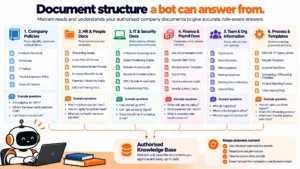
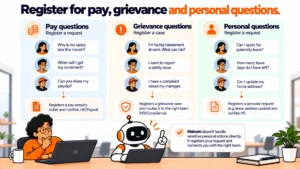
This is the best AI chatbot for HR helpdesk automation. It drastically reduces ticket volume by answering routine queries about policies or leave requests. It's trained directly on your specific HR documentation rather than generic knowledge bases. It works best at companies with over 200 employees. However, it requires exceptionally clean HR policy documentation to train effectively.
SeekOut
SeekOut is the best AI for diverse talent sourcing. It aggregates profiles from GitHub, patents or academic publications to surface hidden technical candidates. It offers explicit demographic diversity filters with proper legal compliance controls. Data quality varies heavily by market and role type. It can require significant training for your sourcing team to adopt fully.
Visier
This is the best AI platform for people analytics. It provides native connectors to 150+ platforms to normalize your workforce data. Machine learning models identify employees at highest risk of leaving 3 – 6 months before resignation. It primarily targets the enterprise market with a correspondingly high cost. It requires good underlying HRIS data quality to function well.
Beamery
Beamery offers the best AI for skills-based talent lifecycle management. It uses a proprietary ontology mapping 20,000+ skills to roles and career paths. It matches internal and external candidates using a unified talent profile. Pricing is positioned purely at enterprise scale. Implementation is highly complex for large organizations attempting to shift to skills-based practices.
Phenom
This is the best AI-powered talent experience platform. It dynamically personalizes career sites based on visitor browsing behavior or career history. It offers excellent employee career pathing to reduce the "I didn't know that opportunity existed" attrition problem. It delivers the best value at enterprise scale. Implementation is often too complex for smaller teams to manage effectively.
Kira Systems
Kira Systems is the best AI for contract and document review in HR. It extracts 1,000+ clause types from employment contracts to flag multi-jurisdiction compliance issues. It reduces compliance review times from weeks to a matter of hours. It's a highly niche use case rather than a general HR platform. It requires actual legal expertise to configure properly.
The Decision Table
| Situation | Scale | Setup | Primary Pain | Recommended Starting Point |
|---|---|---|---|---|
| Screening thousands of hourly workers | 100+ hires/mo | Disconnected ATS | Endless scheduling coordination | Paradox (Olivia) |
| Sourcing hard-to-find specialist software engineers | 50 – 5,000 emp. | Basic LinkedIn Recruiter | Invisible diverse talent pools | SeekOut |
| Moving to a unified skills-based hiring model | 1,000+ emp. | Siloed HR tech stack | Poor internal mobility visibility | Eightfold AI |
| Drowning in basic HR policy questions | 200+ emp. | Slack/Teams heavy | High helpdesk ticket volume | Leena AI |
| Processing hundreds of global employment contracts | Large enterprise | Complex legal requirements | Slow manual document review | Kira Systems |
| Predicting employee flight risk precisely | 1,000+ emp. | Messy HRIS data | Unexpected top performer attrition | Visier |
| Scaling top of funnel candidate assessment | 500+ hires/yr | High volume intake | Inconsistent manual screening | HireVue |
The licence fee is the smallest cost of a bad AI purchase. The real damage happens quietly. It looks like a shortlist that hiring managers slowly stop trusting because the matching logic makes no sense. They smile on the vendor calls. Then they go back to sourcing their own candidates on LinkedIn. You pay for software nobody actually uses.
It also looks like a rejected candidate you can't give a straight answer to. When an applicant asks why they failed the automated screen, saying the computer rejected them isn't an acceptable response. If your model is simply trained on your historical data, it might just be replicating the past bias of your worst managers at scale. You will eventually face an external bias audit you can't evidence.
You're buying a tool to make decisions about human livelihoods. If a regulator walked into your office tomorrow and demanded to see exactly how your automated system filters applicants, could you show them?
When you're ready to move beyond a basic chatbot setup, the evaluation process gets significantly harder. You aren't just comparing feature lists anymore. You're trying to figure out which vendor is actually telling the truth about their data privacy standards. The sales pitches all sound identical.
This is exactly why independent evaluation matters. The HROpsLab editorial team spends hundreds of hours tearing down these tools so you don't have to. We test the claims. We talk to the actual users. We dig into the compliance realities. We look past the shiny user interfaces to see how these platforms handle messy workforce data.
HROpsLab is a review publication. We don't sell software. We don't take referral fees for ranking vendors. We just want to give talent leaders the unvarnished truth about what works. When you need to make a strategic bet on your next talent platform, we've the research to back you up.
Frequently Asked Questions
Does the EU AI Act apply to basic recruiting chatbots?
The EU AI Act categorizes AI systems used in employment or worker management as high risk. This generally includes tools used for recruitment or evaluating candidates. You must consult your legal counsel to determine exactly how this impacts your specific technology stack. A basic conversational bot might face different scrutiny than a tool that actively scores applicants.
Can we just use our existing ATS for talent intelligence?
Most traditional applicant tracking systems were built as digital filing cabinets. They rely heavily on simple keyword matching. If a candidate spells a framework differently, they disappear from your search. Dedicated talent intelligence platforms infer skills from context. This is exactly why organizations eventually outgrow their basic ATS search bars.
What happens if we fail a New York City bias audit?
New York City Local Law 144 requires employers using automated employment decision tools to subject them to an independent bias audit. Failing to comply can result in severe civil penalties. More importantly, it creates a massive reputational risk. Candidates must be notified that an automated tool is being used. They know exactly what to challenge if they feel unfairly rejected. You must take your own legal advice on local compliance.
Is skills-based hiring just a buzzword?
It's only a buzzword if you don't have the data to back it up. True skills-based hiring requires mapping thousands of distinct competencies to actual roles. Tools like Beamery map 20,000+ skills to career paths. If you try to do this manually with spreadsheets, it will fail. You need a proprietary ontology to make it work at scale.
Will an AI sourcing tool replace our recruiters?
No. It will just replace the manual Boolean search string. Great recruiters spend their time building relationships or negotiating offers. AI tools handle the top of funnel discovery. Your recruiters won't lose their jobs to an algorithm, but they'll likely lose their jobs to another recruiter who knows how to use one.
How much data do people analytics tools actually need?
Predictive models are useless without historical depth. If you want Visier to accurately predict employee flight risk 3 – 6 months out, it needs access to clean historical data across your ATS and payroll systems. If your company deletes performance data annually, a predictive tool won't save you. You must fix your data hygiene first.
Stop guessing and start building a talent stack you can defend.