
TL;DR
- The Core Decision: You must choose between fixing your internal HR helpdesk ticket volume or solving deeper hiring pipeline problems.
- When Staying Put Is Right: Keep Leena AI if your primary bottleneck is answering routine policy questions for a mid-sized workforce.
- The Reality of AI Hiring: Any tool that scores or filters candidates operates in a highly regulated space requiring strict legal auditability.
- Market Segmentation: Vendors either automate specific administrative tasks or attempt to restructure your entire talent intelligence pipeline.
- A Simple Decision Rule: Never buy a screening algorithm unless you can explain its rejection criteria to a candidate.
- The Outcome: The right choice reduces manual coordination time without creating unexplainable compliance liabilities.
| Tool | Rating | Pricing | Trial | Best for |
|---|---|---|---|---|
| Leena AI (your current tool) | 4.4/5 | Pricing on request | Free demo available | Best AI chatbot for HR helpdesk automation |
| Eightfold AI | 4.7/5 | Pricing on request | Free demo available | Best AI platform for talent intelligence |
| HireVue | 4.5/5 | Pricing on request | Free demo available | Best AI video interviewing and assessment platform |
| Paradox (Olivia) | 4.6/5 | Pricing on request | Free demo available | Best AI recruiting assistant for candidate screening |
| Textio | 4.5/5 | Pricing on request | Free demo available | Best AI for bias-free job descriptions and feedback |
| SeekOut | 4.4/5 | Pricing on request | Free demo available | Best AI for diverse talent sourcing |
| Visier | 4.5/5 | Pricing on request | Free demo available | Best AI platform for people analytics |
| Beamery | 4.3/5 | Pricing on request | Free demo available | Best AI for skills-based talent lifecycle management |
| Phenom | 4.4/5 | Pricing on request | Free demo available | Best AI-powered talent experience platform |
| Kira Systems | 4.1/5 | Pricing on request | Free demo available | Best AI for contract and document review in HR |
The Black Box Problem
You're sitting in a vendor demo. The sales rep clicks to a slide showing a massive accuracy percentage for their candidate screening algorithm. You ask how they measured that specific number. The rep smiles and talks about proprietary data models or deep learning. They don't actually answer your question.
This happens every day in talent acquisition. We treat buying AI like buying a better spreadsheet. But employment tools are heavily regulated. New York City requires an annual independent bias audit of automated employment decision tools, complete with advance notice to candidates. The EU AI Act places employment systems in the high risk category. These laws demand transparency, meaning a black box is a legal liability rather than a shortcut. You must secure independent legal advice for your specific jurisdiction before deploying anything.
A hiring manager will quickly ignore a ranked shortlist if they can't understand why a candidate scored highly. A rejected applicant will eventually ask for the specific reasons behind their declining application. If your only answer is that the computer said so, you've a major problem. The real issue isn't whether the software speeds up your workflow, it's whether you can defend its decisions under legal scrutiny.
Best tools for AI HR Tools
When Leena AI Is Enough
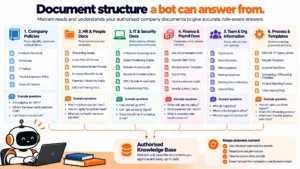
Sometimes your current setup is genuinely fine. Your company recently passed the 200 employee mark, and your HR team spends half their day copying and pasting the exact same answers about annual leave policies into Slack. In this specific scenario, Leena AI does exactly what you need by automating routine helpdesk triage.
Then the friction starts. You want the bot to answer complex questions about custom benefits packages. But the bot gives vague answers because your underlying policy documents are messy or completely outdated. And the system will only be as good as the internal documentation you feed it.
Real risk emerges when you try to stretch a basic helpdesk chatbot into a comprehensive talent management system. It was built for conversational administrative triage. It wasn't built to assess candidate skills or run predictive workforce analytics.
The edge case is when you've perfectly clean policy documentation and only need to process administrative requests. You just need employees to submit leave requests and receive approvals without making them log into a separate HR portal. If that's your only goal, migrating away from Leena AI is an expensive waste of time.
Five 11pm Questions
Can I explain a specific rejection to the candidate? If the system auto-declines an applicant, you need to know exactly which criteria triggered the rejection. A vague machine learning score won't hold up when a candidate demands concrete answers about their application.
What does an independent bias audit actually involve? It involves a qualified third party examining your selection rates across different demographic groups. They look for statistically significant differences in how the tool scores candidates, meaning you can't grade your own homework here.
Are we automating a bad process? Applying artificial intelligence to a fundamentally biased screening process just scales up your existing bias. You have to fix your underlying hiring criteria before you introduce high-speed automation.
Will hiring managers actually trust the recommendations? Managers completely ignore shortlists when the software surfaces candidates who lack required technical credentials. The model has to understand the actual technical requirements of the job rather than matching simple keywords.
Where does the legal liability sit? Vendors build the software, but you make the final hiring decisions. If the tool discriminates against a protected class, the regulatory fines and reputational damage will fall entirely on your company.
How This Market Splits
This sector divides into three distinct categories. You need to know exactly which one you're buying.
First, you've the point solutions. These handle one specific step brilliantly. Think of an automated scheduling tool or a contract review system. They're perfect when you've a single glaring bottleneck in an otherwise functional process. They fail when you expect them to fix your broader talent strategy.
Next are the broad platforms. These systems try to connect internal mobility with external recruiting. They map thousands of skills across your entire workforce. They're right for large enterprises trying to shift to skills-based hiring. But they fall completely flat if your underlying data is full of errors.
Finally, there's the analytics layer. These platforms sit on top of your existing HRIS or applicant tracking system. They pull data from multiple sources to predict things like employee attrition. They're incredibly powerful for workforce planning. But they require pristine database inputs to generate accurate predictions.
Five Diagnostic Questions
Do you spend more time answering routine questions or sourcing technical talent? If your HR team is drowning in payroll queries, a helpdesk bot is appropriate. If you can't find qualified software engineers, you need a dedicated sourcing tool.
How many hires do you actually make every year? A system built to screen thousands of retail applications will heavily frustrate a recruiter trying to hire three senior executives. You must match the tool to your actual hiring volume.
Are you prepared to clean your internal data? These systems require vast amounts of structured information to work properly. If your job descriptions are outdated, an advanced matching algorithm will produce terrible candidate recommendations.
Can your legal team properly review the compliance features? You need lawyers who deeply understand employment law to assess demographic filtering features. Buying software with built-in diversity controls requires strict legal oversight.
Do you want to fix the candidate experience or internal mobility? External career sites require vastly different features than internal talent marketplaces. Pick your primary priority before you look at any new software.
The Nine Alternatives, Reviewed
Every single vendor on this list quotes pricing on request, and they all offer free demos to test the software. Don't guess contract minimums before getting on a scoping call.
Eightfold AI
This talent intelligence platform is best for large enterprises transitioning toward skills-based hiring. It earns a place by using deep learning to infer capabilities from project history, offering explicit diversity filter controls to build representative pipelines. But it genuinely struggles in smaller organizations. The enterprise-only pricing and massive data requirements make it entirely unsuitable for mid-market teams.
HireVue
This platform is best for scaling high-volume candidate screening dramatically. It earns its spot by letting talent teams screen applicants using asynchronous video interviews and AI scoring models. But its algorithmic assessment faces ongoing regulatory scrutiny. Many candidates find the automated asynchronous video format deeply impersonal.
Paradox (Olivia)
This conversational assistant is best for high-volume recruiting teams making hundreds of hires each month. It earns a place by accessing calendars to book interviews directly, eliminating the coordination work that normally consumes 30 to 40 percent of a typical recruiter's day. But it genuinely struggles with highly specialized executive searches. The automated chat interface lacks the nuance required to recruit senior candidates.
Textio
This tool is best for systematically removing bias from your written materials. It earns a place by suggesting language alternatives based on a model trained on over 1 billion job application outcomes, identifying patterns in manager-written feedback that correlate with gender or age bias. But it isn't a full recruiting platform. Teams expecting an end-to-end applicant tracking system will be highly disappointed.
SeekOut
This sourcing tool is best for finding hard-to-reach technical talent and building diverse pipelines. It earns a place by aggregating profiles from GitHub and professional networks to enable precise technical skills searches. But candidate data quality varies wildly depending on the specific market or role type. New recruiters require significant training to use the advanced Boolean search parameters effectively.
Visier
This platform is best for deep people analytics and strategic workforce planning. It earns its spot by providing native connectors to 150 HR systems and using machine learning to identify employees at high risk of resigning months in advance. But it requires incredibly good underlying HRIS data quality to function effectively. The high pricing limits its viability entirely to large enterprise budgets.
Beamery
This system is best for connecting external recruiting with internal talent mobility. It earns a place by mapping over 20,000 skills to roles and combining internal performance data with external career signals into a unified talent profile. But the implementation process is highly complex for large organizations. The enterprise pricing puts it completely out of reach for smaller operations.
Phenom
This platform is best for personalizing both candidate career sites and internal employee experiences. It earns its place by dynamically adjusting job recommendations based on browsing behavior and offering AI career pathing for existing employees. But you only see real value at a massive enterprise scale. Implementation is far too complex for smaller administrative teams to manage properly.
Kira Systems
This tool is best for automating complex employment contract and document reviews. It earns a place by extracting over 1,000 specific clause types from legal documents and flagging non-compliant clauses across multiple jurisdictions simultaneously. But it represents a highly niche legal use case rather than a general HR platform. You must have dedicated legal expertise on staff to configure the system effectively.
The Decision Table
| Situation | Scale | Setup | Primary Pain | Recommended Starting Point |
|---|---|---|---|---|
| Manual scheduling delays | 100+ hires/mo | Process-heavy ATS | 40% of day lost to calendars | Paradox (Olivia) |
| HR drowned in leave questions | 200+ employees | Clean policy docs | Slack helpdesk overload | Leena AI |
| High attrition of top talent | 1,000+ employees | Fragmented HRIS | Unpredictable resignations | Visier |
| Poor interview shortlist quality | 1,000+ employees | High applicant volume | Too many unqualified screens | HireVue |
| Slow technical hiring | 50 – 5,000 employees | Basic LinkedIn seat | Invisible niche candidates | SeekOut |
| Biased manager feedback | 200+ employees | High-volume hiring | Exclusionary language | Textio |
| Complex compliance reviews | Global enterprise | Large legal team | Slow contract processing | Kira Systems |
The Real Cost of Getting This Wrong
The financial cost of a software licence is the smallest risk you face. The real cost hides in second-order effects. Imagine a hiring manager who receives five consecutive shortlists full of unqualified candidates. They will quietly stop trusting your talent acquisition team entirely. They will start running their own shadow recruiting processes, meaning your expensive AI tool becomes shelfware within six months.
Consider the rejected candidate you can't give a specific reason to. When your screening algorithm auto-declines an applicant with ten years of relevant experience, they might complain publicly. If your machine learning model was trained entirely on your own historical hiring data, it has likely learned your past biases. You end up automating the exact discrimination you were trying to eliminate.
Finally, think about the regulatory audit you can't evidence. Regulators will ask for clear documentation proving your algorithm doesn't discriminate based on protected characteristics. If your vendor considers their internal weighting system a trade secret, you've got a massive compliance failure on your hands. Are you prepared to explain a black box decision to a judge?
Moving Beyond the Basics
When you finally outgrow manual scheduling or basic chatbots, the vendor market feels overwhelming. Every sales deck promises to revolutionize your talent pipeline. Every marketing site uses the exact same jargon about artificial intelligence, so you'll need to dig deeper.
Cutting through this noise requires highly objective data. You need to see how these tools perform in actual enterprise environments rather than controlled product demonstrations. You need to know which platforms integrate cleanly with your existing systems without requiring massive IT support.
HROpsLab provides independent analysis of HR technology. We publish detailed reviews based on real practitioner experiences from the field. We don't sell software. We give you the technical clarity required to make an informed buying decision.
Frequently Asked Questions
Do these AI tools replace human recruiters?
No system on the market today completely replaces a human recruiter. They automate specific high-volume administrative tasks like interview scheduling or initial resume screening. The ultimate goal is to free up recruiter time for actual relationship building with senior candidates. A machine can't convince a highly qualified, passive executive candidate to leave their current secure role for a new opportunity. You still need humans to close the deal.
Are AI screening tools legal to use?
The legality of automated employment tools depends entirely on your specific jurisdiction. New York City explicitly requires an annual independent bias audit of automated employment decision tools, with proper notice given to candidates. The EU AI Act similarly classifies employment-related systems as high risk. You must obtain independent legal counsel to ensure your planned deployment meets all local compliance obligations before signing any vendor contract.
How do skills-based matching platforms work?
These platforms analyze a massive volume of internal and external career data to understand how different capabilities relate to one another. They infer candidate skills based on their detailed project history or academic publications. This deep learning approach allows the software to match people to roles based on demonstrated capability rather than relying on an exact keyword overlap on a submitted resume.
What is the difference between Leena AI and Paradox?
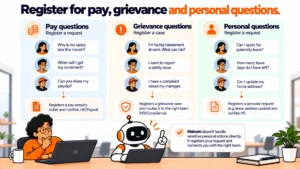
Leena AI primarily focuses on answering internal HR policy questions or leave requests for existing employees. It acts as an internal helpdesk assistant deployed across channels like Slack or email. Paradox targets the external recruiting process by communicating directly with new applicants. It uses SMS or WhatsApp to schedule interviews and conduct initial pre-screening conversations with candidates who haven't yet joined the company.
How accurate are video interview scoring algorithms?
Accuracy claims from software vendors are notoriously difficult to verify independently without seeing the underlying model. These systems score candidates based on structured competency dimensions or neuroscience-based cognitive games. But algorithms trained entirely on historical hiring data often replicate historical human biases. You should always treat algorithmic scores as a single data point rather than a final, unquestionable hiring decision.
Why do these vendors hide their software pricing?
Enterprise software pricing depends heavily on your specific employee headcount and custom feature requirements. Every vendor on this list quotes pricing on request because they require a scoping call to determine integration complexity. The financial cost of implementation for large organizations often exceeds the annual software licence fee itself, making standardized pricing tiers completely inaccurate for complex deployments.
Can we train an AI model on our own internal data?
You can train models on your internal data, but you need a massive volume of clean information to get statistically useful results. If your job descriptions are vague or your past performance reviews are heavily biased, the AI will immediately learn and replicate those exact flaws. Small companies simply don't generate enough structured data to train effective proprietary talent models.
Clear tech advice for the modern HR professional.