
TL;DR
- The real shift: AI doesn't delete HR work, it changes HR work from producing to checking, and checking is a different and quieter cost.
- When to wait: If you can't name the person who would catch a bad output, you're not ready to hand the task over.
- What must be true: Volume, reversibility, and consequence have to be assessed per task, not per tool.
- How the options split: Drafting, triage, and analysis are different jobs and need different guardrails.
- Decision rule: Hand over the task where the worst plausible mistake is cheap and obvious.
- What changes for the team: Headcount plans built on the assumption that work disappears will quietly overload the people left behind.
Priya runs talent acquisition for a 1,400-person engineering firm. Last Tuesday she asked her new AI tool to rewrite a senior backend job description for a Singapore hub. It produced clean copy in under a minute. She shipped it to the hiring manager, posted it, and moved on. Three days later the manager flagged that the seniority bar had drifted down, the compensation band referenced had disappeared, and the language wouldn't clear internal counsel in two of the countries they were hiring in. The JD was pulled. A new one took most of a day to write by hand. The whole exercise ended up slower than if she had written it herself the first time.
This is the pattern that nobody puts in the deck. The tool didn't save Priya the work. It moved the work from the first hour to the forty-eighth, and it changed the kind of work. She used to draft. Now she review, and review is a less visible, more tiring activity that doesn't show up on any plan.
But the real issue isn't whether AI can do the task. It's what the team is now doing with the hours that drafting used to eat, and whether anyone has planned for that.
Best tools for AI in the Workplace
When You Do Not Need to Act on This Yet
There's an honest version of "not now" and it's worth saying out loud before anything else.
Nothing is actually breaking. If your HR function is small, your hiring volume is steady, and your current process produces decisions you can defend in a room, you don't have an automation problem. You have a process problem that no tool will fix. Picture a sixty-person manufacturer with one HR manager and a Thursday payroll contractor. They hire fourteen people a year and the manager writes each JD by editing the last one. A tool saves her forty minutes a month and hands her a review step she didn't have before. Spending a quarter reworking task assignments there is a distraction. Wait.
Friction has started but it's still yours to control. Now picture a services business at around three hundred people with one recruiter and one generalist. Policy questions pile up in a shared inbox, JD turnaround has slipped to nine days because drafting queues behind payroll week, and the screening backlog gets cleared on Sunday nights by someone who won't say so. The case is real and controllable. A small pilot on a single task, with a clear owner for the output, is the right shape. The tell: the backlog sits in one place and you can point at it. You're not behind. You're early, and early is the cheapest time to pick badly and recover.
The rules make the review heavier, not the work smaller. If you're in a regulated environment, or you operate across borders and the rules differ in each, the case becomes sharper. Final decisions on hiring, pay and termination sit in a higher risk band under the EU AI Act Annex III classification for employment, and Illinois HB 3773, in effect since 1 January 2026, requires notice when AI is used in employment decisions. A people director with staff in Chicago and Dublin finds one screening step needs two different explanations, both written before anyone asks. You can still automate. The review is heavier and the documentation burden real, so take local advice before you scale anything.
The tool is bought and no first task has been picked. The edge case is the function that has bought the tool, has not picked a first task, and is starting to lose patience with itself. Nine months in, the licence is mostly unused, someone in finance has begun asking what it's for, and the pressure has shifted from fixing something to showing something. That's the reader this piece is for, and it's also the reader most at risk of making a bad first pick to prove the investment. A pick made under that pressure is visible and consequential, because visible is the point. Screening is the classic one. Pick the boring task instead and let it be boring in public for a month.
Five Questions HR Leaders Ask at 11pm
Am I about to cut headcount? No, you're about to redirect it. If the plan says otherwise, the plan is wrong. The hours don't disappear, they change shape, and the new shape is slower at first while people learn what a bad output looks like. Take the saving out of the budget in one line now and you'll be short-staffed at exactly the moment review is at its most expensive. Then the tool gets blamed for a staffing decision. If someone in finance has already booked the number, have that conversation before the pilot, while you can still describe this as a redesign.
What does my team need to get good at now? Reading outputs. Catching errors. Writing the prompt that gets a useful answer on the second try. These are editorial skills more than technical ones, closer to a sub-editor than an analyst, and they're unevenly distributed on your team already. The person who is best at it is rarely the person who is loudest about AI. It's usually whoever reads other people's drafts properly before commenting. Skip this and you get approval by fluency: text that reads well gets waved through, because fluency is the tool's strongest feature and your reviewer's weakest defence against it.
How do I pick the first task? Pick the one where a wrong answer is cheap and easy to roll back. Consequence first, volume second. The instinct runs the other way, towards the task that hurts most, and that task usually hurts because mistakes in it are expensive. Get the first pick wrong and you don't just lose the pilot. You lose the argument for the next two years, because the hiring manager who got the bad JD will bring it up every time you propose anything.
What do I do when the tool is confidently wrong? You need a named human owner for every output before the tool ever runs. No owner, no run. Confidence carries no information here: a hedged wrong answer gets checked, a fluent wrong answer gets forwarded. Name the owner by role rather than by goodwill, because goodwill goes on holiday. Without a name you get the four-pairs-of-eyes problem, where everyone saw the document and nobody read it as the reviewer, since nobody had been told they were. That's how Priya's JD reached a job board.
How do I keep review work from becoming invisible? Measure it. Review time has to be on the plan, not on the side. Production leaves artefacts and review leaves almost nothing, so a good reviewer ends the day with nothing to show. Ask people to log the hour rather than the verdict. Two things then become visible: whether review is still growing after a couple of months, which usually means the criteria are wrong, and who is absorbing it. Left unmeasured, review gets done at speed by whoever is furthest behind on their real job.
Three Categories the Approaches Split Into
Drafting and content production. The tool writes, a person edits. Right when the work is high volume, low stakes per piece, and the reviewer can tell good from bad in seconds. An internal comms lead producing forty manager briefing notes for a benefits change is the clean case: the same message, forty tones, and any error shows up as something reading oddly. Fails when the reviewer can't, which is most policy and compliance text. The failure there is silent, because a missing clause looks exactly like clean prose and nothing on the page signals absence. Volume is what makes this worth doing and what wears the review down. The fortieth briefing note gets less attention than the first, so put the riskiest pieces at the front of the batch. Here's the test for which half you're in. Can your reviewer say what's wrong without opening a second document? If she has to check the source to know, you haven't removed the work, you've moved it to someone with less time and a slower method.
Triage and shortlisting. The tool screens, a person decides. Right when the volume is high enough to drown a recruiter and the criteria are clear, and clear means written down before the role opened rather than agreed in the kick-off call. Fails when the criteria are soft, when the role is senior, or when the applicant pool is small enough that a human could read every CV in a day. The specific danger is structural: the errors are invisible by construction. A candidate wrongly filtered at stage one doesn't complain, doesn't appear in any report, and leaves the shortlist looking perfectly reasonable to the person who receives it. So the review that matters isn't reading the shortlist. It's reading a sample of the rejections, weekly, by hand, with the criteria sheet next to you. The setup cost gets underpriced here too. Criteria nobody has written down take two meetings to agree and a third to admit what was never agreed, and that argument happens whether or not you buy anything.
Analysis and pattern finding. The tool reads free text, a person interprets. Right when there are hundreds of survey responses or exit notes and no one is going to read them all. Two years of exit interview notes across a division is the honest case, because the alternative isn't careful analysis, it's a folder nobody opens. Fails when the sample is small, when the audience is vulnerable, or when the output will be quoted in a decision that affects someone's career. The mechanism to understand: cluster labels are generated rather than counted, so "career growth" as a theme may be the model's phrase and not a word anyone typed. Keep the raw quotes attached to every theme. Anything that reaches a leadership deck should have real sentences sitting behind it that a person has read. Sample size changes the job rather than the accuracy. Under a hundred responses, someone can read the lot in an afternoon, and the tool becomes a tidy layer between you and what people actually wrote.
Five Questions to Self-Assess Against
Can I name, by role, the person who reviews every automated output before it goes anywhere? If you can't, the task isn't ready to hand over. Don't answer this from the org chart. Send the question separately to the two or three people you'd assume and see whether any of them names themselves. If they name each other, you have a gap with a polite face on it. The answer also has to survive annual leave, so the honest version names a role and a deputy. Write both into the workflow document, not the pilot email. Nobody reopens the pilot email eight weeks later when an output looks odd.
Does the task repeat often enough that the setup cost is paid back inside a quarter? If not, you're buying a tool for a one-off. Count the instances from the actual queue over the last ninety days rather than from memory, because memory over-counts the annoying tasks and under-counts the frequent ones. And price setup properly. It isn't the licence. It's the weeks of prompt-writing and the arguments about criteria that everyone assumed were already settled.
What is the worst plausible mistake, and can the person on the other end see it? Screening that quietly drops qualified candidates is the classic trap here. Make yourself write the mistake as one sentence with a person in it: a returner with a six-year gap is filtered at stage one and never told why. If you can't write that sentence, you don't understand the task well enough to hand it over yet. If you can write it and it makes you wince, you have your answer.
What does my team do with the hours this frees up? If the answer is "more of the same", the freed hours are a fiction. Name the work in advance and put it in someone's objectives before the pilot starts, because freed hours don't gather themselves into a project. They get absorbed by the inbox within a fortnight and nobody can tell you where they went. The test is whether you can describe the new work to the team without using the word "capacity".
Do I have a rollback path that doesn't require a project? If switching the tool off would cause a fire, the dependency is too deep. Test it rather than assume it. Turn it off for a week in a quiet period and watch what stops. The usual discovery is that the criteria and the escalation rules now live only inside the vendor's configuration screen, which means you can't switch off, you can only switch to something else at a cost you haven't budgeted.
Six Task Types, and How Well They Hand Over
First-draft writing such as job descriptions
What it is: producing the first version of a JD, an internal email, a comms draft, or a meeting summary from a prompt. Why it earns a place: volume is high, a reviewer can judge quality in seconds, and the worst case is a redraft. Where it falls short: it quietly flattens seniority bands, drops required compliance language, and shifts tone away from your brand. The flattening is the one to watch. Ask for a senior backend role and you get the median version of that title as it appears everywhere, not yours. Nobody notices at the draft stage. The hiring manager notices at the shortlist stage, when every applicant is mid-level and the pipeline is a fortnight old. The other quiet failure is the pay band that sat in your template and isn't in the output, because the tool was never given it.
High-volume screening and shortlisting
What it is: ranking or filtering applications against a defined criteria set. Why it earns a place: at 400 applicants for a graduate scheme, no human is reading all of them, and the realistic alternative is a recruiter skimming the first eighty. Where it falls short: criteria that look clear in a meeting become soft in practice, and the tool will pick up the meeting version, not the real one. "Strong communicator" means one thing on the scoring form and something else in the room. Senior roles and small pools don't justify the setup cost. The harder problem: mistakes here don't announce themselves, so the shortlist looks reasonable because you never see what was removed to produce it. A talent lead in Chicago opens the vendor's audit summary and finds it covers the model, not her applicant pool. Those are different documents.
Policy and handbook question answering
What it is: an internal chatbot that answers employee questions on leave, benefits, and process. Why it earns a place: the same 20 questions arrive every week and the answers are written down somewhere. Where it falls short: the question is rarely the question, and a tool that returns a confident wrong answer to a pregnant employee or a visa holder is a serious incident, not a bug. Heavy human-in-the-loop required. Someone asking how much unpaid leave they could take is often asking about a diagnosis they haven't mentioned at work. The guardrail is a routing rule rather than a cleverer prompt. Anything touching health, immigration status, pay disputes or leaving goes straight to a named person, and the bot hands over rather than attempts an answer. Log every question it refuses. That log shows you what your handbook never says clearly.
Scheduling and coordination
What it is: interview slot finding, calendar orchestration, reminder sequences, and rebook flows. Why it earns a place: it's the least contested task on this list, low stakes, and the output is either right or obviously wrong. A double-booked panel announces itself inside the hour. Where it falls short: when scheduling decisions encode preferences, like who gets the early slot or who gets the same panel, the tool won't know that and neither will anyone reviewing it. Two candidates for one role, one seen at nine on Tuesday by a full panel and the other at half four on Friday by two people who have already interviewed five, did not sit the same interview. A reminder cadence that reads as attentive from the recruiter's side reads as pestering to a candidate running four processes at once. Set it once, then ask a recent hire how it felt.
Sentiment and free-text survey analysis
What it is: clustering open-text responses from engagement surveys, exit interviews, and stay interviews. Why it earns a place: a 1,200-response exit survey is unread as a flat file, and the themes are the only part anyone ever acts on. Where it falls short: the clusters feel authoritative and are often misleading, and quoting a hallucinated theme in a leadership review has a cost that doesn't show up on the invoice. Small samples are worse, not better. With forty responses from one department, a theme can rest on three sentences and still land on a slide looking like a finding. The fix is context rather than better clustering. Have someone who knows the population read the responses before a leader sees the themes, because "workload" from a team that lost its manager and hasn't replaced her is a different fact with the same label. Check who didn't answer at all, too. Silence from one team is a finding the clustering can't produce.
Final decisions on hiring, pay and exit
What it is: any system that informs, scores, or recommends on promotion, redundancy selection, or compensation. Why it earns a place: there's no honest case for handing these over without heavy human review, and the legal exposure is real under the EU AI Act Annex III classification for employment. Where it falls short: this isn't a task to automate, it's a task to instrument, so the human decision-maker has better inputs than they had before. The exposure is mostly documentary. You need to describe what the system contributed and where the human departed from it, in writing, months later, to someone unsympathetic. Note the two products sold as one. A consistency check that flags two similar records landing on different ratings is useful. A model that produces the rating is a different thing with a different risk. Take local advice before either goes near a cycle.
The Decision Table
| Situation | Scale | Setup | Primary Pain | Recommended Starting Point |
|---|---|---|---|---|
| Small HR team, steady hiring | Under 200 hires a year | Low | None right now | Wait. Pilot one task only if a backlog is real. |
| First-time buyer, internal pressure to show value | Any | Low to medium | Proof of concept needed | Drafting JDs and internal comms, with a named reviewer. |
| High-volume graduate or volume hiring | 1,000+ applicants per role | Medium | Recruiter drowning in screening | Triage and shortlisting with explicit criteria and a human shortlist review. |
| Regulated, multi-jurisdiction employer | Any | High | Documentation and notice burden | Policy Q&A with a human escalation path, no final decisions automated. |
| Engagement survey season approaching | 1,000+ employees | Medium | No one will read the open text | Sentiment analysis on free text, with a human theme review before any leader sees it. |
| Senior hiring, small candidate pools | Under 30 per role | Low | Wrong call cost is high | Do not automate screening. Use the tool for scheduling and JD drafting only. |
| Redundancy or performance cycle coming up | Any | High | Legal and reputational exposure | No automation of the decision. Use the tool for documentation and consistency checks only. |
| Existing tool deployed, no first task picked | Any | Medium to high | Tool losing internal credibility | Pick one task this month, with a single owner and a 30-day review. |
The Cost of Getting This Wrong
The first cost is the one nobody plans for: the team gets quieter. Review work is harder to see than production work. A person who used to ship five JDs a day and now reviews fifteen doesn't look busy, and the work has a different kind of tiredness attached. It's also harder to defend at budget time, because nobody can point at the fifteen. If you built a headcount plan on the assumption that the work disappeared, you've not saved time, you've moved it, and the people left behind are doing more of the harder kind.
The second cost is credibility, both inside the team and outside it. A confidently wrong answer from a policy bot, sent to a vulnerable employee, is the kind of incident that ends careers inside HR, not just inside the vendor. And a hiring manager who has been burned once by a bad JD or a dropped candidate won't come back to the tool, no matter what the dashboard says. Worse, they'll quietly start writing their own with their own tool, and now you have no visibility at all.
The third cost arrives later and hurts longest. Drafting was how junior HR people learned the shape of the work. You wrote forty bad JDs and somewhere around the twentieth you understood what a seniority band actually meant. Hand every first draft to a machine and the apprenticeship goes with it, so in a few years your reviewers will be people who have never drafted, asked to spot errors in work they were never taught to produce. You can test for this now. Ask your newest team member to write a JD without the tool and watch how long it takes.
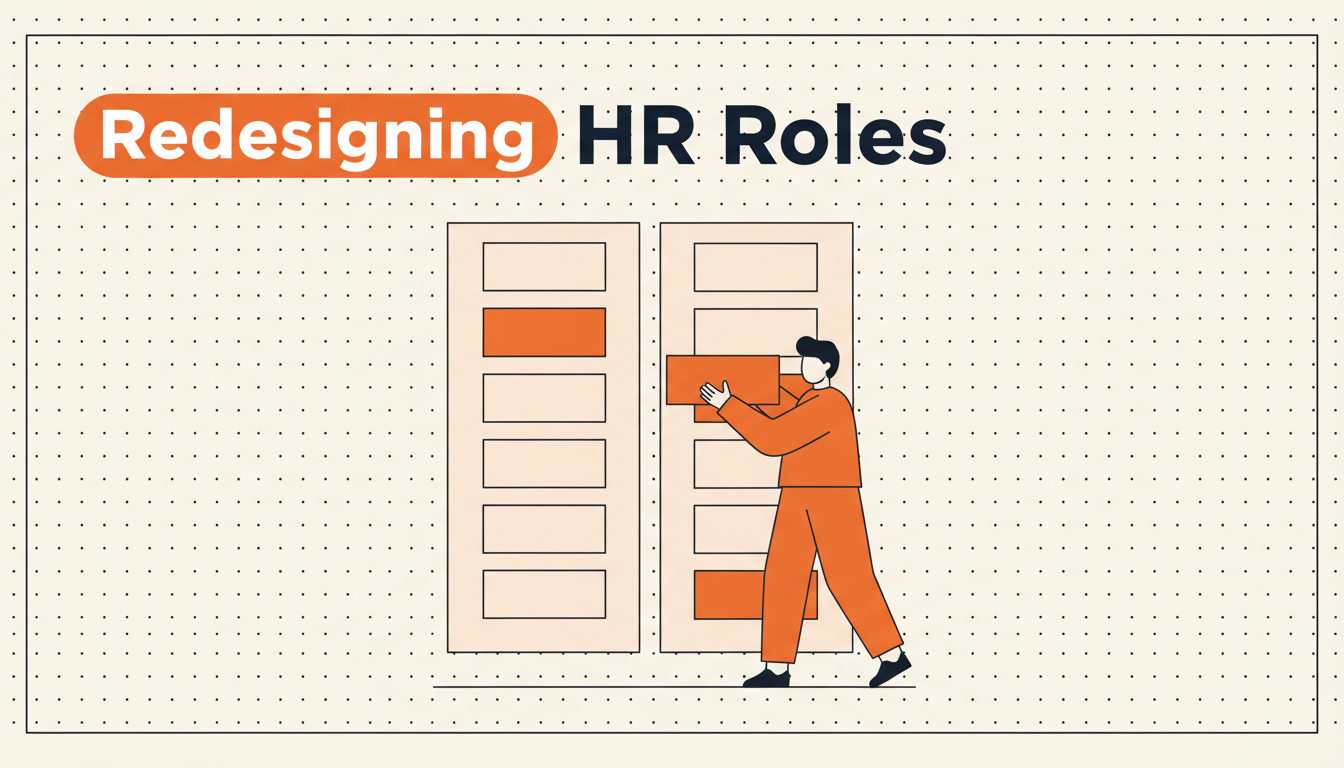
So the right question isn't "what can we hand over". It's "what can we afford to be wrong about, how fast would we know, and who catches it before the person on the other end does". That question has a different answer for every task, and that's why a single tool rollout plan is the wrong shape.
When You Are Ready to Go Further
If the diagnostic above gave you a clear first task and a clear owner, the next question is which tool fits that task, and that's where independent comparison earns its keep. HROpsLab reviews HR software the way a trade publication reviews any other category: with hands-on testing, transparent scoring, and no commercial relationship with the vendors we cover. We sell nothing and we don't implement. When we recommend a tool, it's because it scored, not because we were paid.
If you're still choosing your first task, our case study library walks through real first-task picks at companies of different sizes and stages, including the ones that didn't work. If you want a second opinion on a shortlist, our experts will read yours and tell you where the gaps are. Either starting point is free and either one is a real conversation, not a sales call.
Frequently Asked Questions
Does redesigning HR roles around AI mean fewer HR staff?
No, it means different HR work. The drafting hours move to review and exception handling, and the team needs to be staffed for that. If your plan shows headcount coming down, the plan is built on a wrong assumption about where the hours go. Expect the first stretch to be slower, while reviewers learn what a bad output looks like and still carry their old work. The teams that get into trouble booked the saving before the pilot ran, then went short-handed at the point review cost most. Redesign the roles first, and revisit the numbers when you can see the real review load.
What skills does the HR team need now?
Reading outputs fast, writing prompts that get a useful answer on the second try, and knowing when to ignore a confident result. None of these are on most HR job descriptions yet, and that's a real gap worth closing this year. They're editorial skills rather than technical ones, and the person strongest at them is often the quiet one who already reads other people's drafts properly. The hardest to teach is resisting fluency. Well-written text feels checked and isn't, so reviewers need the habit of asking what should be present rather than judging what is.
How do I pick the first task to hand over?
Pick the task where a wrong answer is cheap and easy to roll back, and where the volume is high enough to justify the setup. Drafting and scheduling usually win. Final decisions never do. Resist the pull towards the task that hurts most, since it usually hurts precisely because errors in it are expensive, and a first pilot that damages someone's application or someone's pay will cost you every future proposal. There's a second filter worth applying. Can a reviewer tell the output is wrong without opening another document? If not, choose something else this quarter.
What do I do when the tool is wrong?
Treat it as a data point about the task, not the tool. Ask who was supposed to catch it, whether the prompt was specific enough, and whether the criteria were clear in the first place. Then update the workflow and move on. Most first failures are criteria failures in a technical costume: everyone agreed on "strong communicator" in the kick-off and nobody wrote down what it meant. Keep a short log of what went wrong and what changed. The pattern across six weeks tells you more than any single incident, and it's what you'll want when someone senior asks whether this is working.
Should we tell staff which tasks are automated?
Yes. Trust in HR is built on transparency, and the legal floor in some jurisdictions already requires notice: Illinois HB 3773, in effect since 1 January 2026, applies when AI is used in employment decisions. Requirements differ by jurisdiction, so take local advice on what applies to you. The reputational case is stronger than the legal one. Employees find out anyway, usually from an output that reads oddly, and finding out that way turns a routine tooling change into a question about what else you haven't mentioned. Say what it does and who reviews it. Give people a way to reach a human.
How do I stop review work from becoming invisible?
Put it on the plan with hours attached, name the reviewer for each task, and report on it. What gets measured gets staffed, and what gets staffed gets done properly. Ask reviewers to log time rather than verdicts. The useful signal is whether review is still growing after two months, which usually means the criteria need work rather than the reviewer. Watch where it lands, too. Review settles on whoever is most conscientious, which is how one person carries a workload nobody has seen written down.
Independent, vendor-free HR software analysis from a publication that has been in the room.