
TL;DR
- The core decision: You're moving from a focused language analysis tool to a broader AI application, meaning you must choose between expanding into full talent intelligence or solving a specific screening bottleneck.
- When staying put makes sense: Keep Textio if your sole objective is systematically improving job descriptions and manager feedback quality across a large team.
- The reality of AI hiring tools: Software that scores or screens human beings is heavily regulated, requiring clear explainability and often independent auditing to survive legal scrutiny.
- Market divisions: Vendors split into broad talent platforms and specialized point solutions.
- A simple decision rule: You shouldn't buy an AI recruiting tool if the vendor can't explain exactly how the model arrived at a specific candidate recommendation.
- The expected outcome: Done right, you gain faster screening and deeper skills matching, but you trade away a simple deployment model for complex change management.
| Tool | Rating | Pricing | Trial | Best for |
|---|---|---|---|---|
| Textio (your current tool) | 4.5/5 | Pricing on request | Free demo available | Best AI for bias-free job descriptions and feedback |
| Eightfold AI | 4.7/5 | Pricing on request | Free demo available | Best AI platform for talent intelligence |
| HireVue | 4.5/5 | Pricing on request | Free demo available | Best AI video interviewing and assessment platform |
| Paradox (Olivia) | 4.6/5 | Pricing on request | Free demo available | Best AI recruiting assistant for candidate screening |
| Leena AI | 4.4/5 | Pricing on request | Free demo available | Best AI chatbot for HR helpdesk automation |
| SeekOut | 4.4/5 | Pricing on request | Free demo available | Best AI for diverse talent sourcing |
| Visier | 4.5/5 | Pricing on request | Free demo available | Best AI platform for people analytics |
| Beamery | 4.3/5 | Pricing on request | Free demo available | Best AI for skills-based talent lifecycle management |
| Phenom | 4.4/5 | Pricing on request | Free demo available | Best AI-powered talent experience platform |
| Kira Systems | 4.1/5 | Pricing on request | Free demo available | Best AI for contract and document review in HR |
Beyond the Augmented Job Description
You're sitting in a Q3 pipeline review with your VP of Engineering. She is frustrated. Your team used Textio to scrub every software engineer job posting for exclusionary language, pushing the inclusivity score well above the benchmark. The postings went live. Applications spiked. But the engineering managers are still rejecting 80 percent of the shortlist at the phone screen stage. When you ask why, the answer is always the same. "They look good on paper, but they don't have the actual skills."
This is the moment many talent leaders realize they have outgrown a language optimization tool. Fixing the top of the funnel is good work. Ensuring job descriptions are inclusive is necessary. But when your hiring managers stop trusting the shortlists you provide, perfect phrasing can't save you. You start looking for software that evaluates actual candidate capabilities.
Then reality hits. You sit through a vendor demo for an AI assessment tool. The rep shows you a dashboard with an accuracy claim. You ask how they define accuracy. The rep hesitates. You ask if they can explain exactly why the AI rejected a specific candidate last week. Silence. The real issue isn't finding a tool that ranks candidates perfectly. The real issue is finding a tool you can defend in a regulatory audit without looking foolish.
Best tools for AI HR Tools
When Textio Remains the Right Choice
Sometimes, ripping out software is a mistake. Your setup is genuinely fine if your primary pain point remains the actual text of your job descriptions and manager feedback. Textio does exactly what it promises. It highlights coded language based on a model trained on 1 billion job application outcomes. It forces hiring managers to think about how they communicate.
Friction starts when you try to use it as a complete recruiting platform. Textio isn't an ATS. It won't source candidates or schedule interviews. It just sits quietly analyzing text.
Real risk appears when you rely on it to fix systemic sourcing problems. You can write the most inclusive job description in the world. If you only post it on the same three university alumni boards, your pipeline remains homogenous.
The edge case is the highly decentralized enterprise. If you've thousands of hiring managers writing their own performance reviews, Textio acts as a necessary guardrail. It prevents casual bias from entering the official employment record. If that's your only goal, keep it.
Five Questions for the Midnight Hour
Here's the problem. These questions keep a talent leader awake.
Can I explain a specific rejection to an angry candidate? If your AI tool auto-declines someone, they might ask why. You need a plain-English reason, not a black-box shrug. This matters because "the computer said no" invites immediate legal scrutiny under data protection laws.
What does an independent bias audit actually involve? New York City requires an annual independent bias audit of automated employment decision tools. This means giving an outside auditor access to your historical selection rates across different demographic groups. It matters because a failed audit becomes public record.
Are we just automating our own historical biases? If a vendor trains their matching algorithm exclusively on your last ten years of hiring data, it learns your past mistakes. It matters because replicating past discrimination at machine speed is a massive liability.
Does this tool evaluate demonstrated capability? Screening by keyword overlap is an outdated practice. You need to know if the software understands adjacent skills and actual project work. This matters because the best candidate often has an unconventional resume.
Will hiring managers actually log in? Software requiring a separate login usually dies immediately. It matters because an unadopted tool yields zero data, ruining your expected return on investment.
Three Distinct Market Lanes
The market for AI talent technology splits into three distinct lanes. You must know which one you're buying.
A point solution does one step well. Tools like Paradox handle interview scheduling. Tools like HireVue run video assessments. They're right when you've a specific bottleneck. They fail when you expect them to share data automatically across your entire hiring lifecycle.
A broad platform covers the whole funnel. Eightfold AI or Phenom sit in this category. They map internal skills. They source external talent. They're right when you want to shift to skills-based hiring enterprise-wide. They fail if you lack the budget or the stomach for a multi-year implementation project.
An analytics layer sits over systems you already run. Visier is the prime example. It doesn't interview candidates. It pulls data from your ATS to predict attrition. This is right when you've massive amounts of siloed data. It fails if your underlying data quality is garbage.
Assess Your Readiness
Are you solving for volume or complexity? If you process thousands of retail applications a month, you need conversational screening. If you hire fifty specialized engineers a year, you need deep skills matching.
Who owns the implementation? Rolling out an AI recruiting assistant requires an operations lead. Implementing an enterprise skills taxonomy demands a dedicated project team.
How clean is your historical data? Machine learning models are hungry. If you haven't cleaned your historical job titles, AI matching tools will struggle to infer anything useful.
Where does your legal team stand on algorithmic screening? Some legal departments are entirely risk-averse regarding algorithmic screening tools. So you must gauge their appetite for automated decision-making before you run a pilot.
What is your total budget for change management? The software license is just the entry fee. You will spend heavily on training recruiters to trust a machine instead of their gut instinct.
The Nine Alternatives, Reviewed
Eightfold AI
This platform is best for large enterprises that want AI-powered talent intelligence for skills-based hiring. It earns its place by using a deep learning model to infer skills from a candidate's career trajectory rather than simple keyword overlap. But it requires significant historical data to generate optimal recommendations. The enterprise-only pricing means smaller teams are entirely priced out of consideration.
HireVue
HireVue excels for large organizations screening high volumes of candidates using structured asynchronous video interviews. It dominates this space because the neuroscience-based game assessments scale candidate screening dramatically. Its weakness is the ongoing regulatory scrutiny surrounding algorithmic assessment. Some candidates also find the asynchronous video format deeply impersonal.
Paradox (Olivia)
This tool is best for high-volume recruiting teams that want to automate candidate screening conversations. It's brilliant because the Olivia assistant accesses recruiter calendars directly, eliminating the back-and-forth coordination that typically consumes 30 to 40 percent of a recruiter's day. It genuinely struggles with highly specialized recruiting. Executive candidates expect a human touch instead of an SMS from a chatbot.
Leena AI
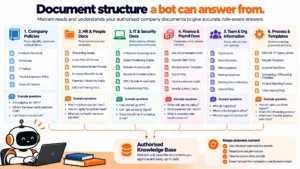
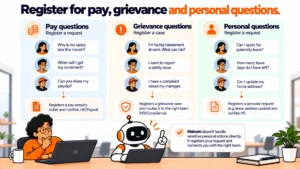
Leena AI is best for HR teams looking to automate helpdesk triage across internal communication channels. It earns its spot because the NLP-powered chatbot sits directly in Slack or Teams, answering policy questions trained entirely on your specific HR documentation. The weakness is its dependence on your internal knowledge base. If your HR policy documentation is messy, the bot will confidently serve employees the wrong answers.
SeekOut
This software is best for talent acquisition teams needing to proactively source hard-to-find technical talent. It works well because it aggregates talent profiles from GitHub and academic publications, surfacing candidates completely invisible to single-source platforms. But the data quality varies wildly by market. Non-technical sourcing often yields thinner results compared to its engineering searches.
Visier
Visier is best for large organizations needing a dedicated people analytics platform for workforce planning. It shines by offering pre-built connectors to over 150 HR platforms, identifying employees at high risk of leaving months before they resign. The major weakness is its reliance on your existing infrastructure. If your underlying HRIS data is flawed, the predictive attrition models become completely unreliable.
Beamery
This platform is best for large enterprises transitioning to skills-based talent practices. It builds a unified talent profile by combining internal HRIS data with external career signals, backed by an ontology mapping 20,000 skills to roles. It struggles heavily with implementation complexity. Smaller organizations will drown in the setup requirements and the enterprise pricing model.
Phenom
Phenom is best for enterprises that want to improve candidate experience through AI-personalized career sites. It earns a place by dynamically adjusting job recommendations based on each visitor's specific browsing behavior. Its weakness is the massive scale required to see a real return on investment. The implementation is highly complex for smaller teams without dedicated technical support.
Kira Systems
This tool is best for legal teams that process significant volumes of employment contracts. It's highly effective because it identifies over 1,000 clause types across multiple jurisdictions simultaneously, flagging non-compliant terms in hours rather than weeks. But this is a highly niche use case offering zero features for traditional recruiting. It requires actual legal expertise to configure effectively, making it useless for standard talent acquisition workflows.
The Decision Table
| Situation | Scale | Setup | Primary Pain | Recommended Starting Point |
|---|---|---|---|---|
| Job ad language optimization | 200+ employees | Centralized TA | Biased job descriptions | Textio |
| Enterprise skills taxonomy | 1,000+ employees | Complex tech stack | Finding internal talent | Eightfold AI |
| High-volume retail hiring | 100+ hires/month | Process-heavy | Interview scheduling | Paradox (Olivia) |
| Video screening automation | 500+ hires/year | High top-of-funnel | Manual phone screens | HireVue |
| Technical sourcing | 50-5,000 employees | Hard-to-fill tech roles | Invisible candidates | SeekOut |
| HR helpdesk tickets | 200+ employees | Multi-channel | Routine employee queries | Leena AI |
| Predictive people analytics | 1,000+ employees | Siloed HR data | Unexpected attrition | Visier |
| Manager feedback guardrails | 200+ employees | Decentralized | Biased performance reviews | Textio |
The Hidden Cost of Getting It Wrong
The second-order costs of a bad AI purchase will haunt your talent team for years. It starts quietly. A hiring manager receives three consecutive shortlists filled with irrelevant profiles generated by a flashy matching algorithm. They stop opening the notifications. They revert to their private network. Your adoption metrics tank. The expensive software becomes an empty shell.
Then the regulatory reality hits. You get a request from a rejected candidate under local data privacy laws. They want to know exactly why they were passed over. If your vendor can't provide a clear explanation of the scoring mechanism, you've a serious problem. You can't hide behind a vendor. An audit you can't evidence is a legal liability. If a regulatory body demands proof that your automated employment decision tool is bias-free, you wouldn't want to only have a marketing brochure to show them.
Worse, you might just be automating your own historical bias. If a vendor trains a model exclusively on your past hiring decisions, it learns to reject the exact demographics you historically marginalized. Replicating past discrimination at machine speed is a disaster. Can you explain exactly how your chosen tool avoids this trap?
Moving Beyond the Basics
When you're ready to move beyond a basic setup, you need objective data. Assessing these platforms requires more than reading vendor websites. It requires seeing how the software actually behaves in a live production environment. You need to know which features are real and which are just mockups.
HROpsLab helps you cut through the noise. We are an independent review publication. We sell nothing. We evaluate talent technology by speaking directly to the operations leaders who use it daily. We find out where the implementations stall out. We discover which support teams actually pick up the phone when something breaks.
Our editorial team spends thousands of hours tearing down HR software. We publish deep comparisons so you can build a talent stack that actually works. We give you the unvarnished truth about what happens after you sign the contract.
Frequently Asked Questions
Are AI recruiting tools illegal under the EU AI Act?
No, they aren't illegal. But the EU AI Act treats AI systems used for employment and worker management as high-risk. This means vendors must meet strict requirements for transparency and human oversight. You must take your own legal advice before deploying these tools in Europe.
Do we have to conduct a bias audit in New York City?
If you use an automated employment decision tool to screen candidates who live in New York City, local law strictly dictates your obligations. The rules require an annual independent bias audit along with specific candidate notices. You should speak to your legal counsel to determine if your specific software falls under this definition.
How much does Eightfold AI cost?
Eightfold AI provides pricing on request. They operate primarily on an enterprise-only pricing model. You won't find a simple monthly subscription on their website, so you must contact their sales team directly for a custom quote.
Can Paradox integrate with my existing applicant tracking system?
Paradox integrates with most major applicant tracking systems. The Olivia assistant sits in front of your database, handling the conversational screening before pushing the final candidate data into your core system of record.
Is Visier useful for companies under 1,000 employees?
Visier can technically be deployed in smaller companies, but it's built for massive scale. The predictive attrition models require a high volume of historical data to function properly. Smaller organizations often lack the statistical volume necessary for accurate machine learning predictions.
Does SeekOut only find software engineers?
SeekOut is highly regarded for technical sourcing due to its GitHub integration, but it covers a wide variety of roles. It aggregates data from over fifty professional networks. However, the data depth varies by market, so you should test it against your specific open roles during a demo.
Why would we use Leena AI instead of a basic knowledge base?
Employees hate searching through static PDF documents on an intranet portal. Leena AI meets them where they already work. By sitting inside Slack or Microsoft Teams, it answers questions conversationally, which dramatically reduces the volume of repetitive tickets submitted to your human resources helpdesk.
Clear insights for modern HR leaders.